
Rating:
⭐⭐⭐⭐ (4.1 out of 5)
Sometimes, the simplest looking books carry the most personal weight.
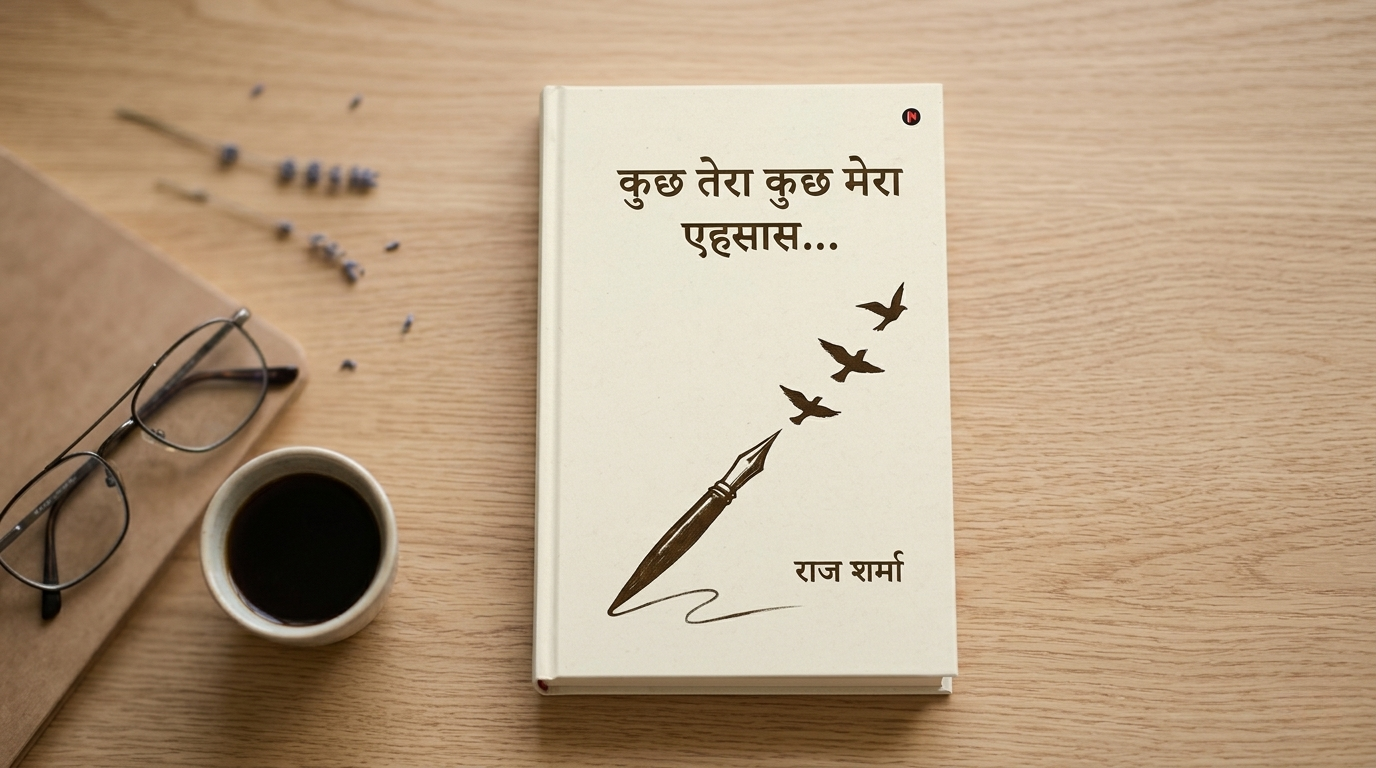
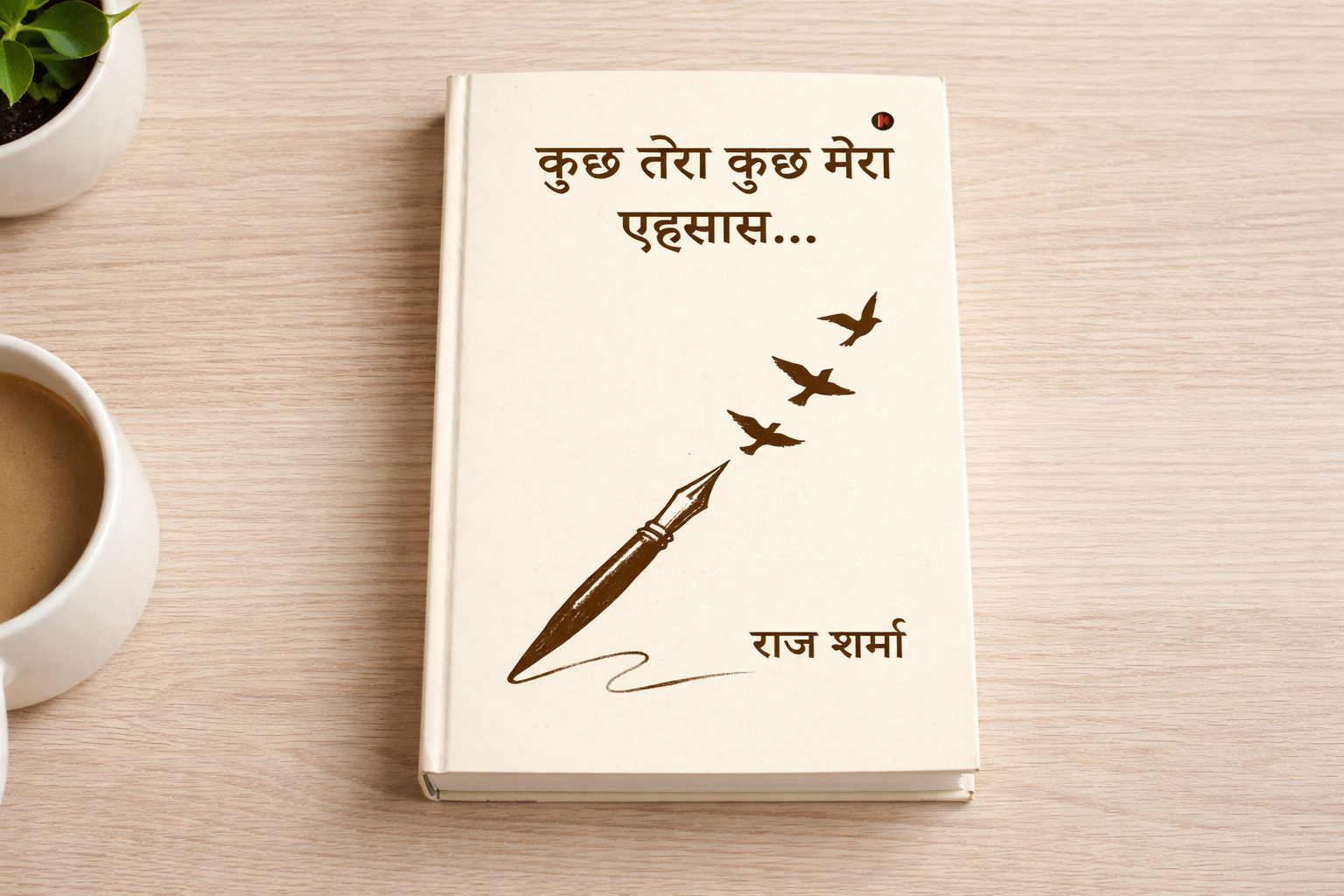
When I first saw the cover of Kuch Tera Kuch Mera Ehsaas by Raaj Sharma, it felt almost minimal. A pen, a few birds, and a line that sounded like it belonged to someone speaking softly rather than performing.
And honestly, that softness continues inside the book.
I didn’t feel like I was reading something written to impress. It felt more like someone writing because they had something to say and maybe no other place to say it.
In my years of reading poetry, I’ve noticed that there are broadly two kinds of poets. One writes with language. The other writes with feeling. When both come together, it creates something powerful. When only feeling is present, it can still work, but in a very different way.
This book leans strongly into feeling.
And I think that’s important to understand before going in.
What the Book Is About
Kuch Tera Kuch Mera Ehsaas is essentially a collection of emotions captured in small, intimate moments.
It does not follow a single narrative. Instead, it moves through fragments of life. Love, longing, distance, memory, and the subtle ache that sits between two people who share something unspoken.
The title itself says a lot.
Some of it is yours. Some of it is mine. And somewhere in between, something exists that cannot be fully owned by either.
That idea flows through the poems.
There are verses that speak of connection. Others that carry a sense of absence. And many that sit in that in between space where you are not completely together, but not completely apart either.
What I found interesting is that the poems do not try to resolve these emotions.
They simply present them.
And then leave you with them.
What Stood Out to Me
The first thing I noticed was the tone.
It is very direct. Almost conversational at times. There is no attempt to complicate language unnecessarily.
I’ve read poetry that feels crafted and polished to perfection. This is not that kind of book.
This feels closer to something written in a diary.
And I don’t mean that as a criticism.
There is honesty in that approach.
Another thing that stood out is how the book treats love.
Not as something grand or dramatic, but as something that exists in small gestures, small thoughts, small memories.
There are moments where the lines feel like something you might have thought yourself but never written down.
And that familiarity works in its favor.
At the same time, I did feel that some poems stay within a similar emotional range. The themes repeat in different forms, and while that creates consistency, it can also feel a bit repetitive in parts.
But then again, emotions themselves are repetitive.
We revisit the same feelings again and again in life.
So maybe that repetition is intentional. Or maybe it just reflects the nature of what the poet is experiencing.
The Emotional Core
If I had to describe the emotional center of this book, I would say it lies in shared incompleteness.
Not heartbreak in a dramatic sense.
Not fulfillment either.
Something in between.
There are lines that made me pause, not because they were complex, but because they felt familiar in a way that is slightly uncomfortable.
You know that feeling when you read something and think, I have felt this, but I never said it out loud.
That happens here.
There is also a softness to the pain.
It is not loud. It does not demand attention.
It just sits there.
And I think that’s where the book finds its strength.
Who This Book Is For
This is not a book for readers looking for layered metaphors or highly experimental poetry.
If someone enjoys structured, complex, literary poetry, this might feel too simple.
But for readers who connect with emotional honesty, who like poetry that feels personal and relatable, this could work very well.
It is also a book that you don’t necessarily read in one sitting.
You can open any page, read a few lines, and sit with them.
I can imagine people returning to certain lines at different points in their life and finding slightly different meanings each time.
Final Thoughts
After spending time with Kuch Tera Kuch Mera Ehsaas, I kept thinking about intention.
This does not feel like a book written to impress critics or to showcase technical brilliance.
It feels like a book written because something needed to be expressed.
And there is value in that.
In 2026, when a lot of writing feels curated for attention, something like this feels more personal, almost unfiltered.
If I had to point out a limitation, it would be the lack of variation in tone across some sections. I found myself wishing for a few poems that shifted the emotional direction more strongly, just to break the rhythm.
But even with that, the sincerity of the writing holds it together.
Raaj Sharma writes like someone who is not trying to hide behind language.
And that honesty is not always easy to find.
FAQ
Is Kuch Tera Kuch Mera Ehsaas worth reading?
Yes, especially if you enjoy simple, emotional poetry that feels personal and relatable.
What is Kuch Tera Kuch Mera Ehsaas about?
It is a poetry collection focused on love, memory, connection, and the emotions that exist between two people.
Who should read Kuch Tera Kuch Mera Ehsaas?
Readers who prefer heartfelt, direct poetry over complex literary styles.
Is this book easy to read?
Yes. The language is simple and accessible, making it easy to connect with.

With over 11 years of experience in the publishing industry, Priya Srivastava has become a trusted guide for hundreds of authors navigating the challenging path from manuscript to marketplace. As Editor-in-Chief of Deified Publications, she combines the precision of a publishing professional with the empathy of a mentor who truly understands the fears, hopes, and dreams of both first-time and seasoned writers.