
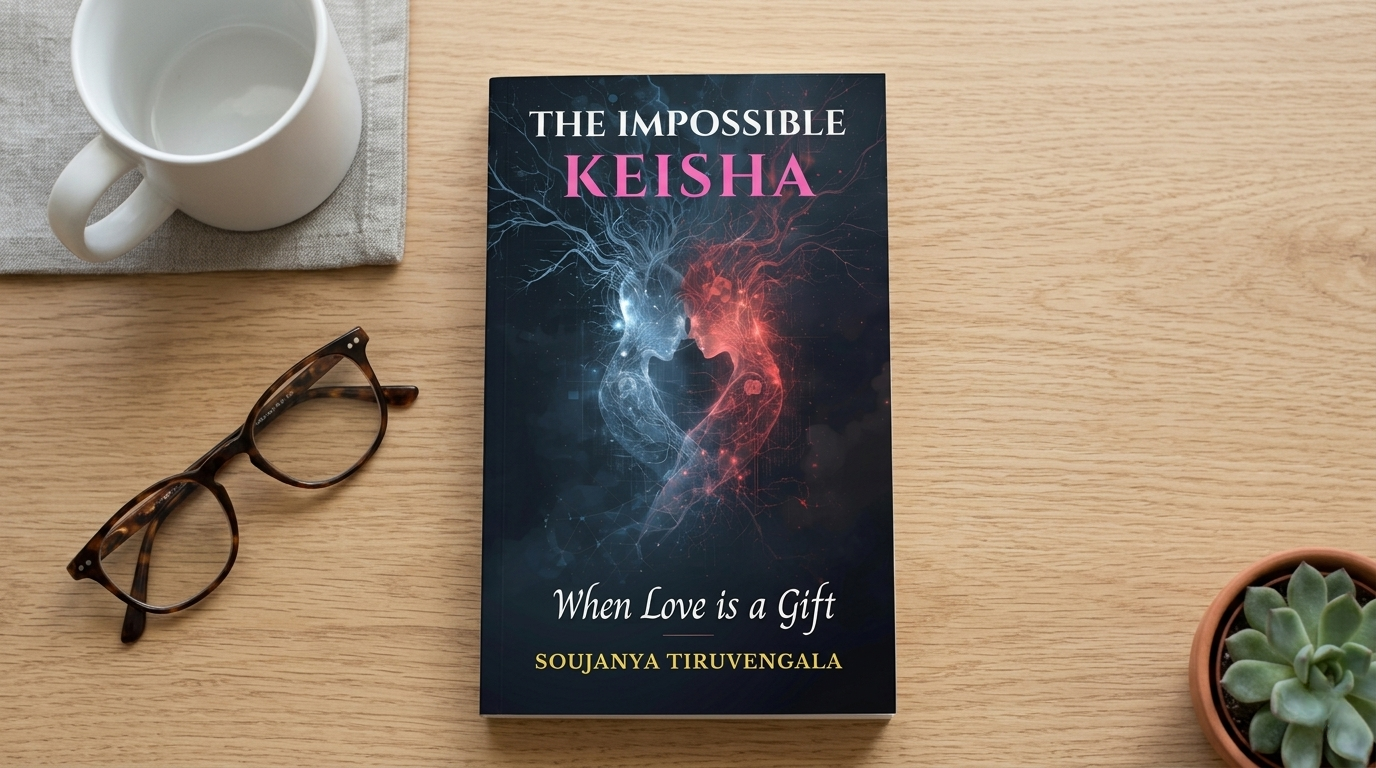
There’s this strange feeling I get sometimes while reading certain books. Not excitement, not even curiosity exactly. It’s more like… a quiet pull. Like something inside me is being asked to slow down and listen.
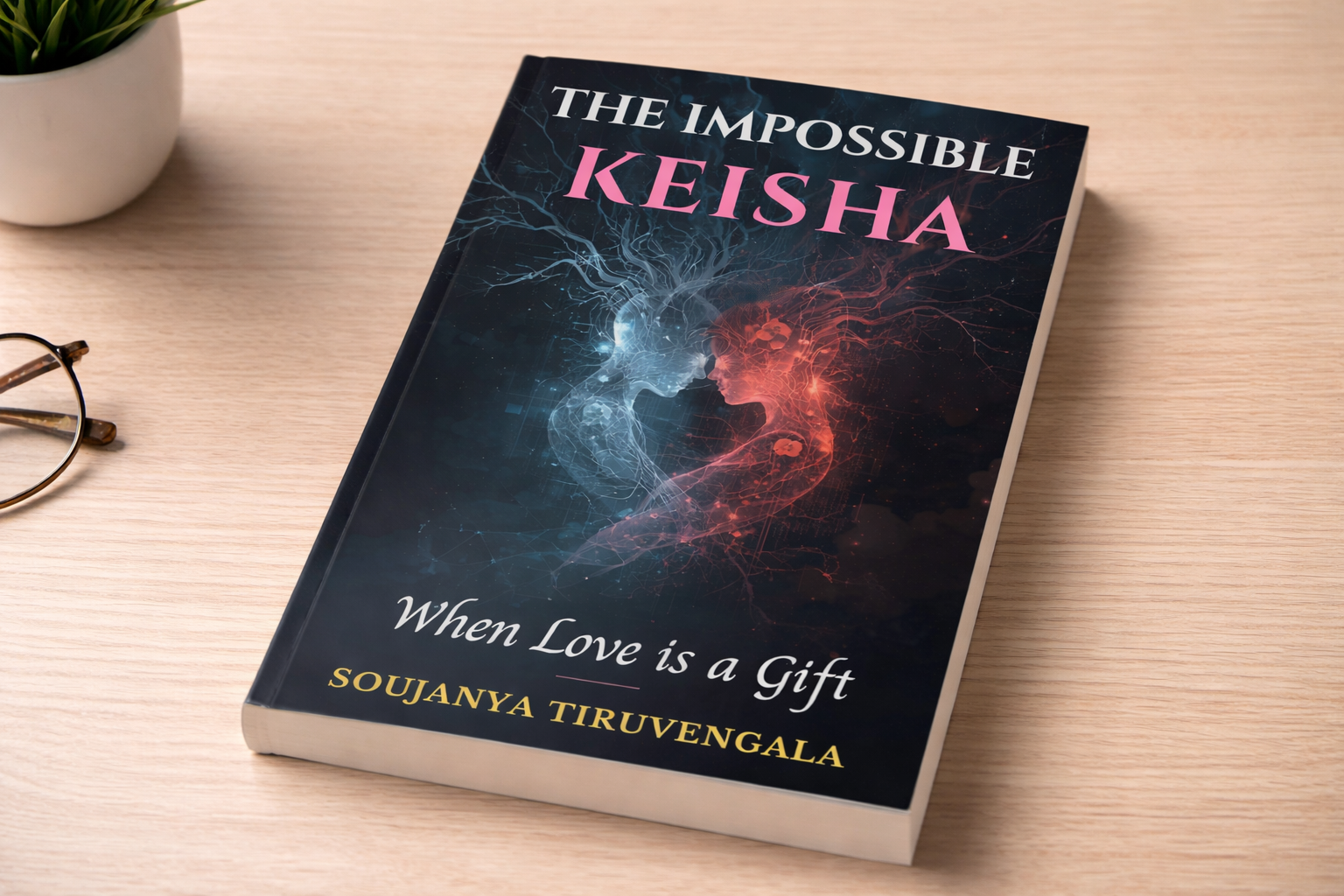
That’s what happened with The Impossible Keisha: When Love is a Gift by Soujanya Tiruvengala.
I didn’t rush through it. I couldn’t. There are passages here that made me stop mid page, just sit there, and think about what I had just read. Not because it was confusing, but because it felt layered. Like it was saying something beyond the words.
In my years of reading across genres, I’ve noticed that stories that blend intellect with emotion often struggle to find balance. They either become too abstract or too sentimental.
This one… tries something different.
And I think that attempt is what makes it memorable.
What the Book Is About
At its surface, The Impossible Keisha is about two people. Keisha and Atlas.
But honestly, reducing it to just that feels unfair.
Atlas is a man rooted in logic. A scientist, someone who believes in clarity, in answers, in things that can be measured and explained. You can feel it in the way he observes, in the way he approaches everything with structure.
Keisha, on the other hand, exists almost like a contradiction to that world.
She creates. Not just art, but meaning. And she does it in a way that doesn’t ask to be explained. There’s a line where she says something like logic helps something function, but instinct gives it a reason to exist. That stayed with me.
Their interaction begins almost formally. A conversation. An attempt to understand.
But slowly, something shifts.
Atlas starts realizing that not everything can be solved. Not everything needs to be named immediately. And Keisha… she never really tries to teach him. She just exists in her own way of knowing.
The story moves through their conversations, their encounters, and the space between what is said and what is felt.
And somewhere in all of this, love appears.
Not loudly. Not dramatically.
But in a way that feels… different.
What Stood Out to Me
There’s this moment where Atlas wonders if meaning belongs to the observer. And Keisha responds that meaning changes the moment it is felt.
I kept thinking about that.
Because it’s such a simple idea, but also not simple at all.
One of the strongest aspects of this book is how it treats meaning itself. It doesn’t hand it to you. It almost asks you to sit with uncertainty.
And that can be uncomfortable.
But also beautiful.
Another thing that stood out is the contrast between Atlas and Keisha. Not in a typical opposites attract way, but in how they represent two different ways of experiencing the world.
Atlas wants clarity. Keisha allows ambiguity.
There’s also a recurring theme of creation. Not just artistic creation, but creation as a way of being.
Keisha doesn’t create to impress. In fact, she seems almost uninterested in admiration. There’s a line about how admiration fades but meaning stays. And I think that captures her completely.
The setting also plays a subtle role. The world feels advanced, almost futuristic, with technology seamlessly integrated into life. And yet, within that structured world, Keisha introduces something deeply human.
That contrast works really well.
As an editor, I also noticed the pacing. It’s not driven by plot twists or big events. It’s driven by conversations. By pauses. By what is not said.
That’s a risky choice.
But here, it mostly works.
The Emotional Core
This is where the book surprised me.
I expected it to be intellectual. And it is.
But beneath that, there’s a very human emotion running through it.
Atlas, for all his logic, begins to feel something he cannot categorize. And that unsettles him.
I think many readers will relate to that feeling. That moment when something doesn’t fit into your understanding, and instead of rejecting it, you stay with it.
There’s also something deeply moving about Keisha.
She is not written as someone who needs validation. She already knows what she is. And yet, there is a subtle loneliness in that.
Not loneliness in a dramatic sense. More like the distance that comes from being different.
I felt that.
There’s a line about how some things are meant to be felt rather than understood. And honestly, that line could define the entire book.
Because that’s exactly what it does.
It makes you feel something you might not be able to fully explain.
Who This Book Is For
I’ll be honest here.
This book is not for everyone.
If someone is looking for a fast paced romance with clear answers and dramatic moments, this might feel slow.
But if you enjoy stories that sit in that space between philosophy and emotion, this could really resonate.
Readers who like reflective writing, who don’t mind pausing and rereading certain passages, will probably appreciate this more.
Also, people who have ever felt caught between logic and feeling.
Between understanding something and just experiencing it.
I think they’ll find something here.
Final Thoughts
After finishing The Impossible Keisha, I didn’t feel like I had a neat conclusion.
And I think that’s intentional.
In 2026, when everything around us pushes for quick answers and instant clarity, this book feels like it’s doing the opposite. It asks you to slow down. To accept that not everything needs to be resolved immediately.
And I found that refreshing.
If I had to point out a small limitation, it would be that at times the writing leans heavily into abstraction. There were moments where I wished for a bit more grounding, a bit more context to anchor the ideas.
But then again, maybe that ambiguity is part of its identity.
It doesn’t want to explain everything.
It wants you to participate.
And honestly, I respect that.
Rating:
⭐⭐⭐⭐ (4.3 out of 5)
FAQ
Is The Impossible Keisha worth reading?
If you enjoy reflective and philosophical storytelling, then yes. It offers a different kind of reading experience.
What is The Impossible Keisha about?
It follows the interactions between Atlas and Keisha, exploring themes of meaning, creativity, and love beyond traditional definitions.
Who should read The Impossible Keisha?
Readers who enjoy slow, introspective narratives and ideas about art, logic, and emotion.
Is The Impossible Keisha easy to read?
It is not difficult, but it does require patience and attention because of its layered writing style.

With over 11 years of experience in the publishing industry, Priya Srivastava has become a trusted guide for hundreds of authors navigating the challenging path from manuscript to marketplace. As Editor-in-Chief of Deified Publications, she combines the precision of a publishing professional with the empathy of a mentor who truly understands the fears, hopes, and dreams of both first-time and seasoned writers.