
Rating:
⭐⭐⭐⭐ (4.3 out of 5)
Some books arrive quietly and still make you pause.
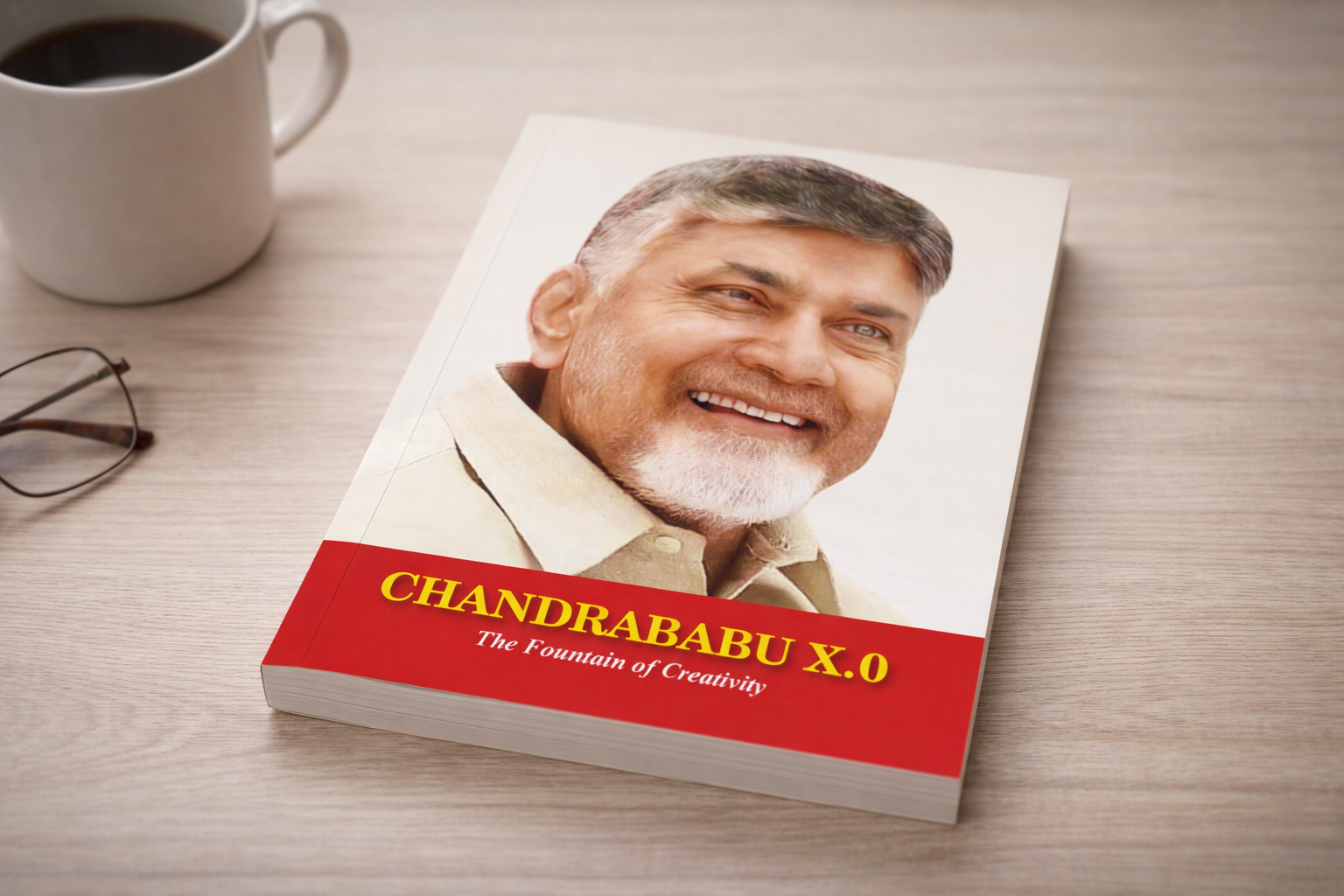
That was my first reaction when I saw Chandrababu X.O: The Foundation of Creativity by Dr. Sakhamuru Srinivasa Prasad.
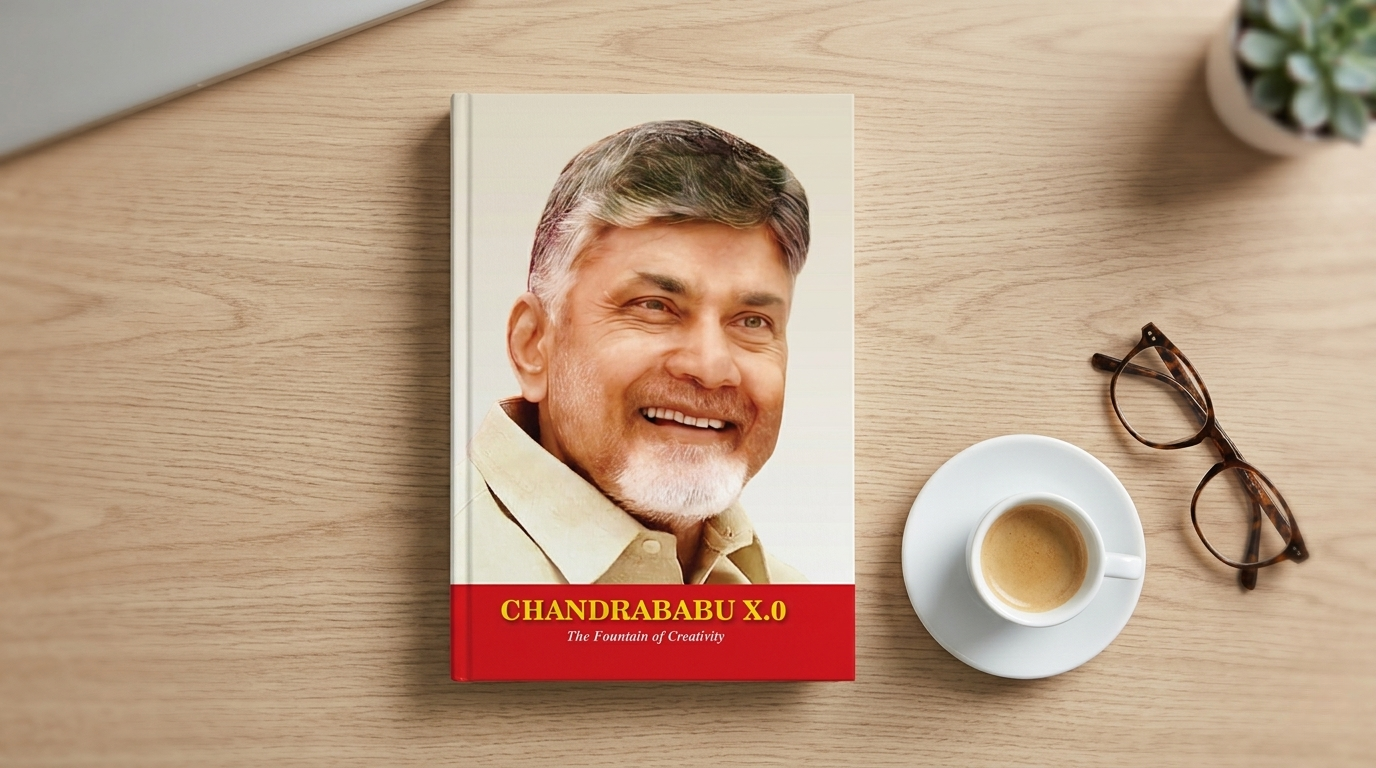
At first glance the cover feels simple. A portrait of N. Chandrababu Naidu smiling, calm and confident. Nothing overly dramatic. But the title carries a certain curiosity. Chandrababu X.O. It almost sounds like a software version. Like someone is presenting the next upgrade of a human mind.
And honestly, that made me smile a little.
In my years as a reader and editor at Deified Publication I have come across many books about political leaders. Some feel like biographies. Some feel like praise. Some read almost like historical documentation.
This one felt slightly different from the beginning.
It reads less like a biography and more like a collection of ideas. Almost like someone trying to map the thought process of a leader who thinks far ahead of his time.
And I kept thinking about something while going through the book.
Sometimes leadership is not about speeches or elections. Sometimes it is about imagination.
What the Book Is About
Chandrababu X.O: The Foundation of Creativity focuses on the ideas and vision associated with the political leader N. Chandrababu Naidu.
The author, Dr. Sakhamuru Srinivasa Prasad, approaches the subject not simply as a political story but as a catalogue of innovative concepts that Naidu either proposed or supported.
Interestingly, the book itself has an unusual journey. It was originally written in Telugu and later translated into English, Hindi, German, and French. Even more unusual is that the author chose to distribute it free of cost rather than selling it commercially.
That detail alone tells you something about the intention behind the book. It feels less like a commercial project and more like a documentation effort.
The book also gained international visibility when the German and French editions were inaugurated by Chandrababu Naidu at the World Economic Forum in Davos in 2025.
When you open the early pages, the tone becomes clear quickly.
The author sees Naidu as a visionary leader who constantly imagines systems that could reshape governance, infrastructure, agriculture, and technology. The introduction even describes him as someone whose ideas operate at a level that sometimes takes years for people to fully understand.
And then the book begins presenting these ideas one by one.
Some of them feel ambitious. Some feel futuristic. Some feel surprisingly practical.
But together they paint a picture of a mind that seems constantly occupied with solving problems.
What Stood Out to Me
One thing I noticed while reading Chandrababu X.O is that the structure of the book is almost like a series of idea capsules.
Each chapter highlights a particular initiative or concept.
For example, there is an interesting section about semi porous highways that would allow rainwater to drain beneath the road surface while preserving groundwater levels. The idea is that roads should not simply carry vehicles but also help environmental sustainability.
Another chapter talks about waterborne transportation corridors along the eastern coastline. The proposal suggests using canals connected to the sea so goods can move more efficiently and reduce logistics costs.
And honestly, I found myself pausing at that idea.
Because it reminded me of something I have noticed while reading about infrastructure in different countries. Sometimes one clever adjustment in design can transform an entire system.
There is also a fascinating concept around walk to work cities.
The idea is simple but powerful. If schools, offices, grocery stores, and services are within walking distance of residential areas, people save hours every day otherwise spent commuting. According to the section in the book, such planning could improve both productivity and mental health.
I remember thinking that this idea feels very relevant today.
Many cities in 2026 are already struggling with long commutes and overcrowded transport systems.
The book also touches on agriculture innovation, where Naidu supported techniques like aquifer recharge and drip irrigation to address water scarcity in regions like Anantapur. These initiatives helped improve groundwater levels and agricultural productivity.
And then there are chapters about education reform, international travel access, tourism development, and MSME growth.
The range of topics is actually quite wide.
Sometimes it feels like reading a notebook of ideas rather than a traditional narrative.
The Emotional Core
Even though Chandrababu X.O discusses policy ideas and development strategies, the emotional center of the book seems to revolve around creativity in governance.
That phrase might sound unusual.
But the book repeatedly suggests that governance should involve imagination. The ability to look at a problem and ask a different question.
For instance, instead of asking how to build more highways, ask how highways themselves can help water conservation.
Instead of asking how people can commute faster, ask whether cities can be designed so commuting becomes unnecessary.
Those shifts in thinking appear again and again throughout the book.
And I think that is the central idea the author wants readers to notice.
Leadership as a creative process.
I kept thinking about this while reading.
Because we usually associate creativity with artists, writers, musicians.
But the book argues that policy makers can also be creative.
And if that creativity is used well, it can shape entire societies.
Who This Book Is For
This is an interesting question because Chandrababu X.O does not feel like a typical biography or political memoir.
Readers who enjoy leadership studies might find it particularly interesting. It reads almost like a case study of how ideas evolve in governance.
Students of public policy or development economics might also appreciate some of the chapters.
At the same time, readers looking for personal stories or emotional narratives about Chandrababu Naidu may feel that the book stays more focused on ideas than personality.
And that is not necessarily a flaw.
It simply means the book has a specific purpose.
Personally I also think young readers interested in innovation could find inspiration here. Because the book repeatedly emphasizes something important.
Big change often begins with a simple question.
What if we tried something different?
Final Thoughts
After finishing Chandrababu X.O: The Foundation of Creativity, I found myself thinking less about politics and more about imagination.
The book tries to capture the thought process of a leader who sees possibilities where others see limitations.
Some ideas discussed in the book are ambitious. Some may take years to become reality. Some might remain experiments.
But that is how progress usually works.
Not every idea succeeds.
Yet without ideas nothing changes.
What I appreciated most about this book is the author’s effort to document these ideas before they disappear into political history.
Because sometimes the most interesting part of leadership is not the policies that were implemented.
It is the ideas that were imagined.
And in 2026, when societies everywhere are struggling to solve complex challenges, that emphasis on creative thinking feels especially relevant.
FAQ
Is Chandrababu X.O worth reading?
If you are curious about leadership ideas and governance innovation, Chandrababu X.O offers an interesting collection of development concepts associated with Chandrababu Naidu.
What is Chandrababu X.O about?
The book highlights various ideas and policy proposals connected with Chandrababu Naidu, including infrastructure innovation, agriculture reform, and urban planning.
Who wrote Chandrababu X.O?
The book is written by Dr. Sakhamuru Srinivasa Prasad, a journalist and editor connected with the Telugu news daily Repatikosam.
Is Chandrababu X.O a biography?
Not exactly. It feels more like a collection of visionary ideas and development concepts associated with Chandrababu Naidu.

With over 11 years of experience in the publishing industry, Priya Srivastava has become a trusted guide for hundreds of authors navigating the challenging path from manuscript to marketplace. As Editor-in-Chief of Deified Publications, she combines the precision of a publishing professional with the empathy of a mentor who truly understands the fears, hopes, and dreams of both first-time and seasoned writers.