
Rating:
⭐⭐⭐⭐ (4.3 out of 5)
Some books arrive with a very clear intention. They want to entertain you. Some want to impress you with language. Others try to dazzle with complexity.
But every once in a while a book appears that simply wants to remind you of something you may have forgotten.
That was my feeling while reading Hope Takes Wings by Mr. G.K. Balasubramani.
I have been reviewing books for more than fifteen years now. As Editor in Chief at Deified Publication I read poetry, fiction, memoirs, essays. Poetry especially can be unpredictable. Sometimes it feels distant or overly abstract. Other times it lands gently but stays with you long after you close the page.
This book falls in the second category.
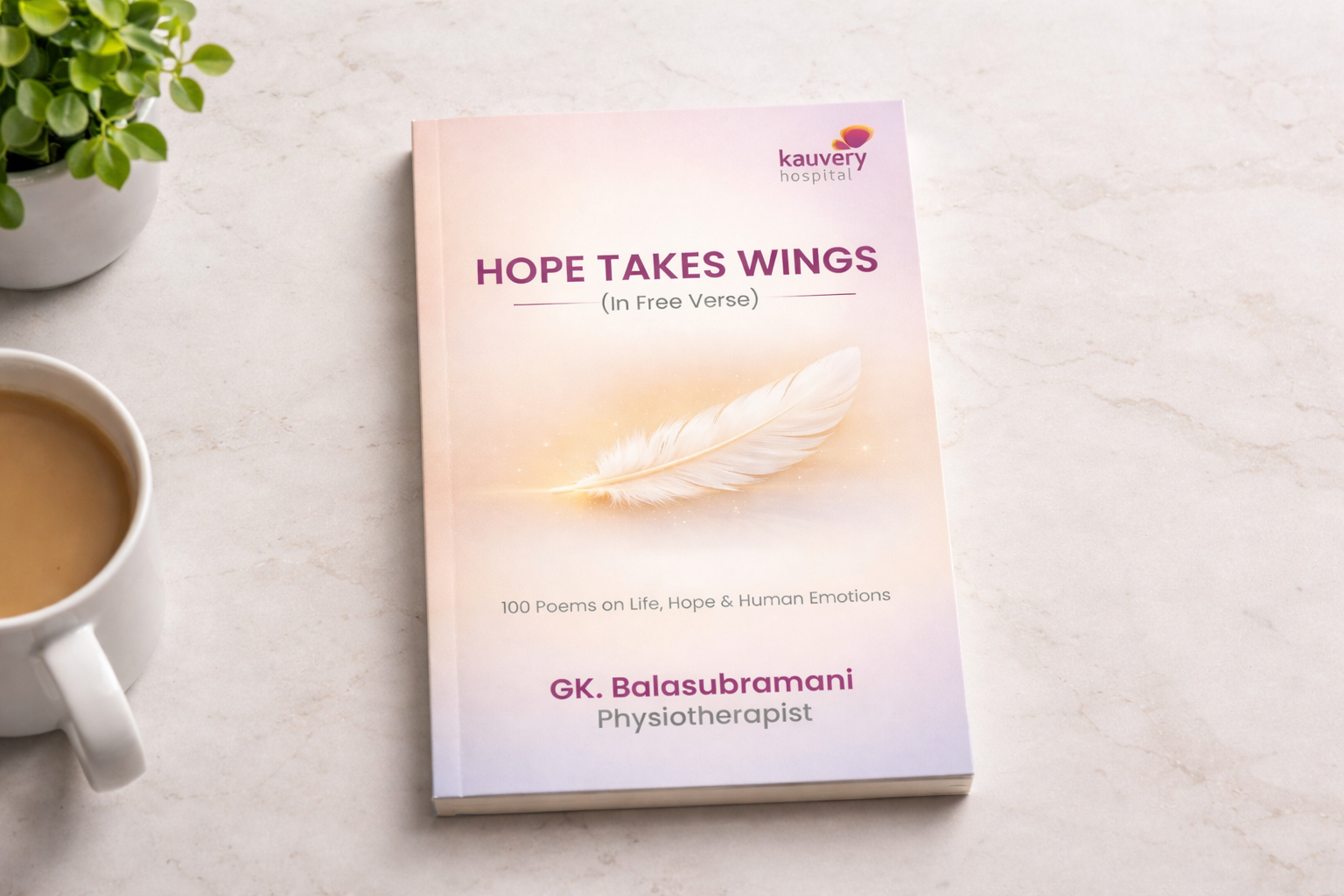
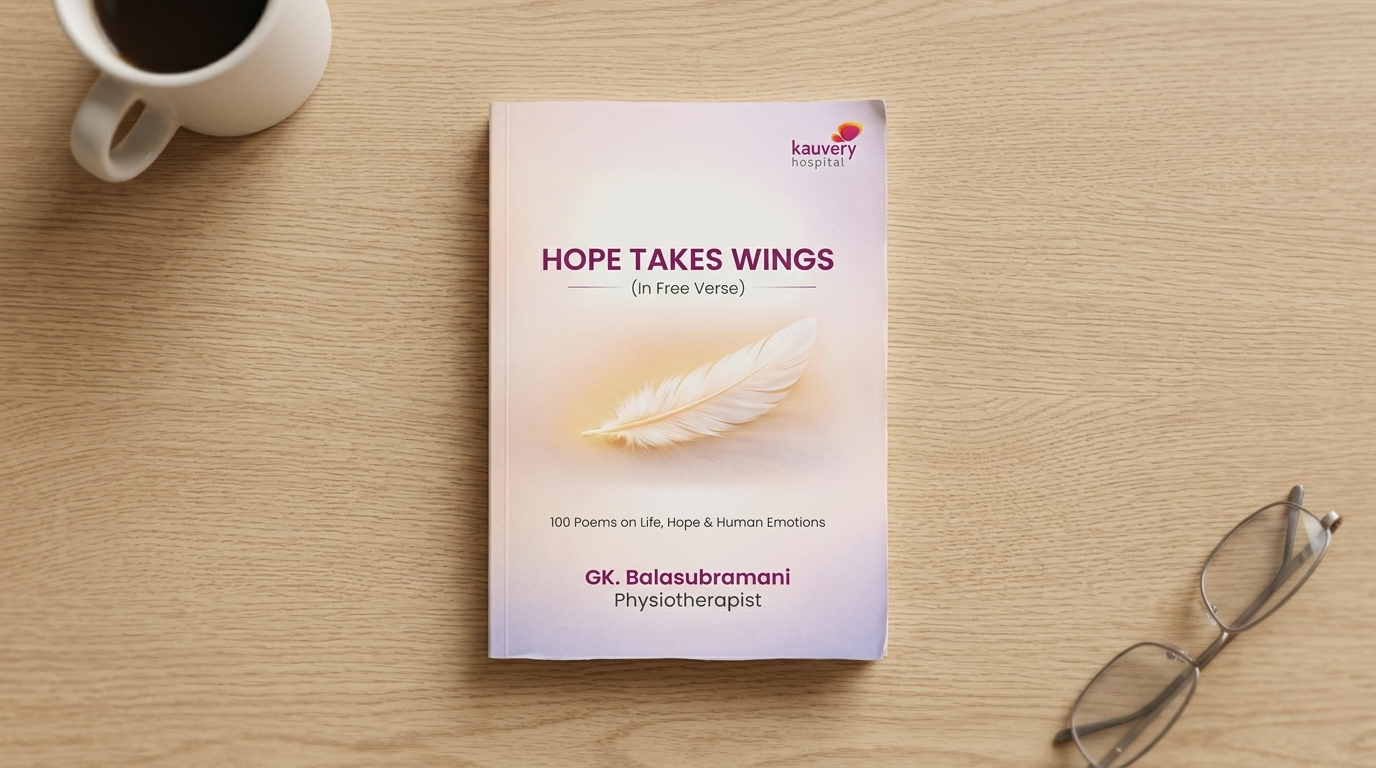
The title itself carries a certain softness. Hope Takes Wings. There is something delicate in that phrase. And the cover with a floating feather feels almost symbolic. Lightness. Healing. Renewal.
But what makes the book truly interesting is the voice behind it.
Mr. G.K. Balasubramani is not writing as a traditional literary poet. He writes as a physiotherapist. A person who spends daily life surrounded by patients, recovery stories, pain, resilience, and quiet acts of compassion inside hospitals.
And honestly that perspective changes everything.
Because the poems are not built from imagination alone. They feel grounded in real human encounters.
What the Book Is About
At its heart, Hope Takes Wings is a collection of one hundred free verse poems that revolve around health, humanity, and compassion.
But the book is not only about medicine.
It is about the human spirit in moments when life feels fragile.
Many of the poems draw inspiration from hospital environments. Doctors and nurses moving quickly through corridors. Patients waiting anxiously for recovery. Families hoping for good news. And healthcare workers quietly carrying the responsibility of healing others.
The author looks at these everyday scenes and transforms them into reflections about life itself.
Some poems focus on the dedication of medical professionals. Others speak about the importance of preventive healthcare and awareness. There are poems encouraging blood donation and organ donation. There are poems about mental strength, patience, and the importance of kindness.
What I found particularly interesting is the way the author reframes the image of hospitals.
In popular imagination hospitals often feel intimidating. White walls, medical equipment, serious faces. Many people associate them with fear or uncertainty.
But the poems here gently push against that perception.
Hospitals become places of hope. Spaces where compassion and science work together. Almost like temples where healing is the central purpose.
That perspective feels both refreshing and sincere.
What Stood Out to Me
One thing that stood out immediately while reading Hope Takes Wings by G.K. Balasubramani is the simplicity of language.
And I mean that in a positive way.
Poetry does not always need complex metaphors or dense symbolism to carry meaning. In fact some of the most memorable poems in literature use very direct language.
These poems often speak in a voice that feels conversational and accessible.
I could easily imagine a student reading them and understanding the message without needing to decode layers of literary references.
For example the themes around blood donation and organ donation carry strong social messages. But the poems never feel like lectures. Instead they feel like quiet reminders about responsibility toward others.
Another aspect I appreciated is the connection between nature imagery and healing.
Throughout the collection the author brings in images of flowers, wings, light, rivers, and sky. These natural elements appear alongside hospital scenes and medical themes. The contrast works beautifully.
Nature becomes a metaphor for recovery and resilience.
As someone who reads a lot of poetry manuscripts every year, I often look for authenticity in the voice. That sense that the writer is speaking from lived experience rather than trying to imitate a literary style.
Here that authenticity is very clear.
The author’s professional background as a physiotherapist quietly shapes the poems. There is respect for patients. Gratitude toward doctors and nurses. Awareness of physical pain but also of emotional courage.
Those details give the collection its heart.
The Emotional Core
If I had to describe the emotional center of Hope Takes Wings, I would say it revolves around compassion.
Not the dramatic kind we sometimes see in movies. But the everyday compassion that exists inside hospitals and clinics.
The kind where a nurse checks on a patient late at night. A doctor explains treatment patiently to worried family members. A therapist encourages someone who is struggling through rehabilitation exercises.
These moments rarely become headlines. Yet they represent extraordinary acts of care.
Several poems celebrate the dedication of healthcare professionals who work long hours with the single purpose of helping others recover.
Reading those sections made me pause.
We often take healthcare workers for granted until we personally need them. Then suddenly their patience and skill become priceless.
The book also touches on mental resilience. There are poems that encourage readers to develop inner strength, perseverance, and self belief.
That theme feels especially relevant today. In a world filled with stress, uncertainty, and constant information overload, reminders about emotional strength feel valuable.
The author repeatedly returns to one core idea.
Health and compassion form the foundation of a meaningful life.
It is a simple message but an important one.
Who This Book Is For
I think Hope Takes Wings by Mr. G.K. Balasubramani will resonate with several groups of readers.
Students and young readers may find the poems inspiring because the language is clear and the themes are easy to connect with. Many poems offer guidance about discipline, empathy, and healthy living.
Healthcare professionals might feel a special connection to the book. Doctors, nurses, physiotherapists, and medical students may recognize the everyday experiences described in these poems.
At the same time the book is not limited to medical audiences.
Anyone who enjoys reflective poetry about life, hope, and human values could appreciate this collection.
However I should mention one small observation.
Readers who prefer highly experimental poetry with complex literary structures may find the style here quite straightforward. The focus is clearly on message and emotion rather than stylistic experimentation.
Personally I think that simplicity works well for the purpose of this book. But it is something worth noting.
Final Thoughts
As someone who spends much of my time surrounded by manuscripts and stories, I have learned that sincerity in writing cannot be faked.
You either feel it or you do not.
While reading Hope Takes Wings, I felt that sincerity repeatedly.
The poems do not try to impress with complexity. Instead they focus on reminding readers of something essential. That compassion matters. That health should never be taken for granted. That small acts of kindness can transform someone’s day.
In a world where so much literature explores darkness or conflict, it is interesting to encounter a poetry collection that centers hope so deliberately.
And perhaps that is exactly what the title promises.
Hope taking flight.
By the time I reached the final pages I found myself thinking about how rare it is to see healthcare experiences expressed through poetry in such a gentle way.
For readers looking for uplifting reflections about life, humanity, and healing, this book offers a warm and thoughtful experience.
FAQ
Is Hope Takes Wings worth reading?
If you enjoy inspirational poetry and reflections about healthcare, compassion, and human resilience, this collection offers thoughtful and uplifting messages.
What is Hope Takes Wings about?
The book is a collection of one hundred free verse poems focusing on health awareness, compassion, hospital life, and the dedication of healthcare professionals.
Who should read Hope Takes Wings by G.K. Balasubramani?
Students, healthcare workers, and readers who appreciate motivational poetry about life and kindness will likely enjoy the book.
What genre is Hope Takes Wings?
It is an inspirational poetry collection written in free verse.

With over 11 years of experience in the publishing industry, Priya Srivastava has become a trusted guide for hundreds of authors navigating the challenging path from manuscript to marketplace. As Editor-in-Chief of Deified Publications, she combines the precision of a publishing professional with the empathy of a mentor who truly understands the fears, hopes, and dreams of both first-time and seasoned writers.