
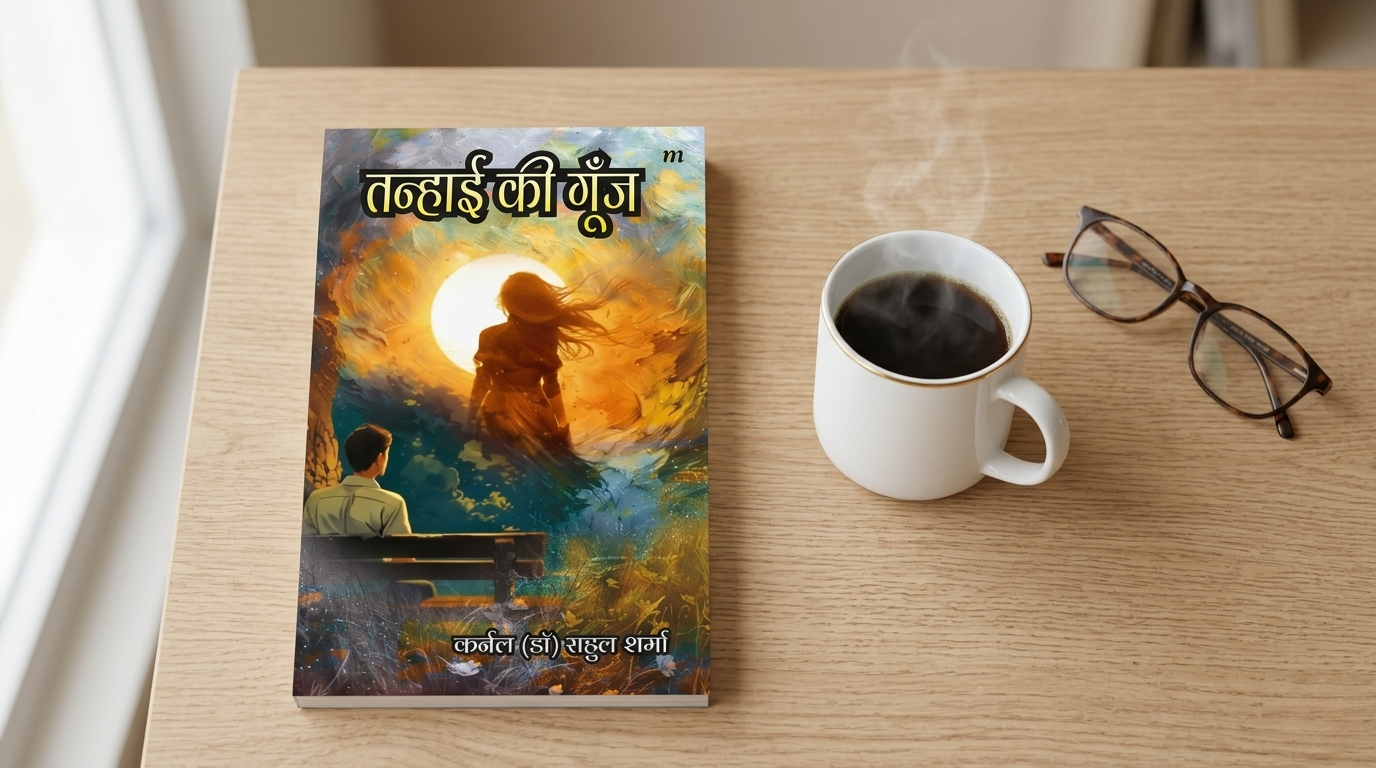
Rating:
⭐⭐⭐⭐ (4.2 out of 5)
When Loneliness Starts Speaking
Sometimes poetry arrives like a whisper.
Not loud. Not dramatic. Just a line that suddenly makes you stop and stare at the page.
That was my first feeling when I started looking at Tanhai Ki Goonj by Col. Dr. Rahul Sharma.
I’m Priya Srivastava, Editor in Chief at Deified Publication, and after more than fifteen years of reading poetry manuscripts, I’ve learned that poetry collections often tell you more about the writer’s inner life than any autobiography ever could.
And this one clearly comes from a place of lived experience.
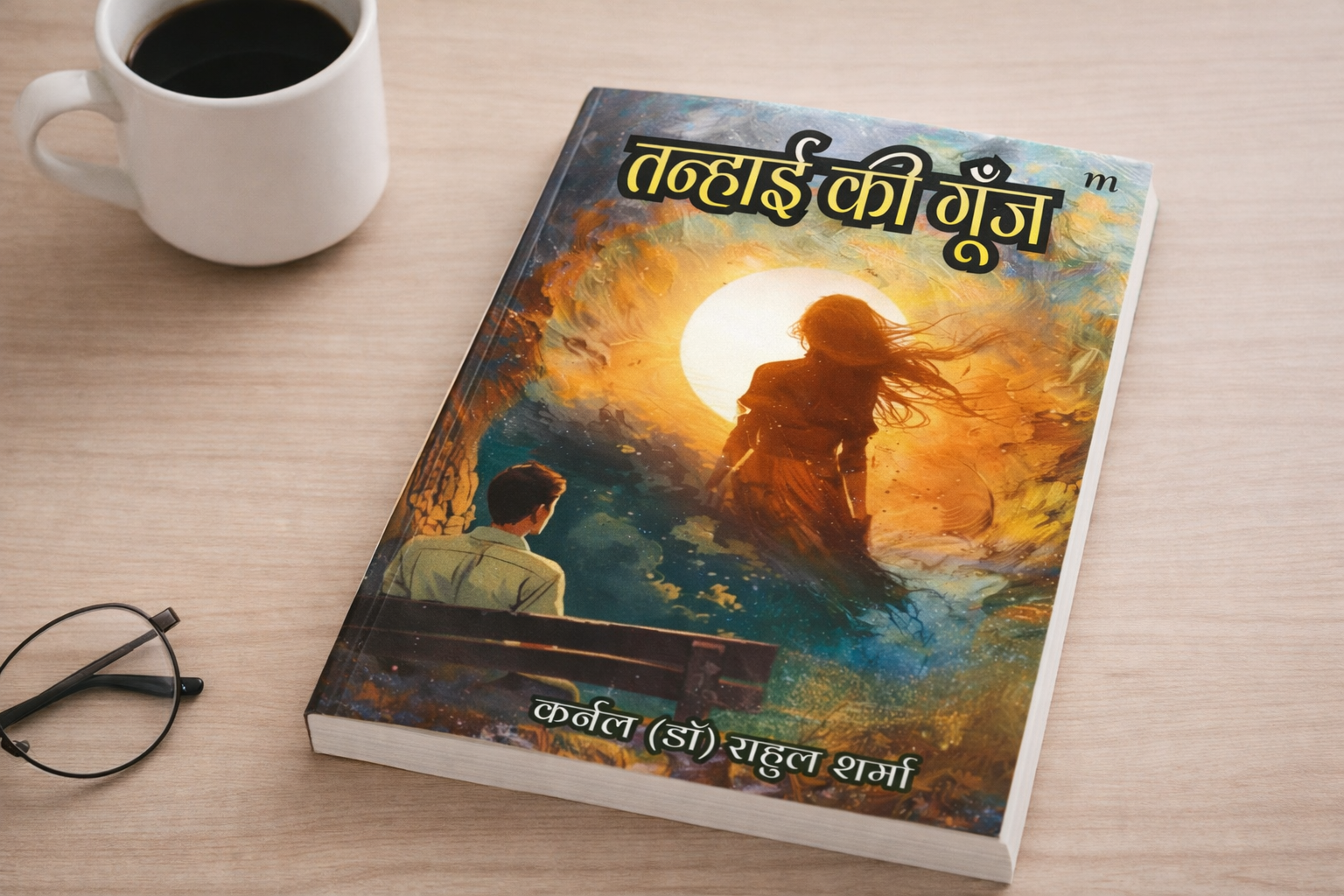
The title itself stayed with me for a while before I even opened the book.
“Tanhai Ki Goonj.”
The echo of loneliness.
It’s such a simple phrase. But it suggests something interesting. Loneliness is usually silent. Yet here it has an echo. A voice that keeps returning.
As I moved through the poems, I began to feel that many of these verses are exactly that. Echoes of moments the author has carried for years. Love, separation, disappointment, hope. All of it filtered through reflection.
And honestly, that sincerity matters more than technical perfection in poetry.
What the Book Is About
Tanhai Ki Goonj is a Hindi poetry collection filled with ghazals, nazms, and lyrical reflections that revolve around love, separation, memory, and the quiet questions that follow heartbreak.
In the introduction, Col. Dr. Rahul Sharma writes that these poems are born from years of emotions, experiences, and personal reflections. The collection gathers thoughts that lived in the writer’s mind for many years before being brought together into one book. That context helps.
Because when you read the poems, they often feel like fragments of long emotional journeys rather than isolated verses.
Many poems speak directly about lost love.
For instance, in the poem “Juda Ho Gaya,” the speaker reflects on how someone once deeply prayed for has now become distant. The sense of betrayal and emotional fatigue comes through clearly. Another poem, “Thak Gaya Hoon,” expresses the exhaustion that follows long emotional struggle. The voice sounds like someone who has lived through enough storms to want a pause. Then there are pieces like “Umeed” that shift the tone slightly. They remind readers that hope still exists, even after disappointment.
One thing I appreciated is how many poems feel conversational. They read like thoughts someone might scribble late at night when sleep refuses to come.
And in poetry, that kind of honesty often lands stronger than elaborate metaphors.
What Stood Out to Me
As someone who has read countless poetry collections over the years, I usually pay attention to three things.
Voice. Emotional authenticity. And consistency of theme.
Tanhai Ki Goonj clearly leans toward emotional authenticity.
Many poems revolve around love that either remained incomplete or changed with time. But what makes them interesting is that they rarely sound angry.
Instead they sound reflective.
Take the poem “Pyaar Karo,” which urges a beloved to trust love again. There’s longing there, but also patience. Almost like the speaker understands that love cannot be forced.
Another poem that stayed with me is “Apna Gam.”
The lines talk about how everyone carries their own sorrow and how people hide their wounds behind smiles. When I read that, I paused for a moment. Because honestly, that observation feels painfully accurate.
We meet people every day who look perfectly fine.
But we never know what they are carrying inside.
That theme appears repeatedly in the book.
There are poems about loneliness in crowds. About memories that refuse to fade. About relationships that end without clear explanations.
If I had to compare the emotional tone, I would say some of these poems reminded me of the reflective ghazals you sometimes find in the works of Bashir Badr or Nida Fazli. Not in style exactly, but in the mood of quiet contemplation.
Of course, this book has its own voice.
The language is accessible and direct. That means readers who are new to Hindi poetry will likely find it easy to connect with.
That said, I did feel that a few poems use familiar imagery that long time poetry readers may have encountered before. Words like “dil,” “yaad,” “khwab,” and “tanhai” appear frequently. While they suit the theme, some readers might wish for a bit more variation in metaphor.
Still, sincerity carries the collection forward.
The Emotional Core
If I had to describe the emotional heart of Tanhai Ki Goonj, I would say it is about learning to live with unanswered questions.
Many poems circle around that idea.
Why do relationships change?
Why does love sometimes fade even when feelings remain?
Why do memories linger longer than people?
In one poem the speaker wonders why the person he loved is no longer part of his life and questions the strange nature of fate. That feeling. That confusion.
I think many readers will recognize it immediately.
Because heartbreak rarely comes with clear explanations.
Sometimes it just leaves a lingering echo.
And maybe that’s why the title works so well.
Another emotional layer in the book is resilience. Even when the poems speak about sadness, there is often a quiet determination underneath.
Lines about learning from pain. About continuing forward. About accepting loneliness without letting it destroy the spirit.
One poem says something that stayed with me for a while. It talks about how people who break and rebuild themselves are the ones who truly shine in life.
That idea feels deeply human.
Who This Book Is For
Poetry is always a personal experience. Not every collection connects with every reader.
But I think Tanhai Ki Goonj will resonate with a few specific groups.
First, readers who enjoy Hindi ghazals and emotional poetry. If you appreciate reflective verses about love, memory, and life’s uncertainties, this collection may feel familiar in a comforting way.
Second, people who have experienced emotional transitions. Breakups, distance, changing relationships. Many poems touch those spaces gently.
Third, readers who prefer accessible poetry rather than highly experimental forms.
In 2026, when so much poetry on social media is extremely short or written for instant impact, there’s something refreshing about a traditional collection that simply sits with its emotions.
That said, readers looking for highly innovative poetic structures may find this book more traditional than experimental.
And that’s perfectly fine.
Not every poetry collection needs to reinvent the form. Sometimes it simply needs to speak honestly.
Final Thoughts
After spending time with Tanhai Ki Goonj, I kept returning to one small thought.
Poetry often becomes a place where people store emotions they cannot easily say aloud.
And this collection feels very much like that.
A place where memories, heartbreak, faith, and hope all coexist.
Col. Dr. Rahul Sharma has clearly lived a life filled with diverse experiences. His background in the armed forces and academic fields adds an interesting layer to this book. You don’t always expect someone from that world to write such emotionally open poetry.
But perhaps that contrast is exactly what gives the poems their sincerity.
Are there moments where the language feels familiar? Yes.
Are there poems that could have been trimmed slightly for sharper impact? Possibly.
But those are small things.
What remains is the feeling that these poems were written because the author genuinely needed to write them.
And sometimes, that authenticity matters more than anything else.
Some poems fade after you close the book.
Others keep returning.
Tanhai Ki Goonj has a few lines that linger.
And for a poetry collection, that is already a good sign.
FAQ
Is Tanhai Ki Goonj worth reading?
If you enjoy Hindi poetry about love, loneliness, and personal reflection, the collection offers many relatable moments.
What genre is Tanhai Ki Goonj?
It is a Hindi poetry collection that includes ghazals, nazms, and lyrical reflections on relationships and life.
Who should read Tanhai Ki Goonj?
Readers who appreciate emotional poetry and reflective writing about relationships and memories will likely enjoy it.
Is Tanhai Ki Goonj suitable for new poetry readers?
Yes. The language is clear and approachable, making it accessible even for readers who do not read poetry frequently.

With over 11 years of experience in the publishing industry, Priya Srivastava has become a trusted guide for hundreds of authors navigating the challenging path from manuscript to marketplace. As Editor-in-Chief of Deified Publications, she combines the precision of a publishing professional with the empathy of a mentor who truly understands the fears, hopes, and dreams of both first-time and seasoned writers.