
Rating:
⭐⭐⭐⭐ (4.2 out of 5)
Some books try very hard to impress you. And then there are books that simply sit with you for a while, almost like a memory you did not expect to revisit.
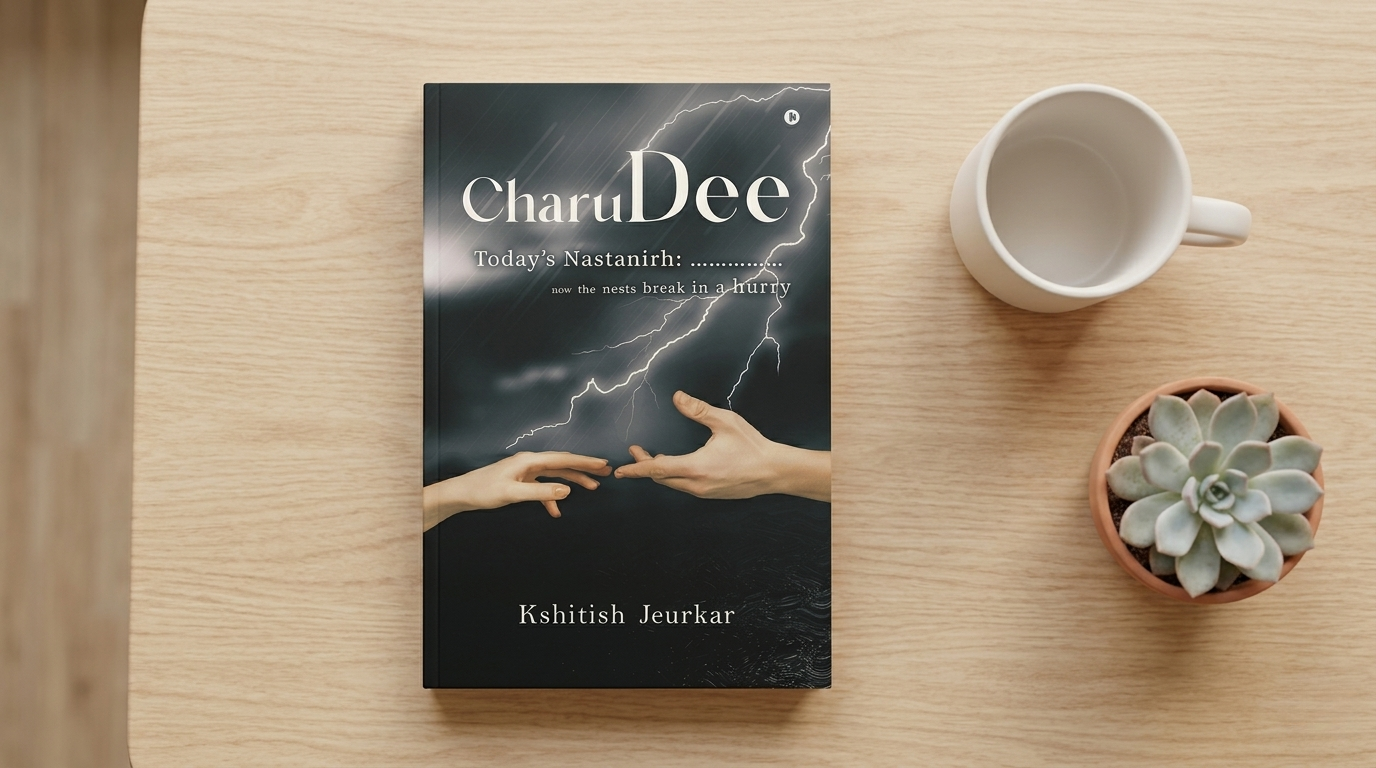
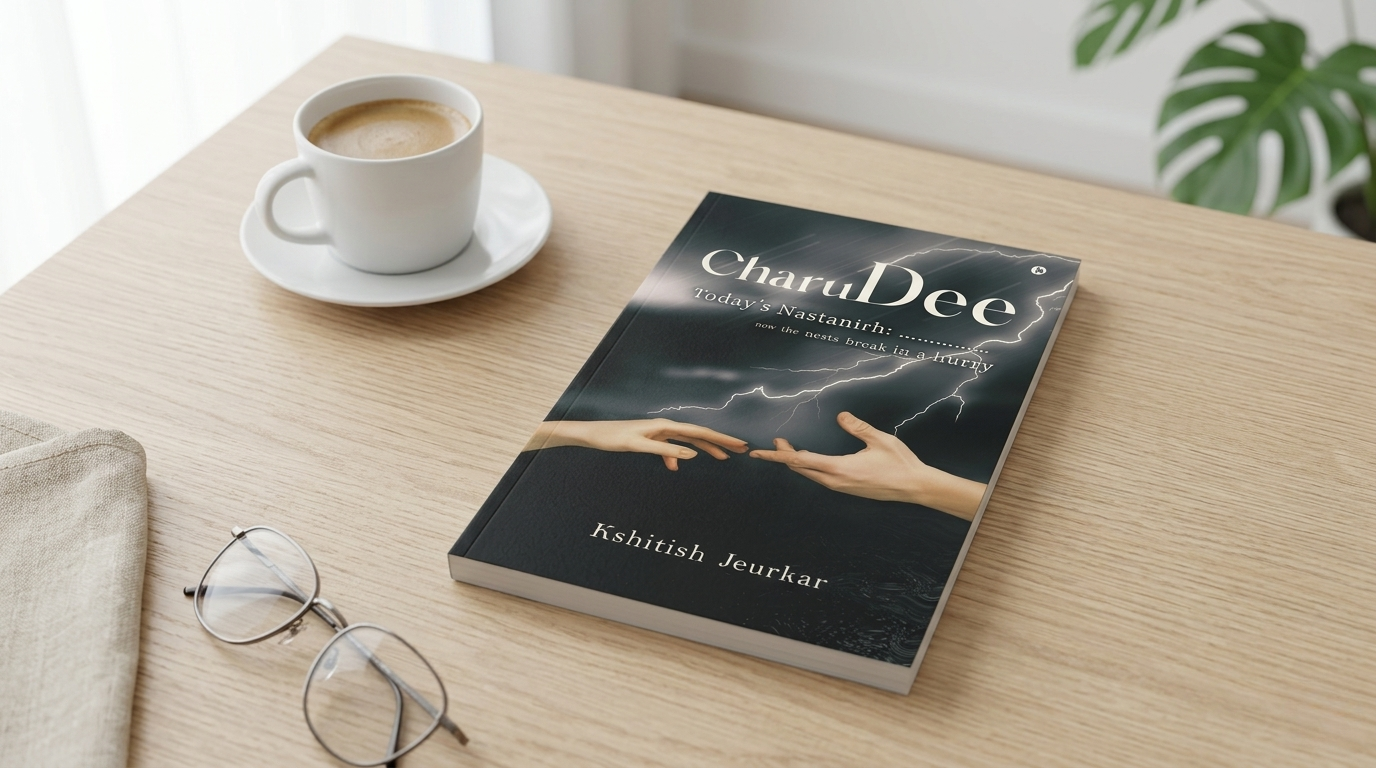
When I first saw CharuDee: Today’s Nastanirh by Kshitish Jeurkar, the title immediately made me pause. Anyone who has spent time with Indian literature knows the emotional gravity behind Rabindranath Tagore’s novella Nastanirh or The Broken Nest. It is not a light legacy to step into.
So I was curious. Maybe a little cautious too.
Modern reinterpretations of classics can go either way. Sometimes they feel forced. Sometimes they surprise you.
What struck me almost immediately while reading through the early pages and the author’s note was the sincerity behind the project. Jeurkar is not trying to rewrite Tagore. He is trying to let the emotional blueprint live again in a modern world.
And honestly, that idea stayed with me long after I finished reading.
What the Book Is About
At its core, CharuDee is a story about longing, silence, and the complicated ways people misunderstand love.
The protagonist, CharuDatta Thakur, known throughout the book as CharuDee or sometimes simply Dee, grows up in Shimla in a life that looks stable from the outside. His father and Hari Sood run a resort business together. Their families are deeply connected. Their children grow up almost like siblings.
But life shifts suddenly.
A landslide takes CharuDee’s parents when he is fifteen. Overnight he becomes an orphan.
Hari Sood adopts him, but the emotional reality is complicated. The house that becomes his shelter never quite becomes his home. And the person who loved him most deeply, Ira, Hari’s daughter, suddenly becomes someone he cannot love openly anymore.
That tension sits at the center of CharuDee’s early life. Ira’s love for him grows intense during adolescence, but adoption transforms their relationship into something society will never accept.
So CharuDee does what many wounded people do. He closes himself off.
He leaves Shimla. Moves away for engineering. Builds a life elsewhere. Tries to bury everything.
Years pass.
Then Aarti Shetty enters his life. She is a filmmaker. Driven, ambitious, focused almost entirely on her work. Their relationship begins with attraction and quickly becomes marriage.
But something about their marriage feels emotionally incomplete. Aarti is constantly pulled into her professional world in Mumbai while CharuDee remains in Gurugram.
They live separate lives more than a shared one.
In that emotional distance, old wounds begin resurfacing.
And then Swara arrives. Aarti’s younger cousin. Warm. Present. Someone who actually notices CharuDee’s loneliness.
What follows is not dramatic in the typical sense. It is slow and uncomfortable. Feelings grow in spaces where they probably should not. Silence builds. Guilt follows.
By the time everyone begins to understand what has been happening emotionally, damage has already taken root.
That is where the story hurts the most.
What Stood Out to Me
One of the first things that stood out while reading CharuDee by Kshitish Jeurkar was its emotional patience.
Many modern novels rush their characters into conflict. Here, the author allows relationships to develop gradually.
The early chapters in Shimla feel almost reflective. We see CharuDee and Ira as teenagers navigating feelings they cannot fully understand. We see Varun Awasti as the friend who loves Ira silently while watching her heart belong elsewhere.
These early dynamics matter later.
And I appreciated how the author did not try to simplify the emotional mess. Ira’s love is intense and unwavering. CharuDee cares deeply for her but feels trapped by circumstance and responsibility. Varun exists in that painful middle ground where loyalty and longing collide.
In my years reviewing fiction, I have noticed that love triangles often become melodramatic. Here it feels more human.
Another thing I noticed was how geography mirrors emotion. Shimla appears again and again as a place filled with memory. Gurugram represents escape. Mumbai represents ambition.
And none of these places offer true emotional stability for CharuDee.
The writing style itself leans toward introspection. There are moments where the narrative slows down to sit inside a character’s thoughts. Some readers might find that pacing deliberate. Personally I think it suits the story.
Because this novel is not driven by plot twists. It is driven by emotional accumulation.
Small decisions. Small silences. Over time they become something irreversible.
The Emotional Core
There is a moment early in the story that stayed with me.
CharuDee reflects on his childhood after losing his parents. He describes having everything necessary to survive. A roof. Food. Stability.
But not love.
That distinction shapes everything about him.
I have met people like this in real life. People who appear successful and functional on the outside but carry a strange emotional distance inside them.
CharuDee feels like that kind of character.
His inability to respond fully to Ira’s love. His attempt to build a life with Aarti. His quiet pull toward Swara. None of these choices feel impulsive.
They feel like the behavior of someone who never fully learned what love looks like when it is safe.
And that is where the story becomes painful.
Because everyone around him seems to love him in different ways.
Ira waits for years believing he will come back emotionally. Varun loves Ira even when she rejects him repeatedly. Aarti probably believes she loves CharuDee but her ambition keeps pulling her away.
By the time Swara enters the picture, the emotional landscape is already fragile.
Reading these interactions, I found myself thinking about how many relationships fail not because people do not care, but because they never learn how to express that care at the right moment.
In 2026, when so many relationships are shaped by distance and career ambition, this theme feels painfully relevant.
Who This Book Is For
I think CharuDee: Today’s Nastanirh will resonate strongly with readers who appreciate emotionally layered fiction.
If you enjoy stories where relationships evolve slowly and characters carry complicated emotional histories, this book will probably stay with you.
Readers familiar with Tagore’s Nastanirh will also notice the homage in the narrative structure. The author even acknowledges the inspiration directly in the author’s note and explains how certain characters have been reimagined through a gender swap approach.
At the same time, you do not need to know Tagore’s original novella to understand the story.
I would especially recommend this novel to readers who enjoy introspective relationship dramas. It reminded me in spirit of literary works where emotional tension grows quietly until it becomes impossible to ignore.
That said, if someone is looking for fast moving plots or dramatic twists every few chapters, this might feel slower than expected.
This story relies more on emotional observation than dramatic spectacle.
Final Thoughts
As someone who reads a lot of manuscripts every year at Deified Publication, I tend to remember books that handle human relationships with honesty.
CharuDee by Kshitish Jeurkar attempts something ambitious. It revisits a classic emotional framework from Tagore and places it in a modern context shaped by distance, ambition, and unresolved longing.
I appreciate that the author does not try to simplify the characters into heroes and villains. Everyone in the story carries some form of vulnerability.
CharuDee struggles with emotional paralysis. Ira struggles with devotion that never fades. Aarti struggles with ambition that overshadows intimacy.
Even secondary characters like Varun reveal how love can exist quietly in the background for years.
If I had one small critique, it would be that some readers might find the emotional introspection dense in certain sections. The narrative sometimes pauses deeply inside characters’ thoughts rather than pushing the story forward.
But honestly, that reflective quality also gives the book its emotional texture.
By the end, I found myself thinking less about plot and more about the fragile timing of love.
How easily relationships shift. How often people realize what mattered only after something breaks.
And that feeling stayed with me.
FAQ
Is CharuDee by Kshitish Jeurkar worth reading?
If you enjoy emotionally reflective novels about relationships and human vulnerability, CharuDee offers a layered reading experience.
What is CharuDee about?
The novel follows CharuDee, a man shaped by early loss and complicated love. His relationships with Ira, Aarti, and Swara reveal how silence and unresolved emotions can reshape lives.
Is CharuDee connected to Tagore’s Nastanirh?
Yes. The author describes the book as a modern reinterpretation of Tagore’s novella Nastanirh. Some characters are reimagined while preserving the emotional essence.
Who should read CharuDee?
Readers who enjoy literary relationship dramas and introspective storytelling will likely appreciate the novel.

With over 11 years of experience in the publishing industry, Priya Srivastava has become a trusted guide for hundreds of authors navigating the challenging path from manuscript to marketplace. As Editor-in-Chief of Deified Publications, she combines the precision of a publishing professional with the empathy of a mentor who truly understands the fears, hopes, and dreams of both first-time and seasoned writers.