
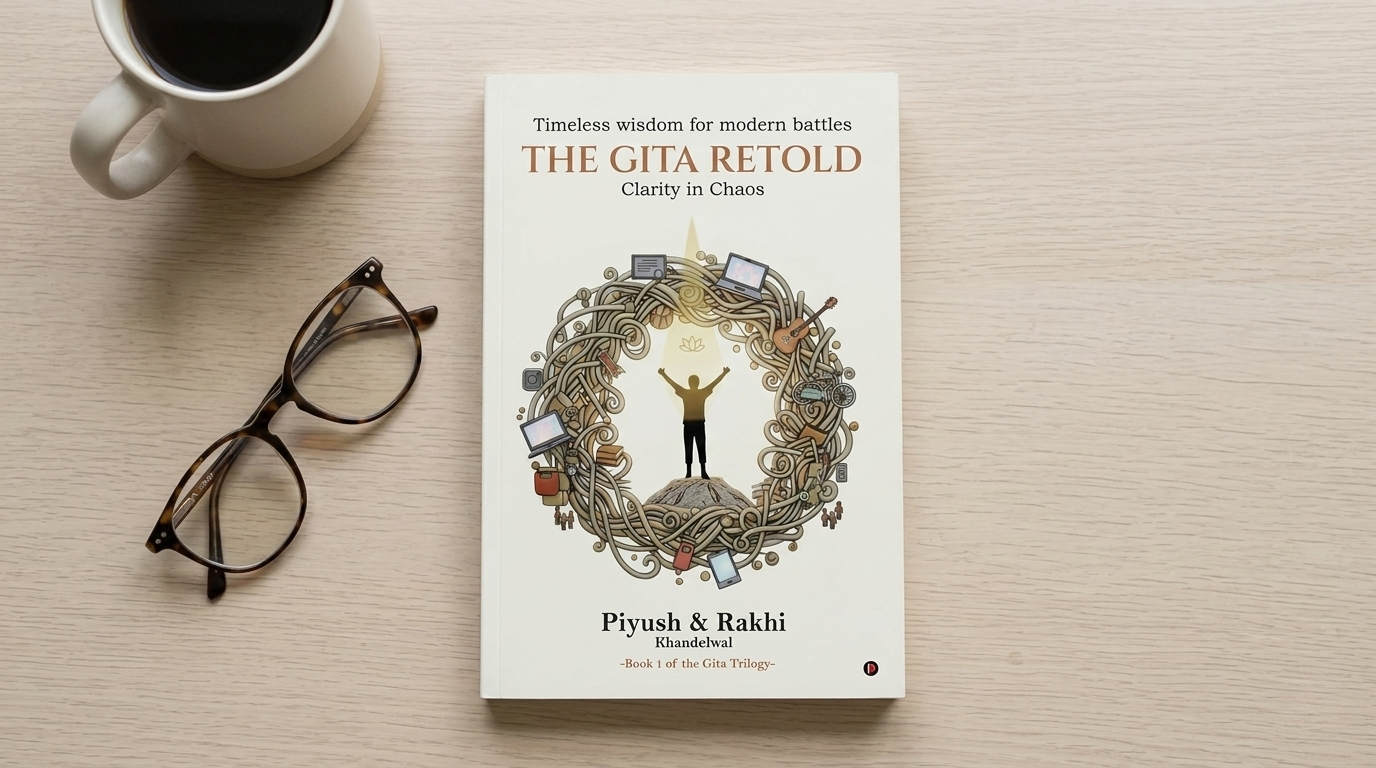
Rating
⭐⭐⭐⭐ (4.3 out of 5)
My name is Priya Srivastava, and as Editor in Chief at Deified Publication I spend a large part of my life reading. Some weeks it is literary fiction. Other weeks it is business books, poetry, memoirs, spiritual writing. After more than fifteen years around books I have developed a small instinct about certain manuscripts. Sometimes even before finishing a chapter I feel something shift inside me. Not excitement exactly. More like recognition.
That was the feeling I had while reading The Gita Retold by Piyush and Rakhi Khandelwal.
Now let me be honest about something first. I have seen many attempts to make the Bhagavad Gita easier for modern readers. Some are academic. Some are philosophical. Some are simplified summaries. Many of them try very hard but end up sounding distant. Almost like someone explaining wisdom from a stage.
This book feels different.
I remember pausing during the prologue when the authors tell that small story about two unborn babies discussing whether life exists after birth. One child believes there must be something more. The other laughs and says delivery is the end. It is such a simple story. But I sat there thinking about it longer than I expected. Because suddenly the question shifts. It stops being about babies and becomes about us asking whether something greater exists beyond what we can see.
Moments like that made me slow down while reading The Gita Retold. And honestly I appreciate books that make me pause.
What the Book Is About
At its heart The Gita Retold is a modern interpretation of the Bhagavad Gita. But it does not try to rewrite the scripture. Instead the authors explain its teachings through everyday situations that people today understand easily.
The structure is fairly clear. Each shlok from the Gita appears first. Then there is a short explanation. After that the authors introduce a real life style example. Sometimes it is a student facing exam pressure. Sometimes a business leader dealing with insecurity. Sometimes family dynamics and comparison between children.
One example that stayed with me involves a CEO walking into a boardroom filled with competitors. On the surface he appears confident. Yet inside he feels anxiety about the weaknesses within his company. The authors connect that moment to Duryodhana approaching his teacher before battle. That comparison felt surprisingly natural.
Another example involves a family conversation where one child is referred to as “my son” while others are called “my brother’s daughters.” Such a small difference in words. Yet the book shows how language creates comparison and tension. That idea is then connected to Dhritarashtra calling them “my sons” and “the sons of Pandu.”
What I liked about these examples is that they are not dramatic stories. They are ordinary situations. Exams. Work. Family expectations. That is exactly where most of us experience our inner battles.
The authors also include helpful tools like a Gita dictionary and reflection sections which encourage readers to think about their own situations. So it is not only explanation. It becomes a kind of personal reflection exercise.
What Stood Out to Me
In my years reviewing books I often look at three things. Clarity of voice. Structure. Emotional sincerity.
The first thing that stood out in The Gita Retold is the tone. The writing feels conversational. Krishna is presented less like a distant deity and more like a mentor guiding a confused friend. I think that choice will help younger readers connect with the ideas more easily.
The second thing I noticed is the consistent pattern in each section. Shlok. Explanation. Example. Insight. Life codes. This rhythm helps the reader understand complex philosophy step by step. It reminds me of the way good teachers structure lessons in classrooms.
There is also a sincerity in the author note that caught my attention. Piyush Khandelwal writes openly about facing depression earlier in life and wishing he had discovered the guidance of the Gita sooner. When authors share their personal motivations like that it usually changes how I read their work. The intention behind the book becomes clearer.
One small detail I appreciated was the effort to connect ancient ideas with familiar cultural references. There is even a comparison involving Jethalal and the characters from a well known television show. I actually smiled when I read that part. Some readers may find it playful. Others may find it unexpected in a spiritual book. Personally I think it helps illustrate the point about inclusion and comparison in a way many Indians instantly recognize.
The Emotional Core
If I had to describe the emotional center of The Gita Retold I would say it is about confusion.
Not confusion in a negative sense. But the honest human state of not knowing what to do.
Arjuna standing in the battlefield is often seen as a heroic figure. Yet what the Gita begins with is actually hesitation. Fear. Doubt. Even emotional collapse. That part of the story sometimes gets forgotten.
This book brings that feeling forward again.
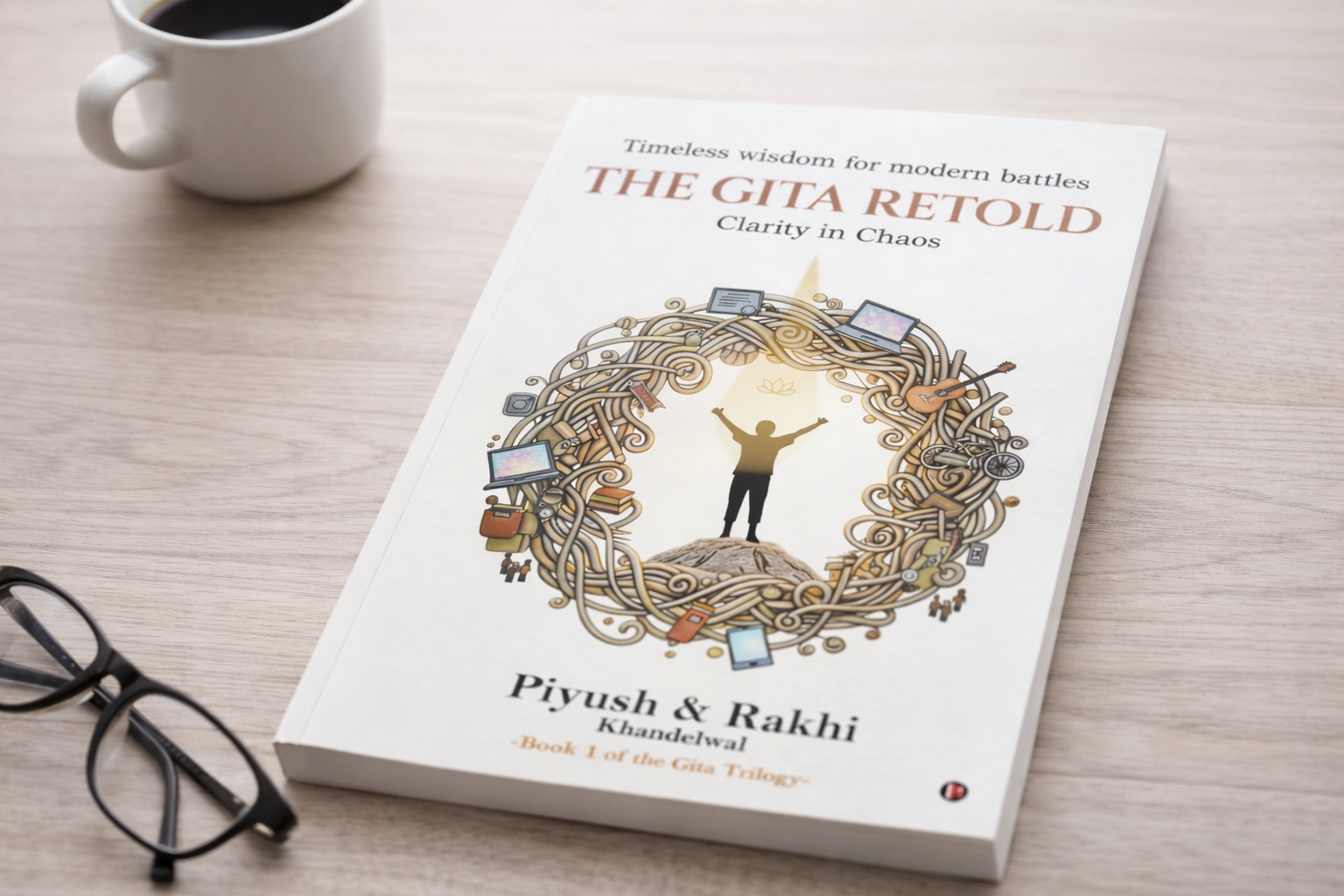
When the authors talk about exam halls, office cubicles, heartbreak, expectations, or endless scrolling on screens, it becomes clear that Kurukshetra is not just a battlefield from history. It is something we step into every day.
Reading those sections I found myself thinking about how many young readers today carry silent pressure. Career choices. Comparison on social media. Family expectations. It is easy to say spiritual texts offer answers. It is harder to show how those answers relate to daily life.
In The Gita Retold the emotional message is simple. Clarity does not come from escaping life. It comes from facing it with steadiness.
There is a line in the early chapters that stayed with me. The idea that comparison is the blindness of the heart. I have seen that truth play out in real life more times than I can count.
Who This Book Is For
Not every reader approaches spiritual literature in the same way. Some want scholarly depth. Some want philosophical debate. Others want something they can actually apply in daily situations.
I think The Gita Retold will resonate most strongly with readers in the third group.
Students and young professionals might especially appreciate it because the examples mirror situations they face every day. Exam pressure. Workplace competition. Family expectations.
Readers who feel intimidated by dense Sanskrit commentary may also find this approach welcoming. The explanations stay accessible without sounding overly simplified.
That said, readers looking for a deep academic analysis of the Gita might feel the book stays at a practical level rather than a philosophical one. Personally I do not see that as a weakness. It simply means the book has chosen a different purpose.
In fact I suspect that purpose is what makes it meaningful.
Final Thoughts
When I finished The Gita Retold I did something I rarely do. I went back and reread the prologue again.
The story about the unborn babies questioning life after delivery suddenly felt even more powerful after reading the rest of the book. Because the entire Gita is really about that moment when our limited understanding meets something larger.
In 2026 the message of this book feels particularly relevant. We live in an age where information is everywhere but clarity often feels missing. Everyone has advice. Very few voices help people slow down and think about their inner conflicts.
I appreciate that Piyush and Rakhi Khandelwal approached the Gita as a conversation rather than a lecture. That tone makes the wisdom feel approachable.
Is the book perfect. Not entirely. A few sections repeat similar ideas and some examples feel slightly simplified. Yet even those moments did not bother me much because the sincerity behind the writing remains visible.
As someone who has spent many years reading manuscripts for Deified Publication I can say this much with honesty. Books that connect ancient wisdom with everyday life are harder to write than they appear.
The Gita Retold manages to do that more often than not.
And sometimes that is exactly what readers need. Not a complex philosophy lesson. Just a voice reminding them that their confusion is part of the journey.
FAQ
Is The Gita Retold worth reading?
If you want a practical interpretation of the Bhagavad Gita connected to modern situations like exams, career stress, and relationships, this book offers a very accessible entry point.
Who should read The Gita Retold?
Students, young professionals, and readers curious about spiritual wisdom but hesitant about traditional commentary may find it especially helpful.
What makes The Gita Retold different from other Gita books?
The authors explain each shlok through everyday examples and reflections. It feels more like guidance from a mentor rather than a formal philosophical text.
Is The Gita Retold easy to understand?
Yes. The language stays simple and conversational, making complex ideas easier to absorb for modern readers.

With over 11 years of experience in the publishing industry, Priya Srivastava has become a trusted guide for hundreds of authors navigating the challenging path from manuscript to marketplace. As Editor-in-Chief of Deified Publications, she combines the precision of a publishing professional with the empathy of a mentor who truly understands the fears, hopes, and dreams of both first-time and seasoned writers.