
Rating
⭐⭐⭐⭐ (4.2 out of 5)
Children notice their differences earlier than we think
I’ve read countless children’s stories. Some are playful, some are educational, and some carry a message that children might not even realize they are absorbing.
But the ones that stay with me are usually the simplest ones.
Stories about small feelings.
Feeling left out.
Feeling curious.
Feeling like something about you isn’t quite right.
When I first looked at I Want a Tail by Ram Jee, that’s the feeling I got almost immediately.
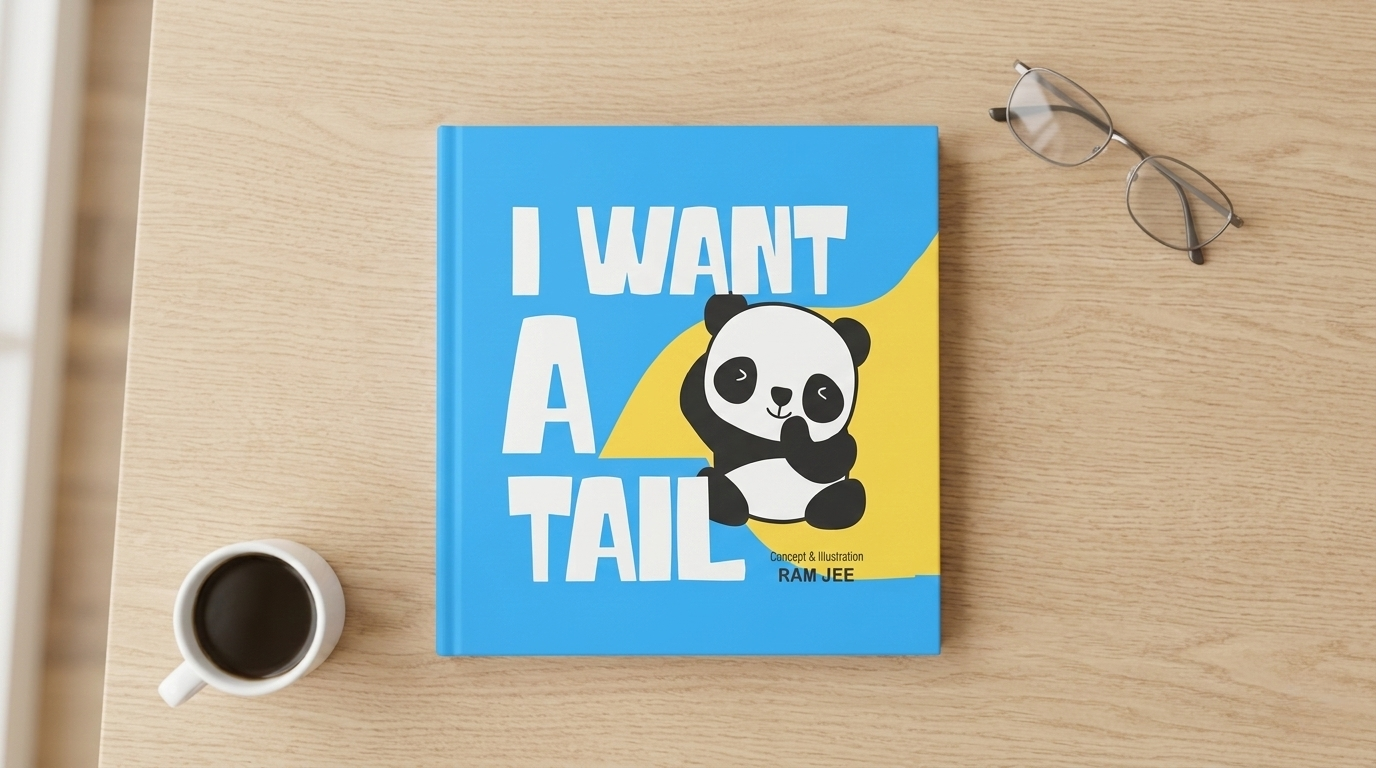
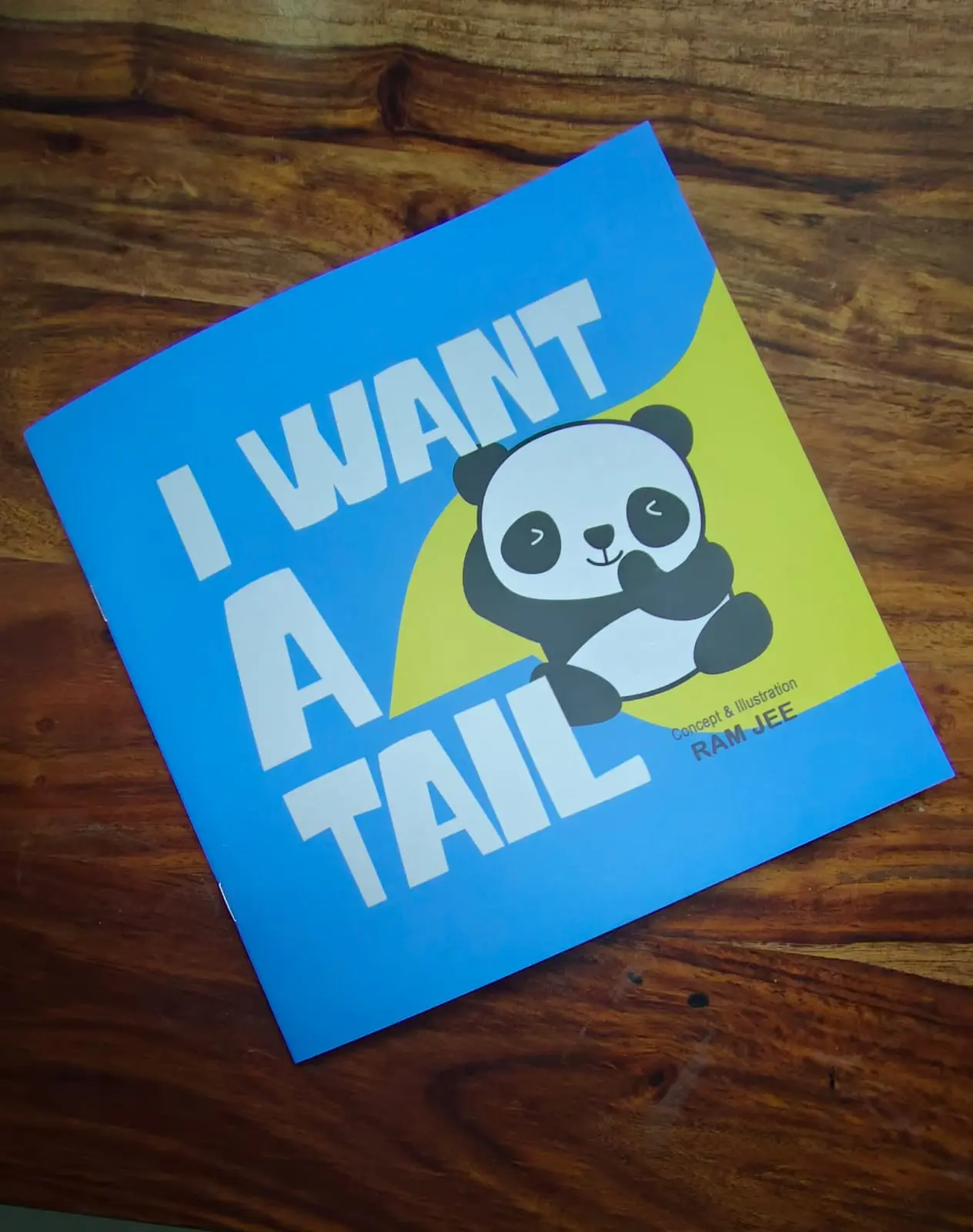
The cover itself made me pause. A small panda sits happily against a bright blue and yellow background with big bold letters spelling out the title. It feels cheerful and inviting. But the title hints at something deeper — a little wish.
Why would a panda want a tail?
Children ask questions like that all the time.
And honestly, that curiosity is where this story begins.
What the Book Is About
At the heart of I Want a Tail, we meet a young panda who looks at himself and notices something different.
His tail is short.
Very short.
And like many children comparing themselves to others, he begins to wonder if things would be better if he had something different.
A bigger tail.
Not just the tiny little fluff pandas are known for.
This simple observation leads him to a wish. The panda imagines how life might be with a different kind of tail — something long and dramatic like other animals have.
According to the story’s premise, when he asks God for help, he’s offered three playful choices.
A horse tail.
A monkey tail.
A cat tail.
Each one brings a new experience.
And that’s where the fun of the book really begins.
Children love transformation stories. When characters try something new, especially something physical or visual, it keeps them engaged.
The panda tries each tail and discovers that things don’t always go the way he imagined.
Sometimes the tail gets in the way.
Sometimes it makes movement awkward.
Sometimes it creates funny accidents.
And gradually the panda realizes something important.
Maybe the tail he already had wasn’t such a bad thing after all.
What Stood Out to Me
There are a few things about I Want a Tail by Ram Jee that stood out to me right away.
First, the visual humor.
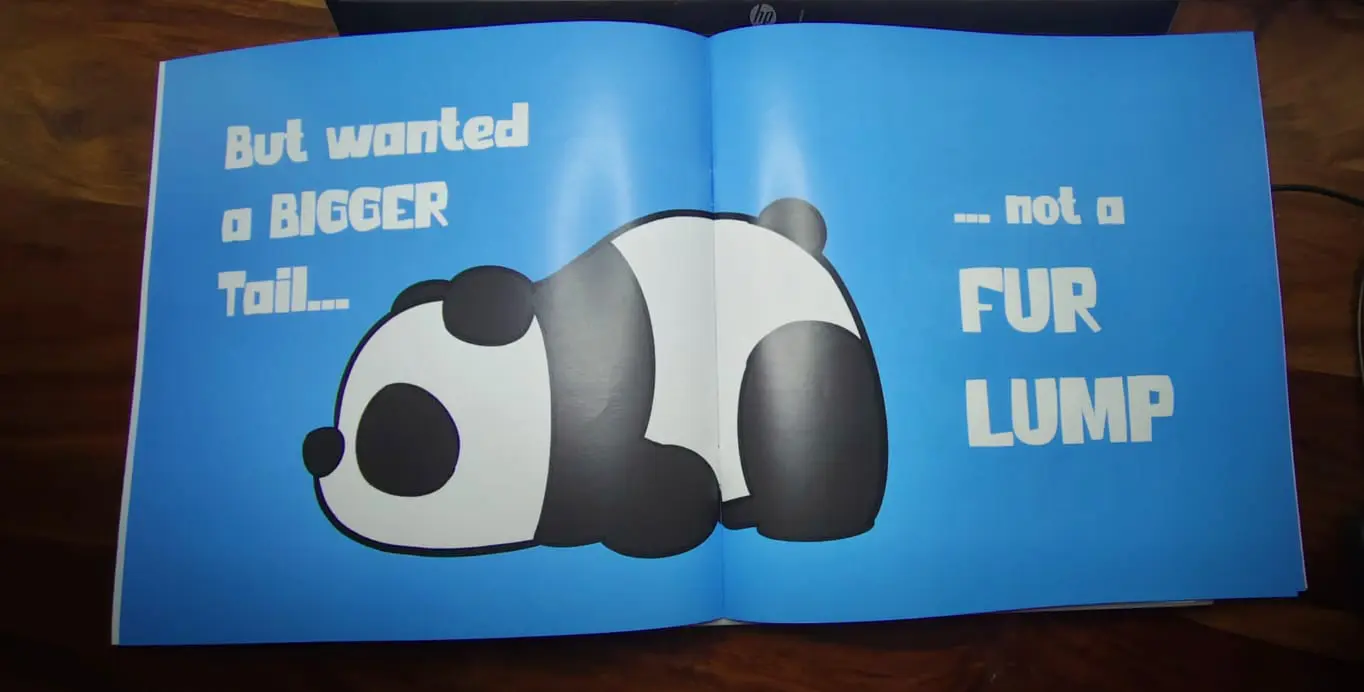
One of the pages I saw shows the panda lying down with a big rounded body shape while the text says:
“But wanted
a BIGGER
Tail…
…not a
FUR
LUMP.”
That line made me smile.
It captures a very childlike complaint. Kids often focus on the smallest details of their bodies and imagine dramatic improvements.
The page design itself is bold and playful. The bright blue background contrasts with the black and white panda, making the illustration very clear for young readers.
Picture books rely heavily on clarity.
Young children shouldn’t have to search the page to understand what’s happening.
Another thing I appreciated was the pacing.
In children’s picture books, pacing is almost entirely visual. The rhythm comes from page turns and illustration changes.
This story seems designed so that each tail brings a new moment of surprise.
A horse tail probably swishes and knocks things around.
A monkey tail might help with swinging but cause other funny problems.
A cat tail might move elegantly but create unexpected trouble.
Kids enjoy this pattern of trial and error.
It’s predictable in a comforting way, but still entertaining.
The Emotional Core
At its heart, I Want a Tail is about something most children experience at some point.
Comparison.
Children notice differences early.
One child wishes for curly hair instead of straight hair.
Another wishes they were taller.
Another wonders why their nose looks different.
This panda is simply wondering about his tail.
The story gently walks children through a process of curiosity and experimentation. The panda tries different possibilities before realizing something important.
What he already had was perfectly fine.
That message is subtle but meaningful.
And honestly, in 2026 this kind of message feels especially important.
Children grow up surrounded by images and comparisons everywhere — in cartoons, toys, and digital content.
A story that quietly reminds them that their natural self is enough can be surprisingly powerful.
It doesn’t feel preachy here.
Instead, it comes through humor and experience.
The panda learns the lesson naturally rather than being told what to think.
What the Illustrations Add
Ram Jee is credited for both concept and illustration, and you can see that unity in the artwork.
The panda’s design is simple and expressive.
Round shapes. Big eyes. Gentle expressions.
This kind of design works well for younger children because it communicates emotion clearly.
One illustration shows the panda lying almost like a soft plush toy, emphasizing how small his tail really is. That visual exaggeration helps children immediately understand the problem the character is feeling.
The bright colors also deserve mention.
The book uses strong backgrounds — blues, yellows, and clean contrasts — that make the panda stand out on the page. This is especially useful for toddlers or preschool readers who are still developing visual focus.
Another detail I liked was the scale of the illustrations.
Picture books sometimes crowd the page with too many elements. But here the panda remains the clear focus.
Children will easily follow the character’s reactions and movements.
Who This Book Is For
I Want a Tail by Ram Jee feels ideal for children between the ages of three and seven.
It’s especially suitable for:
• bedtime reading
• classroom story time
• parents introducing gentle life lessons
The message about self-acceptance is simple enough for young children but meaningful enough that parents will appreciate it too.
Teachers might also find this book useful when discussing topics like differences between animals or even conversations about individuality.
And of course, kids who already love pandas will likely connect with the character immediately.
Final Thoughts
When I finished looking through I Want a Tail, I found myself thinking about something simple.
Children don’t need complicated moral lessons.
They need stories where characters feel the same small frustrations they do.
A panda wishing for a bigger tail might seem like a tiny problem.
But for a child, that feeling of “I wish I were different” can be surprisingly real.
What I appreciate about this book is how gently it handles that idea.
Instead of telling children they should love themselves, the story shows a character discovering it through experience.
And sometimes that’s the most effective way to teach anything.
A small panda.
Three funny tails.
And one quiet realization.
Maybe the tail he had all along was just right.
FAQ
Is I Want a Tail worth reading for kids?
Yes. The book offers a playful story while introducing the idea of self-acceptance in a way children can easily understand.
What is I Want a Tail about?
The story follows a little panda who wishes for a bigger tail and tries different animal tails before realizing his own is perfect.
Who should read I Want a Tail by Ram Jee?
Children ages three to seven, parents reading bedtime stories, and teachers looking for gentle lessons about individuality.
Does the book teach a lesson?
Yes, it introduces themes of gratitude and accepting what makes us unique.

With over 11 years of experience in the publishing industry, Priya Srivastava has become a trusted guide for hundreds of authors navigating the challenging path from manuscript to marketplace. As Editor-in-Chief of Deified Publications, she combines the precision of a publishing professional with the empathy of a mentor who truly understands the fears, hopes, and dreams of both first-time and seasoned writers.