
Rating
⭐⭐⭐⭐ (4.4 out of 5)
After reviewing books for years, I’ve learned something simple about children’s stories.
The best ones don’t try too hard.
They don’t overload young readers with big lessons or complicated plots. Instead, they create a small world children can step into. A place where curiosity is allowed to lead the way.
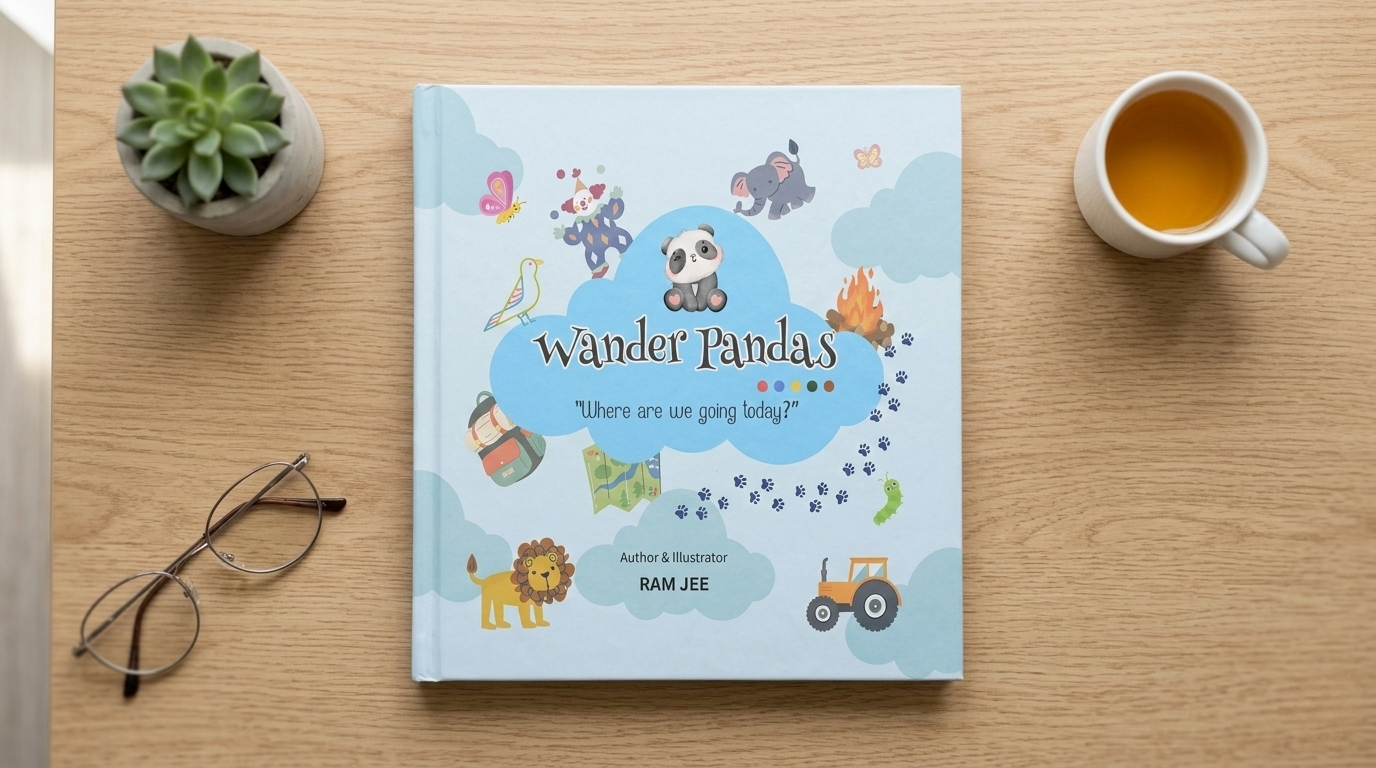
When I first opened Wander Pandas: Where are we going today? by Ram Jee, I had that exact feeling.
Five colourful pandas sitting together. A playful title floating inside a cloud. Little footprints scattered across the page like someone has been wandering around already.
You immediately sense that something fun is about to happen.
And honestly, I smiled when I read the first lines.
On page 3, the story begins with a gentle rhyme about five colourful pandas who are bored and looking for something to do:
“Colourful Pandas…
One more than FOUR…
Looking so gloomy,
feeling a BORE…”
It’s simple. But it sets the mood perfectly.
Anyone who has spent time around children knows that boredom is usually the beginning of an adventure.
What the Book Is About
At its core, Wander Pandas follows five pandas, each a different colour, as they decide to leave boredom behind and explore the world around them.
The idea comes from the red panda, who suddenly has a bright thought. On page 8, he suggests something exciting:
“Whole world to see,
why stay behind the DOOR?” And just like that, the story begins.
Each panda goes off on a small adventure in a different place. Instead of moving together as a group, they explore separate environments, which keeps the story visually fresh for children.
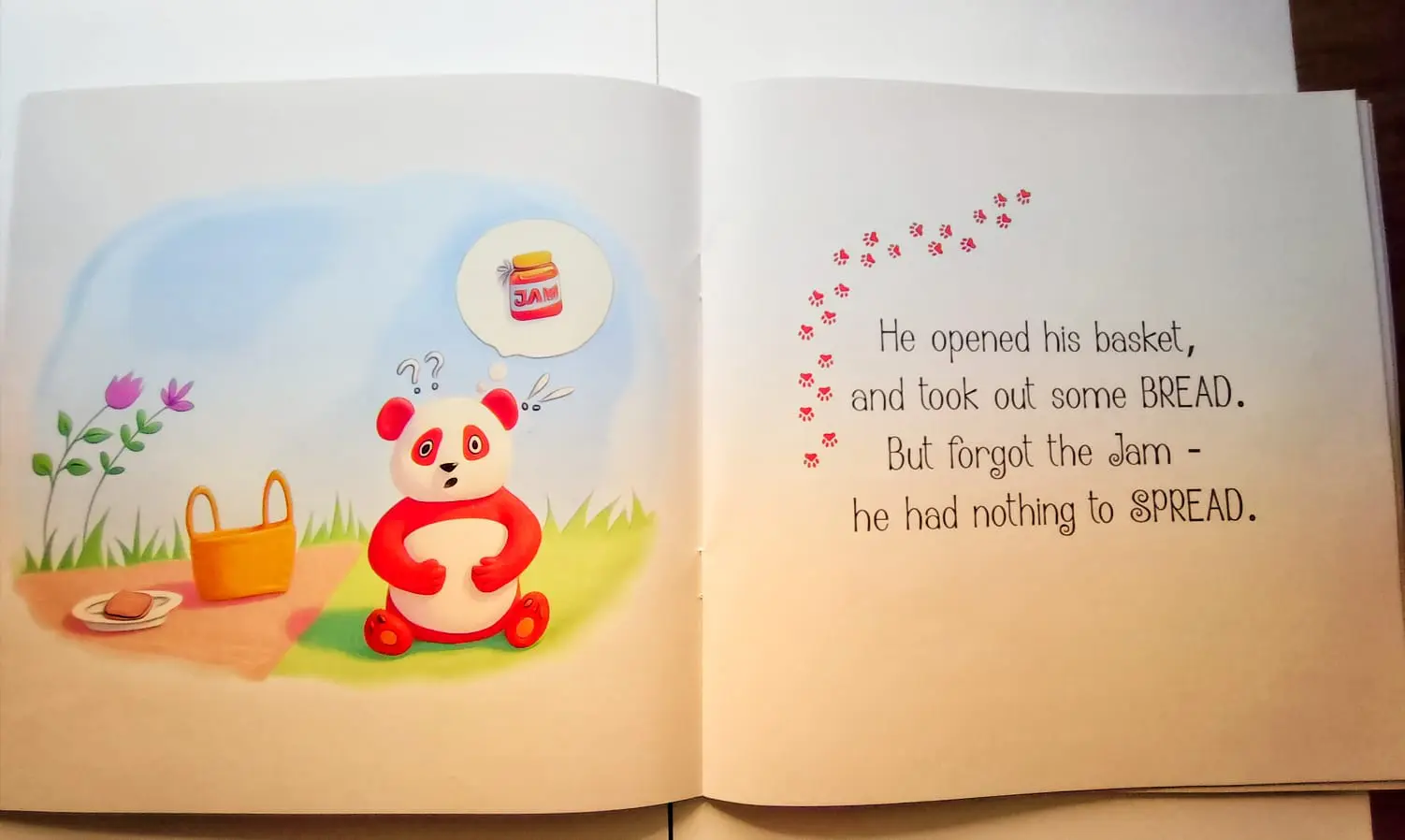
The red panda wanders into a garden full of butterflies and flowers. On page 11, the rhyme explains that he watches butterflies over a flower bed. Then comes a small, funny moment that children will probably enjoy.
The red panda opens his picnic basket only to realize he forgot the jam for his bread.
On page 14, the lines read:
“He opened his basket,
and took out some BREAD.
But forgot the Jam –
he had nothing to SPREAD.” It’s playful and relatable. Little mishaps like this feel very real to kids.
Another panda heads to the farm, where he meets animals. A pig goes “Oink!” and a cow sings “Mooohhh.” There’s also a moment where the panda waves politely to a dog, asking “How do you do?” only to find the dog busy chewing an old leather shoe. These small scenes feel almost like snapshots of childhood curiosity.
Then the green panda reaches the zoo, where he spots animals like a stretching tiger and a keen meerkat. He even counts flamingos and discovers there are eighteen of them. Another panda goes camping, roasting marshmallows by a fire and later falling asleep under the stars beside a tent. And finally, the brown panda dreams of visiting the circus, where he laughs at clowns and watches a monkey balancing on a tightrope wearing a crown. At the end of the day, the five pandas return home, tired but happy, sharing stories about their adventures.
What Stood Out to Me
A few things about Wander Pandas by Ram Jee really stayed with me.
First, the rhyme structure.
The book uses short rhythmic lines that are easy to read aloud. As someone who has reviewed many children’s books, I know how important that rhythm is.
Children often remember the sound of the story before they remember the meaning.
Lines like:
“Adventure that lasted
all day till NIGHT…
Their little hearts
are filled with DELIGHT.” feel almost musical.
Another thing I appreciated was the colour-coded characters.
Instead of identical pandas, the book introduces five different coloured ones — red, blue, green, yellow, and brown.
For young readers, colour association helps memory.
A child might remember:
“The red panda went to the garden.”
“The blue panda visited the farm.”
That kind of storytelling is surprisingly effective for early readers.
The illustrations also deserve praise.
They have a soft, hand-painted feel with gentle shading and rounded shapes. The animals — whether it’s the tiger stretching at the zoo or rabbits hopping with vegetables — look friendly rather than intimidating.
This matters for younger children who might be sensitive to overly intense images.
I also liked the little paw-print trails scattered across pages.
They subtly guide the eye from one part of the page to another, almost like following the pandas’ footsteps.
The Emotional Core
Children’s books sometimes carry deeper messages without announcing them loudly.
In Wander Pandas, the emotional heart of the story seems to be about curiosity.
The pandas begin the day bored.
But instead of staying inside, they step outside and explore.
Near the end of the book, the message becomes clear in a gentle way.
The lines say:
“So much on offer,
this World so WIDE…
It’s better outdoors
than staying INSIDE.” That idea feels especially meaningful today.
Nowadays , children spend a lot of time indoors with screens. A story that celebrates exploring gardens, farms, and the outdoors feels refreshing.
The book doesn’t lecture.
It simply shows how much joy the pandas find when they step outside.
Who This Book Is For
Wander Pandas works best for younger children, especially ages three to seven.
Parents reading bedtime stories will probably appreciate the short rhymes and calm pacing.
Teachers might also find it useful during early reading sessions because the story introduces different environments like farms, zoos, and campsites.
And of course, children who enjoy animals will likely connect with the pandas immediately.
The illustrations make the book approachable even for kids who are still learning to read.
Final Thoughts
When I finished Wander Pandas, I kept thinking about how gentle the story feels.
Nothing dramatic happens.
No villains. No big conflicts.
Just five pandas deciding that boredom isn’t very interesting and that the world outside is worth exploring.
Sometimes that’s all a children’s book needs.
A little curiosity. A few friendly animals. A playful rhyme.
And five colourful pandas who remind young readers that adventures often begin with a simple idea.
FAQ
Is Wander Pandas worth reading for kids?
Yes, especially for preschool and early readers who enjoy animals and simple rhyming stories.
What is Wander Pandas about?
The book follows five colourful pandas exploring places like gardens, farms, zoos, campsites, and a circus.
Who should read Wander Pandas by Ram Jee?
Children aged 3-7, parents looking for bedtime stories, and teachers working with early readers.
Does Wander Pandas have an educational element?
Yes. The book introduces animals, environments, counting, and encourages curiosity about the world outside.

With over 11 years of experience in the publishing industry, Priya Srivastava has become a trusted guide for hundreds of authors navigating the challenging path from manuscript to marketplace. As Editor-in-Chief of Deified Publications, she combines the precision of a publishing professional with the empathy of a mentor who truly understands the fears, hopes, and dreams of both first-time and seasoned writers.