
Rating:
⭐⭐⭐⭐ (4.2 out of 5)
There are some books that you approach slowly. Not because they intimidate you, but because the title itself feels like a sigh. Echoes of a Silent Cradle was one such book for me. Even before I read the blurb, the phrase lingered in my mind. A cradle suggests birth, hope, continuity. Silence suggests absence. Already there is tension.
In my fifteen years of reading fiction, especially Indian literary fiction, I have seen how often we circle around themes of family, fate, legacy, and societal expectation. But every once in a while, a writer attempts to peel back those layers gently, almost reverently. Anilkumar P Cherpu’s novel does exactly that. It is rooted in an orthodox cultural setting, yet it quietly questions the weight of that very structure.
I finished reading it with a strange heaviness in my chest. Not dramatic. Not loud. Just a lingering ache.
What Echoes of a Silent Cradle Is About
If you are searching for a clear book summary of Echoes of a Silent Cradle, let me try to explain it in human terms rather than promotional ones.
At its heart, this novel revolves around loneliness and longing. The kind that does not shout but settles into daily life. The story unfolds within a conservative cultural framework where tradition dictates roles, relationships, and expectations. Within that setting, the characters grapple with identity, gender equality, and the pressure to carry forward lineage and legacy.
The title becomes clearer as the story unfolds. The cradle is both literal and symbolic. It speaks of parenthood, inheritance, continuation of family lines, and the painful silence that follows when those expectations are disrupted. There is love in this novel, yes, but not the easy kind. It is love entangled with duty, faith, pride, and social scrutiny.
Anilkumar P Cherpu, being a postgraduate in English Literature and a teacher with years of experience in Kerala, brings a certain discipline to the narrative. His background as a translator of Malayalam poetry into English is visible in the texture of his prose. There is visual richness. Scenes feel painted rather than merely described. You can sense temple bells, rituals, whispered conversations behind closed doors, and the quiet observation of neighbors who always seem to know more than they say.
The story introduces relationships that appear accidental at first, but gradually you realize they are woven together by something larger. Fate. Destiny. Or perhaps simply the inevitability of human choices. References to Hindu gods and philosophical ideas about justice and karma are not decorative. They form the moral backdrop against which the characters struggle.
What Stood Out To Me
First, the emotional restraint.
In my experience as Editor in Chief at Deified Publication, I often tell writers that restraint is more powerful than excess. This novel understands that. The pain of not fitting into societal expectations is not expressed through dramatic outbursts. It is shown in small gestures. A paused conversation. A ritual performed mechanically. A lingering look at a cradle that remains empty.
The exploration of gender equality within an orthodox setting is handled with care. It does not feel like a manifesto. Instead, it is woven into character arcs. Women in the novel are not caricatures of rebellion or submission. They are layered. They love deeply, they endure quietly, and sometimes they question silently. The men, too, are not painted as villains. They are products of the same structure that binds everyone.
I found myself thinking about how often identity is shaped not by who we are, but by what is expected of us. In conservative societies, belonging often comes at the cost of individuality. The novel asks gently, what happens when someone cannot fulfill the role assigned to them. Are they incomplete, or is the definition flawed.
Second, the visual quality of the narration.
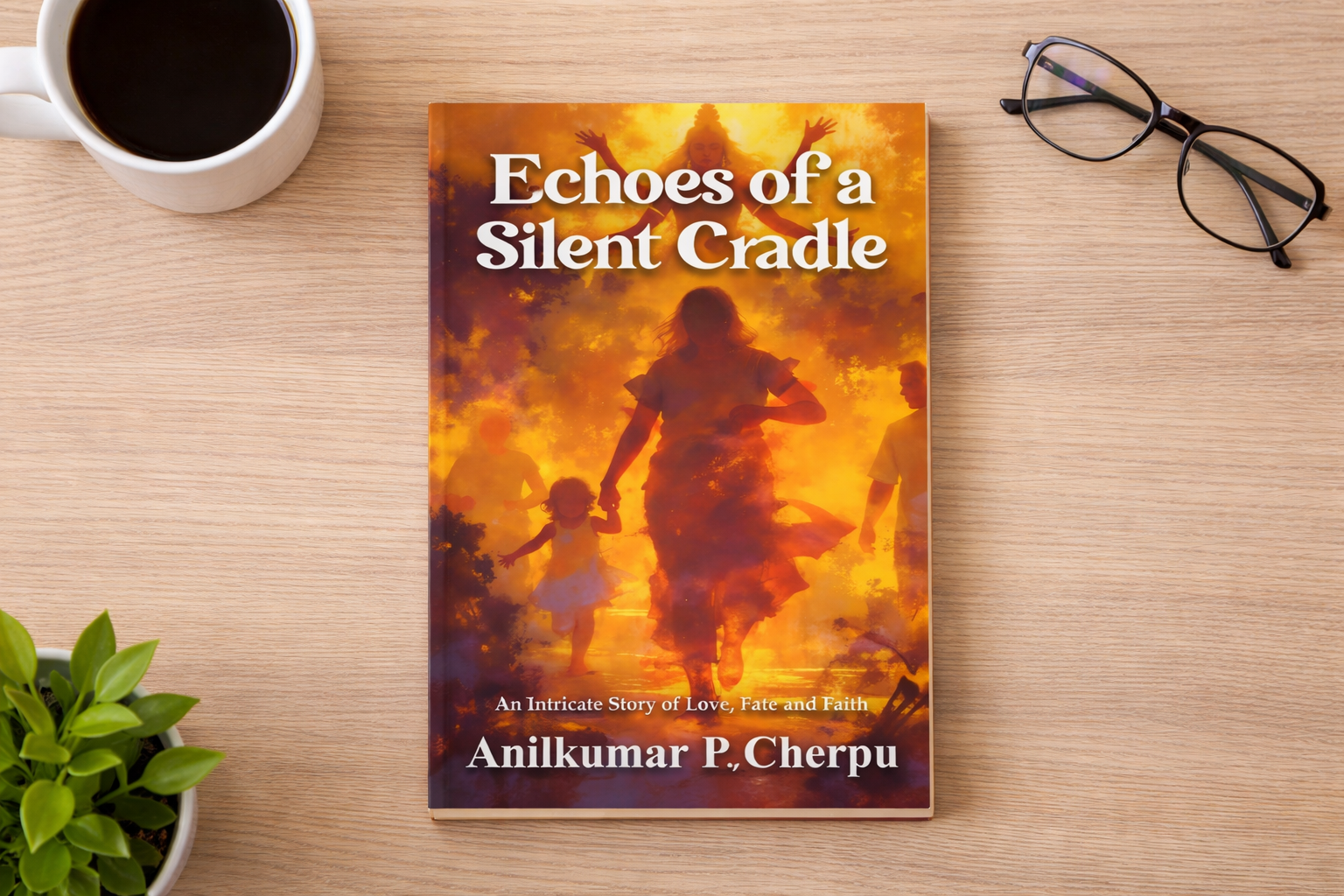
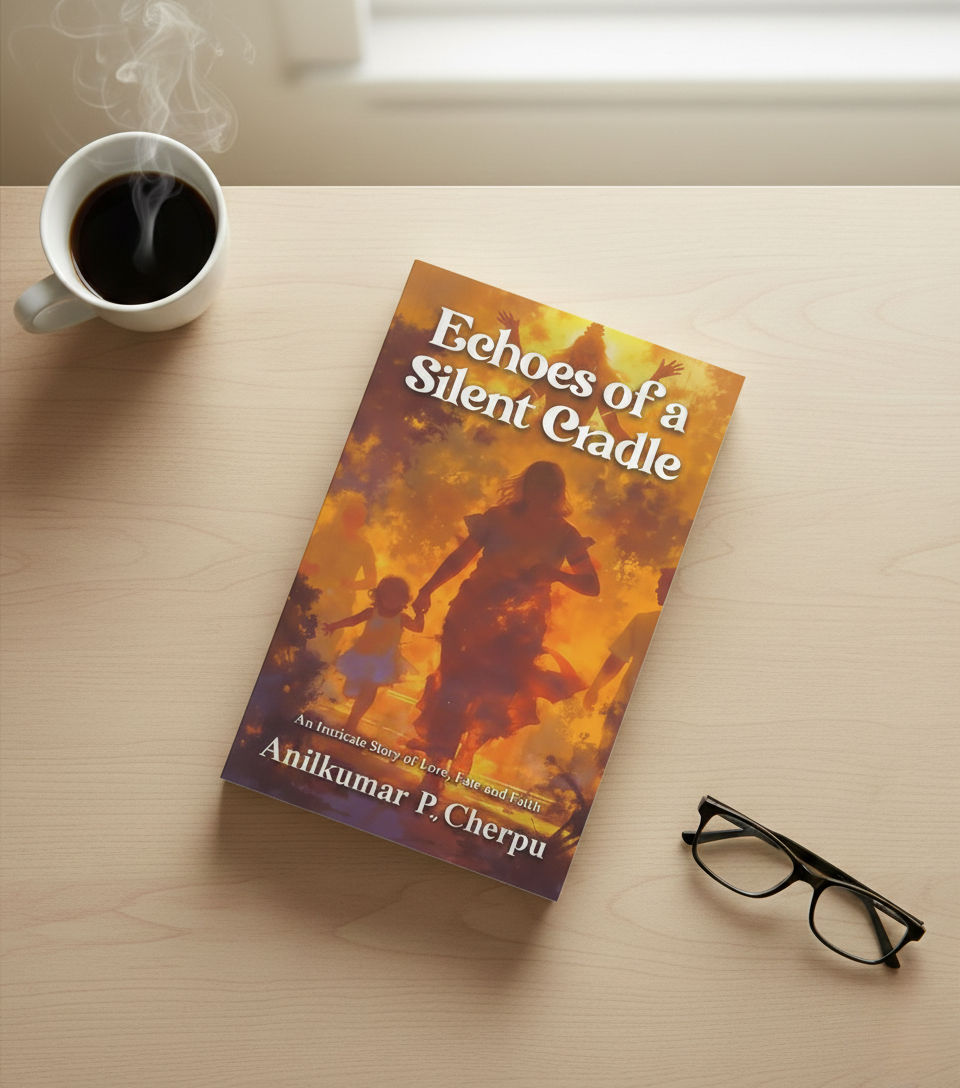
The cover itself hints at this. A woman walking through fire like light, holding a child’s hand, silhouettes around her. It feels mythic. Almost epic. And the prose mirrors that tone. There are moments where religious imagery blends seamlessly with everyday life. The stars are invoked. The gods are referenced. Yet the characters remain grounded, flesh and blood people, as the blurb rightly says.
There were passages where I paused, not because something shocking happened, but because the emotional truth felt familiar. I have seen families strained by expectations of lineage. I have seen women measured by motherhood. I have seen men crumble under the burden of being providers of legacy.
As someone who has read extensively in Indian Writing in English, I can say that Anilkumar P Cherpu’s voice carries a certain sincerity. It does not chase modern trends. It stays rooted in its soil.
That said, I must be honest. The pacing occasionally slows, especially in sections where philosophical reflections take center stage. Some readers might find those stretches contemplative. Others might wish for tighter narrative movement. Personally, I appreciated the depth, but I can see how it may not work for everyone.
The Emotional Core
At its core, Echoes of a Silent Cradle is about belonging.
Loneliness in this novel is not about physical isolation. It is about emotional displacement. A character can be surrounded by family and still feel unheard. Still feel unseen. The silent cradle becomes a symbol of unspoken grief and unmet expectations.
The idea that human relationships are controlled by an unknown destiny adds another layer. Are we free, or are we simply enacting scripts written in the stars. The novel does not provide easy answers. It presents characters who believe deeply in religious justice and karma, yet struggle with the unfairness of their circumstances.
I felt particularly moved by how the theme of legacy is handled. Legacy is often romanticized. Here, it is shown as both blessing and burden. The desire to leave something behind, a child, a name, a continuation, becomes intertwined with self worth. And when that continuity is threatened, identity itself feels fragile.
There is also an undercurrent of quiet rebellion. Not loud. Not dramatic. But present. In small acts of defiance. In internal monologues. In decisions that may appear minor but carry emotional weight.
I kept thinking about how many people live lives shaped by others’ expectations. In 2026, when conversations about gender equality and identity are louder than ever, this story feels timely. It reminds us that change is not always revolutionary. Sometimes it begins in silent rooms.
Who This Book Is For
If you are asking, is Echoes of a Silent Cradle worth reading, I would say yes, if you enjoy reflective literary fiction.
This novel is not fast paced commercial drama. It is not filled with constant twists. It is more about internal landscapes than external spectacle.
Readers who appreciate stories rooted in Indian culture, with philosophical undertones and layered character studies, will likely find meaning here.
If you have ever felt the pressure of family expectations. If you have questioned your place within tradition. If you have wondered whether destiny shapes you more than your choices do. This book might resonate deeply.
However, if you prefer plot driven narratives with rapid movement, you might find parts of it slow. It demands patience. And perhaps a willingness to sit with discomfort.
Final Thoughts
As Priya Srivastava, someone who has read across genres for years, I value books that attempt emotional honesty. Echoes of a Silent Cradle by Anilkumar P Cherpu feels earnest. It is written by someone who understands both literature and life.
It does not scream for attention. It speaks softly about love, fate, identity, and the deep human longing to belong and to be remembered.
When I closed the book, I felt reflective. A little unsettled. But grateful that stories like this continue to emerge from our regional spaces into English, carrying with them the weight of culture and the universality of longing.
FAQ
Is Echoes of a Silent Cradle worth reading?
If you enjoy thoughtful literary fiction about identity, loneliness, and societal expectations within an Indian cultural setting, it is worth your time.
What is Echoes of a Silent Cradle about?
It centers on love, fate, gender equality, and the pressure of legacy in a conservative society, exploring how individuals navigate belonging and destiny.
Who should read Echoes of a Silent Cradle?
Readers interested in Indian Writing in English, philosophical themes, and layered family dramas will connect strongly with this novel.
Is Echoes of a Silent Cradle fast paced?
It is more reflective than fast paced. The focus is on character depth and emotional exploration rather than constant plot twists.

With over 11 years of experience in the publishing industry, Priya Srivastava has become a trusted guide for hundreds of authors navigating the challenging path from manuscript to marketplace. As Editor-in-Chief of Deified Publications, she combines the precision of a publishing professional with the empathy of a mentor who truly understands the fears, hopes, and dreams of both first-time and seasoned writers.