
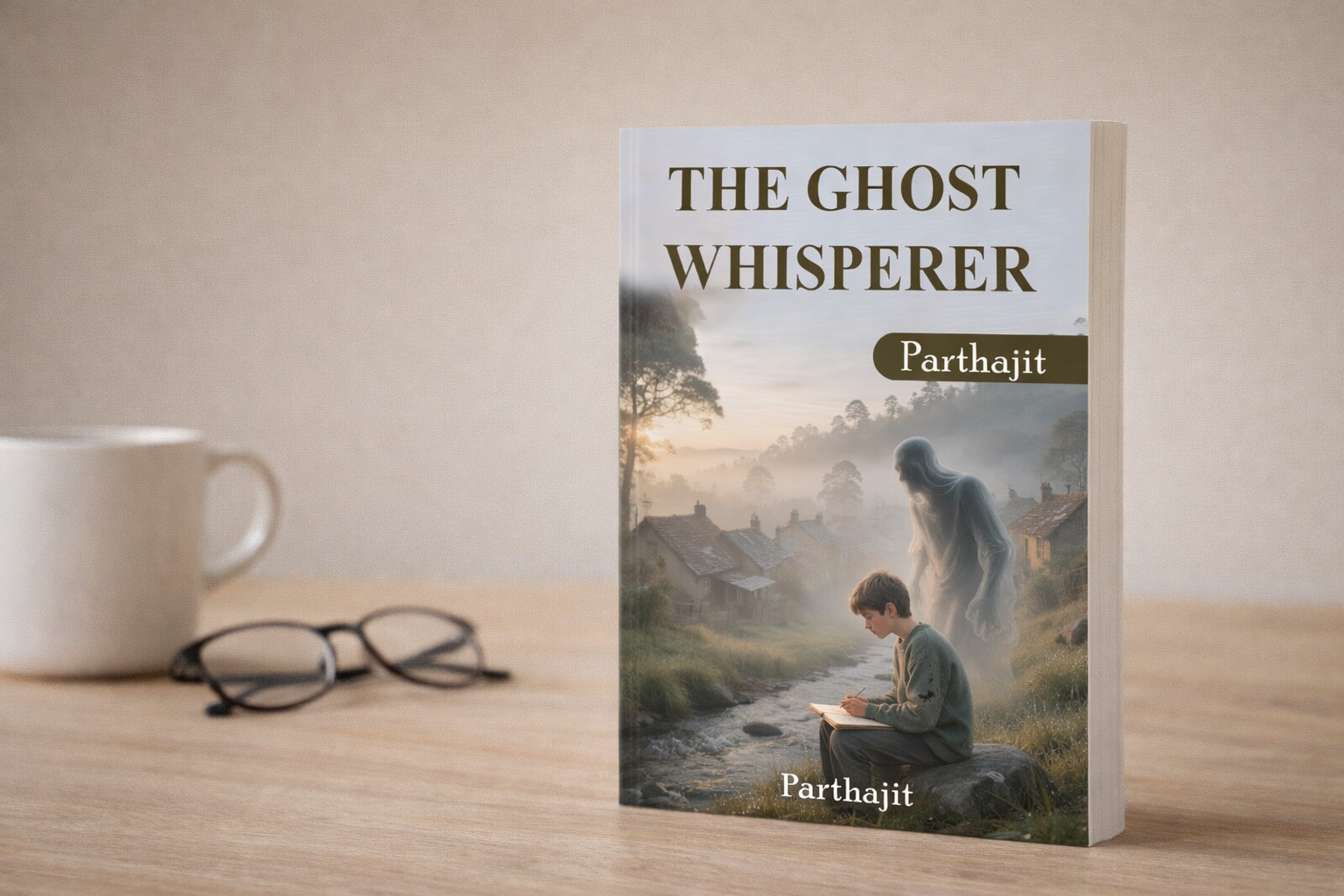
Rating:
⭐⭐⭐⭐ (4.3 out of 5)
I finished reading The Ghost Whisperer by Parthajit late last night, and I did not close the file immediately. I just sat there for a while. There is something about stories that begin with anger and end with grace that stays with me. In my years as an editor at Deified Publication, I have read countless coming of age novels, plenty of ghost stories, and even more small town dramas. This one sits somewhere in between all of them. Not loud. Not trying too hard. Just quietly building a relationship between a bitter ghost and a boy who already carries too much for his age.
And I think what moved me most is this simple idea. What if the person haunting you is simply someone who never learned how to belong?
What The Ghost Whisperer Is About
If you are searching for a clear book summary of The Ghost Whisperer, here it is in the most honest way I can put it.
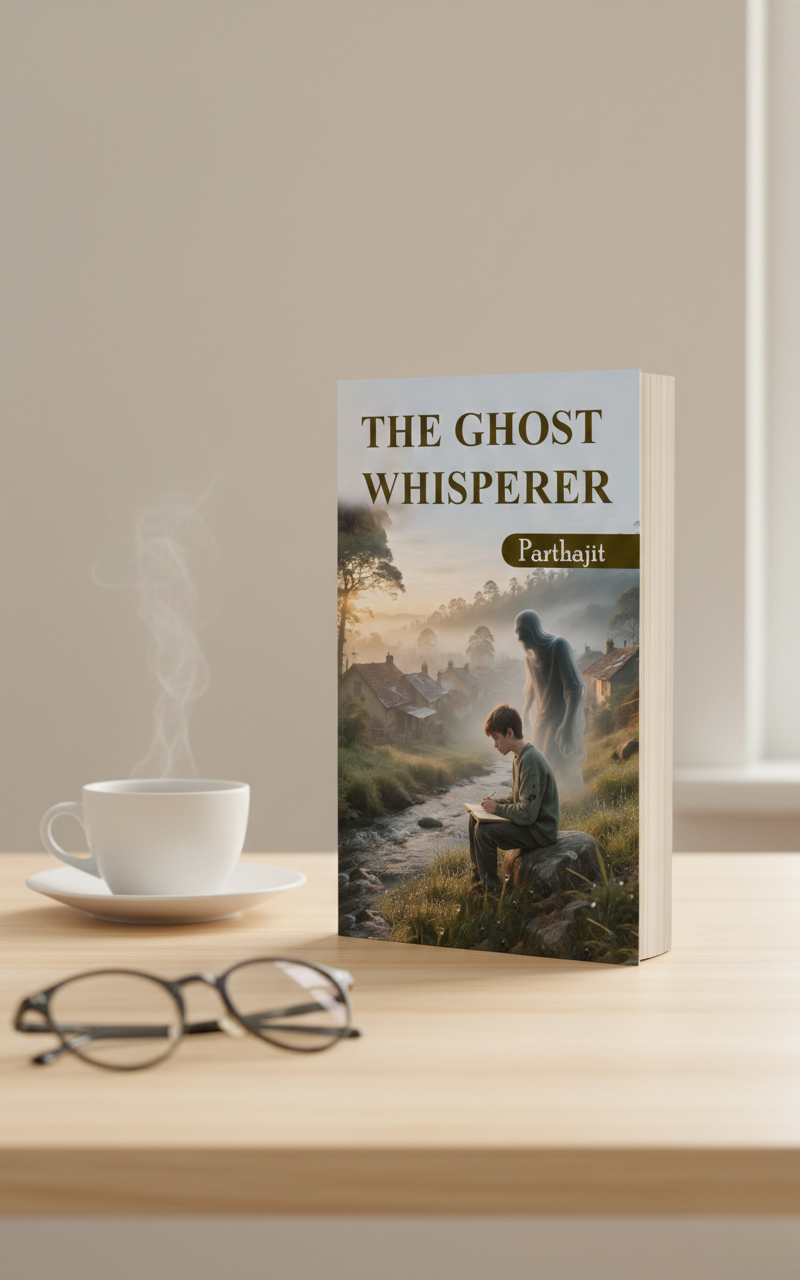
Franklin Roosevelt D’Souza dies alone in the misty village of Abhootpuram near Mussoorie. His funeral is small. Almost forgotten. He was an awkward man in life, carrying resentment, struggling with connection, and drifting further away from people, including his own brother Rupert. That loneliness follows him into death. He becomes a ghost bound to the village, angry and confused.
Then comes Arjun.
Arjun is a sensitive thirteen year old boy who can see spirits. Not because he is special in a fantasy novel way, but because he carries grief inside him. His twin brother died at birth. He grows up feeling slightly out of step with the living world. When he sees Franklin hovering near the graveyard, he does not run. That first moment where he tells Franklin, “You are not supposed to be here,” sets the tone for everything that follows.
What begins as a haunting slowly becomes companionship.
The novel moves through school mischief, market chaos, family scenes with Arjun’s overworked mother, village festivals, and even a goat race that had me smiling. But beneath the humor runs something heavier. Franklin must confront the life he wasted. Arjun must figure out how to belong without drowning in sadness.
As the chapters unfold, especially in sections like “The Letter He Never Burned” and “The Ghost Who Forgave and Danced Philosophically,” we see Franklin forced to reckon with his unresolved anger toward Rupert and his own missed chances at love. The village itself becomes a character, especially during the festival called Velicham Ratri, where light becomes both literal and symbolic.
By the time we reach “The Bench By The Banyan,” “The Edge Of The Road,” and the Epilogue, the story gently asks whether forgiveness is enough to free a restless soul.
What Stood Out To Me
First, the tone.
Parthajit writes with a playful warmth that surprised me. In the early chapters, Franklin’s bitterness feels heavy. The opening funeral scene is stark and honest. I have read many stories where a lonely man dies and the narrative becomes self pitying. Here, it does not. Franklin is not romanticized. He was difficult. He drank. He pushed people away. That felt real.
But then we move into these almost absurdly funny scenes. The pressure cooker battle in Arjun’s kitchen. The school chaos with a pigeon flying through Franklin. The mango festival mishap involving Mayor Silver D’Costa. The goat that almost flies. I found myself smiling at how the ghost is constantly annoyed by the living world, and yet drawn to it.
In my experience reviewing fiction, tonal balance is difficult. If humor undercuts emotion, the book loses weight. If emotion overwhelms humor, it becomes exhausting. I think Parthajit mostly manages this balance well. There were moments where the pacing wandered slightly in the middle chapters, especially during repeated prank like sequences. But then the story deepens again.
Second, the character arc of Franklin.
I kept thinking about the chapter “The Letter He Never Burned.” That moment where we learn about the letters he wrote to Rupert, hoping for reconciliation, and how those letters stayed unanswered. It reminded me of something I have seen in real life. People often rehearse apologies in their heads but never deliver them when it matters.
Later, when Franklin begins to confront not just the village but himself, especially during Velicham Ratri, I felt the emotional weight shift. The scene where he addresses other restless spirits and admits that he was angry at himself more than anyone else felt earned. It was not dramatic for the sake of drama. It felt like a man finally telling the truth.
And Arjun. I have read enough coming of age fiction to know when a child character feels like a device. Arjun does not. He is awkward, funny, sometimes stubborn. He teases Franklin. He drags him into school. He makes him help with homework. But he is also carrying grief. The line where he admits that being around the dead makes the living feel far away hit me harder than I expected.
The Emotional Core
At its heart, The Ghost Whisperer is not really about ghosts. It is about loneliness.
Franklin was invisible when he was alive. Arjun feels half invisible among the living. The story suggests that sometimes we need someone who sees us fully, even if that someone is from another world.
The later chapters slow down beautifully. “The Bench By The Banyan” is quiet and reflective. “The Edge Of The Road” feels like a turning point. There is a sense that Franklin must choose whether to keep clinging to resentment or let go. And when forgiveness finally comes, especially in connection with Rupert, it is not grand. It is soft. Almost ordinary. I liked that.
The Epilogue does something I appreciate as an editor. It does not over explain. We see growth in Arjun. We sense that he will carry the lessons forward. And Franklin’s presence shifts. I will not spoil the exact moment, but it left me with a lump in my throat.
I was not expecting to feel this way about a story that includes flying goats and karaoke with a ghost. But some parts hit differently.
Who This Book Is For
If you are asking, should you read The Ghost Whisperer? I think it depends on what you are looking for.
If you want horror with jump scares and dark terror, this is not that book. The supernatural here is gentle. Even the more intense scenes, like the village disturbances or ghostly gatherings, are rooted in emotion rather than fear.
If you enjoy small town fiction with heart, layered with light humor and themes of forgiveness, this might be for you.
Teen readers who feel slightly out of place may connect deeply with Arjun. Adults who have regrets may see something of themselves in Franklin. Parents might recognize the quiet resilience in Arjun’s mother.
It is also worth noting that this novel is very rooted in its Indian setting. The festivals, the village politics, the market scenes, the mix of church and temple bells, all feel specific. In 2026, when so many stories chase global neutrality, I find something refreshing about a book that stays local and personal.
That said, there are moments where the narrative could have been tightened. A few comedic sequences run longer than needed. Some dialogue feels slightly on the nose. But these are small things in an otherwise sincere story.
Final Thoughts
As Priya Srivastava, someone who has spent over fifteen years reading manuscripts, I have learned to value sincerity above polish. The Ghost Whisperer by Parthajit is sincere.
It is a novel about a man who realizes too late that he wanted connection. It is about a boy who learns that seeing the dead does not mean he has to live half alive. It is about forgiveness that comes not with fireworks but with acceptance.
When I closed the book, I did not feel exhilarated. I felt steady. Grounded. A little softer, perhaps.
Is it perfect? No. Is it worth your time? I believe so.
FAQ
Is The Ghost Whisperer worth reading?
If you enjoy emotional fiction with light supernatural elements and a strong focus on character growth, yes. It is more about healing than haunting.
Who should read The Ghost Whisperer?
Teens navigating grief, adults reflecting on missed chances, and anyone who likes small town stories with humor and heart.
What genre is The Ghost Whisperer by Parthajit?
It blends coming of age fiction, light supernatural drama, and emotional literary storytelling.
Does The Ghost Whisperer have a happy ending?
Without giving spoilers, it offers emotional closure rather than dramatic triumph. It feels complete and hopeful.

With over 11 years of experience in the publishing industry, Priya Srivastava has become a trusted guide for hundreds of authors navigating the challenging path from manuscript to marketplace. As Editor-in-Chief of Deified Publications, she combines the precision of a publishing professional with the empathy of a mentor who truly understands the fears, hopes, and dreams of both first-time and seasoned writers.
5 Comments
Comments are closed.