
Rating
⭐⭐⭐⭐ 4.3 out of 5
I began Spilled Coffee and Some Laughs on a weekday afternoon with my own mug going cold beside me, which now feels strangely fitting. In my years as a reader and editor at Deified Publication, I have noticed that some books do not try to impress you. They simply sit beside you like a friend who does not need small talk. This one felt exactly like that. Not dramatic, not polished to perfection, just deeply familiar in a way that made me pause more than once and think, this happens to me too.
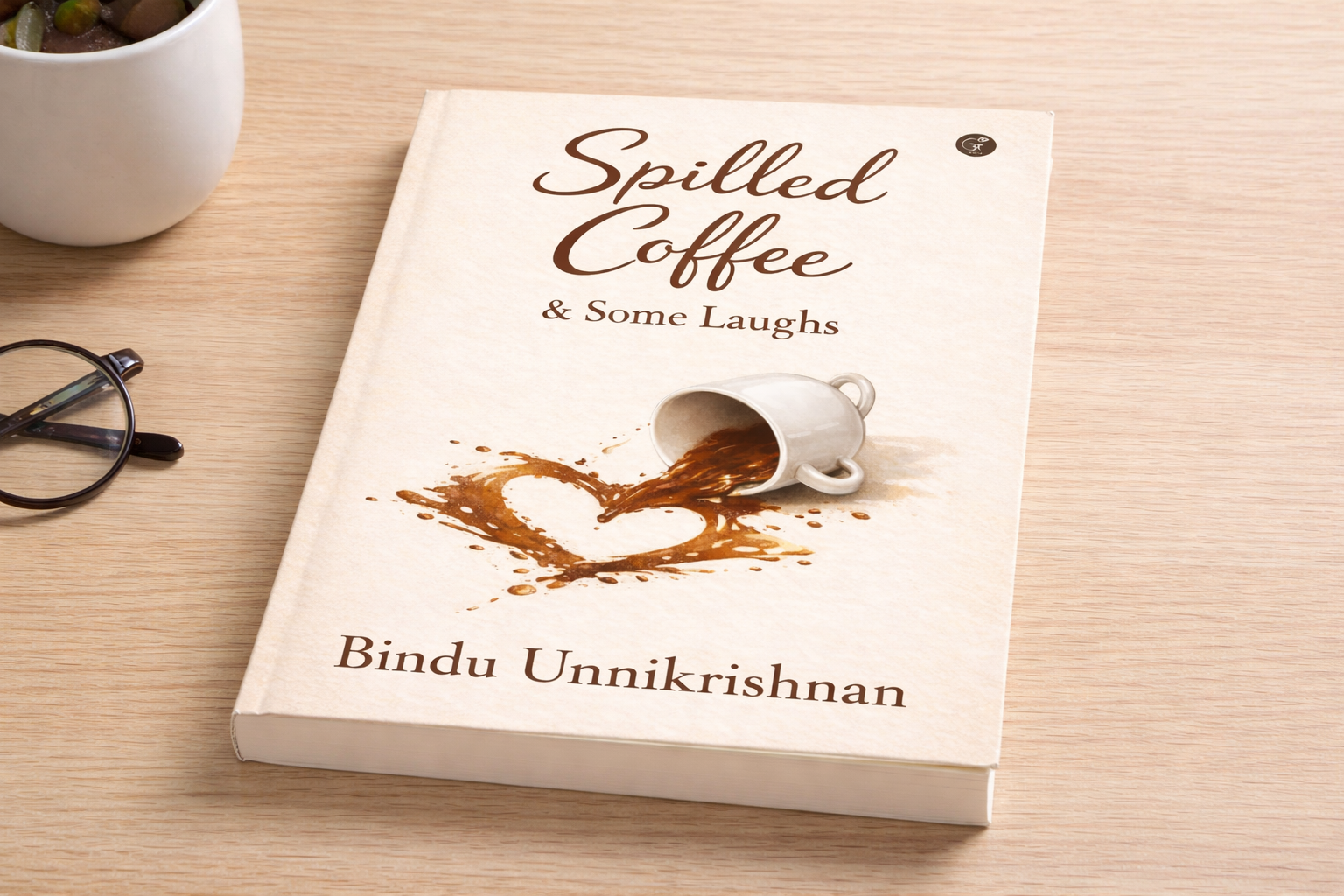
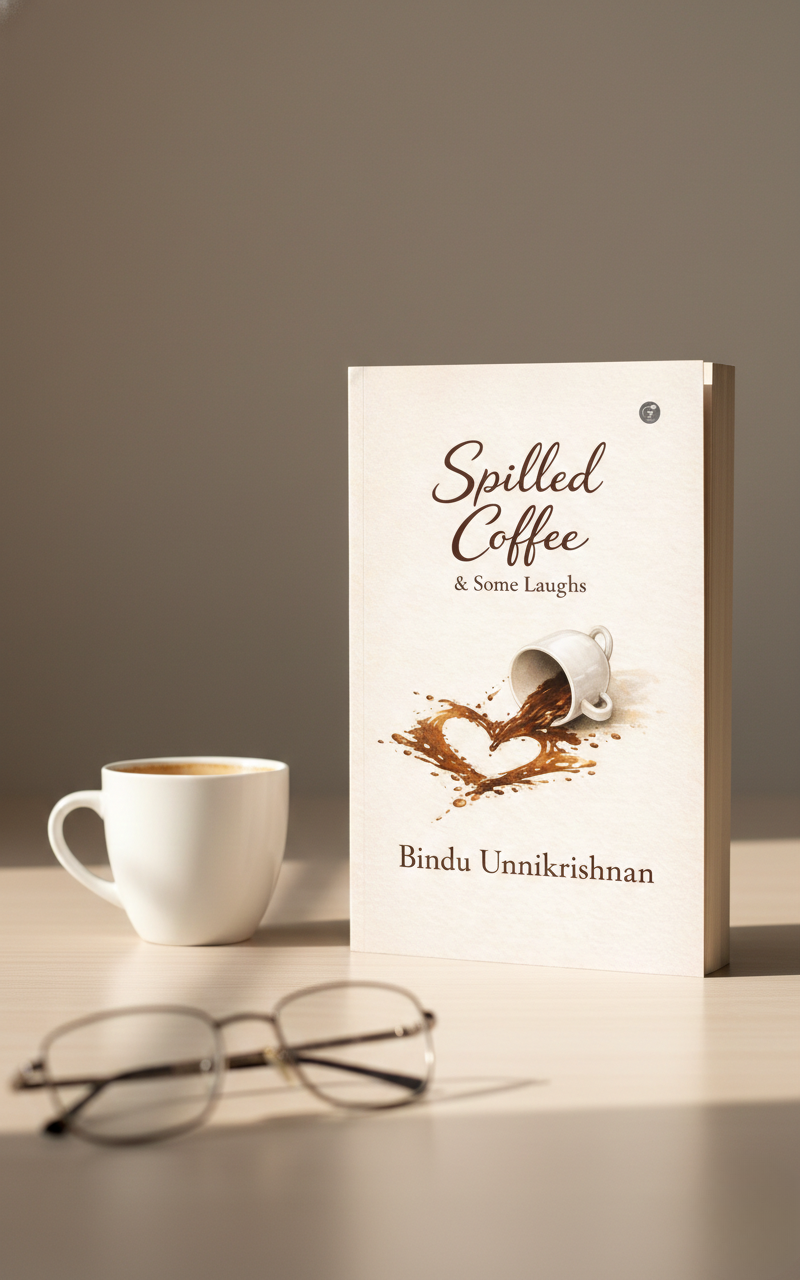
The cover already hints at the mood. A toppled cup, a heart shape formed by spilled coffee. It is not tragic and not tidy. A little embarrassing, a little funny, and very human. That is precisely what the book delivers.
What surprised me most was how quickly I slipped into the voice of the essays. There is no heavy introduction telling you how to read them. You simply enter someone’s lived chaos. Misplaced keys, Sunday cooking theatrics, saree battles, the invisible labour of holding everything together. Suddenly you are not just observing. You are recognizing yourself.
What the Book Is About – Everyday Chaos Without Filters
At its core, Spilled Coffee and Some Laughs is a collection of essays about ordinary life, especially modern Indian womanhood with all its contradictions. Marriage, motherhood, work, friendships, bodies, aging, social expectations, the absurd rituals of productivity. Everything is present, but never framed as advice or instruction.
One piece that stayed with me describes wrestling with six yards of saree before stepping into a day that demands composure. I have witnessed this moment countless times backstage at events. The quiet panic, the safety pins, the deep breath before becoming presentable. The essay does not exaggerate it. It simply lets the tension exist, which makes it feel authentic.
Another essay about men discovering their culinary genius on Sundays made me laugh out loud. Not because it mocks anyone, but because it captures a familiar domestic theatre. The elaborate cooking, the chaos left behind, the applause expected afterward. It is a scene many households know intimately.
There are reflections on friendships strained by lifestyle trends, on relationships that operate on different emotional frequencies, on the silent negotiations women perform between ambition and expectation. The book returns again and again to one central truth. Life rarely resembles the curated versions we present online. Most of it unfolds in the messy middle.
What I appreciated most is that the essays do not force tidy lessons. Sometimes a situation ends with nothing more than exhaustion and a small laugh, which feels far closer to real life than any polished conclusion.
What Stood Out to Me – Voice, Observation, Timing
Bindu Unnikrishnan’s greatest strength is observation. She notices tiny behavioural details that reveal entire emotional landscapes. The way people give unsolicited advice as a form of control. The quiet competition hidden inside parenting conversations. The subtle guilt attached to wanting time for oneself.
The humour is gentle but incisive. Not punchlines, but the kind of remark you make after a long day when you finally sit down and admit how ridiculous everything has been. I found myself smiling in recognition more often than laughing loudly.
The essays are compact and focused, which makes them easy to read in short bursts. However, there were moments when I wished a piece would linger longer and go one layer deeper emotionally. Occasionally it feels as if the essay ends just when it is about to say something devastatingly true. Perhaps that restraint is intentional, because life itself rarely provides dramatic closure. Still, as a reader I wanted to stay there a little longer.
There is also a refreshing refusal to romanticize struggle. Motherhood is not presented as sacred bliss. Marriage is not portrayed as automatic stability. Professional life is not framed as empowerment theatre. Everything exists together. Love and irritation, pride and fatigue, connection and loneliness.
In a time when conversations about burnout and invisible labour are everywhere, this book feels timely without trying to be topical. It simply describes what many people are already living.
The Emotional Core – Laughter That Comes After a Sigh
If I had to describe the emotional tone, I would call it laughter that arrives after you exhale. Not carefree joy and not bitterness either. Something in between. Relief, recognition, survival.
Several passages made me reflect on how often we minimize our own exhaustion because it does not look dramatic enough to justify complaint. No crisis, no catastrophe, just a thousand small demands pressing from all sides. The book validates that experience without turning it into victimhood.
I was especially moved by the recurring theme of invisibility. So much work, emotional and logistical, goes unnoticed because it is expected. The essays do not accuse anyone directly, yet the weight of those expectations is unmistakable.
And still, there is tenderness. Relationships are not portrayed as adversarial. They are messy, mismatched, sometimes loving in awkward ways. One moment you are irritated, the next you are protective. That emotional ambivalence feels deeply honest.
The humour described in the blurb as laughter that slips out in exhaustion and relief is exactly right. Not staged humour or forced positivity. The kind that surprises you because you did not realize how tense you were until it escaped.
I did not cry, but I paused often. Sometimes that speaks louder.
Who This Book Is For – And Who Might Not Connect
This book will resonate most with readers navigating multiple roles at once, particularly women balancing home, work, caregiving, and the constant pressure to appear composed. If you have ever wondered why you feel exhausted even when nothing dramatic has happened, you will likely feel understood here.
It is also ideal for readers who prefer reflective essays over plot driven narratives. You can open to any page and read a piece in one sitting, which makes it perfect for fragmented reading time such as waiting rooms, commutes, or late nights.
However, readers looking for high drama, sweeping storytelling, or direct self help guidance may find it understated. The book does not offer solutions or transformations. It offers recognition. For some readers that is deeply satisfying. For others it may feel incomplete.
Personally, I value books that acknowledge life’s unresolved nature. Not everything gets fixed. Sometimes you simply continue.
Final Thoughts – A Book That Keeps You Company
As Editor in Chief at Deified Publication, I encounter many manuscripts that try very hard to be important. This one does not strain. It trusts that ordinary life, observed honestly, already carries meaning.
Spilled Coffee and Some Laughs is not loud, but it lingers. It made me think about the invisible stories unfolding in every household, every office, every friendship. The things we do not post, do not dramatize, sometimes do not even articulate to ourselves.
Will it transform your life overnight. Probably not. But it may make you feel less alone on an ordinary, chaotic Tuesday. And sometimes that is exactly what a book needs to do.
I finished it with the quiet comfort that comes from being seen by someone you have never met. Like sharing chai with a stranger who somehow understands your week without needing an explanation.
FAQs
Is Spilled Coffee and Some Laughs worth reading?
If you enjoy reflective, relatable essays about modern life rather than plot-heavy stories, yes. It’s especially meaningful if you’ve been feeling stretched thin by everyday responsibilities.
Who should read this book?
Readers interested in contemporary Indian life, womanhood, relationships, and humour rooted in real situations will likely connect strongly.
Is it a light read or heavy?
Emotionally nuanced but not overwhelming. You can read it in small portions without feeling drained.
Does it offer advice or self-help?
Not really. It focuses on observation and recognition rather than solutions.

With over 11 years of experience in the publishing industry, Priya Srivastava has become a trusted guide for hundreds of authors navigating the challenging path from manuscript to marketplace. As Editor-in-Chief of Deified Publications, she combines the precision of a publishing professional with the empathy of a mentor who truly understands the fears, hopes, and dreams of both first-time and seasoned writers.