
Rating:
⭐⭐⭐⭐ (4.3 out of 5)
A Book That Felt Like Sitting by a Fire
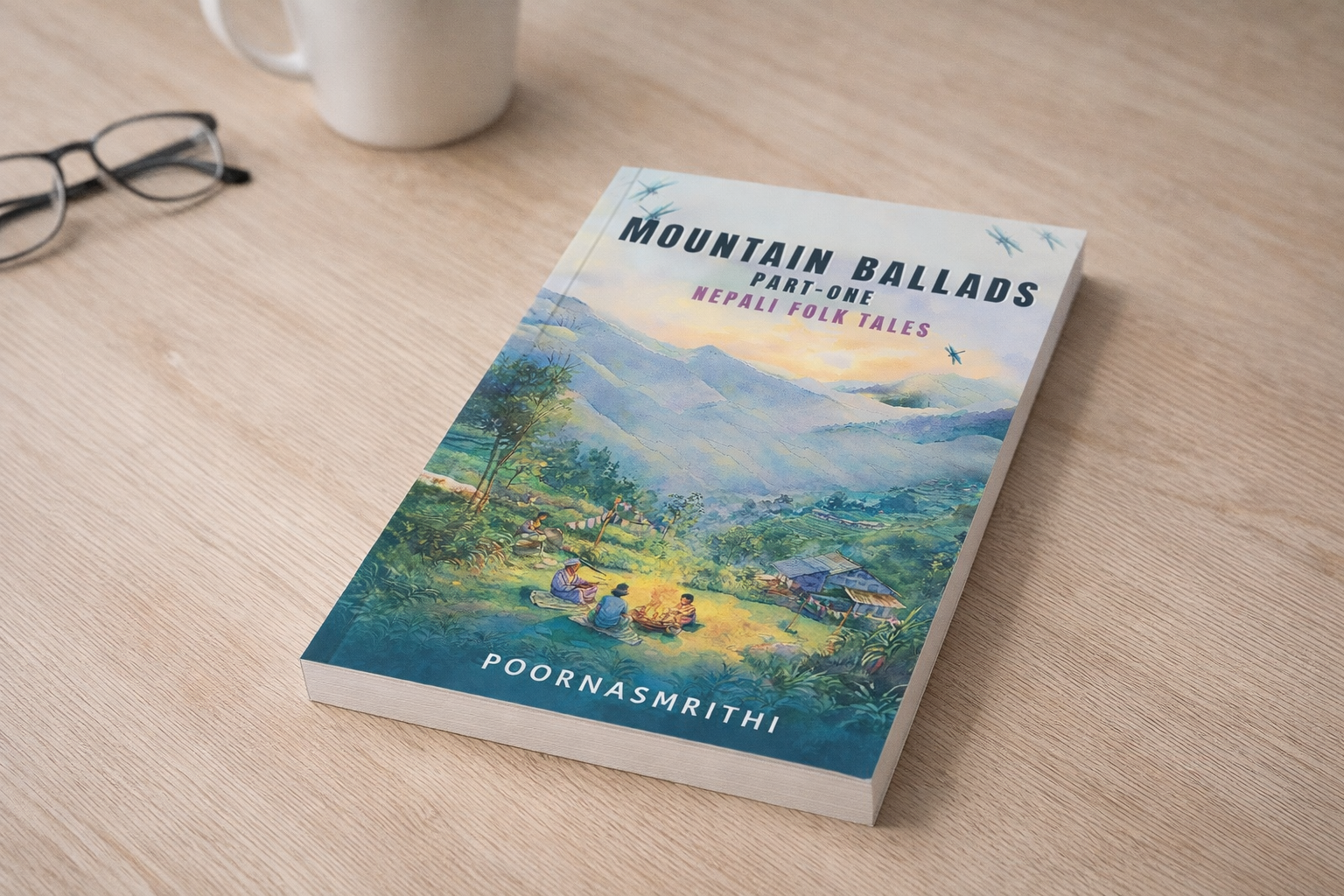
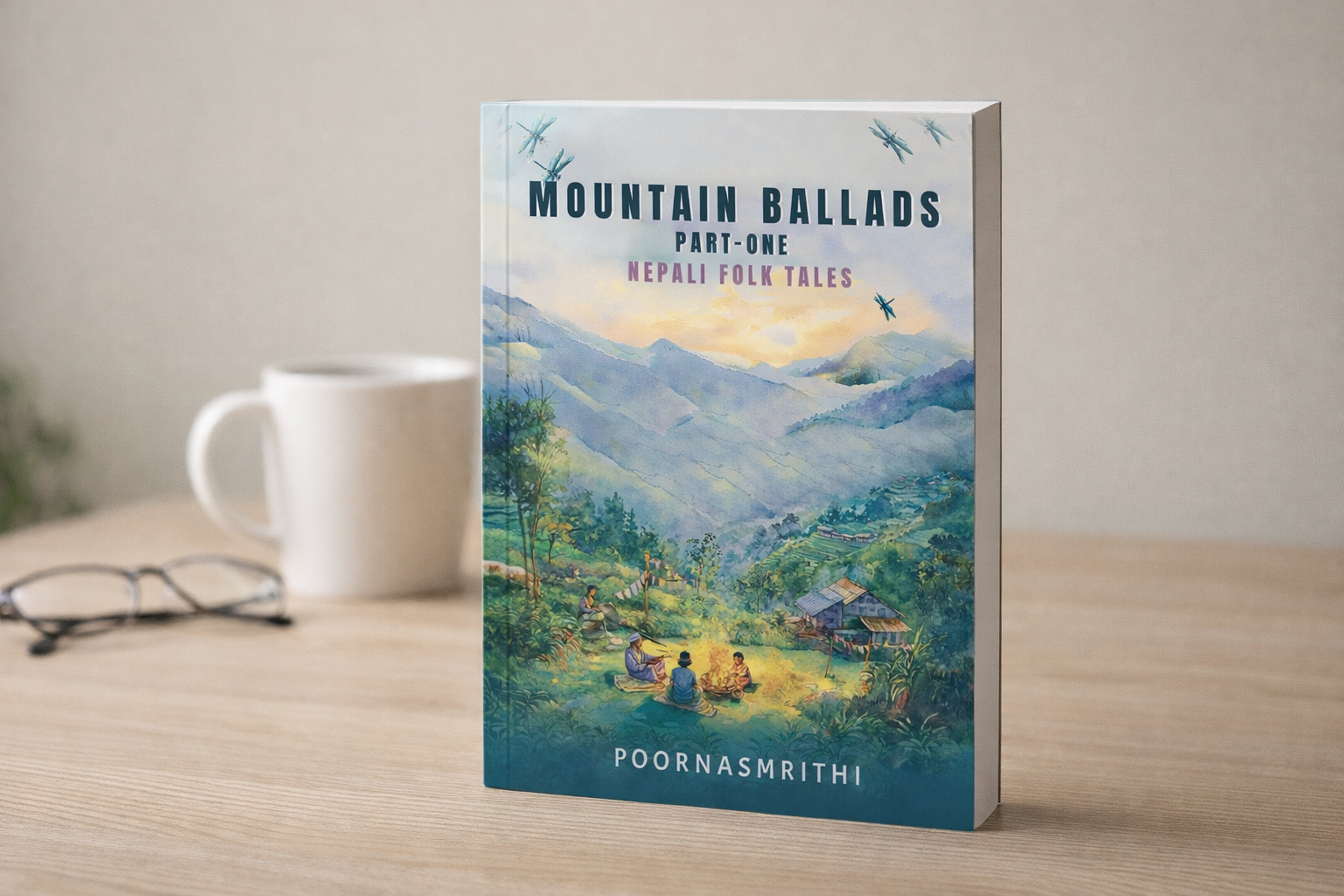
I have a soft spot for books that carry the scent of oral storytelling — the kind you imagine being told beside a fire, with someone pausing mid-sentence to sip tea, watching your face to see if you’re listening. Mountain Ballads: Nepali Folk Tales by Poornasmrithi immediately gave me that feeling. Even before opening it, the cover did something to me. There’s this warm scene of people gathered around a fire in the hills, mountains layered in mist behind them, dragonflies drifting in the sky. It reminded me of evenings in hill stations when the air turns cold faster than expected and conversations grow deeper without anyone noticing.
In my years reviewing books at Deified Publication, I’ve seen many folklore collections — some academic, some romanticized, some stripped of context. This one feels… personal. Like someone sat down and said, “These are the stories my people grew up with. Don’t let them disappear.”
And honestly, in 2026, that feels important. We’re living in a time where cultures flatten into algorithms. A book that insists on specificity — on rootedness — feels almost rebellious.
What the Book Is About – More Than Just Tales
According to the blurb, Mountain Ballads is the first volume of a collection of 42 stories from Nepali/Gorkha communities spread across the Himalayan foothills — Himachal, Uttarakhand, Nepal, Sikkim, Bhutan, Darjeeling, even parts of the Northeast. That geographical spread alone hints at something fascinating: these stories aren’t confined to one village or one dialect. They’ve traveled, shifted, survived.
The world inside these tales sounds beautifully strange in the way traditional folklore often is. Animals speak. Birds are kin to humans. A pillar of clay pots might become a ladder to the heavens. Festivals are explained through myth rather than calendar dates. There’s even mention of why dogs are worshipped once a year — a detail that made me smile because it connects ritual to affection in a very human way.
What struck me most is the emphasis on everyday life. These aren’t grand epics about kings alone. They seem rooted in ordinary people trying to understand why the world behaves the way it does. Why does this bird sing at dawn? Why does that mountain look the way it does? Why do we celebrate this day?
Folklore, at its core, is humanity trying to make sense of existence without textbooks. And this book appears to honor that.
What Stood Out to Me – Authenticity Over Ornament
Poornasmrithi’s background matters here, and the back cover gives clues that this isn’t an outsider’s interpretation. She grew up in a small village in Darjeeling, belongs to the Khamboo/Rai community, has worked in the jungles of Chitwan, trekked through remote parts of Nepal, Bhutan, Sikkim, Ladakh. She mentions shamanistic traditions still being practiced at home. That detail alone tells you these stories aren’t museum pieces to her — they’re lived reality.
I’ve read folklore collections where the voice feels detached, almost anthropological. This doesn’t sound like that. It sounds like someone who has heard these stories from grandparents, neighbors, rituals, festivals — not from archives.
There’s also something refreshingly unpolished about the premise. The blurb isn’t trying to make the book sound “literary” or fashionable. It promises delight, entertainment, cultural insight. That humility actually makes me trust it more.
Another thing I appreciate: the emphasis on nature as a living presence. When a culture treats birds, animals, mountains as relatives rather than scenery, the stories naturally carry a different emotional weight. It’s not “man versus nature.” It’s coexistence, sometimes uneasy, sometimes sacred.
And that idea — that every creature has its own story of creation and deserves protection — feels surprisingly contemporary. Climate conversations often circle back to indigenous wisdom. Here, it seems embedded organically rather than presented as a lesson.
The Emotional Core – A Gentle Reorientation
If I had to guess what readers might feel while reading Mountain Ballads, I’d say this: a soft recalibration of attention.
The book suggests that ordinary things aren’t ordinary at all. A bird on your balcony, a tree on your commute, a festival you celebrate without knowing why — everything has a lineage of meaning. That idea can be oddly moving. It makes the world feel less disposable.
I also sense a tenderness toward animals, especially dogs. The mention of annual dog worship caught my heart a little. Anyone who has ever loved a dog knows they occupy that strange space between family member and guardian spirit. Seeing that bond ritualized in folklore feels both ancient and deeply relatable.
There’s probably nostalgia here too — not just personal nostalgia, but cultural memory. Stories that communities tell to remind themselves who they are. For diaspora readers, especially, I imagine this could hit differently. It might feel like opening a window back home, even if “home” is something inherited rather than lived.
At the same time, these stories may carry darker undertones — as most folk tales do. Lessons about humility, warnings about pride, explanations for suffering. Folklore rarely sanitizes life completely. It acknowledges mystery, sometimes fear, sometimes loss.
Who This Book Is For – And Who Might Struggle
I think Mountain Ballads Book Review readers often ask the same practical question: “Should I read this?” So here’s my honest take.
You’ll probably love this book if:
-
You enjoy mythology, folklore, or oral traditions
-
You’re curious about Himalayan cultures beyond tourist brochures
-
You like stories where nature is central, not decorative
-
You appreciate cultural context more than fast plots
-
You want something that feels rooted rather than globalized
It might be especially meaningful for readers from Nepali/Gorkha backgrounds. Representation matters, but so does recognition — the feeling of seeing your grandparents’ worldview treated with respect.
However, if you’re looking for tightly structured modern narratives with clear arcs and character development, this may feel different. Folk tales often move by dream logic. Events happen because that’s how the story has always been told, not because of contemporary storytelling rules.
Also, with 42 tales in one volume, the experience will likely be episodic. Some stories may resonate deeply, others less so. That’s normal with collections.
Final Thoughts – A Book That Preserves Voices
What stays with me most is Poornasmrithi’s simple wish: to be remembered as a storyteller. There’s something disarmingly sincere about that. Not an intellectual, not an authority — just a storyteller.
And maybe that’s the right word. Stories are how cultures survive when everything else changes — borders, languages, economies, even landscapes.
As someone who has spent years in publishing, I’ve seen how easily regional voices get overshadowed by global trends. Books like Mountain Ballads quietly resist that erasure. They say, “We were here. We are still here. This is how we understand the world.”
Is it perfect? Probably not. I suspect some readers might wish for more context, footnotes, or modern framing. Others might want deeper analysis. But that would change the spirit of the book. This feels like a hand extended across generations, not a lecture.
And honestly, sometimes what we need isn’t analysis. It’s memory.
FAQ – Mountain Ballads Reader Questions
Is Mountain Ballads worth reading?
Yes, especially if you’re interested in folklore, Himalayan culture, or stories rooted in oral tradition. It offers cultural insight rather than high drama.
What is Mountain Ballads about?
It’s a collection of 42 Nepali/Gorkha folk tales explaining nature, rituals, animals, and everyday life through mythic storytelling.
Who should read Mountain Ballads?
Folklore lovers, cultural readers, diaspora communities, and anyone curious about Himalayan traditions.
Is Mountain Ballads suitable for casual readers?
Yes, but it’s best read slowly — one or two stories at a time rather than all at once.

With over 11 years of experience in the publishing industry, Priya Srivastava has become a trusted guide for hundreds of authors navigating the challenging path from manuscript to marketplace. As Editor-in-Chief of Deified Publications, she combines the precision of a publishing professional with the empathy of a mentor who truly understands the fears, hopes, and dreams of both first-time and seasoned writers.