
Rating:
⭐⭐⭐⭐ (4.3 out of 5)
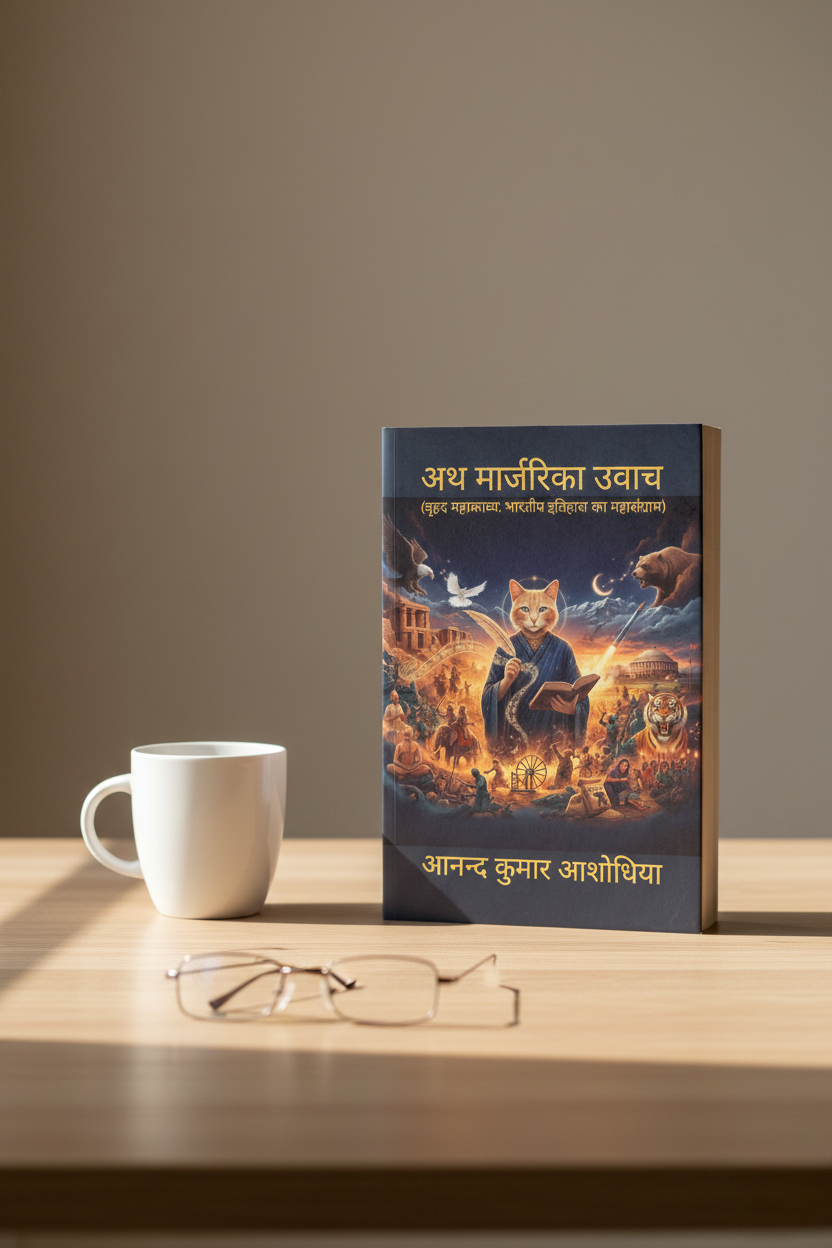
I’ve been sitting with this book for a few days now. Not because it was difficult to get through. Actually, the opposite. I finished it and then found myself going back to the cover again. That cat. The pen. The book in its paws. Something about it felt watchful, almost patient. Like it wasn’t done speaking just because I had closed the pages.
In my years reviewing books at Deified Publication, I’ve learned that some books announce themselves loudly. Others wait. अथ मार्जरिका उवाच is very much the second kind. It doesn’t shout history at you. It watches it. And honestly, that made all the difference for me.
What the Book Is About
At its core, अथ मार्जरिका उवाच is a symbolic retelling of Indian history, narrated through an unusual but strangely fitting voice. A cat. Marjarika. A time traveling observer who does not belong to any camp, ideology, dynasty, or party. She simply exists across centuries, watching India become what it is.
Based on the blurb and the visual language of the cover, Anand Kumar Ashodhiya is not interested in listing dates or rehearsing the usual winners and losers. Instead, he reframes Indian history as a living conversation. From ancient Aryavarta to what he calls the Amrit Kaal of 2025, events are filtered through symbolism rather than literal naming.
This is not a textbook. It is also not nostalgia. The author uses a system of 198 standardized symbols to represent leaders, movements, ideologies, and power structures. Tigers, doves, queens, great beasts. The idea, I think, is to move the reader away from personality worship and toward patterns. Power rising. Power falling. Silence. Resistance. Repetition.
There is a section that seems to span post independence India where democracy itself feels like a battlefield. The Emergency period is represented without direct naming, which honestly made it feel more unsettling. You recognize it without being told. Later, the book touches contemporary India, digital revolutions, space exploration, political consolidation, all still filtered through poetic imagery.
It is ambitious. Maybe even a little risky. But I respect that kind of ambition.
What Stood Out to Me
The first thing that stayed with me was the decision to use a cat as the narrator. At first, I smiled. It felt playful. Then I thought about it more. Cats are observant. They survive empires without belonging to them. They see everything but intervene rarely. That choice suddenly felt very intentional.
Another thing that stood out was the discipline behind the symbolism. This is not random metaphor. The blurb mentions Pingal Shastra and poetic structure, and you can sense that rigor even without reading every verse closely. Anand Kumar Ashodhiya is clearly someone who respects form. You don’t attempt something like this unless you’ve spent years understanding rhythm, restraint, and repetition.
I’ve read enough experimental historical poetry to know that many fall apart halfway through. Either the symbols become confusing, or the author starts preaching. Here, the intent seems to be dialogue rather than instruction. The symbols create distance, and that distance allows reflection.
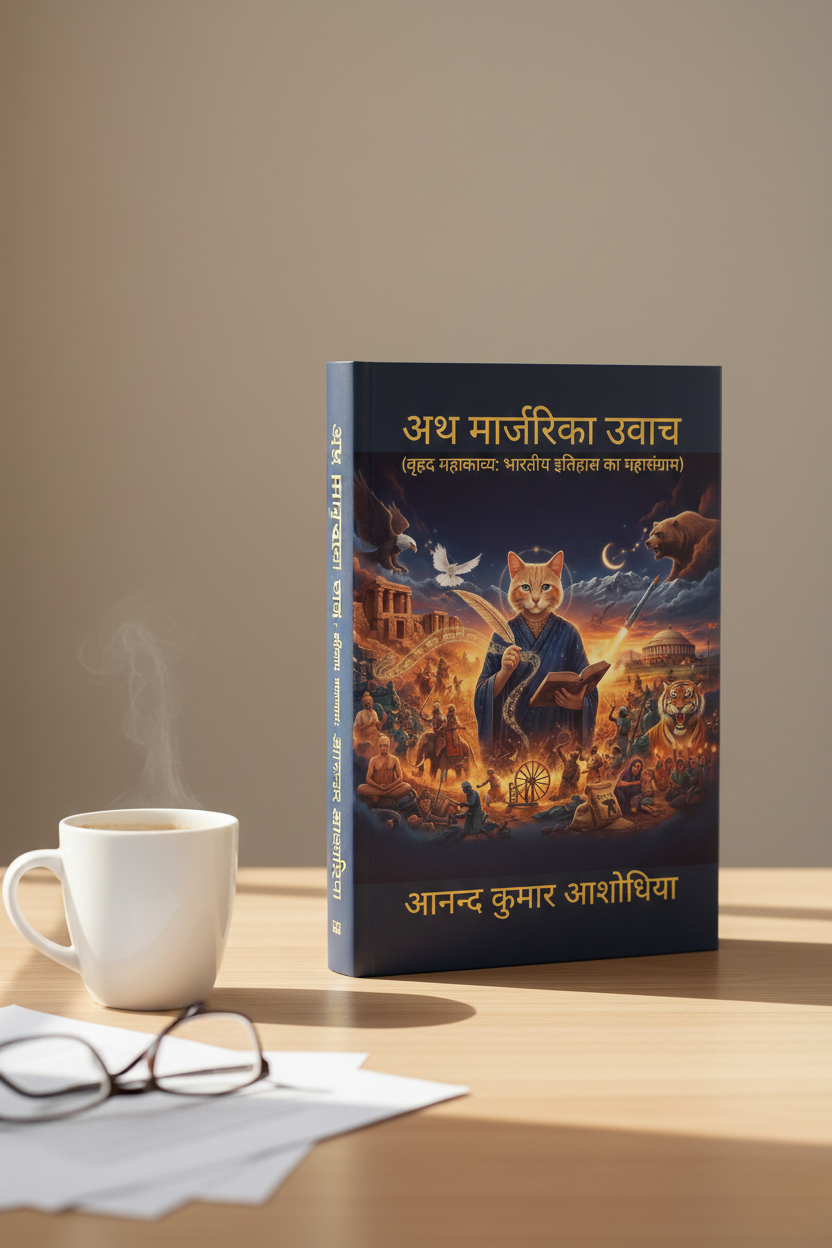
The cover deserves a mention too. The visual language reinforces the book’s idea perfectly. Ancient ruins, modern buildings, rockets, monks, soldiers, ordinary families. Everything coexisting. The cat stands in the middle, holding a pen and a book, not judging. Just recording.
I also appreciated the attention given to Indian states and their cultural identities. Giving regions symbolic names based on geography and spirit rather than politics felt thoughtful. It reminded me of conversations I’ve had with older relatives who describe places not by borders, but by rivers, soil, and memory.
The Emotional Core
This book did something unexpected for me. It didn’t make me angry. It didn’t make me defensive. It made me still.
There were moments where I paused and thought, we keep repeating ourselves, don’t we. Not just as a nation, but as people. Power concentrates. Voices are silenced. Then new voices rise. The cat remains.
I wasn’t overwhelmed with emotion, but I felt a steady weight. Like listening to someone older than you who has seen enough to stop arguing. That tone matters, especially in 2025, when every discussion about history becomes a shouting match within minutes.
Some parts hit differently if you’ve lived through certain decades. If you’ve seen political shifts up close. If you’ve worked under institutions, like the author has. Anand Kumar Ashodhiya’s background as an Indian Air Force veteran shows up not in slogans, but in discipline. There’s a certain orderliness to how chaos is presented.
I did feel, at times, that the symbolism might demand more patience than some readers are willing to give. A few sections might feel dense if you are expecting quick clarity. But maybe that is the point. History isn’t neat. Why should poetry about it be?
Who This Book Is For
I don’t think अथ मार्जरिका उवाच is for everyone, and I mean that kindly.
If you want a straightforward retelling of Indian history with dates and definitions, this is not it. If you are deeply attached to one political narrative and don’t like being unsettled, this might make you uncomfortable.
But if you are someone who enjoys symbolism, poetry with structure, and history seen sideways rather than head on, this book might stay with you.
It feels especially relevant for UPSC and competitive exam aspirants who struggle to remember events as disconnected facts. The symbolic framework could actually help memory. I can see students remembering the Emergency as a queen’s silence rather than a paragraph number.
It is also for readers who enjoy modern Hindi literature that experiments without losing cultural grounding. And for those curious citizens who want to observe India without immediately choosing sides.
Final Thoughts
As Editor in Chief at Deified Publication, I read many manuscripts that try to say something big. Few attempt it with this much restraint.
अथ मार्जरिका उवाच does not beg for agreement. It invites observation. Anand Kumar Ashodhiya, also known as Kavi Anand Shahpur, brings together his experience as an IAF veteran, a poet, and a cultural observer in a way that feels earned.
Is it perfect? Maybe not. Some symbolic passages may feel heavy if you’re tired. Some readers might wish for more emotional warmth in places. But overall, this is a serious, thoughtful work that trusts its reader.
It’s the kind of book that sits with you. You don’t finish it and rush to recommend it loudly. You mention it quietly over chai, weeks later, when a conversation about history turns complicated.

With over 11 years of experience in the publishing industry, Priya Srivastava has become a trusted guide for hundreds of authors navigating the challenging path from manuscript to marketplace. As Editor-in-Chief of Deified Publications, she combines the precision of a publishing professional with the empathy of a mentor who truly understands the fears, hopes, and dreams of both first-time and seasoned writers.