

Rating:
⭐⭐⭐⭐ (4.7 out of 5)
I don’t remember the exact year I first read How to Win Friends and Influence People, but I remember the phase of life I was in. I was younger, trying to understand people, trying to be taken seriously at work, and quietly confused about why some people seemed to move through rooms so easily while others, equally capable, remained invisible. This book came to me then, and now, looking at it again years later, I realize how differently it lands depending on where you are in life.
I’m Priya Srivastava, Editor in Chief at Deified Publication, and over the last fifteen plus years I’ve read fiction, poetry, business books, self help, memoirs, and everything in between. Some books impress me for a moment and fade. Some I argue with internally. And a very small number become reference points. Not because they are flawless, but because they keep resurfacing when real life happens.
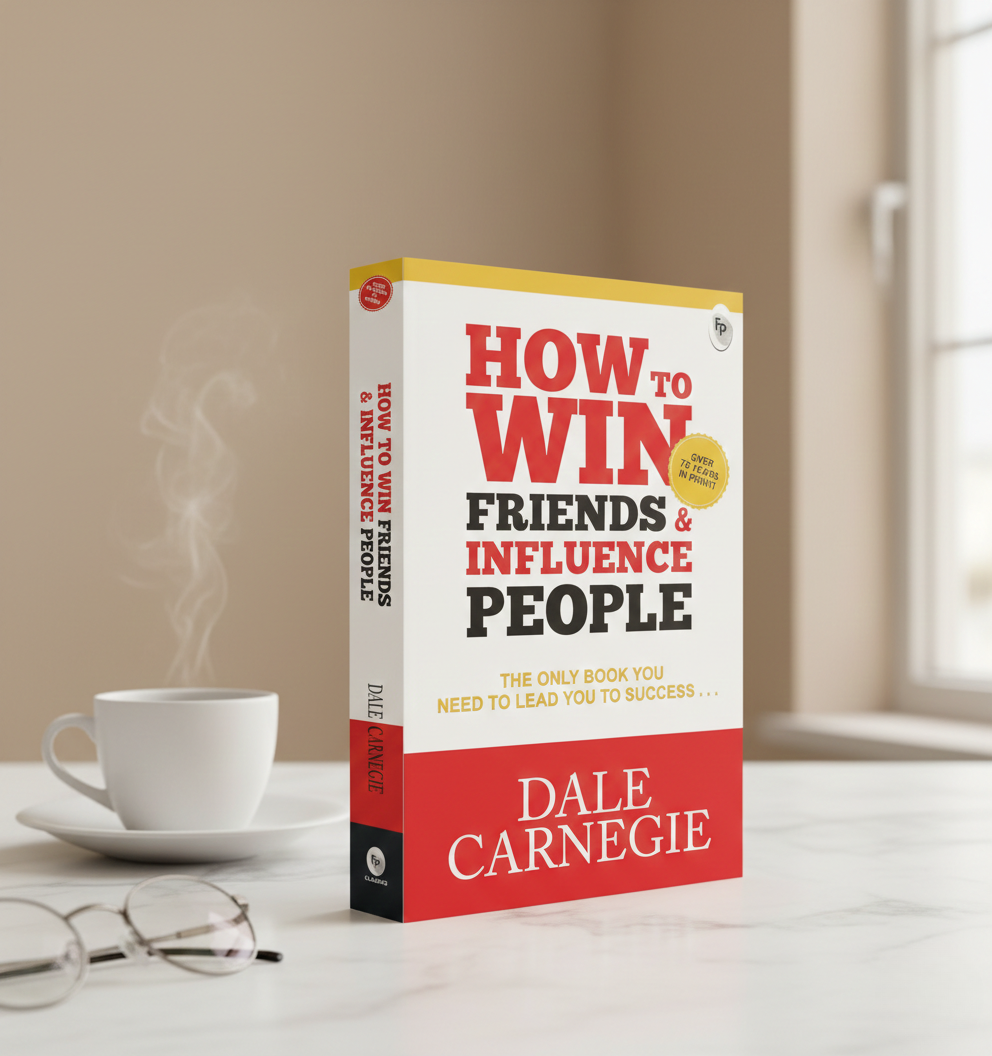
Dale Carnegie’s How to Win Friends and Influence People belongs to that last category.
What the Book Is About
At its simplest level, this book is about dealing with people. Not manipulating them. Not outsmarting them. Just understanding how human beings actually behave, especially when pride, ego, insecurity, and desire for recognition are involved.
The book opens with stories, many of them historical, some unsettling, some oddly human. Carnegie does not start with rules. He starts with examples. Criminals who justified themselves. Powerful figures who believed they were right. People who never saw themselves as villains in their own stories. It is an uncomfortable beginning, but also a revealing one.
From there, the book moves into principles. How to make people feel heard. Why criticism usually backfires. Why appreciation works better than argument. Why remembering names matters more than clever opinions. These ideas are illustrated through anecdotes rather than theory, which is part of why the book has survived for decades.
The structure is simple. Short chapters. Clear lessons. Repetition of ideas from different angles. It does not rush. It insists. Almost as if Carnegie knows that knowing something intellectually is not the same as practicing it.
What Stood Out to Me
What stands out most, even after all these years, is how little this book is actually about winning.
The title suggests strategy. Influence. Control. But the content leans heavily toward humility. Listening. Letting go of the need to be right. That contrast surprises many first time readers.
I’ve read enough modern self help to notice how often books encourage dominance disguised as confidence. Carnegie’s approach feels older, but also more psychologically accurate. He understands that people want to feel important. Not flattered, but genuinely seen.
One chapter that always makes me pause is the emphasis on sincere appreciation. Not generic praise. Not performance. Real noticing. I’ve seen this play out in workplaces again and again. The manager who listens gets loyalty. The leader who acknowledges effort builds trust. The person who interrupts less gets remembered more.
Another thing that stands out is the tone. Carnegie does not sound superior. He admits his own failures openly. That matters. In my years reviewing books, I’ve learned that readers trust authors who admit they struggled to apply their own advice.
The examples may feel dated to some readers. References to early twentieth century America, industrial leaders, old business settings. But the behavior patterns underneath have not changed. People still resist criticism. Still crave validation. Still remember how you made them feel long after they forget what you said.
The Emotional Core
The emotional center of How to Win Friends and Influence People is empathy.
Not the performative kind. The practical kind. The kind that requires slowing down and stepping outside your own perspective for a moment. Carnegie keeps returning to this idea, that most conflict comes from misunderstanding, not malice.
There is a particular discomfort that arises while reading this book, especially the first time. You begin to recognize yourself in the mistakes described. Times you corrected someone publicly. Times you dismissed an opinion too quickly. Times you wanted credit more than connection.
I remember feeling slightly defensive when I first read it. Then reflective. Then quieter in my interactions without even trying to be.
In 2025, when conversations are sharper, more polarized, and often performative, this book feels almost countercultural. It asks you to soften your stance. To listen longer. To assume less. That is not easy advice, and maybe that is why it still matters.
Who This Book Is For
This book is for people who work with people. Which is almost everyone.
It is especially useful for professionals early in their careers who are struggling to navigate workplaces where technical skill alone is not enough. It is also valuable for leaders who want influence without fear based authority.
Parents, teachers, and mentors can also find relevance here. Many of the principles apply directly to raising children and guiding young minds. Respect works better than force. Listening builds more trust than lecturing.
That said, this book might frustrate readers looking for quick hacks or dramatic transformation. The changes it suggests are subtle. They require patience. Practice. Self awareness.
It may also feel repetitive at times. Carnegie repeats himself intentionally. Some readers will appreciate that reinforcement. Others may wish for a tighter structure.
Final Thoughts
Every time I return to How to Win Friends and Influence People, I notice something different. Earlier, it felt like a guide to external success. Now, it feels more like a mirror.
As an editor, I often ask whether a book ages well. This one does, not because society has not changed, but because human psychology has not evolved as fast as our technology.
Dale Carnegie was not writing for algorithms or virality. He was writing for dinner table conversations, workplace disagreements, friendships that quietly fell apart. That grounding gives the book its longevity.
If there is one limitation worth mentioning, it is that the book assumes a level of goodwill from the reader. It works best when approached sincerely. Used manipulatively, it loses its ethical center.
Still, if you are willing to apply even a few principles honestly, the impact can be lasting.
FAQ
Is How to Win Friends and Influence People worth reading today?
Yes. Despite its age, the principles remain relevant because human behavior has not fundamentally changed.
Who should read How to Win Friends and Influence People?
Professionals, leaders, students, parents, and anyone who wants to communicate better with others.
Is this book outdated?
Some examples are from an earlier era, but the underlying ideas about empathy and communication still apply.
Should you read this book more than once?
Many readers find it useful to revisit at different stages of life, as its lessons land differently over time.

With over 11 years of experience in the publishing industry, Priya Srivastava has become a trusted guide for hundreds of authors navigating the challenging path from manuscript to marketplace. As Editor-in-Chief of Deified Publications, she combines the precision of a publishing professional with the empathy of a mentor who truly understands the fears, hopes, and dreams of both first-time and seasoned writers.