
Rating:
⭐⭐⭐⭐ (4.2 out of 5)
Books on artificial intelligence usually intimidate me a little. Not because I dislike the subject, but because so many of them forget there’s a human on the other side of the page. They get technical fast. They start sounding like conference papers. And somewhere between algorithms and predictions, the reader is left behind.
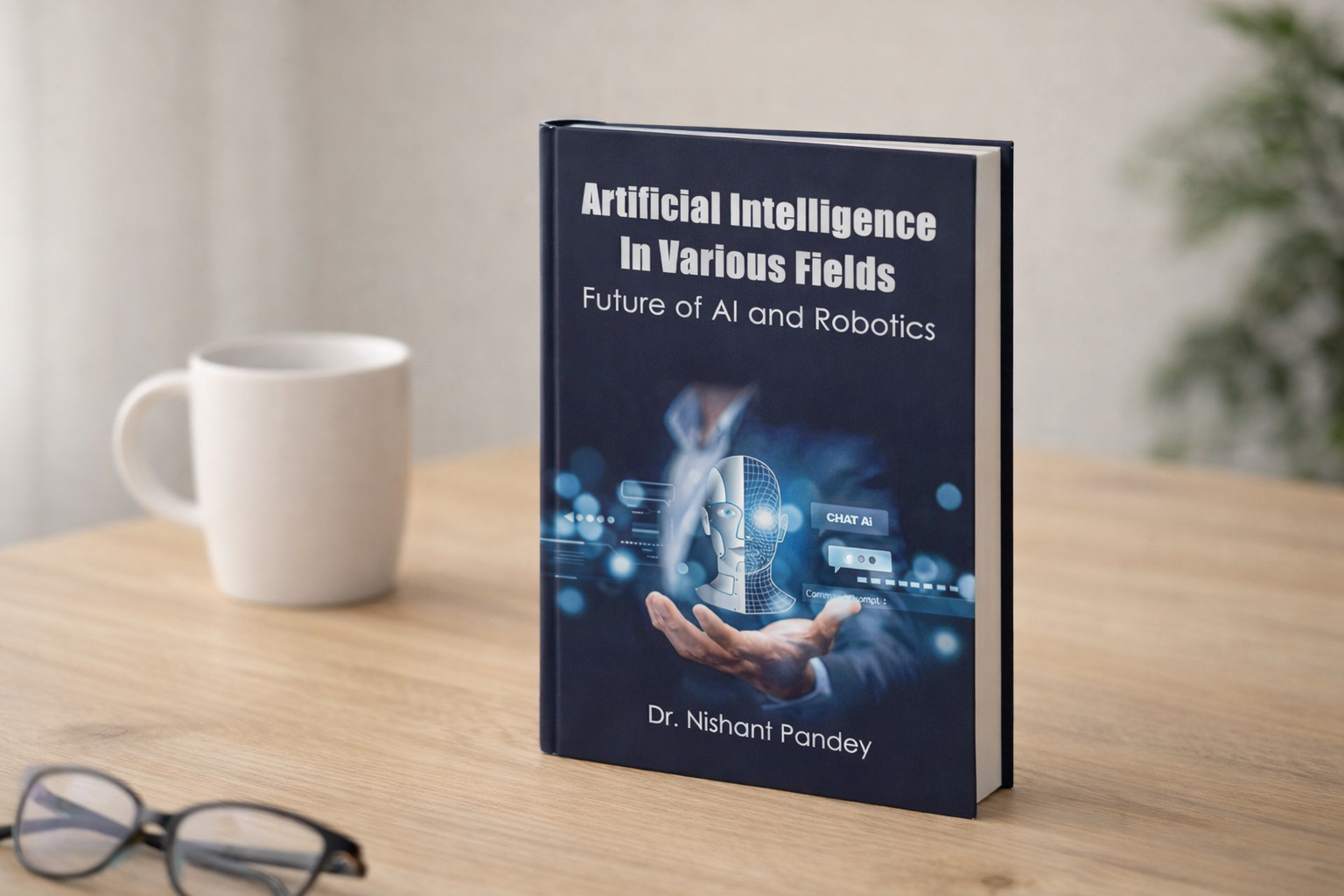
So when I first looked at Artificial Intelligence In Various Fields: Future of AI and Robotics by Dr. Nishant Pandey, I wasn’t sure what kind of reading experience I was walking into. The cover is bold, futuristic, very clearly signaling “technology.” I half expected something dense. Useful, maybe, but heavy.
What I didn’t expect was how accessible the intent of this book felt right from the start.
I’ve been reading non fiction for over fifteen years now, alongside fiction and poetry, and I’ve learned that clarity is a choice. This book chooses clarity more often than not. And honestly, that matters.
What the Book Is About
At a basic level, Artificial Intelligence In Various Fields is exactly what the title promises. It looks at how AI is being used across different domains and where robotics and intelligent systems might be headed in the coming years.
But it doesn’t feel like a narrow technical manual. The framing is broader. The book seems interested in showing readers how AI fits into real systems, real industries, and real lives. Education, healthcare, industry, communication, automation. These are not abstract ideas here. They are presented as evolving realities.
The subtitle, Future of AI and Robotics, gives you another clue. This is not just about what exists today, but about where things are moving. There is a forward looking energy throughout. Not hype driven exactly, but curious. Observational.
From what the structure suggests, the book is organized to move from foundational understanding into application. That pacing helps. It allows readers who may not come from a technical background to ease into the subject instead of being thrown into jargon immediately.
I found myself thinking that this would work well for readers who want context. Not just how AI works, but where it shows up and why it matters.
What Stood Out to Me
One thing that stood out almost immediately is the tone. Dr. Nishant Pandey does not sound like he is trying to impress the reader with complexity. That might sound like a small thing, but it isn’t. Especially in books about emerging technology.
There’s an effort here to explain rather than overwhelm. To connect ideas instead of stacking them. I kept noticing how the book seems to acknowledge that readers come from different levels of familiarity with AI.
Another thing I appreciated is the way “various fields” is taken seriously. This is not a surface level mention of industries. The intent feels analytical. As if the author wants readers to understand patterns. How AI adapts differently depending on context. How robotics intersects with ethics, efficiency, and human labor.
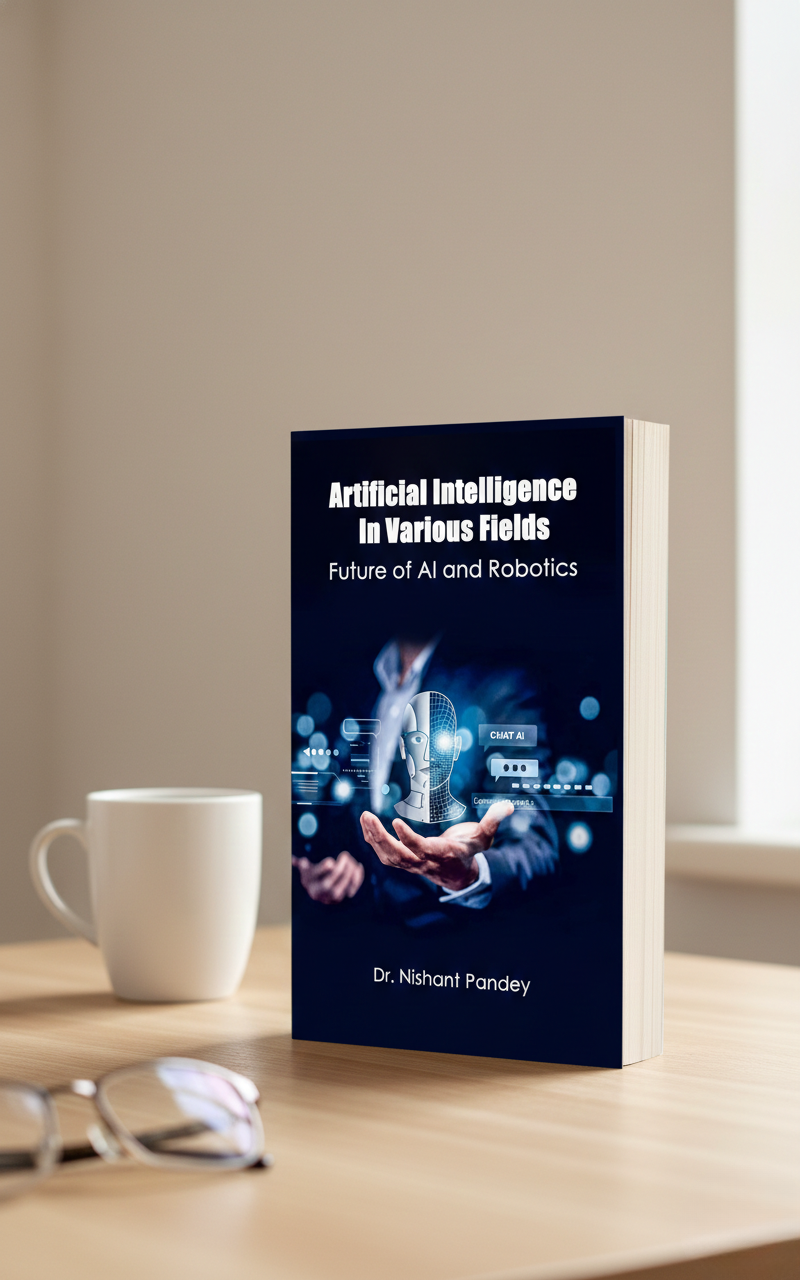
The visuals implied by the cover also say something. The human hand holding a digital intelligence form. It made me pause. I’ve seen similar imagery before, but here it feels symbolic of balance rather than dominance. That balance shows up in the book’s approach too. There’s excitement, yes, but also restraint.
If I had to point out something that didn’t fully land for me, it would be that some sections feel more explanatory than reflective. I found myself wanting a little more pause in certain chapters. A moment where the implications are sat with longer. But that’s a preference, not a flaw.
The Emotional Core
This might sound strange to say about a book on artificial intelligence, but there is an emotional undercurrent here. It’s subtle. It’s not about feelings in the traditional sense. It’s about responsibility.
I kept thinking about how often we talk about AI as something inevitable. As if it’s happening to us rather than being shaped by us. This book gently pushes back against that idea. It reminds readers that systems are designed. Choices are made. Priorities are set.
There were moments where I felt a quiet sense of curiosity growing. Not fear. Not blind optimism either. Just curiosity. That feeling of wanting to understand what’s coming so you can engage with it more consciously.
In 2025, when conversations around AI are often extreme on either side, panic or hype, this middle ground feels refreshing. It’s the kind of book that sits with you because it doesn’t tell you what to think. It shows you what to notice.
Who This Book Is For
This book will work especially well for students, early professionals, educators, and readers who want a structured overview of AI across domains without diving straight into coding or research heavy material.
If you are someone who keeps hearing about AI but feels unsure where to start, this is a good entry point. It builds familiarity without assuming expertise.
That said, if you are already deep into AI research or looking for advanced technical frameworks, this might feel introductory in parts. This might not be for readers who want cutting edge mathematical models or deep programming discussion.
But if you want context, perspective, and a grounded understanding of how AI fits into different fields, this book earns its place.
Final Thoughts
As an editor at Deified Publication, I always ask myself one question when finishing a book. Did this respect the reader’s time?
Artificial Intelligence In Various Fields does. It doesn’t rush you, and it doesn’t talk down to you. It feels like a book written by someone who wants readers to understand, not just admire the subject.
There are moments where the writing could slow down and reflect a bit more deeply, and a few sections could benefit from more real world anecdotes. But overall, this is a solid, thoughtful contribution to a conversation that is only getting louder.
I walked away feeling more informed and, more importantly, more grounded. And that’s not something I say lightly about books in this space.
FAQ Section
Is Artificial Intelligence In Various Fields worth reading?
If you are looking for a clear, structured overview of how AI is shaping different industries, yes. It offers understanding without unnecessary complexity.
Who should read Artificial Intelligence In Various Fields?
Students, educators, professionals curious about AI, and readers who want context rather than pure technical depth.
What is the book about in simple terms?
It explains how AI and robotics are used across various fields and what their future might look like.
Is this book too technical for beginners?
No. It is written in a way that beginners can follow comfortably.

With over 11 years of experience in the publishing industry, Priya Srivastava has become a trusted guide for hundreds of authors navigating the challenging path from manuscript to marketplace. As Editor-in-Chief of Deified Publications, she combines the precision of a publishing professional with the empathy of a mentor who truly understands the fears, hopes, and dreams of both first-time and seasoned writers.