
Rating:
⭐⭐⭐⭐ (4.2 out of 5)
I picked up Whispers of Emptiness at a moment when my reading table was already crowded. Manuscripts waiting for edits, novels bookmarked halfway through, poetry collections I kept promising myself I would return to. I did not expect this book to interrupt me. But it did, in a very specific way. Not loudly. Not urgently. More like a pause I did not know I needed.
I have been reading and reviewing books for over fifteen years now, across genres and moods. As Editor in Chief at Deified Publication, I see a lot of writing that tries to sound wise. This book does not try very hard to impress. That is probably why it stayed with me longer than I expected.
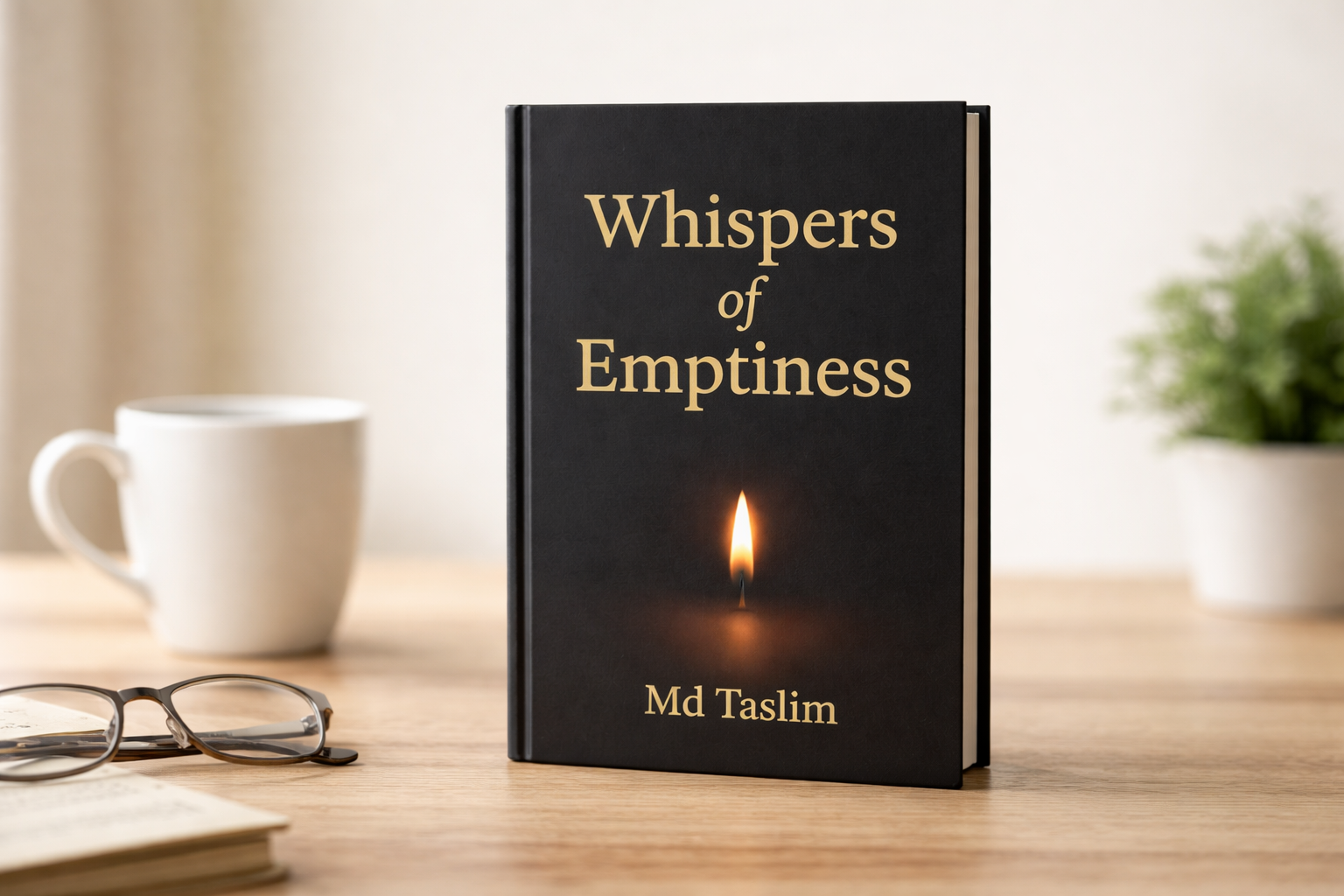
Just from the cover alone, there is a sense of restraint. A black background. A single candle flame. The title, Whispers of Emptiness, printed in gold, almost hesitant. It feels like a book that knows silence is part of its language. And when I moved to the blurb, that feeling deepened.
What the Book Is About
Based on the blurb, Whispers of Emptiness by Md Taslim tells the story of a young boy who walks away from the noise of the world. Family, friends, comfort, familiarity, all of it is left behind in search of wisdom. He chooses seclusion. Years pass. Decades, actually. Fifty of them. During this long withdrawal from the world, the boy transforms into what the book calls The Sage.
What struck me here is not the transformation itself. We have seen variations of this arc in spiritual literature before. What feels different is the way time is treated. Fifty years is not romanticized. It feels heavy. Almost intimidating. The Sage learns from nature, from stars and wind, but also from his own inner questions. The blurb suggests that wisdom is not handed to him. It grows slowly, maybe painfully.
When The Sage finally returns to society, he does not come back with sermons or grand declarations. He comes back with whispers. Truths discovered in emptiness. Lessons formed in silence. The book positions itself as a sharing of those insights rather than a story driven by plot or conflict.
I am not sure this book is meant to be read like a conventional narrative. It feels closer to a spiritual offering, maybe even a meditative text.
What Stood Out to Me
The first thing that stood out to me was the language in the blurb itself. It is deliberate. Slightly old fashioned. Almost formal in its rhythm. Words like illumination, seclusion, odyssey. This tells me a lot about the tone readers can expect. This is not casual or conversational prose. It seems reflective, careful, and intentionally slow.
Another thing that stayed with me is the idea of emptiness not as absence, but as presence. The book frames emptiness as something that contains whispers, truths, teachings. I found myself thinking about how uncomfortable most of us are with empty spaces. Empty schedules. Empty rooms. Empty thoughts. In my years reviewing spiritual and philosophical writing, I have noticed that authors often rush to fill emptiness with meaning. This book appears to do the opposite. It sits there.
There is also a strong sense that this is a personal book. Even though the story speaks of a Sage, it does not feel mythological in a distant way. The back cover image of the author, paired with the blurb, made me wonder how much of this is drawn from lived experience. I am not saying it is autobiographical, but there is an intimacy here that feels earned rather than constructed.
If I had to offer a small critique based only on the provided material, it would be this. The language might feel heavy for some readers. If you are someone who prefers sharp, minimal sentences or modern phrasing, this might take adjustment. But for the right reader, that cadence will feel intentional.
The Emotional Core
Emotionally, I think Whispers of Emptiness works in a quiet, inward way. This is not a book that tries to make you feel inspired in big, dramatic bursts. Instead, it seems to invite reflection. I kept thinking about how many people today feel overwhelmed by noise. Social media, expectations, constant updates. Reading this in 2025, the idea of stepping away for fifty years feels extreme, yes, but also strangely tempting.
There is something gentle about the way the book frames wisdom. Not as achievement, but as something that grows when you stop chasing it. That idea stayed with me long after I closed the description. Honestly, it reminded me of moments in my own life when clarity came not from effort, but from stillness. From sitting with confusion instead of fixing it.
Some readers may find this emotionally distant. There does not seem to be much interpersonal drama or relational tension suggested here. But for others, especially those going through personal transitions or burnout, this emotional restraint might feel comforting.
Who This Book Is For
This book will not be for everyone, and I think that is okay.
If you enjoy spiritual writing, reflective prose, or books that feel more like companions than entertainment, Whispers of Emptiness might resonate with you. Readers who appreciate Eastern philosophy, meditative texts, or wisdom literature will likely find something meaningful here.
If you are looking for fast pacing, plot twists, or character driven drama, this may not be the right fit. This book seems to ask for patience. For pauses. For rereading a paragraph and sitting with it.
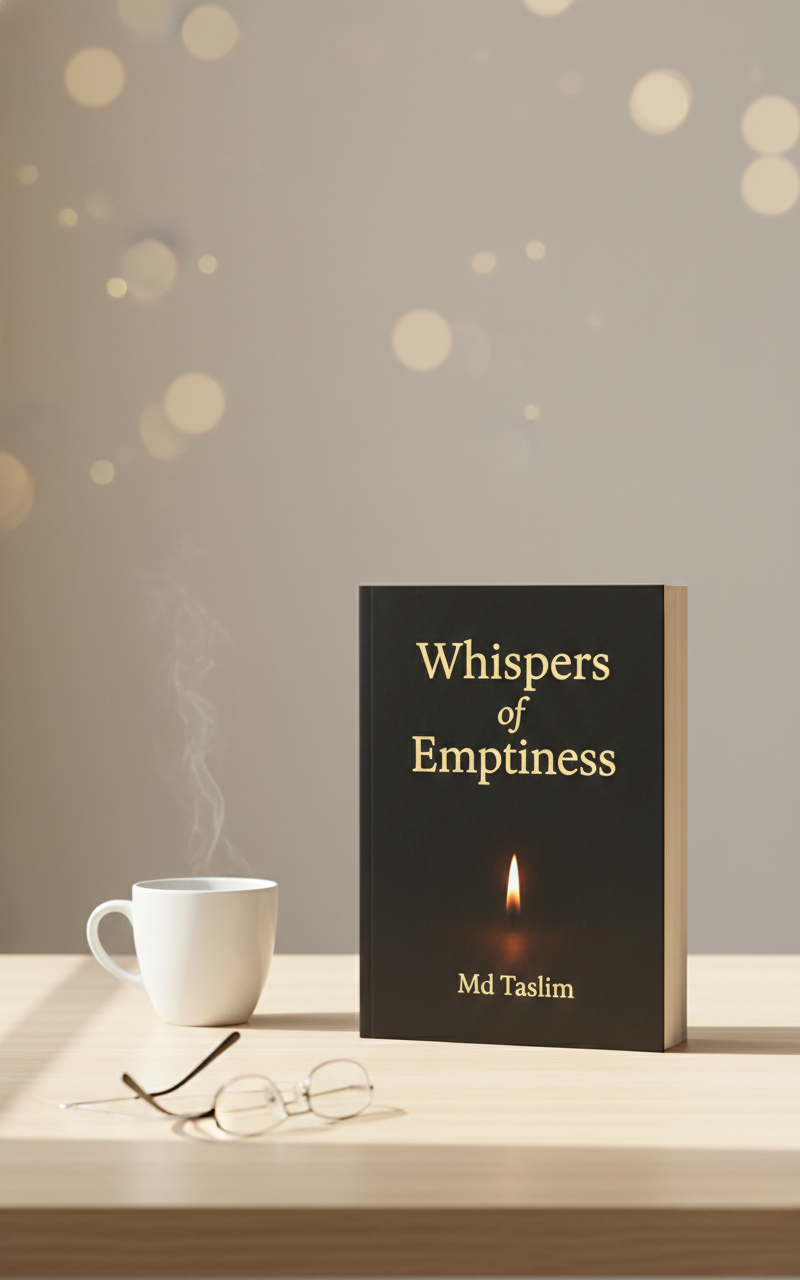
I would especially recommend this to readers who enjoy reading alone, slowly, maybe with a cup of tea nearby. The kind of book you read a few pages at a time rather than in one sitting.
Final Thoughts
As an editor and a reader, I value honesty in books. Not perfection, not grand ambition, but sincerity. Whispers of Emptiness feels sincere. It knows what it wants to offer and does not pretend to be something else.
Md Taslim does not appear to be trying to impress the reader with cleverness. Instead, the book feels like an invitation. Take what you need. Leave the rest. Sit with the words. Or simply let them pass.
I did not agree with everything implied by the blurb. And I do not think every passage would land equally for every reader. But I appreciate books that respect silence. That do not rush to explain themselves. In my experience at Deified Publication, those are often the books people return to later in life.
This is the kind of book that might mean one thing to you now and something entirely different a few years from now. And honestly, those are my favorite kinds.
Frequently Asked Questions
Is Whispers of Emptiness worth reading?
If you enjoy reflective, spiritual writing and are comfortable with a slow, contemplative tone, it is worth your time.
Who should read Whispers of Emptiness?
Readers interested in wisdom literature, silence, inner growth, and philosophical reflections will likely connect with it.
What genre does Whispers of Emptiness fall under?
It sits somewhere between spiritual nonfiction and philosophical reflection, rather than traditional storytelling.
Is this book heavy or intense?
Emotionally, it is gentle but serious. It asks for attention and patience rather than emotional highs.

With over 11 years of experience in the publishing industry, Priya Srivastava has become a trusted guide for hundreds of authors navigating the challenging path from manuscript to marketplace. As Editor-in-Chief of Deified Publications, she combines the precision of a publishing professional with the empathy of a mentor who truly understands the fears, hopes, and dreams of both first-time and seasoned writers.