
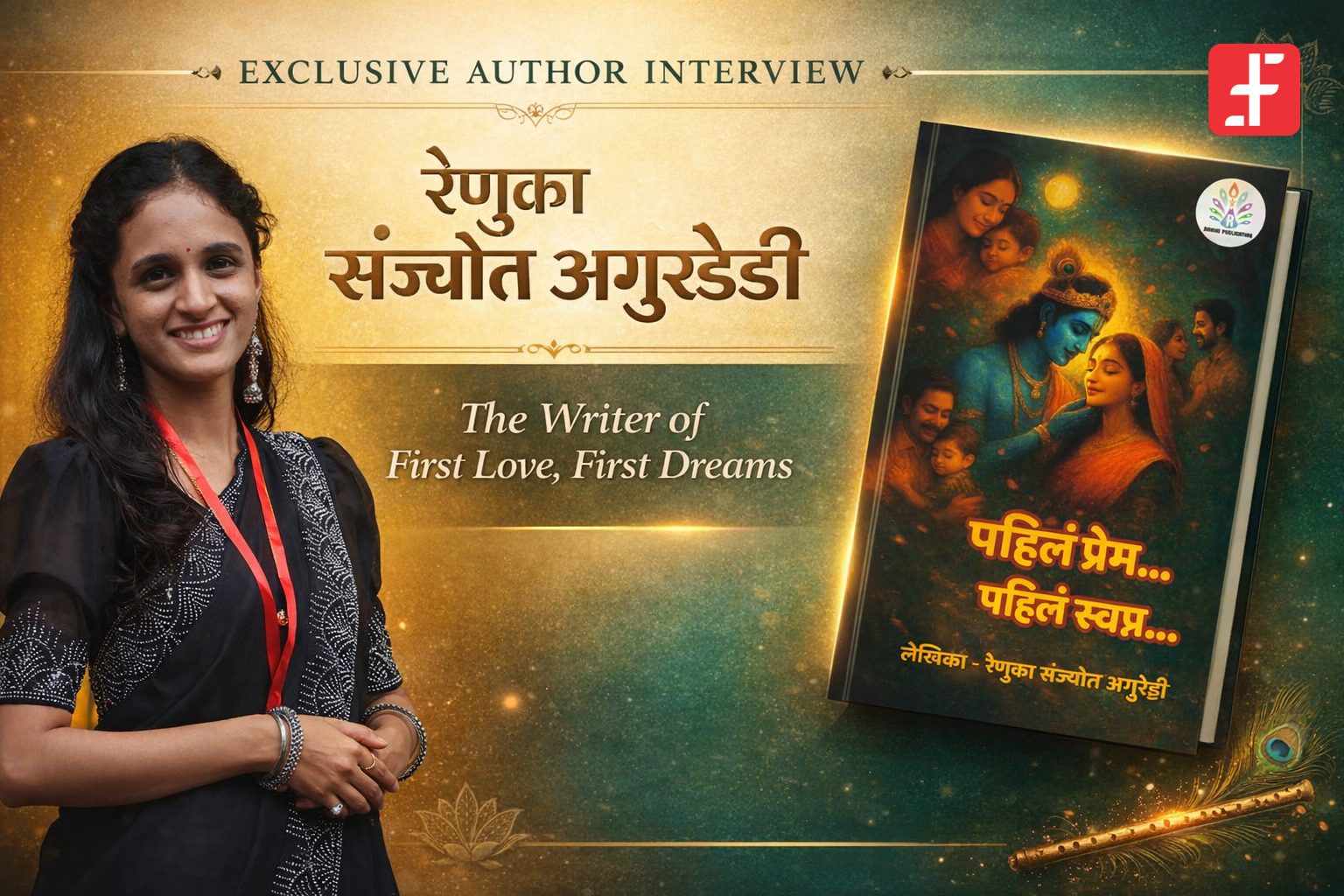
An Exclusive Interview by Priya Srivastava, Editor-in-Chief, Deified Publications
Some people stumble into writing. Others are claimed by it, quietly and insistently, until they have no choice but to surrender. Renuka Sanjyot Agureddy belongs to the second kind. A Finance Analyst by profession and a Marathi poet by calling, Renuka’s journey to her debut poetry collection Pahila Prem… Pahila Swapna is a testament to resilience, patience, and the unshakable belief that words can heal what life breaks.
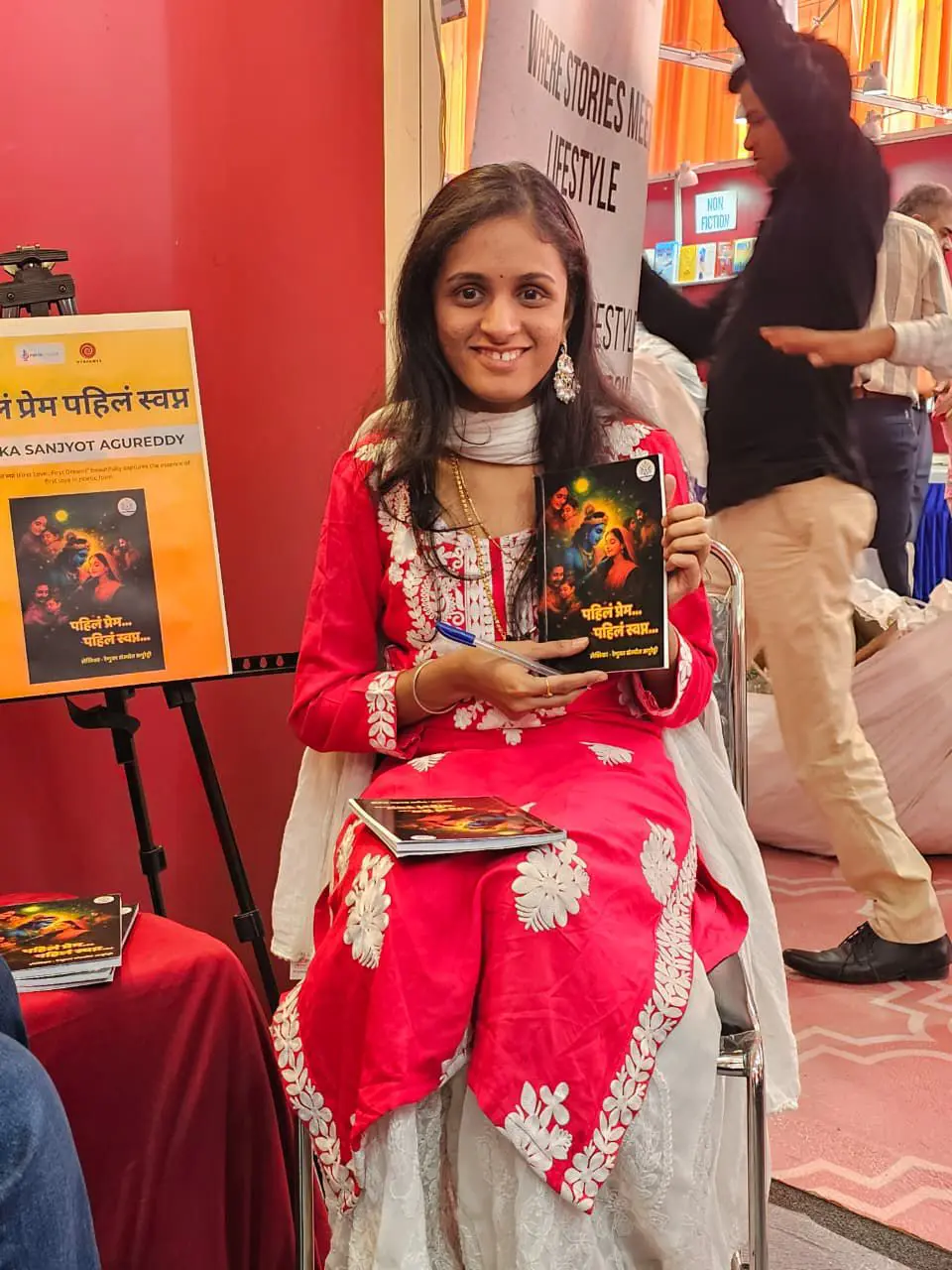
I met Renuka at a quiet café near her workplace at Altimetrik. She arrived carrying her book, a shy smile playing on her lips. Within minutes of our conversation, that shyness gave way to something deeper. Passion. The kind that only comes from surviving difficult seasons and emerging with stories to tell.
Over steaming cups of chai and the gentle hum of afternoon conversations around us, Renuka shared her journey from a struggling school student to an award-winning published author. This is that conversation.
The Beginning: When Poetry Chose Her
Priya Srivastava: Renuka, thank you for making time today. Let’s start at the very beginning. Your journey as a writer began unintentionally, almost like destiny guiding you. Can you take me back to that moment in 7th grade when you first played with rhymes?
Renuka Sanjyot Agureddy: Thank you for having me, Priya. You know, I was never planning to become a writer. It just happened. I was in 7th grade during summer vacations, bored out of my mind, and I randomly started playing with words in Marathi. I put together rhymes, and suddenly a poem was born.
That first poem was dedicated to my mother. She is my god, my strength, everything. I needed to express what I felt for her, and poetry gave me that language. From that moment, writing stopped being just a hobby. It became my calling.
PS: That’s beautiful. So you didn’t choose poetry. Poetry chose you.
RA: Exactly! Especially during phases when life felt heavy and words became my only refuge. When everything else failed, I had poetry. It held me when nothing else could.
PS: You mentioned that poetry became your refuge during difficult times. Can you tell me more about those phases?
RA: Life has tested me in ways I never imagined. I lost my first poetry book, my diary, my grandfather, and for a while, I even lost myself. I faced illness, financial problems, emotional breakdowns. There were long stretches when I couldn’t write at all.
But here’s the thing about poetry. Even when I stopped writing, poetry never left me. It was always there, waiting patiently like an old friend who knows you’ll come back eventually.
School Struggles and Finding Belief
PS: In the excerpt from your story that you’ve shared, you talk about never being a bright student in your early school days, struggling with focus, distractions, comparisons, and self-doubt. That must have been hard.
RA: It was really hard. I wasn’t the topper. I wasn’t the student teachers praised. I struggled to focus, always got distracted, and constantly compared myself to others. The self-doubt was crushing sometimes.
But one thing remained constant. Someone always believed in me. That person was my father. No matter how badly I performed, no matter how many times I failed, he never stopped believing in me.
PS: And your mother’s strict guidance, your sister’s silent teaching, your grandfather’s unconditional love. They all shaped who you are today.
RA: Completely. My mother was strict because she knew I needed discipline. My sister taught me without saying much, just by being who she was. My grandfather gave me love without conditions, without expectations. Together, they created this foundation that I stand on today.
When life knocked me down later, it was their voices I heard. Their belief in me became my belief in myself.
The Dark Interval: Loss, Illness, and Silence
PS: You mentioned losing so much. Your first poetry book, your diary, your grandfather, and even yourself for a while. That’s a lot of loss to carry.
RA: Let me clarify this, because it often gets misunderstood. In 12th standard, my teacher mistook my personal diary for a slam book and confiscated it. I never got it back. That moment pushed me away from writing on paper and towards writing on my phone. This happened long before marriage. Later, as I wrote more poems, a quiet desire kept growing inside me to publish them someday. After marriage, that flow paused for a while, but it was not a loss. It was more like a temporary blockage, a silence before a new journey began. Looking back, it feels less like something was taken from me and more like life was preparing me differently.
Then my grandfather passed away. He was one of my biggest supporters, someone who loved me without asking for anything in return. Losing him broke something inside me.
PS: And on top of that, you faced illness and financial instability.
RA: Yes. My health deteriorated. We faced serious financial problems. There were days I couldn’t see a way forward. Emotionally, I was breaking down regularly. The pauses in writing became longer and longer.
Some people might think, “She gave up.” But I never gave up on poetry. I just… paused. Life demanded my attention elsewhere, and I gave it. But poetry was always there in the background, like a song you can’t quite hear but you know is playing.
PS: That’s a powerful image. How did you find your way back to writing?
RA: With time, understanding, and the steady support of my husband and in-laws. They never pressured me. They gave me space to heal, to find myself again. Slowly, I started writing on my phone. Just random thoughts at first. Then I started posting anonymously on social media.
PS: Posting anonymously. Why anonymously?
RA: Because I wasn’t ready to attach my name to my words yet. I was still rebuilding my confidence. The anonymous posts gave me freedom. I could express without fear of judgment. I could test if my words still mattered to anyone.
And they did. People responded. They connected with what I wrote. That response gave me courage.
Rediscovering Joy Through Voice and Creativity
PS: Apart from writing, you also rediscovered joy through creativity by expressing emotions and humor through your Shinchan voice. That’s such an unexpected detail! Tell me about that.
RA: (Laughs) Yes! I do a Shinchan voice impression. It started as a silly thing, just to make people laugh. But it became surprisingly important to my healing process.
After so much pain and seriousness, I needed lightness. I needed to laugh again. The Shinchan voice let me be playful, be childlike, connect with people in a lighter, happier way. It reminded me that life isn’t just about surviving pain. It’s also about finding joy in small, silly things.
PS: And it’s gained appreciation across social media platforms.
RA: Yes, and I’m so grateful for that. It showed me that I could be many things at once. Serious poet, funny voice artist, finance analyst, daughter, wife. I didn’t have to choose just one identity.
The Professional Life: Finance, Logic, and Discipline
PS: You work as a Finance Analyst at Altimetrik with a Post Graduation in M.Com. That’s a very different world from poetry. How has your commerce background and professional life influenced your writing?
RA: Coming from a commerce background and working as a Finance Analyst has taught me discipline, structure, and clarity. Finance is all about logic, precision, numbers that need to add up perfectly.
While my profession strengthened my logical thinking, poetry allowed my emotions to flow freely. This balance between logic and emotion reflects in my writing. My poems are deeply emotional, yes, but they’re also grounded in real-life experiences. They’re not just random feelings. They’re structured emotion, if that makes sense.
PS: It makes perfect sense. The analytical mind providing structure to emotional chaos.
RA: Exactly. Also, managing studies, job, and family responsibilities taught me patience. Writing matured over time because I matured over time. You can’t rush good poetry. It needs to simmer, to age, to develop depth.
When I was younger, I wrote from immediate emotion. Now, I write from reflected emotion. There’s a difference. Reflection gives you wisdom that immediacy doesn’t.
The Turning Point: Pahila Prem… Pahila Swapna
PS: Let’s talk about your book, Pahila Prem… Pahila Swapna. What a beautiful title. First love, first dream. What made you realize you must write and publish this book?
RA: The moment I wrote the poem “Pahila Prem… Pahila Swapna,” something shifted inside me. That poem gave me the confidence that my words deserved a larger space and a lasting form.
It was my childhood dream to publish a book. But life had its own pace. With the support of my family, including my husband and in-laws, I found the courage to heal, believe again, and turn my dream into reality.
PS: The book is described as a heartfelt poetic journey of love, innocence, emotions, and self-discovery. Walk me through what readers will find in these pages.
RA: The book is about life’s first experiences. First love, first heartbreak, first moment of understanding who you really are. It’s about innocence and how life slowly shapes you, sometimes gently, sometimes harshly.
Each poem is rooted in real emotions and real experiences. Love, relationships, family bonds, self-doubt, hope, pain, healing. Nothing is exaggerated. Nothing is fiction. What you read is what I lived or observed closely in others.
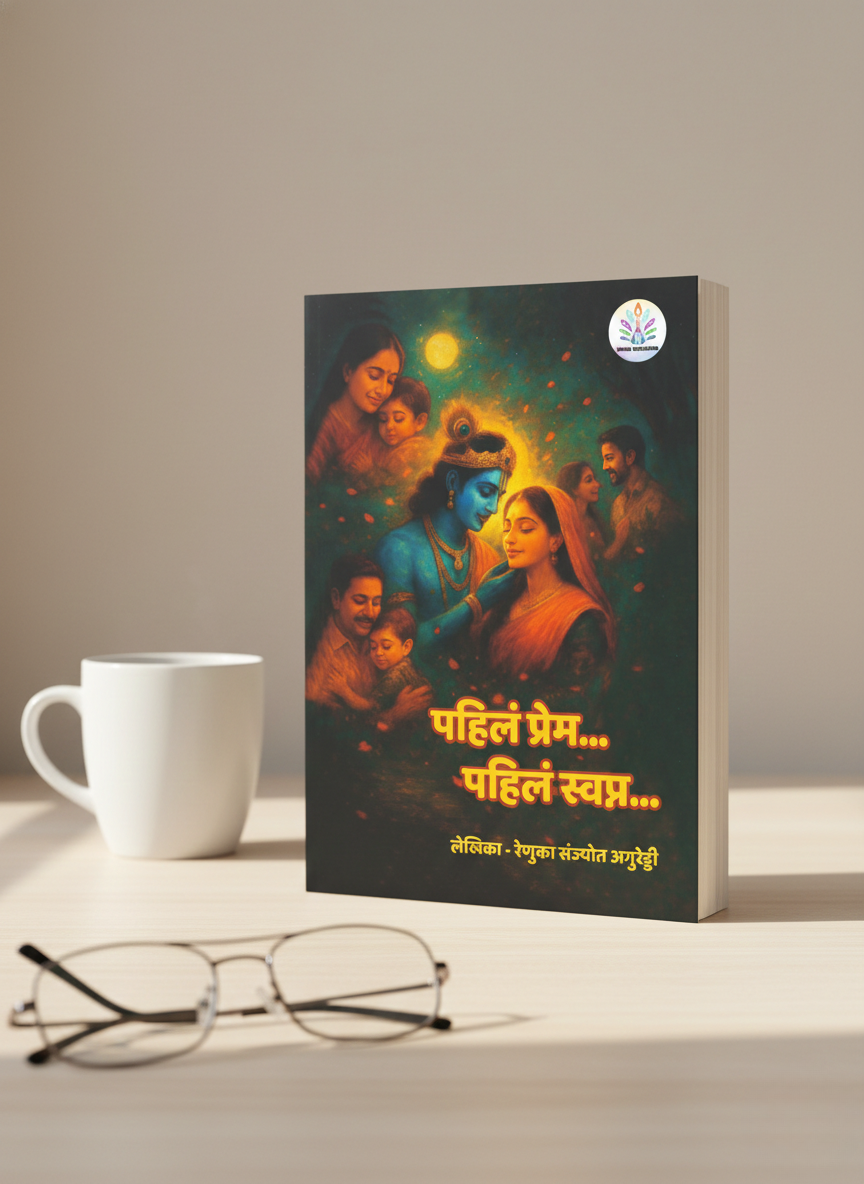
PS: The cover is stunning. Radha and Krishna surrounded by modern couples, all bathed in this warm, golden light. What’s the symbolism there?
RA: The cover represents the timelessness of love. Radha and Krishna symbolize divine, eternal love. The modern couples around them represent how love continues in every generation, in different forms but with the same essence.
First love is sacred, whether it happened 5,000 years ago or yesterday. That golden light you see? That’s the warmth, the glow that first love brings to your life. Even if it doesn’t last, it changes you forever.
PS: That’s profound. The book is in Marathi. Was that always the plan?
RA: Absolutely. Marathi is my mother tongue. It’s the language of my heart. When I’m happy, I think in Marathi. When I’m sad, I cry in Marathi. When I’m angry, I scold in Marathi. (Laughs)
My emotions are most authentic in Marathi. Translating them to another language would lose something essential. I wanted readers to experience the raw, unfiltered version of what I felt.
Also, Marathi poetry has such a rich tradition. I wanted to contribute to that tradition in my own small way.
The Writing Process: Balancing Logic and Emotion
PS: You’re juggling a demanding finance job, family responsibilities, and writing. How do you manage it all without burning out?
RA: Honestly? Some days I don’t manage it well. There are days I’m exhausted, days I snap at people when I shouldn’t, days I feel like I’m failing at everything.
But I’ve learned to be gentle with myself. I’ve learned that doing your best is enough, even if your best on Tuesday is very different from your best on Friday.
PS: What does your typical writing routine look like?
RA: There is no typical routine, which used to frustrate me until I accepted it. I write when inspiration strikes. Sometimes that’s at 2 AM when I can’t sleep. Sometimes it’s during my lunch break at work. Sometimes it’s on weekends when the house is quiet.
I keep notes on my phone constantly. A line, a phrase, an image. Later, when I have time, I expand those notes into full poems. My phone is basically my modern-day diary.
PS: Do you edit a lot or do poems come out more or less complete?
RA: Both, actually. Some poems pour out complete, and I barely touch them afterward. Those are usually the ones written from intense emotion, from a place of urgent need to express.
Other poems need work. I’ll write a draft, leave it for days or weeks, come back with fresh eyes, rewrite, restructure. The finance analyst in me can’t let go of imperfection easily. (Laughs) I want the emotional truth AND the structural beauty.
Faith and Philosophy: The Role of Belief
PS: Looking at your book cover and your story, spirituality seems important to you. What role does faith play in your life and writing?
RA: Faith has been my anchor. When everything else was uncertain, when I didn’t know if things would get better, faith kept me going.
I’m not talking about blind faith or ritualistic practice. I’m talking about the belief that life has meaning, that struggles serve a purpose, that there’s something bigger than my individual pain.
That faith shows up in my poetry. There’s an underlying current of hope even in the saddest poems. Because I believe in resilience. I believe in transformation. I believe that nothing is wasted, not even pain.
PS: Your book cover features Radha and Krishna. Are they personally significant to you?
RA: Very much so. Their love story is about separation, longing, devotion, and transcendence. It’s not a simple, happy love story. It’s complicated, bittersweet, profound.
That resonates with me because real life is like that. Love doesn’t always mean staying together. Sometimes it means growing apart while still holding someone in your heart. Sometimes the deepest love comes with the deepest pain.
Radha and Krishna teach you that love can be beautiful even when it’s incomplete. Maybe especially when it’s incomplete.
Competitions, Recognition, and Self-Belief
PS: You mentioned participating in competitions and earning your first reward. How important was external validation to your journey?
RA: In the beginning, it was very important. When you’ve doubted yourself for so long, external validation feels like proof that you’re not crazy. That your words actually matter.
Winning that first reward, getting recognized in competitions, it gave me confidence. It made me believe that I wasn’t just writing for myself. Other people could connect with my work.
PS: And now? Is external validation still as important?
RA: Less so. Now I write because I need to, not because I need applause. Don’t get me wrong, appreciation still feels wonderful. But it’s not the fuel anymore.
The fuel now is the writing itself. The process of taking messy feelings and shaping them into something beautiful. That’s the reward.
If readers connect with it, that’s bonus. But even if they don’t, the act of writing already gave me what I needed.

The Message to Readers
PS: In your story, you end with two powerful messages. “Dreams don’t expire, they wait for the right time and courage.” And “You don’t need a perfect start, you only need the courage to continue.” These feel like the heart of your journey.
RA: They are. Those aren’t just nice quotes. They’re survival lessons I learned the hard way.
I had the dream of publishing a book when I was young. Life said, “Not yet.” I went through years of struggle, loss, pain. The dream waited. It didn’t die. It waited patiently for me to become the person who could bring it to life.
That’s what I want readers to understand. Your dream isn’t dead just because it hasn’t happened yet. It’s just waiting. For the right time, for the right version of you, for the right circumstances.
PS: And the second part, about not needing a perfect start?
RA: That’s for everyone who’s stuck because conditions aren’t ideal. You don’t have money? Start anyway. You don’t have time? Start anyway. You don’t have confidence? Start anyway.
I started writing on my phone during commutes. I posted anonymously when I was too scared to use my name. I took baby steps when giant leaps weren’t possible.
Those imperfect starts accumulated into a published book. You don’t need everything to be perfect. You just need to keep moving forward, even if it’s inches at a time.
Advice for Aspiring Poets and Writers
PS: What would you tell someone who wants to write poetry but is afraid their emotions aren’t “poetic enough” or their language isn’t sophisticated enough?
RA: I’d tell them that poetry isn’t about fancy words. It’s about honest emotion. The most powerful poems I’ve read are simple. They use everyday language to express universal feelings.
Don’t try to sound like other poets. Sound like yourself. Write the way you talk, the way you feel, the way you think. That authenticity is what readers connect with.
Also, your emotions are always enough. You don’t need dramatic life events to write meaningful poetry. Sometimes the most profound poems come from ordinary moments observed closely.
PS: What about writer’s block? How do you handle it?
RA: I’ve learned not to fight it. When words don’t come, I don’t force them. I do other things. I listen to music, I spend time in nature, I talk to people, I do my Shinchan voice and make people laugh. (Laughs)
Creativity needs to be refilled. If you’re constantly pouring out without taking anything in, you’ll run dry. Writer’s block is often your mind saying, “I need rest. I need new experiences. I need to fill up again.”
So I fill up. And when I’m ready, the words return. They always do.
Looking Ahead: Future Plans
PS: Now that you’ve published Pahila Prem… Pahila Swapna, what’s next for you?
RA: I’m working on new poems, exploring different themes. First love was the focus of this book. But there are so many other aspects of life I want to write about.
Motherhood, aging, friendship, loneliness in crowded spaces, finding joy in routine, the complexity of family relationships. There’s so much material in ordinary life that nobody talks about honestly.
PS: Will you stick with Marathi or explore other languages?
RA: Marathi will always be my primary language for poetry. But I’m open to experimenting. Maybe some pieces in Hindi. Maybe bilingual poems. Maybe even translating some of my Marathi work to reach wider audiences.
Language should serve the emotion, not limit it.
PS: Any plans for prose? A memoir perhaps, given your powerful life story?
RA: You know, people have suggested that. And maybe someday. Right now, poetry feels like the right medium for me. It lets me capture intensity in short bursts.
But never say never. Life has surprised me before. It’ll probably surprise me again.
The Personal Side: Being Renuka
PS: Outside of writing and work, who is Renuka? What brings you joy?
RA: I’m someone who finds joy in small things now. A good cup of tea. A funny conversation with my husband. Making people laugh with my voice impressions. Watching old movies. Cooking a meal that turns out well.
After years of chaos, I’ve learned to appreciate calm. I’ve learned that happiness doesn’t have to be dramatic. Sometimes it’s just a quiet evening with nothing urgent demanding your attention.
PS: What’s your relationship with failure now? How do you handle it?
RA: Much better than before. Younger me was terrified of failure. It felt like proof that I wasn’t good enough.
Now I understand that failure is just information. It tells you what doesn’t work so you can try something else. Every poem that doesn’t land teaches me something. Every plan that falls apart opens space for a better one.
Failure isn’t the opposite of success. It’s part of the process of getting there.
PS: If you could go back and tell your 7th grade self something, what would it be?
RA: (Thinks for a moment) I’d tell her that the poem she just wrote about her mother? That’s just the beginning. There will be years of silence, years of pain, years when she thinks she’ll never write again.
But she will. And when she does, she’ll hold a published book in her hands with her name on it. All the struggle will make sense. All the waiting will be worth it.
I’d tell her to be patient, be brave, and never stop believing in the power of her words.
Final Thoughts
PS: Renuka, this has been such a heartfelt, honest conversation. Before we close, what message would you like to leave with our readers?
RA: To everyone reading this, please know that your journey is your own. Don’t compare your chapter three to someone else’s chapter twenty. Don’t feel like you’re behind because others seem ahead.
Life will test you. It will take things from you. It will make you question everything, including yourself. But those tests are preparing you for something you can’t see yet.
Keep your faith, whatever that means to you. Keep your courage, even when it’s just a tiny spark. Keep moving forward, even when you can only crawl.
Your dreams are waiting for you. Not because you’re perfect. Not because you have everything figured out. But because you’re willing to keep trying.
To aspiring writers specifically, write your truth. Don’t wait for permission. Don’t wait for perfect conditions. Start now, with whatever you have. Your story matters. Your words matter. You matter.
And to readers of Pahila Prem… Pahila Swapna, thank you for giving my words a home in your hearts. I wrote this book from a place of honesty and vulnerability. I hope it makes you feel less alone in whatever you’re going through. I hope it reminds you that first loves, first dreams, and first attempts at healing are all sacred. They all matter. They all count.
PS: Thank you so much, Renuka, for sharing your journey so openly and beautifully. Your story will inspire many.
RA: Thank you, Priya, for creating this space for honest conversation. This meant a lot to me.
This interview was conducted in January 2026. It has been lightly edited for clarity while preserving the authentic voice and spirit of the conversation.

With over 11 years of experience in the publishing industry, Priya Srivastava has become a trusted guide for hundreds of authors navigating the challenging path from manuscript to marketplace. As Editor-in-Chief of Deified Publications, she combines the precision of a publishing professional with the empathy of a mentor who truly understands the fears, hopes, and dreams of both first-time and seasoned writers.