
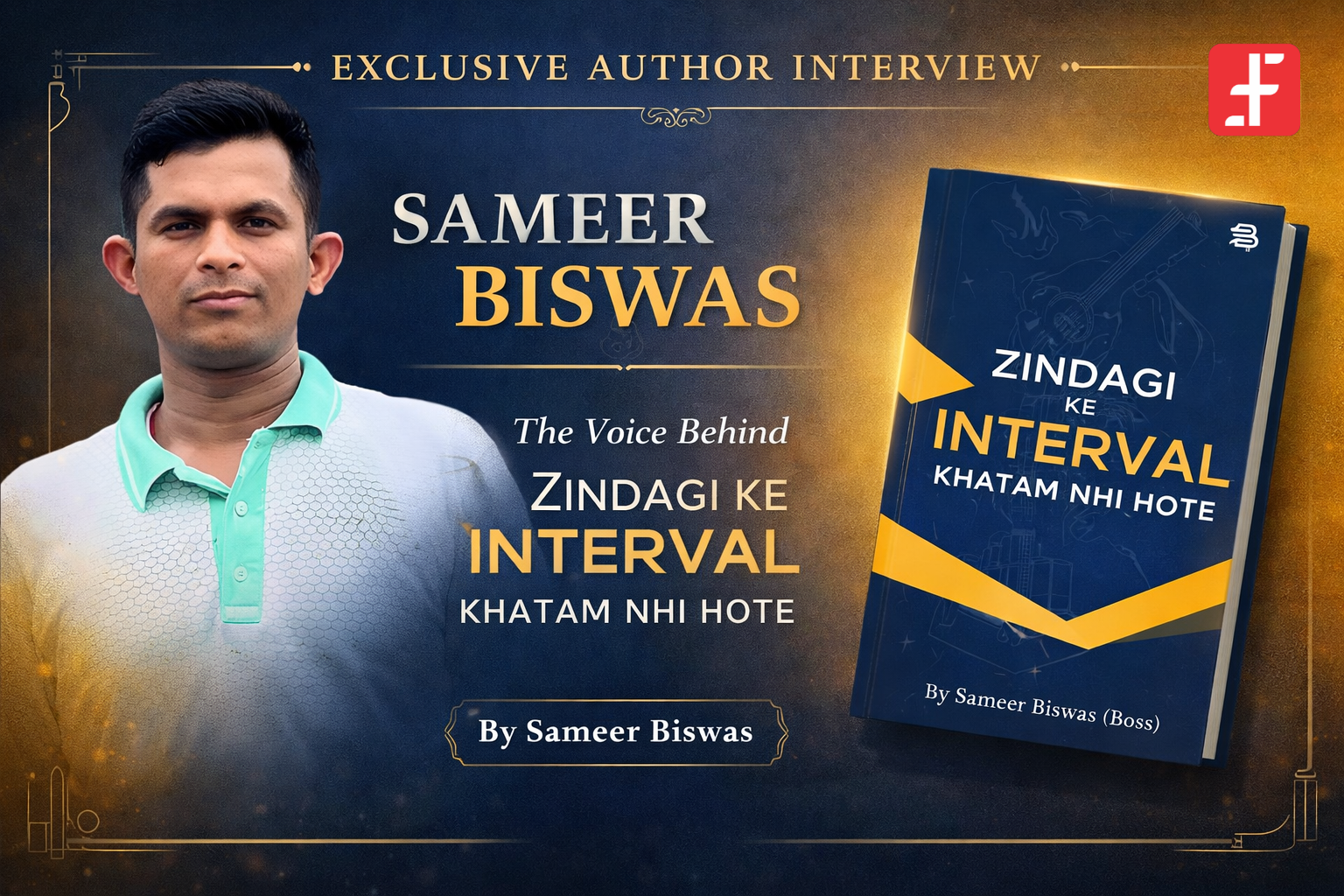
An Exclusive Interview by Priya Srivastava, Editor-in-Chief, Deified Publications
Some authors create worlds that never existed. Others hold up a mirror to the world we actually live in. Sameer Biswas belongs firmly to the second category. His debut book, Zindagi Ke Interval Khatam Nhi Hote, isn’t just another motivational read. It’s a raw, honest account of what it means to keep going when everything inside you wants to stop.
I met Sameer on a quiet Thursday morning at a café near his office in Okhla. He showed up fifteen minutes early, apologizing for making me wait even though I hadn’t arrived yet. That small gesture told me everything I needed to know about the person I was about to interview. Here was someone who cared deeply about not wasting anyone’s time, about showing up fully, about doing things right.
Over the next two hours, we talked about failure, faith, corporate life, cricket, and what it really takes to write a book when you have a full-time job and real-life responsibilities. This is that conversation.
Growing Up Between Two Worlds
Priya Srivastava: Sameer, thank you so much for sitting down with me today. Let’s start from the beginning. You were born in a Bengali family but your hometown is Chandrapur in Maharashtra. That’s an interesting cultural mix. How did that shape you?
Sameer Biswas: Thank you for having me, Priya. You know, growing up, I always felt like I belonged to two places at once. At home, we spoke Bengali, celebrated Durga Puja, ate fish curry and mishti doi. But outside, I was a Maharashtrian kid playing gully cricket and celebrating Ganesh Chaturthi with my friends.
It taught me early on that identity isn’t just one thing. You can be many things at the same time. That lesson stuck with me. Later in life, when I moved to Delhi for studies and then stayed back for work, I realized I had become comfortable with being an outsider and an insider at the same time. That comfort with multiple identities actually helped me understand different kinds of people, which I think shows up in my writing.
PS: You moved to Delhi for your BA from Delhi University. What was that transition like?
SB: Honestly? Terrifying at first. I was this small-town guy suddenly thrown into the chaos of Delhi. The language was different, the pace was different, people were different. I remember standing at the Kashmere Gate ISBT with my bags, watching thousands of people rushing around, and thinking, “What have I gotten myself into?”
But Delhi also gave me freedom. Freedom to figure out who I was without the weight of everyone’s expectations from back home. I could reinvent myself. I could fail without the whole neighborhood knowing about it. That space to breathe, to make mistakes, to learn… that was precious.
PS: And now you’re pursuing an MBA in HR from Amity University while working full-time. That’s a lot to juggle.
SB: (Laughs) Yes, some days I wonder what I was thinking! But I believe in continuous learning. The corporate world is changing so fast. If you don’t keep updating yourself, you become irrelevant. Plus, the HR specialization made sense because I’m already leading a team at work. I wanted to understand people management better, not just do it by instinct.
The NIELIT ‘O’ Level and digital marketing skills came from the same philosophy. In today’s world, especially in e-commerce, you can’t afford to be technologically illiterate. You have to know how systems work, how algorithms think, how to reach people in the digital space.
The Corporate Journey and Real Struggles
PS: You work as a Senior E-commerce Executive and Team Leader at a tea company. Tell me about that journey. How did you land there?
SB: It wasn’t a straight line, I’ll tell you that much. After my BA, I needed a job. Like, really needed it. I couldn’t keep depending on my family. So I took whatever came my way initially. Some jobs lasted three months, some six. I learned what I didn’t want to do by doing a lot of things I hated.
E-commerce happened almost by accident. A friend told me about an opening, I applied, somehow I got through the interview. And then I realized I actually enjoyed it. The fast pace, the problem solving, the direct impact you can see when a campaign works or when customer feedback improves. It felt real.
PS: What’s the hardest part about being a team leader?
SB: People think leadership is about giving orders and having authority. It’s not. It’s about taking responsibility when things go wrong, even if it wasn’t your fault. It’s about motivating someone who’s having a terrible day and still needs to hit their targets. It’s about making tough calls and then lying awake at night wondering if you made the right decision.
The hardest part? Realizing that you can’t save everyone. Some people don’t want to be helped. Some people will leave no matter how much you invest in them. Learning to be okay with that… that took time.
PS: Those experiences clearly influenced Zindagi Ke Interval Khatam Nhi Hote. The book deals with corporate life struggles among other things.
SB: Absolutely. I’ve seen brilliant people break down in office bathrooms. I’ve seen toxic bosses destroy someone’s confidence in six months. I’ve also seen ordinary people do extraordinary things when someone believes in them. All of that is in the book.
Corporate life isn’t what they show you in motivational LinkedIn posts. It’s messy. It’s political. Sometimes it’s unfair. But it’s also where most of us spend the majority of our waking hours. If I’m writing about real life, I can’t ignore that reality.
Faith, Philosophy, and Bhagwan Shri Krishna
PS: You mentioned that you’re a deep believer in Bhagwan Shri Krishna. How does that faith show up in your life and work?
SB: Krishna’s teachings are everything to me. Not in a ritualistic way, but in how I try to approach life. The Bhagavad Gita teaches you to do your duty without being attached to the results. That’s so relevant today, especially in a world obsessed with outcomes and metrics.
I fail at this daily, by the way. I still get anxious about results, I still overthink, I still want control. But at least I know what the ideal is. At least I have a reference point to return to when I’m lost.
Krishna also teaches you that life is about balance. He wasn’t just a serious philosopher. He danced, he played the flute, he had friends, he laughed. That permission to be fully human while still striving for something higher… that’s what I take from his life.
PS: Does that philosophy influence your writing?
SB: Completely. When I was writing the book, I kept asking myself, “Am I being honest? Am I exaggerating to make the story more dramatic? Am I staying true to what actually happened?” That commitment to truth comes from my faith. Krishna says speak the truth, even when it’s difficult. Even when a lie would be easier.
Also, the whole concept of intervals in life, which is the core theme of my book, comes from understanding that life is cyclical. There are ups and downs. Good phases and terrible ones. But nothing is permanent. That’s pure Krishna consciousness right there.
Writing, Dancing, and Creative Expression
PS: You list writing and dancing as your favorite hobbies. That’s an interesting combination. Tell me about the dancing.
SB: (Smiles) I’m not a professional dancer or anything. But I love it. There’s something about moving your body to music that frees your mind. When I’m stressed or stuck with a problem, I’ll just put on some music and dance. Sometimes classical stuff, sometimes Bollywood, sometimes just random beats.
Writing uses your head. Dancing uses your body. Together, they create this balance. And honestly, both are about expression, right? Both are about taking what’s inside and bringing it out in a form others can perceive.
PS: How do you make time for creative pursuits with such a packed schedule?
SB: I don’t always manage it well, let me be honest. There are weeks where I don’t write a single word or dance for even five minutes. But I’ve learned that creativity isn’t about having time. It’s about using the time you have.
I write on my phone during commutes. I write late at night when the house is quiet. I write in 15-minute bursts between meetings. Is it ideal? No. Would I write better if I had six uninterrupted hours every day? Probably. But I don’t have that luxury, and I can’t let that be an excuse.
Some of my best scenes in the book were written on the metro. There’s something about that in-between space, between work and home, where your mind is both alert and relaxed.
The Birth of Zindagi Ke Interval Khatam Nhi Hote
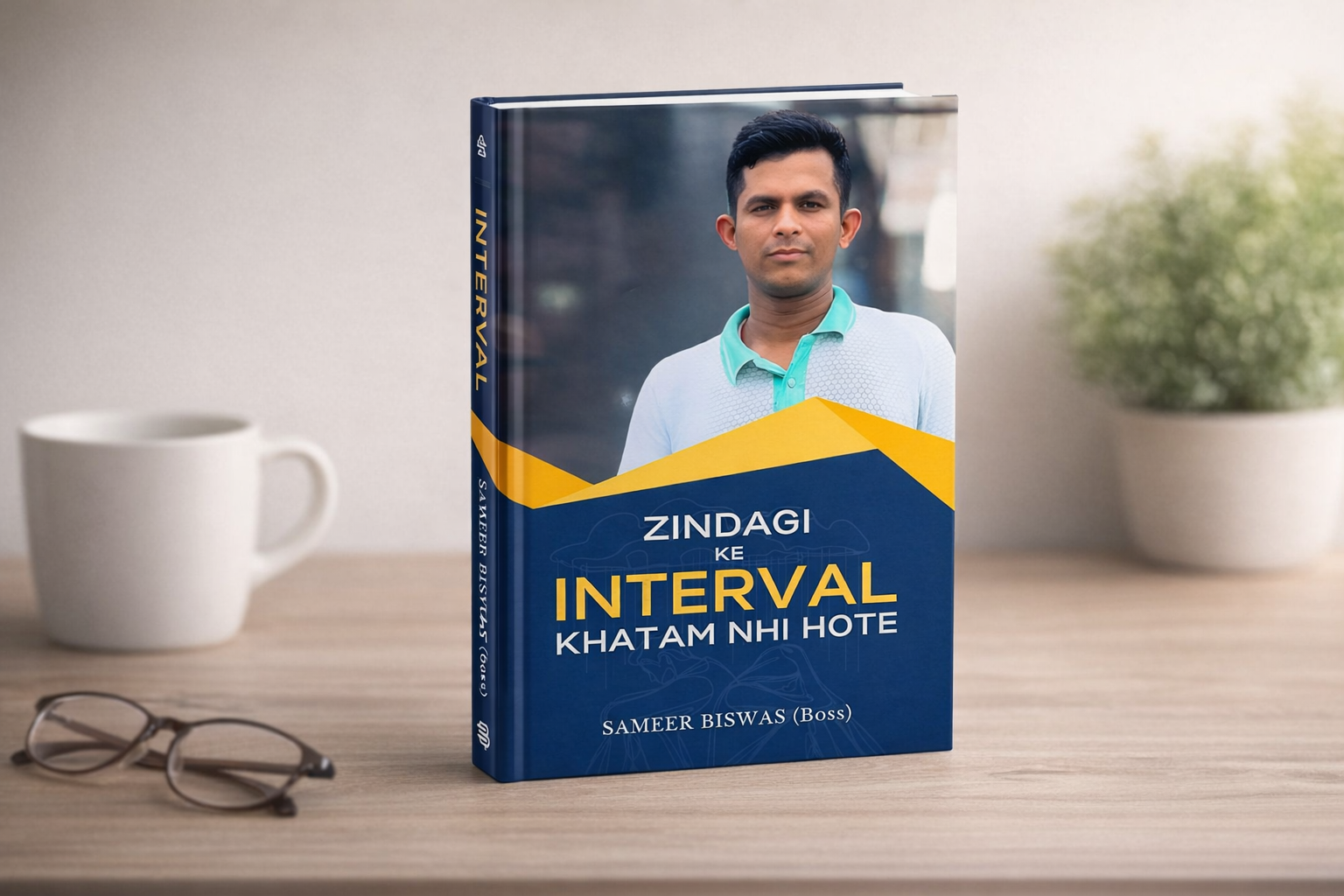
PS: Let’s talk about the book. Zindagi Ke Interval Khatam Nhi Hote. First, I love that title. It’s in Hindi, it’s conversational, and it immediately tells you this isn’t going to be a typical self-help book. How did you land on it?
SB: The title came before the book, actually. I was watching a cricket match on TV. India was playing, I think it was against Australia. We were losing badly in the first innings. Someone on the panel said something like, “Well, the game isn’t over. There’s still another innings to go.”
And it hit me. Life is like that. We think when one phase ends badly, that’s it. Game over. But it’s not. There’s always another innings, another interval, another chance. The match doesn’t end when you’re behind. It ends when you stop playing.
I grabbed my phone and typed the title right then. I knew that was it. That was the book I needed to write.
PS: The book is described as a real-life inspired story. Why was it important to you that it be based on truth rather than pure fiction?
SB: Because I’m tired of fake inspiration. I’m tired of stories where someone loses everything and then magically becomes a millionaire because they had the right attitude. That’s not how real life works.
Real life is grinding. It’s showing up every day even when nothing changes. It’s small victories that nobody notices. It’s crying in the shower and then putting on a smile for your team meeting. That’s the reality most people live.
I wanted to write something where readers would say, “Yes, this happened to me too,” not “Wow, what a fantasy.” Fiction has its place, but for this book, I needed authenticity. I needed people to trust that these struggles are real, that these solutions actually worked for someone.
PS: The book covers childhood hardships, corporate challenges, emotional pain, and self-discovery. That’s a lot of ground to cover. How did you structure it?
SB: I structured it the way life happens. Not in neat chapters with clear lessons, but in phases. Intervals, if you will.
Childhood is its own interval. You don’t have control over much, but you’re learning constantly. Then comes education, where you start making choices. Then career, where those choices have consequences. Then relationships, which bring their own complexity.
Each interval taught me something different. Childhood taught me resilience. Corporate life taught me strategy. Emotional pain taught me empathy. Self-discovery taught me acceptance.
I didn’t want to present these as separate topics. I wanted to show how they’re connected, how who you are in one phase influences who you become in the next.
PS: What was the hardest part of the book to write?
SB: The emotional pain sections. Writing about professional failures is one thing. You can rationalize those. But writing about personal heartbreak, about disappointing people you love, about the times you disappointed yourself… that required going to places I had tried to forget.
There were days I would write a page and then just sit there, staring at the screen, feeling everything again. My wife would ask if I was okay, and I’d realize I’d been sitting there for an hour, not moving.
But it was also the most necessary part. Because that’s where real connection happens. When you’re vulnerable enough to say, “I messed up. I hurt. I didn’t have answers.” That’s when readers know you’re telling the truth.
The Message of Hope and Resilience
PS: Despite dealing with heavy topics, the book’s message is ultimately hopeful. It’s about resilience, about not giving up. Why was that balance important?
SB: Because that’s reality. Yes, life is hard. Yes, bad things happen. But people survive. They adapt. They find joy in unexpected places. They rebuild.
If I only showed the pain without the recovery, that would be dishonest. If I only showed the recovery without the pain, that would be useless. The truth is in the middle. The truth is that intervals end, but new ones begin. Always.
I’ve met people who’ve lost everything and somehow found the strength to start over. I’ve been that person. And I wanted to document that journey not as a miracle but as a process. A messy, painful, beautiful process.
PS: Who is this book for? Who did you imagine reading it while you were writing?
SB: I wrote it for the 25-year-old who just got rejected from their dream job. For the 30-year-old wondering if they made the right career choice. For the 35-year-old who feels stuck in a life that looks good on paper but feels empty inside.
I wrote it for anyone who’s ever felt like they’re in a bad interval and it’s never going to end. I wanted them to know that it does end. But also, that ending doesn’t mean everything becomes perfect. It means you get stronger. You get wiser. You get better at handling the next interval.
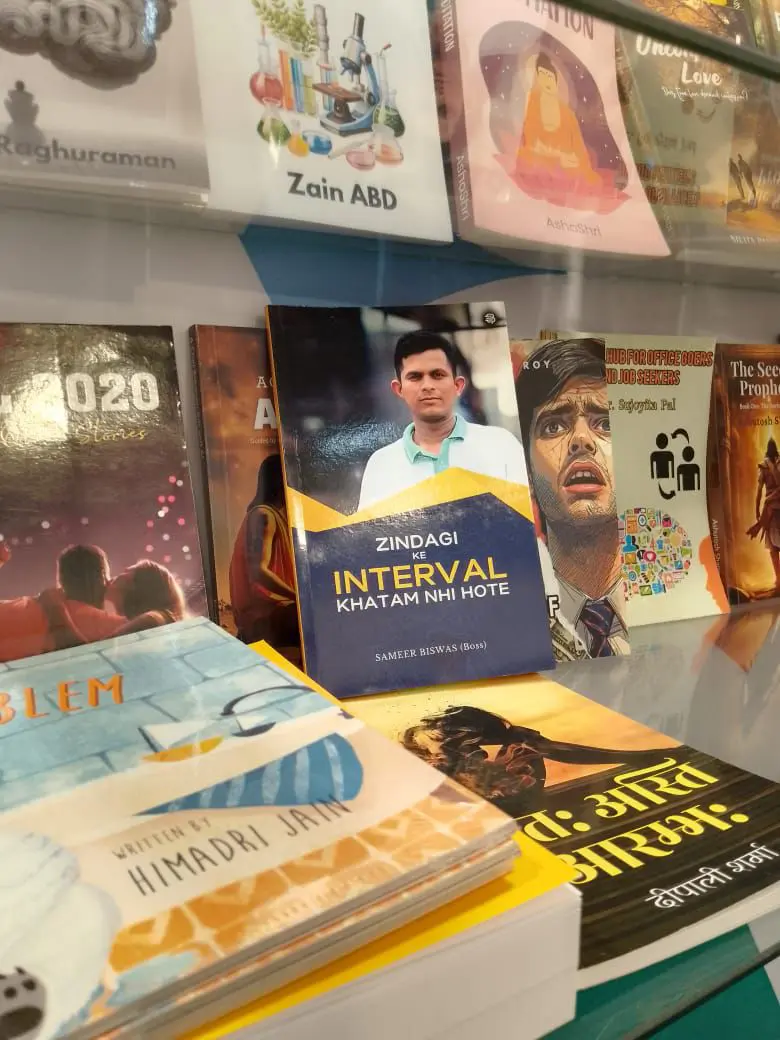
PS: There’s a cricket theme running through the book cover and concept. You’re clearly a cricket fan.
SB: (Laughs) Is it that obvious? Yes, I grew up playing gully cricket in Chandrapur. Cricket is in my blood. And it’s the perfect metaphor for life, honestly.
In cricket, you have good days and bad days. Sometimes you’re on top, sometimes you’re struggling. One match you’re the hero, next match you fail completely. But the game goes on. The series goes on. And the best players are the ones who don’t let one failure define them.
That’s exactly what I wanted to convey. Life is a long format game, not a T20 match. You don’t win or lose in one interval. You keep playing.
The Writing Process and Challenges
PS: What was your writing process like? How did you go from idea to finished book?
SB: Chaotic, honestly. I don’t have a dedicated writing space or a specific time of day when creativity strikes. I wrote whenever and wherever I could.
I started by just dumping memories. No structure, no editing, just writing down everything I remembered about different phases of my life. Some of it was painful to revisit. Some of it made me laugh. Some of it made me cringe at my younger self.
Then I started seeing patterns. I started seeing how one experience led to another, how lessons I ignored in one phase came back to bite me in the next. That’s when the structure emerged.
The actual writing took about eight months, but that includes long gaps when I didn’t write at all because work got crazy or life happened. If I could have written consistently, maybe four or five months.
PS: Did your wife support your writing journey?
SB: She’s been my biggest support. There were nights I’d be typing away at midnight, and she’d bring me tea without saying anything. She read early drafts and gave me honest feedback, even when it wasn’t what I wanted to hear.
She also kept me grounded. When I’d get too caught up in whether the book would succeed or what people would think, she’d remind me why I started. She’d say, “You wrote this to help people. That’s enough. The rest will follow or it won’t, but the work is already valuable.”
Having that kind of support makes all the difference.
PS: What about doubt? Did you ever question whether you should finish the book?
SB: Every single day. (Laughs) I’d think, “Who am I to write a book? I’m not a famous author. I don’t have multiple degrees. I’m just a regular guy working a regular job.”
But then I’d remember that’s exactly the point. Most motivational books are written by people who’ve already made it. They’re CEOs or celebrities looking back from the top. I’m writing from the middle. I’m still figuring things out. And maybe that’s more useful to people who are also in the middle.
Also, my faith helped. I kept thinking about Krishna’s message in the Gita. Your job is to do your duty. The results aren’t in your control. So I focused on writing the most honest book I could and let go of worrying about what would happen after.
Connecting with Readers
PS: The book has been out for a while now. What kind of feedback have you received?
SB: The feedback has been overwhelming in the best way. People message me on social media saying they saw themselves in the book. That’s the highest compliment I could receive.
One reader told me they were about to quit their job and give up on their career, but reading the book made them realize they were just in a tough interval. They stuck with it, and things improved. Another person said they started journaling about their own intervals after reading the book.
Those stories mean more to me than any award could. Because it means the book is doing what I hoped it would do. It’s making people feel less alone in their struggles.
PS: Have you had any negative feedback?
SB: Some people expected more of a step-by-step guide. They wanted “10 steps to overcome failure” or something like that. This book isn’t that. It’s a story with lessons embedded in it, not a manual.
Some readers also wanted more dramatic events. They felt some parts were too ordinary. But that’s the point. Most of life is ordinary. The magic is in how you handle the ordinary challenges.
I’ve learned that you can’t please everyone, and that’s okay. The book will find its people.
Balancing Work, Life, and Writing
PS: You’re juggling a demanding job, an MBA, a marriage, and writing. How do you manage it all without burning out?
SB: (Pauses) I’m not sure I always manage it well. There are definitely times I’ve felt burnt out. Times when I snapped at my team when I shouldn’t have. Times I was physically present at home but mentally still at work.
What helps is being very clear about priorities. Work pays the bills. Education improves my skills. Marriage sustains my emotional wellbeing. Writing feeds my soul. When I’m clear about what each thing gives me, it’s easier to allocate time and energy.
Also, I’ve learned to let go of perfection. My house isn’t always clean. I don’t always submit assignments early. I don’t always meet my daily word count goals. And that’s fine. Progress over perfection.
PS: What role does your team at work play in your life?
SB: They’re like my second family. We spend more waking hours together than with our actual families. Leading them has taught me so much about people, about motivation, about resilience.
And they’ve been supportive of my writing too. Some of them bought the book. Some gave me feedback. They understand that I’m not just their boss. I’m also a person with dreams outside of work.
That mutual respect makes the tough days easier.
Future Plans and Upcoming Books
PS: You mentioned you have many book ideas in mind. Can you give us a hint about what’s next?
SB: I’m working on something, but I’m keeping the details close for now. What I can tell you is that it’s going to follow the same philosophy. Real stories, honest emotions, practical lessons.
I’m also thinking about exploring different formats. Maybe a collection of short real-life stories from different people. Maybe something more focused on corporate life specifically. Maybe something about relationships and marriage from a man’s perspective, which doesn’t get talked about enough honestly.
The ideas are there. It’s about finding the time and energy to execute them properly.
PS: Will your future books also be in Hindi or will you explore English?
SB: Great question. I chose Hindi for the title and some portions because that’s the language of emotion for me. When I’m angry, I think in Hindi. When I’m hurt, I cry in Hindi. (Laughs)
But I think there’s space for both. Some topics might demand English for wider reach. Some might be better served in Hindi for authenticity. I’m not going to box myself in. The language should serve the story, not the other way around.
PS: What advice would you give to aspiring authors who are also working full-time jobs?
SB: First, stop waiting for the perfect time. There is no perfect time. If you wait until you have six months free to write, you’ll never write. Start now, even if it’s just 100 words a day.
Second, use your job as material. Your colleagues, your boss, your commute, your lunch breaks, all of it is research. Don’t see your job as an obstacle to writing. See it as feeding your writing.
Third, be patient with yourself. You’re not going to write as fast as someone who writes full-time. And that’s okay. Slow progress is still progress.
Fourth, tell people you’re writing a book. It creates accountability. When my teammates would ask, “How’s the book coming?” I couldn’t keep saying, “I haven’t written anything.” It pushed me to actually do the work.
Finally, remember why you’re writing. Not for fame or money, though those would be nice. Write because you have something to say that needs to be said. That clarity of purpose will carry you through the hard days.
On Authenticity and Staying Grounded
PS: You’ve been very open about your struggles and imperfections in this conversation. That’s refreshing. In a world of carefully curated social media personas, why is authenticity important to you?
SB: Because pretending is exhausting. I tried it for years. Pretending to be more confident than I was. Pretending I had it all figured out. Pretending failures didn’t hurt.
It’s lonely, you know? When you’re always performing, you never get to actually connect with people. They’re connecting with your mask, not with you.
Also, I think social media has created this toxic positivity culture where everyone is always winning, always grinding, always on top. That’s not real. That’s not sustainable. And it makes regular people feel like failures because their lives don’t look like that.
I want to be part of a different conversation. One where it’s okay to say, “Today was hard and I barely made it through.” One where we celebrate small wins, not just massive transformations. One where being human is enough.
PS: How do you stay grounded as your writing career develops?
SB: My job keeps me grounded. (Laughs) When you’re dealing with angry customers and inventory issues and team conflicts, you can’t float off into some artistic bubble.
My family keeps me grounded too. They knew me before the book, and they’ll know me after. To them, I’m still the same person who forgets to buy groceries and leaves wet towels on the bed.
And my faith keeps me grounded. Krishna teaches that success and failure are both temporary. They’re just different weather patterns passing through. Your job is to keep doing your dharma regardless of external circumstances.
Lessons from Writing and Life
PS: Looking back at your journey, what’s the biggest lesson you’ve learned?
SB: That intervals really don’t end. (Smiles) I wrote a whole book about it, and I’m still learning it.
Every time I think I’ve figured something out, life throws a new challenge. Every time I get comfortable, things change. And that’s actually beautiful once you accept it.
The lesson isn’t to avoid tough intervals. It’s to stop being surprised when they arrive. It’s to build resilience not through avoiding pain but through surviving it repeatedly and realizing you can survive it again.
PS: If you could go back and give advice to your younger self, what would you say?
SB: I’d tell him to relax a bit. (Laughs) I was so anxious about everything. About grades, about jobs, about what people thought of me. I wish I’d known earlier that most of that stuff doesn’t matter as much as you think it does.
I’d also tell him that the hard times he’s going through aren’t wasted time. They’re building something. He can’t see it yet, but those struggles are creating the foundation for everything that comes later.
And I’d tell him to be kinder to himself. He’s doing his best. That’s enough.
Final Thoughts
PS: Sameer, this has been such an honest, grounded conversation. Before we wrap up, what message would you like to leave with readers, both those who’ve read your book and those who haven’t yet?
SB: To everyone reading this, whatever interval you’re in right now, it’s not permanent. If it’s a good interval, enjoy it but don’t get too attached. If it’s a tough interval, endure it but don’t lose hope.
Life keeps moving. That’s the only guarantee. The question is, will you move with it or will you get stuck fighting against its natural rhythm?
To readers who’ve picked up Zindagi Ke Interval Khatam Nhi Hote, thank you for giving my words a chance. I hope you found something useful in there. Even if it’s just one line that stays with you, that’s enough for me.
To aspiring writers, please write your stories. The world needs more honest voices. Your story matters, even if you think it’s ordinary. Especially if you think it’s ordinary.
And to everyone juggling multiple roles, trying to be good at work and at home and at their passions, I see you. It’s hard. But it’s also worth it. Keep showing up. Keep trying. Keep believing that the next interval might surprise you.
PS: Beautiful words to end on. Thank you so much for your time and for being so open with me today. I’m excited to see what you write next.
SB: Thank you, Priya. This was really special. You asked questions that made me think deeper about my own journey. I appreciate that.
This interview was conducted in January 2026. It has been lightly edited for clarity while preserving the authentic voice and spirit of the conversation.
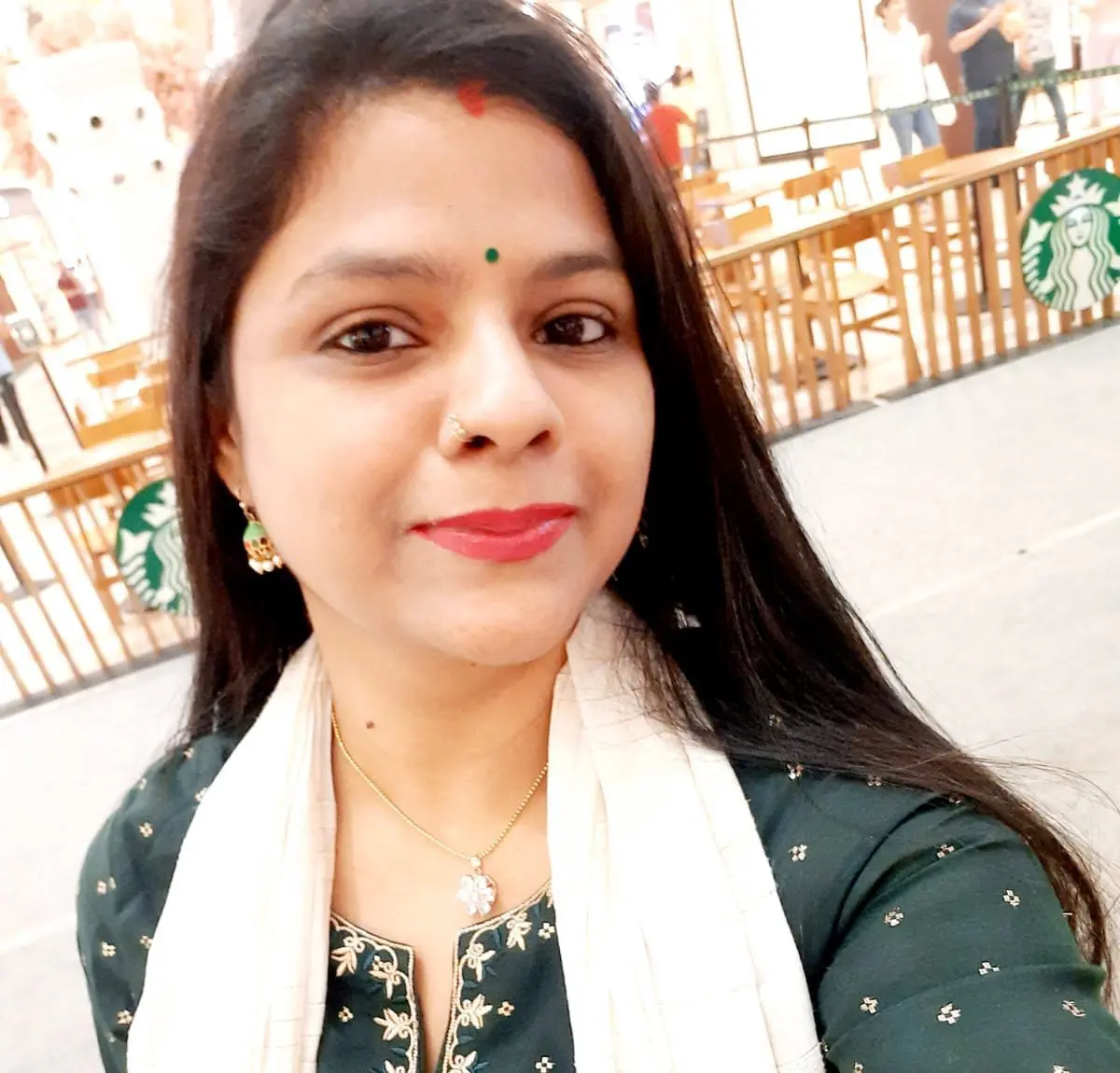
With over 11 years of experience in the publishing industry, Priya Srivastava has become a trusted guide for hundreds of authors navigating the challenging path from manuscript to marketplace. As Editor-in-Chief of Deified Publications, she combines the precision of a publishing professional with the empathy of a mentor who truly understands the fears, hopes, and dreams of both first-time and seasoned writers.