
Rating:
⭐⭐⭐⭐ (4.2 out of 5)
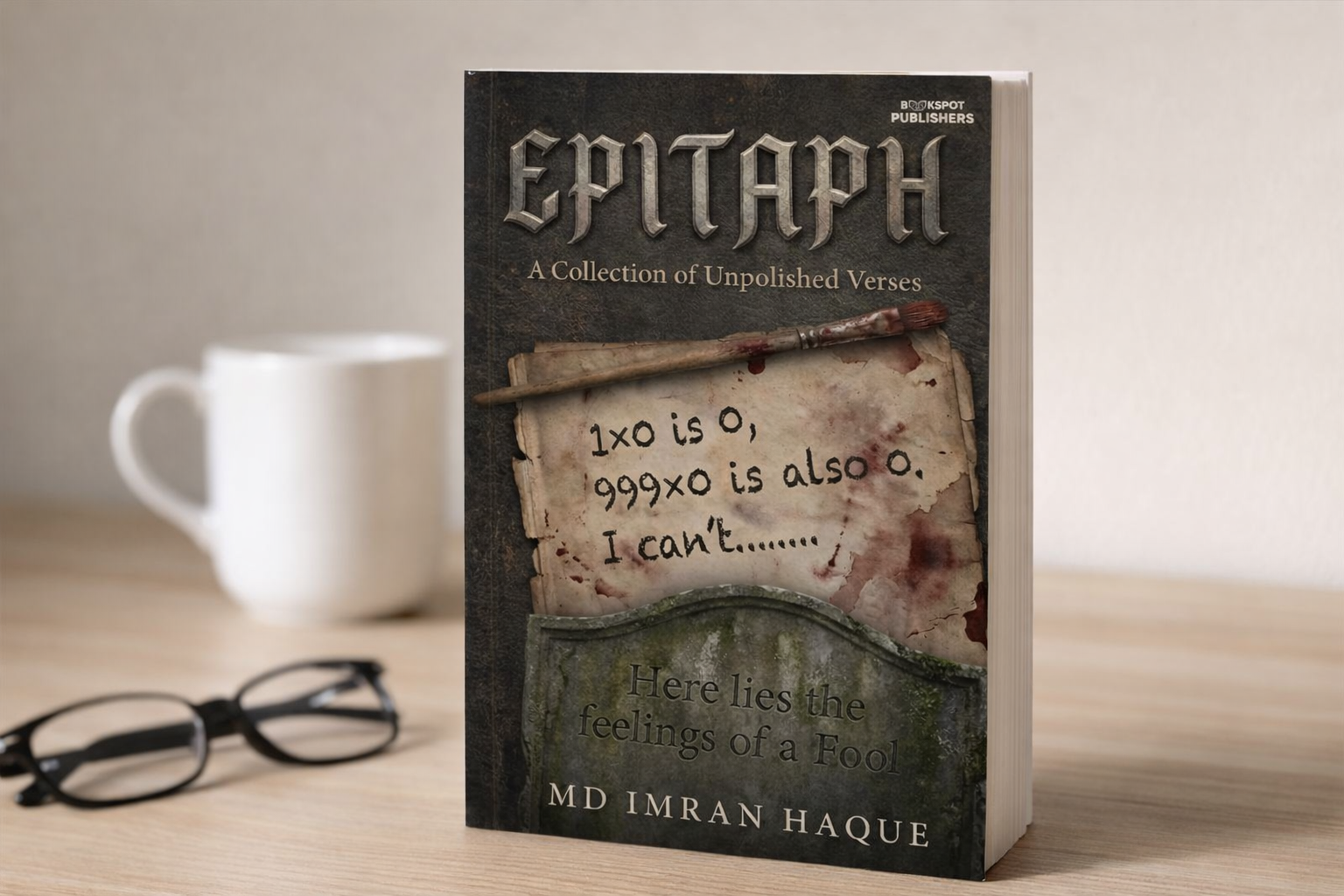
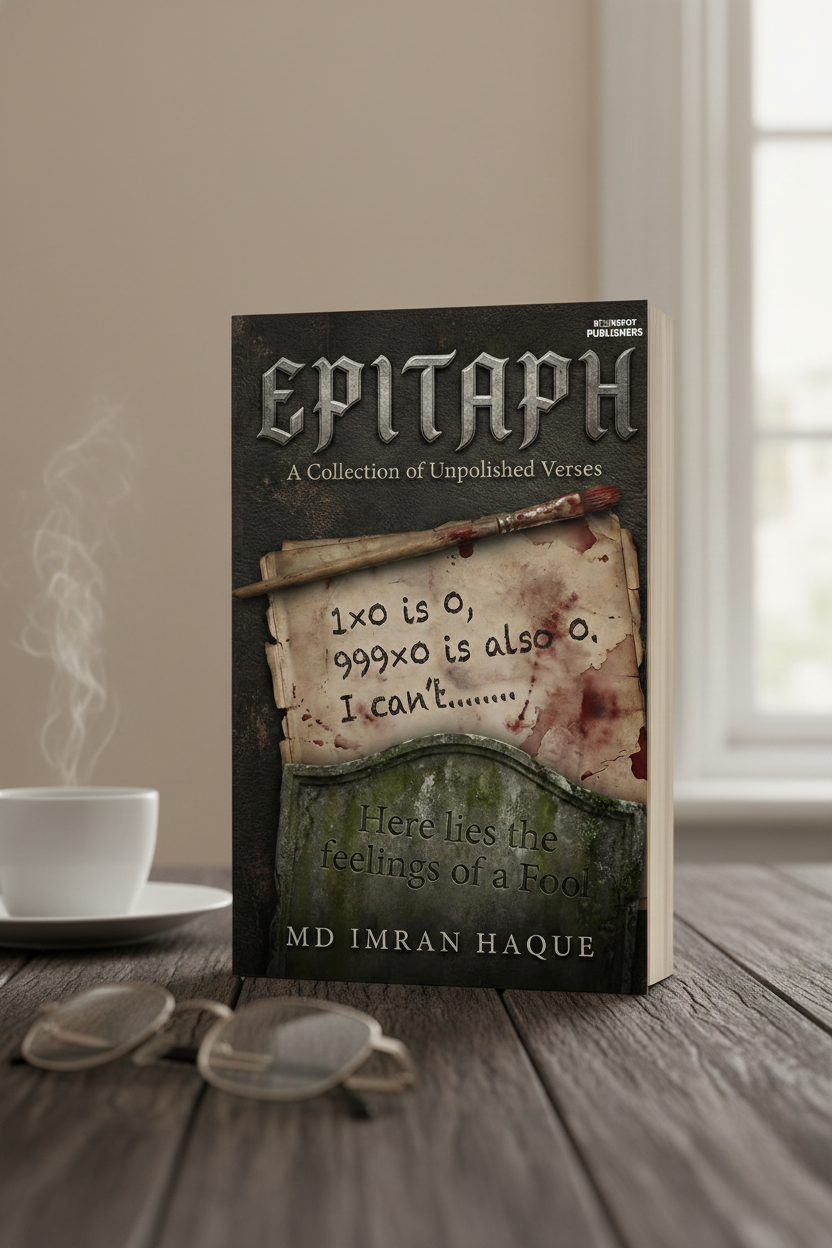
I’ll be honest. When I first looked at the cover of Epitaph, I didn’t rush into it mentally. I paused. That tombstone. That line scratched like a confession. The quiet violence of it. As someone who has spent more than fifteen years reading poetry in all its moods, I’ve learned to trust that instinct. When a book makes you slow down before you even open it, something inside you already knows this isn’t casual reading.
I’m Priya Srivastava, Editor-in-Chief at Deified Publication, and I’ve read enough poetry collections to recognize when a poet is not trying to impress anyone. Epitaph by MD Imran Haque doesn’t perform. It doesn’t decorate. It doesn’t soften itself. It just… exists. Like a thing left behind after something important has died.
And that, honestly, is what stayed with me.
What the Book Is About
Epitaph: A Collection of Unpolished Verses presents itself very clearly. This is not poetry polished for applause. According to the blurb, these are the “residual notes” left after emotional finality. I like that phrase. Residual notes. It implies aftermath, not drama. Consequences, not chaos.
The poems here are described as a “zero-sum game written in verse.” That idea runs quietly through the entire concept. What happens when everything you invested emotionally adds up to nothing? Not tragedy. Not revenge. Just zero.
There’s a raw honesty in how the book frames itself. These are not fictional explorations or imagined characters. The blurb insists these are lived moments. The imagery of tombstones, bloodstains, and unfinished thoughts suggests a speaker who is done explaining himself. He is not asking the reader to understand him. He is simply leaving the record behind.
In my years reviewing poetry, I’ve noticed that many collections want to process pain. This one doesn’t. It documents what remains after processing is over.
What Stood Out to Me
The first thing that stood out wasn’t a line. It was the refusal to polish. The subtitle isn’t ironic. Unpolished Verses really means unpolished. That’s a risky choice. Many poets hide behind metaphor and complexity. Here, the poet chooses exposure instead.
The recurring idea of mathematical inevitability stayed with me. “1 times 0 will always be zero.” That line is deceptively simple. I kept thinking about it for days. Not because it’s clever, but because it’s cruel in how true it feels. No matter how much effort you put into nothing, the result doesn’t change. That kind of honesty hurts in a very quiet way.
The reference to the “Itinda Curse” intrigued me. It feels like an internal mythology. Something personal, something unresolved. The blurb doesn’t explain it fully, and I think that’s intentional. Some pain doesn’t want to be decoded. It just wants to be acknowledged.
Stylistically, this is a book that resists lyrical beauty. The language appears blunt, sometimes abrupt. And honestly, that works in its favor. I’ve seen many poetry books try to sound deep. This one seems more interested in being accurate.
The Emotional Core
This is not a comforting book. I want to be very clear about that. Epitaph is the kind of poetry that sits with you after you close it, but not in a warm way. More like the way silence sits after an argument that ended without resolution.
There’s grief here, but it’s not dramatic grief. It’s the kind that comes after you’ve cried enough and now you’re just tired. I wasn’t expecting to feel that sense of emotional exhaustion from a blurb alone, but it came through very clearly.
What struck me most was the idea of emotional finality. Many books talk about heartbreak, but few talk about what happens after heartbreak stops hurting actively. That numb clarity. That point where you don’t even want closure anymore. You just want it documented.
Some parts hit differently because they refuse hope. Not cynically. Just honestly. And for certain readers, that honesty will feel like relief.
Who This Book Is For
This book is not for everyone. And that’s not a weakness.
If you like poetry that resolves itself neatly, this may not be your book. If you’re looking for healing affirmations, probably not here either.
But if you’ve ever reached a moment where emotions felt finished rather than fresh, this might speak to you. Readers who appreciate raw confession, unfiltered expression, and emotional realism will likely connect deeply.
I think this book will resonate most with readers who have already lived through something intense. Loss. Betrayal. Emotional burnout. People who don’t want lessons. Just recognition.
Final Thoughts
As an editor and a reader, I value honesty more than elegance. Epitaph chooses honesty, even when it’s uncomfortable. MD Imran Haque doesn’t seem interested in being liked here. He’s interested in being done.
There’s something brave about that.
Is it perfect? No. The refusal to polish may feel jarring to some readers. At moments, the rawness borders on abruptness. But that imperfection feels intentional. It adds credibility.
In 2025, when so much writing feels curated and algorithm-friendly, this book feels strangely human. Messy. Final. Unresolved.
And sometimes, that’s exactly what a reader needs.
FAQ Section
Is Epitaph worth reading?
If you appreciate raw, emotionally honest poetry that doesn’t seek resolution, yes. It offers something rare: emotional finality without apology.
Who should read Epitaph?
Readers who connect with confessional poetry, themes of loss, and unfiltered emotional expression will likely find it meaningful.
Is Epitaph heavy or depressing?
It’s heavy, yes. But not melodramatic. It feels more like quiet acceptance than despair.
What kind of poetry is this?
Minimal, raw, confessional poetry that prioritizes truth over aesthetics.

With over 11 years of experience in the publishing industry, Priya Srivastava has become a trusted guide for hundreds of authors navigating the challenging path from manuscript to marketplace. As Editor-in-Chief of Deified Publications, she combines the precision of a publishing professional with the empathy of a mentor who truly understands the fears, hopes, and dreams of both first-time and seasoned writers.