
Rating:
⭐⭐⭐⭐ (4.3 out of 5)
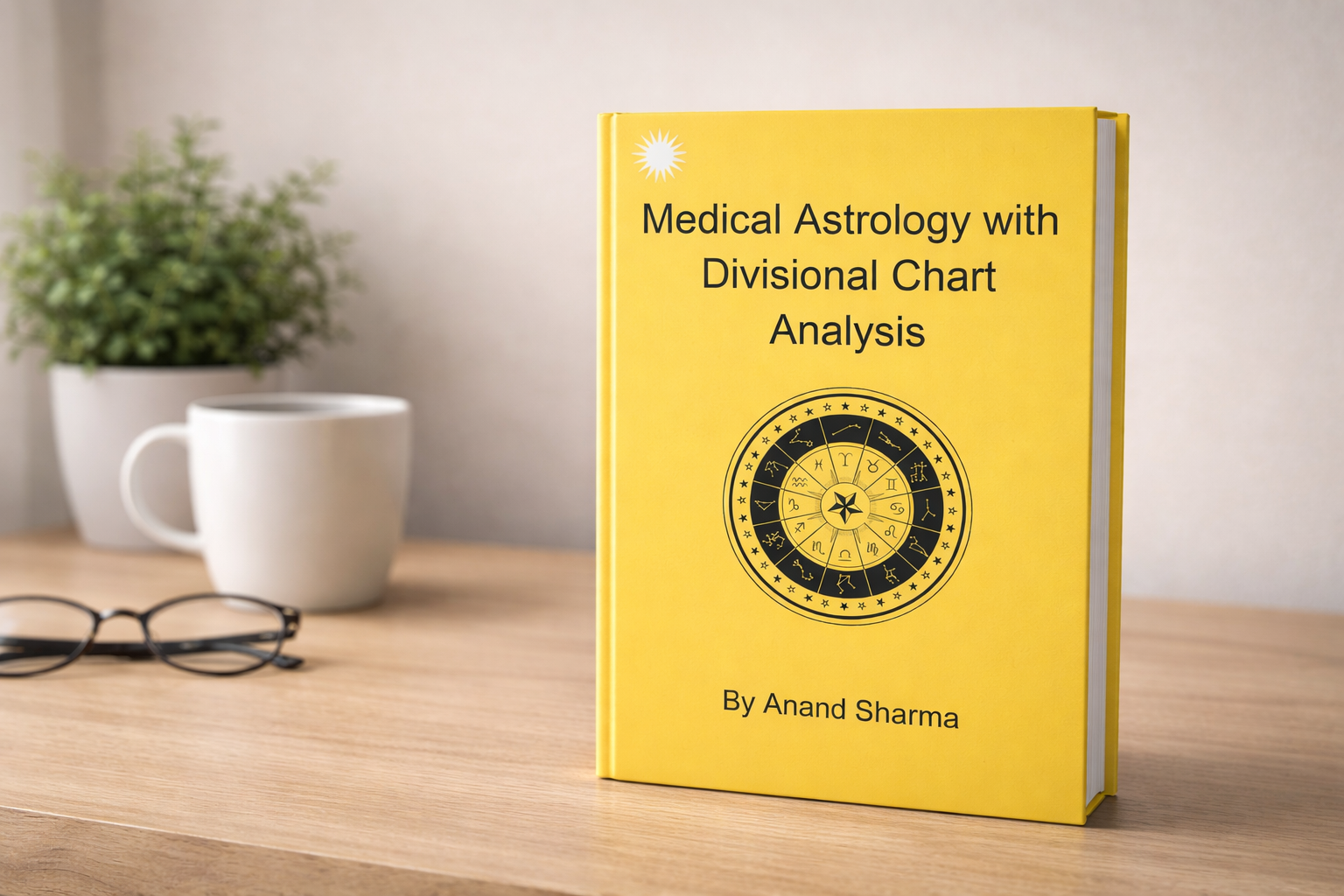
I will be honest right from the start. When I first saw the cover of Medical Astrology with Divisional Chart Analysis by Anand Sharma, I paused longer than I usually do. Not because of the design alone, but because the title carries a certain weight. Medical astrology is not light reading. It is not something people casually browse through on a sleepy afternoon. It sits at the intersection of belief, observation, experience, and responsibility.
In my years reviewing books across genres, I have noticed that books dealing with astrology, especially health related astrology, tend to fall into two extremes. Either they are overly theoretical and intimidating, or they become vague and almost careless with serious topics. I was curious where this book would land. Honestly, I felt a mix of interest and caution. Health is personal. Predictions around it can feel sensitive. So I went in slow, reading the blurb, studying the structure, and paying attention to what the author claims and what he does not.
By the time I finished going through the material provided, I realized this is not a flashy book. It does not try to impress you with grand language or dramatic promises. Instead, it feels like a practitioner sitting across the table, opening files, pointing at charts, and saying, “Let me show you how this works in real life.”
That tone matters. A lot.
What the Book Is About
At its core, Medical Astrology with Divisional Chart Analysis focuses on understanding health related patterns through astrology using real case studies. The book does not remain stuck in abstract planetary meanings. Anand Sharma grounds his explanations in actual charts sourced from paid consultations, which immediately adds a layer of seriousness and responsibility.
The structure revolves around practical diagnosis through astrology. The author places strong emphasis on the Rashi chart but does not stop there. Divisional charts like Navamsa D9 and Shashtiamsa D6 are used repeatedly to deepen the analysis. If you have even a basic familiarity with astrology, you know how rarely medical discussions go beyond surface level chart readings. This book clearly intends to change that.
One of the most striking aspects mentioned in the blurb is the focus on Mrityu Bhaga degrees. This is not a topic many mainstream astrology books talk about in detail, let alone apply consistently through case studies. The author treats it not as a mysterious concept but as a practical diagnostic tool when used carefully.
The book also balances traditional astrological frameworks with modern awareness. The intention is not fear based prediction. Instead, it leans toward awareness, vulnerability mapping, and preventive understanding. I found that approach reassuring, especially in 2025 when people are actively questioning blind belief while still seeking meaning.
What Stood Out to Me
The first thing that stood out was the decision to use only real client charts. In my experience as an editor, this is a risky choice. Real cases mean real responsibility. There is no hiding behind hypothetical examples. It also means the author has to explain things clearly, because real charts are messy. Life is messy. And astrology applied to life is never clean cut.
I also noticed the language. It is simple. Almost deliberately so. There is no attempt to sound grand or intellectual. Anand Sharma seems aware that astrology already carries complexity. Adding heavy language would only alienate readers. This reminded me of some senior teachers I have met over the years who speak plainly because they actually understand their subject deeply.
The explanation of planetary combinations contributing to health conditions felt methodical. Not rushed. Not alarmist. There is a sense of patience in how the material is laid out. I think that comes from experience rather than theory.
Another thing I appreciated was the repeated use of divisional charts instead of treating them as optional add ons. Many astrology books mention D9 and D6 in passing. Here, they are integral. It made me wonder how many readers will revisit their own charts with a completely new lens after reading this.
That said, there were moments where I felt beginners might need to slow down. The book assumes some basic familiarity with charts. It does not hold your hand constantly. This is not necessarily a flaw, but it is something readers should know going in.
The Emotional Core
Now, astrology books are not usually discussed in emotional terms, but this one carries an underlying emotional responsibility. Health is not just data. It is fear, hope, anxiety, and sometimes relief. While the author stays technical, there is a quiet sense of care behind the work. I felt that especially in the way preventive awareness is emphasized.
There is an unspoken message here that astrology should not be used to scare people. It should be used to inform them. That matters. I have seen real harm caused by careless predictions, and this book seems conscious of that line.
There were moments where I caught myself thinking about people I know who are deeply into astrology and also deeply anxious about health. This book, if read with maturity, could actually ground them instead of pushing them into panic. It does not promise cures. It does not dramatize outcomes. It points toward awareness.
Honestly, some parts hit differently because they reflect real consulting situations. You can sense that these are not academic exercises. These are charts of people who came seeking answers.
Who This Book Is For
This book is clearly for students and practitioners of astrology who want to deepen their understanding of medical astrology. If you are someone who enjoys learning through real examples rather than abstract theory, this will speak to you.
Advanced learners will appreciate the focus on divisional charts and lesser discussed factors like Mrityu Bhaga degrees. Beginners with basic chart knowledge can also benefit, but they should be prepared to move slowly and maybe revisit sections more than once.
If you are a casual reader with zero background in astrology, this might feel heavy. And that is okay. This book is not trying to be universal. It knows its audience.
I would also say this book is for responsible astrologers. The ones who believe prediction should come with awareness and context, not drama.
Final Thoughts
In my role at Deified Publication, I see many books that promise depth but deliver surface level content. Medical Astrology with Divisional Chart Analysis does the opposite. It does not oversell itself. It quietly delivers substance.
Is it perfect? No. Some readers might wish for more explanatory pauses for beginners. Some sections could benefit from visual clarity if someone is new to divisional charts. But those are minor observations, not deal breakers.
What stayed with me is the seriousness of intent. Anand Sharma writes like someone who understands the weight of the subject. In a time where astrology content is often reduced to social media snippets, this book feels grounded and responsible.
It is the kind of book that will likely sit on a practitioner’s desk, not on a coffee table.
FAQ Section
Is Medical Astrology with Divisional Chart Analysis worth reading?
If you are serious about astrology and health related chart analysis, yes. It offers practical insight rather than vague theory.
Who should read this book?
Astrology students, practitioners, and advanced learners interested in medical astrology and divisional chart application.
Is this book suitable for beginners?
Beginners with basic chart knowledge can read it, but absolute newcomers may find it dense.
Does the book focus only on theory?
No. It relies heavily on real case studies and applied analysis.

With over 11 years of experience in the publishing industry, Priya Srivastava has become a trusted guide for hundreds of authors navigating the challenging path from manuscript to marketplace. As Editor-in-Chief of Deified Publications, she combines the precision of a publishing professional with the empathy of a mentor who truly understands the fears, hopes, and dreams of both first-time and seasoned writers.