
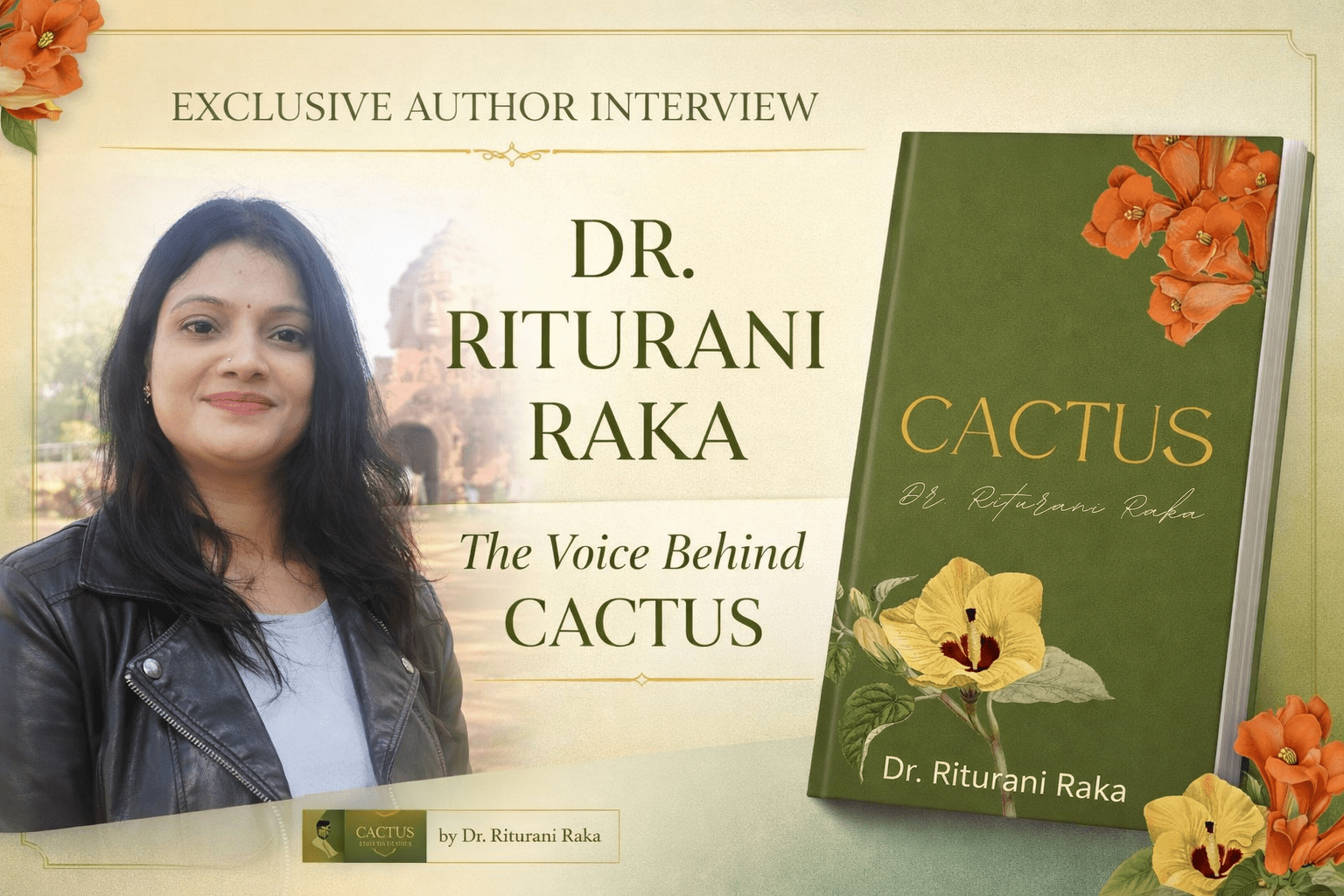
A heartfelt dialogue with the poet who found strength in simplicity and voice in vulnerability
Interview by Priya Srivastava, Editor-in-Chief, Deified Publications
There’s something profoundly honest about meeting someone who chooses simplicity not as a limitation, but as a gift. Dr. Riturani Raka, also known as Ritu Mishra, is that person. An academician, author, and educator, she has spent her professional life teaching others, and now, through her debut poetry collection Cactus, she’s teaching in a different way, through verses that speak directly to the heart.
When I sat down with Dr. Raka, I expected to meet a scholar. What I found was a woman who understands that the most profound truths don’t need complicated words. They need honest ones. Her poetry doesn’t perform or impress. It simply speaks. And in that simplicity lies its power.
The Symbol That Became a Book
Priya Srivastava: Dr. Ritu, your book is titled Cactus, and in your introduction, you describe the cactus as a symbol of resilience, strength, and endurance. What drew you to this particular metaphor?
Dr. Riturani Raka: The cactus has always fascinated me, Priya. Think about it. It survives in conditions where nothing else can. It doesn’t need constant care or perfect circumstances. It endures harsh environments, extreme temperatures, long periods without water. And yet, it blooms. It gives. It lives.
That’s exactly like human life, isn’t it? We face challenging conditions, difficult emotions, harsh situations. But we survive. We endure. And sometimes, in the middle of all that hardship, we bloom too.
I wanted to write about that kind of resilience. Not the loud, dramatic kind. The quiet, everyday kind. The kind where you wake up every morning and choose to keep going, even when it’s hard.
PS: The poems in Cactus are based on human desires, feelings, and situations. Was there a specific moment or experience that made you want to write this collection?
DR: It wasn’t one moment. It was a lifetime of moments. Being a daughter, a student, a wife, a mother, a teacher. Each role came with its own emotions, its own challenges, its own beauty.
I’ve always loved reading and writing. My husband shares that love, which makes our home a very literary space. But for years, I wrote for myself, in journals, on scraps of paper. I didn’t think about publishing.
Then one day, I realized these feelings I was experiencing, these situations I was navigating, they weren’t just mine. Every woman I knew was feeling something similar. Every person was struggling with desire, loss, love, criticism, vulnerability.
I thought, what if I wrote these down? Not in complicated academic language, but in simple words anyone could understand? What if my poetry could be a mirror where people see themselves and think, “Yes, that’s exactly how I feel”?
That’s when Cactus began to take shape.
The Power of Simple Words
PS: One of the most striking things about your book is your commitment to simplicity. You specifically mention choosing “normal vocabulary” instead of complicated, difficult words. In a literary world that often values complexity, why did you make this choice?
DR: Because poetry shouldn’t be exclusive. It shouldn’t be something only scholars or literary experts can appreciate. Poetry is for everyone. It’s for the person reading it on their lunch break, for the student studying late at night, for the mother putting her children to sleep.
When I was teaching at Bhagalpur College of Engineering, I saw students struggle with texts because the language was unnecessarily complicated. They had the intelligence to understand the concepts, but the vocabulary created a wall between them and the meaning.
I didn’t want to build walls with my poetry. I wanted to build bridges.
Simple words don’t mean simple emotions. You can express the deepest pain, the most complex love, the most profound truth using everyday language. In fact, I think simple words often carry more weight because they’re honest. They’re direct. They reach straight to the heart.
PS: You mention that every poem has a different message, yet there’s a connection. Can you explain that thread that ties them together?
DR: The thread is human experience. The thread is that cluster of emotions, feelings, situations, and ideas that make us who we are.
One poem might be about love. Another about inner strength. Another about vulnerability or criticism or romance. But they’re all part of the same life. Human life isn’t based on a single emotion. It’s a mixture. Sometimes we’re strong and vulnerable in the same moment. Sometimes we’re in love and critical. Sometimes we’re romantic and realistic.
I didn’t want to write a collection that’s only about one thing. I wanted to capture that beautiful, messy complexity of being human. So yes, each poem stands alone, but together, they create a picture of a whole life, a whole heart.
From Bhagalpur to Raipur: A Journey of Roots and Growth
PS: You were born and raised in Bhagalpur, Bihar, the daughter of Shri N.P. Mishra and Smt. Nalini Mishra. Tell me about how that place shaped you.
DR: Bhagalpur is in my bones. It’s where I learned to read, to think, to dream. My parents gave me the greatest gift, an education and the freedom to pursue knowledge.
Growing up in a traditional yet modern family meant I understood both worlds. I respected tradition, but I was also encouraged to think independently, to question, to learn. That balance is reflected in my poetry. I write about traditional values like family and love, but I also write about modern struggles like inner strength and vulnerability.
Bhagalpur is also where I fell in love with English Language and Literature. I pursued my education there, all the way to my Ph.D. The city gave me roots. It gave me a foundation of culture, language, and values that I carry with me wherever I go.
PS: You served as an Assistant Professor at Bhagalpur College of Engineering. How did teaching engineering students influence your approach to writing?
DR: It taught me clarity. Engineering students think in terms of logic, structure, precision. They appreciate things that are clear and functional. That mindset influenced how I write poetry.
I learned that you don’t need flowery language to convey deep meaning. You need clarity. You need structure. You need words that work, that serve a purpose, that communicate effectively.
Teaching also taught me empathy. I saw students struggling to balance their technical studies with their emotional lives. They had desires, dreams, heartbreaks, just like everyone else. But they didn’t always have the vocabulary to express those feelings.
I wanted to write poetry that those students could read and connect with. Poetry that didn’t require a literature degree to appreciate. Poetry that spoke in a language they understood.
PS: Now you live in Raipur with your husband Amit Kumar and your two children. How has motherhood influenced your poetry?
DR: Motherhood has expanded my heart in ways I never imagined. Before children, I thought I understood love. After children, I realized I didn’t know half of it.
Being a mother means experiencing the full spectrum of human emotion daily. Joy, fear, pride, worry, exhaustion, wonder. You feel everything more intensely because it’s not just about you anymore. It’s about these precious beings you’ve brought into the world.
Many of the poems in Cactus are influenced by that experience. The vulnerability of loving someone so much it terrifies you. The strength you find when you thought you had nothing left. The resilience of getting up every day and trying again, even when you’re exhausted.
Motherhood taught me that strength and vulnerability aren’t opposites. They coexist. That’s a very cactus-like quality, actually. Resilient and tender at the same time.
Marriage, Partnership, and Shared Words
PS: You mention that you and your husband share a love for reading and writing. How does that shared passion influence your creative life?
DR: It’s everything. Having a partner who understands the need to read, to write, to think, that’s a gift not everyone has.
Amit doesn’t just tolerate my writing. He encourages it. He reads my poems, gives honest feedback, celebrates when something works, helps me rethink when something doesn’t.
We have conversations about books, about poetry, about ideas. Those conversations feed my creativity. Sometimes a single discussion with him will spark three different poems.
Our children see this too. They see two parents who value words, who read together, who write, who think. I hope we’re teaching them that creativity isn’t a luxury. It’s a necessity. It’s how you make sense of the world.
PS: Your husband is an engineer, like the students you taught. Does that practical mindset balance your literary one?
DR: Absolutely. He thinks in terms of structure, systems, solutions. I think in terms of emotions, metaphors, meanings. Together, we create a kind of balance.
He keeps me grounded when I get too abstract. I help him see the emotional side of things when he gets too logical. It’s a beautiful partnership, honestly. We complement each other.
And I think that balance shows in my poetry. It’s emotional, but it’s also structured. It’s heartfelt, but it’s also clear. It doesn’t get lost in feelings. It channels them into something readable, something accessible.
The Philosophy of Accessible Poetry
PS: You’ve mentioned several times that you want your poetry to be accessible to everyone. Is there a risk of oversimplifying complex emotions?
DR: I don’t think so. I think there’s a difference between simple and simplistic.
Simplistic means you’ve reduced something complex to the point where it loses its truth. Simple means you’ve found the clearest, most direct way to express that complexity.
I’m not avoiding difficult emotions. I’m just expressing them in a way that doesn’t require a dictionary or a degree to understand. That’s actually harder than writing in complicated language. It takes more thought, more revision, more care to find the exact right simple words.
People sometimes think that literary value comes from difficulty. But I believe the opposite. The most valuable literature is the kind that reaches people, that changes them, that makes them feel seen. And you can’t do that if they can’t understand what you’re saying.
PS: The book mentions that every poem has a different message, but readers will find connection. What do you hope that connection does for them?
DR: I hope it makes them feel less alone. That’s the greatest gift poetry can give.
When you read a poem and think, “Oh, someone else has felt this too,” suddenly your experience isn’t isolated anymore. It’s shared. It’s universal. And that’s comforting.
I also hope the poems give permission. Permission to feel complex things. Permission to be strong and vulnerable. Permission to desire things, to criticize things, to love things. Permission to be fully human in all your messy, beautiful complexity.
And maybe, I hope the poems inspire resilience. Like the cactus. Like the ability to bloom even in harsh conditions.
The Craft Behind the Simplicity
PS: Walk me through your writing process. How do you create these accessible yet meaningful poems?
DR: I write from experience first. I don’t sit down thinking, “I’m going to write a poem about strength.” I sit down thinking about a moment I experienced, a feeling I had, a conversation I overheard.
Then I ask myself, what’s the truth here? Not the decorated truth. The bare, honest truth. Once I find that, I look for the simplest words to express it.
I revise a lot. People think simple writing happens easily, but it doesn’t. I’ll write a poem ten different ways before I find the version that’s both clear and true.
I also read the poem aloud. If I stumble over a word or phrase, I know it’s not right yet. If it doesn’t sound like something a person would actually say or think, I revise.
And I test it. I’ll read it to my husband or a friend and watch their face. If they understand immediately, if it resonates, I know I’ve succeeded. If they look confused or have to read it twice, I know I need to simplify more.
PS: Do you have a favorite poem from the collection?
DR: That’s like asking me to choose a favorite child! Each poem holds a specific moment, a specific truth.
But if I had to choose, there’s one about vulnerability that I’m particularly proud of. It’s about allowing yourself to be seen, even when you’re afraid. That poem took the longest to write because vulnerability is so complex. But when I finally found the right words, the simple, honest words, it just flowed.
That poem reminds me why I write. To express things that are hard to say. To find words for feelings that seem too big for language.
The Academic and the Artist
PS: You have a Ph.D. in English Language and Literature. How does your academic background influence your creative work?
DR: It gives me appreciation for the craft. I understand meter, structure, literary devices, tradition. That knowledge informs my writing even when I’m choosing to write simply.
But I also had to learn to set aside the academic voice when writing poetry. Academia values complexity, analysis, distance. Poetry, at least the kind I write, values clarity, feeling, intimacy.
My Ph.D. taught me to think critically about language. My heart taught me to feel deeply about life. Cactus is where those two things meet.
PS: Do you think there’s a divide between academic poetry and accessible poetry?
DR: Sometimes, yes. And I think that’s unfortunate.
Poetry shouldn’t be divided into “literary” and “popular.” Good poetry is good poetry, whether it’s complex or simple, traditional or modern, academic or accessible.
I respect poets who work in complex forms and experimental styles. That’s valid and valuable. But I also believe there’s equal value in poetry that speaks directly to people’s hearts without requiring literary training to appreciate.
We need both. We need poetry that challenges us intellectually and poetry that comforts us emotionally. We need poetry that makes us think and poetry that makes us feel. There’s room for all of it.
On Being a Woman, A Mother, An Educator
PS: Many of your poems explore themes of love, inner strength, vulnerability, romance. How does being a woman inform these explorations?
DR: Being a woman means living in a constant negotiation between strength and vulnerability, between what you want and what’s expected of you, between your individual identity and your relational roles.
Women are taught to be strong but not too strong. Vulnerable but not weak. Loving but not needy. It’s exhausting, honestly. And it creates this internal tension that I explore in my poetry.
I write about love, but also about the fear that comes with love. I write about strength, but also about the moments when that strength fails. I write about desire, but also about the guilt that sometimes accompanies desire.
These aren’t just women’s experiences, though. They’re human experiences. But I think women, because of how we’re socialized, feel this complexity very acutely.
PS: You balance being a mother, a wife, a writer. How do you make time for creativity?
DR: Honestly? It’s a daily struggle. There’s no perfect balance.
Some days I write for hours. Some days I don’t write at all because my children need me or the house needs attention or I’m simply too exhausted.
But I’ve learned that creativity doesn’t always mean sitting at a desk writing. Sometimes creativity is noticing. It’s paying attention to the small moments, the conversations, the feelings. I collect those moments mentally, and when I do have time to write, they’re there waiting.
I also write in small pockets of time. Fifteen minutes while the kids are playing. Half an hour before everyone wakes up. Late at night when the house is quiet. You learn to grab the moments when they come.
PS: What do you hope your children learn from watching you write?
DR: That their mother is more than her roles. That I’m a whole person with thoughts, feelings, creativity that belongs to me.
I hope they learn that it’s important to pursue what you love, even when it’s hard to find time. That creativity matters. That expressing yourself matters.
And I hope, especially if I have a daughter, she learns that she can be many things at once. Scholar, mother, wife, artist. You don’t have to choose. You can hold all of it, even when it’s messy, even when it’s hard.
The Message and The Mission
PS: What do you want readers to take away from Cactus?
DR: I want them to feel seen. I want them to read a poem and think, “Yes, that’s exactly it. Someone understands.”
I want them to know that whatever they’re feeling, desire, pain, love, criticism, vulnerability, it’s valid. It’s human. It’s normal.
I also want them to recognize their own resilience. Like the cactus, we’re all surviving conditions that aren’t always ideal. We’re all enduring. And sometimes, in the middle of all that endurance, we’re also blooming.
If this book gives even one person comfort, or courage, or the feeling that they’re not alone, then it’s succeeded.
PS: This is your first book. Are there more poems waiting to be written?
DR: Always. Life keeps happening, which means feelings keep happening, which means poetry keeps happening.
I’m already thinking about the next collection. Maybe something more focused, perhaps on motherhood, or on the journey from girlhood to womanhood, or on the small, quiet moments that make up a life.
But I’m not rushing. This book took time to develop, to refine, to get right. The next one will too. I’d rather write slowly and honestly than quickly and superficially.
The Quick Round
PS: Let’s do some quick questions. Favorite poet?
DR: Robert Frost. For his ability to find profound meaning in simple, everyday scenes.
PS: When do you write best?
DR: Early morning or late at night. When the world is quiet and my mind can hear itself think.
PS: One word that describes your poetry?
DR: Accessible. I want everyone to be able to enter it.
PS: Best advice you’ve received about writing?
DR: Write for one person. If you try to write for everyone, you’ll connect with no one. But if you write honestly for one person, you’ll reach thousands.
PS: What gives you hope?
DR: Small moments of connection. When someone reads my poem and says, “I felt that too.” That’s everything.
Final Thoughts
PS: Dr. Raka, before we close, what would you say to someone who wants to write but thinks their words aren’t sophisticated enough, their ideas aren’t complex enough?
DR: I’d say sophistication and complexity aren’t the same as truth. And truth is what matters.
Your words don’t need to be fancy. They need to be honest. Your ideas don’t need to be complicated. They need to be real.
The world has enough elaborate poetry that only scholars can decode. What we need more of is honest poetry that ordinary people can feel.
Don’t let anyone make you think your simple words are less valuable. Some of the most powerful things ever written are the simplest. “I love you.” “I’m sorry.” “You’re not alone.”
If you have something to say, say it. In your own words. In your own voice. Trust that if it’s true for you, it will be true for someone else too.
PS: That’s beautiful. Thank you, Dr. Raka, for your honesty, your accessibility, and for creating poetry that blooms even in challenging conditions.
DR: Thank you, Priya. For this conversation, for understanding what I’m trying to do, and for giving space to voices that speak simply but sincerely. That means everything.
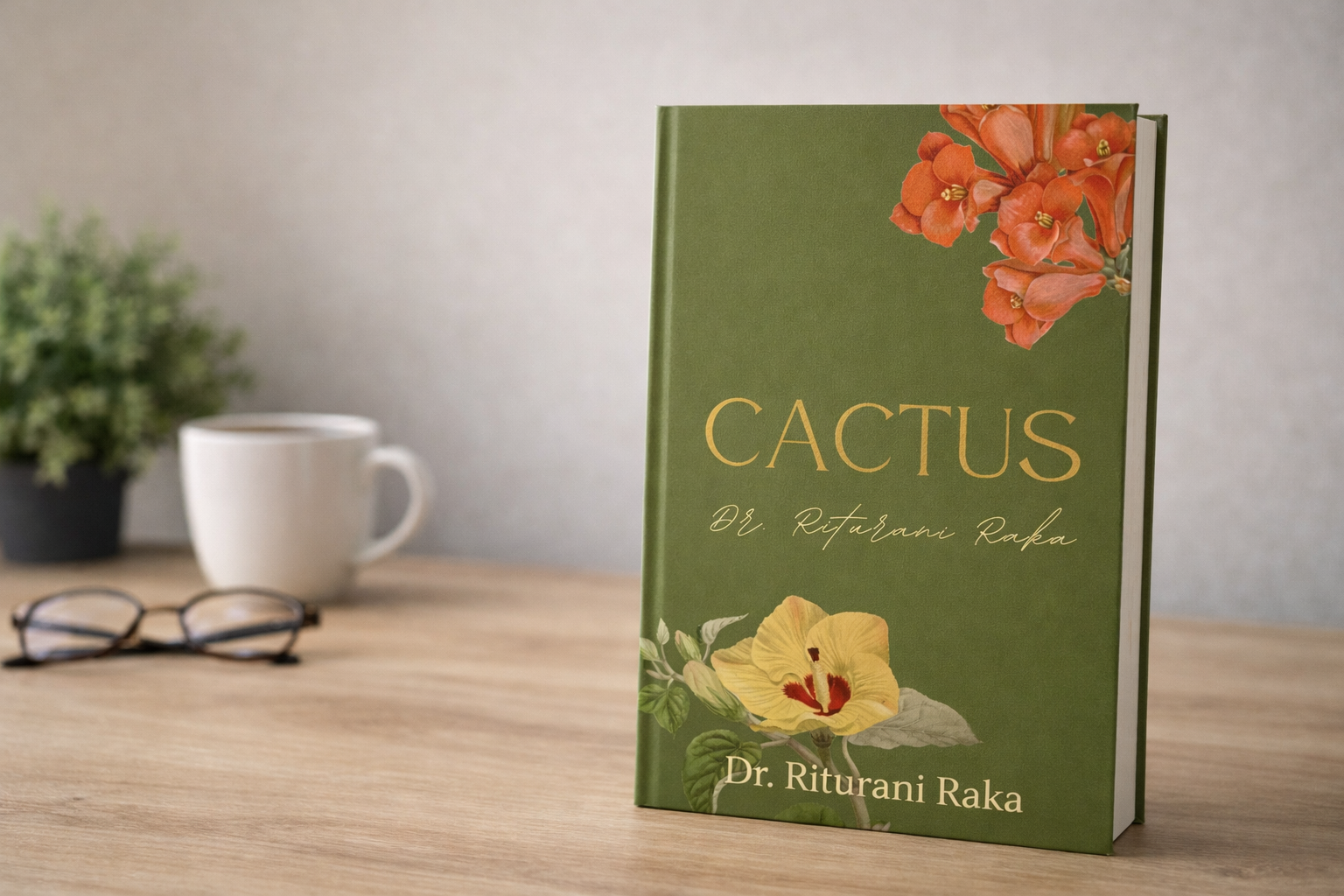
Cactus by Dr. Riturani Raka is available now through BookLeaf Publishing. The collection offers accessible poetry for anyone navigating the complex, beautiful mess of human life.
This interview has been edited for clarity while maintaining the authentic voice of the conversation.
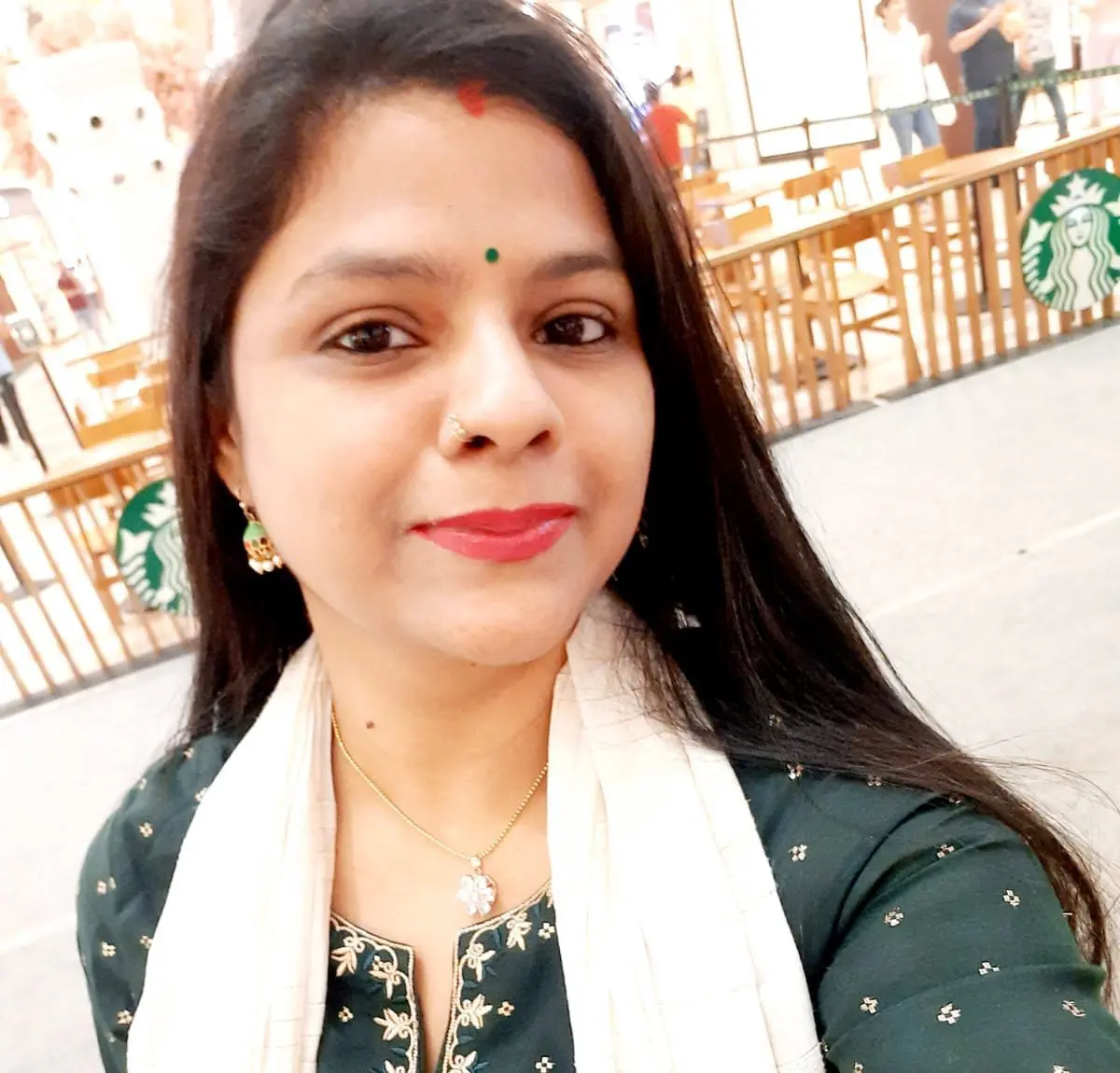
With over 11 years of experience in the publishing industry, Priya Srivastava has become a trusted guide for hundreds of authors navigating the challenging path from manuscript to marketplace. As Editor-in-Chief of Deified Publications, she combines the precision of a publishing professional with the empathy of a mentor who truly understands the fears, hopes, and dreams of both first-time and seasoned writers.