
Rating
⭐⭐⭐⭐¼ (4.25 out of 5)
Why this book caught my attention
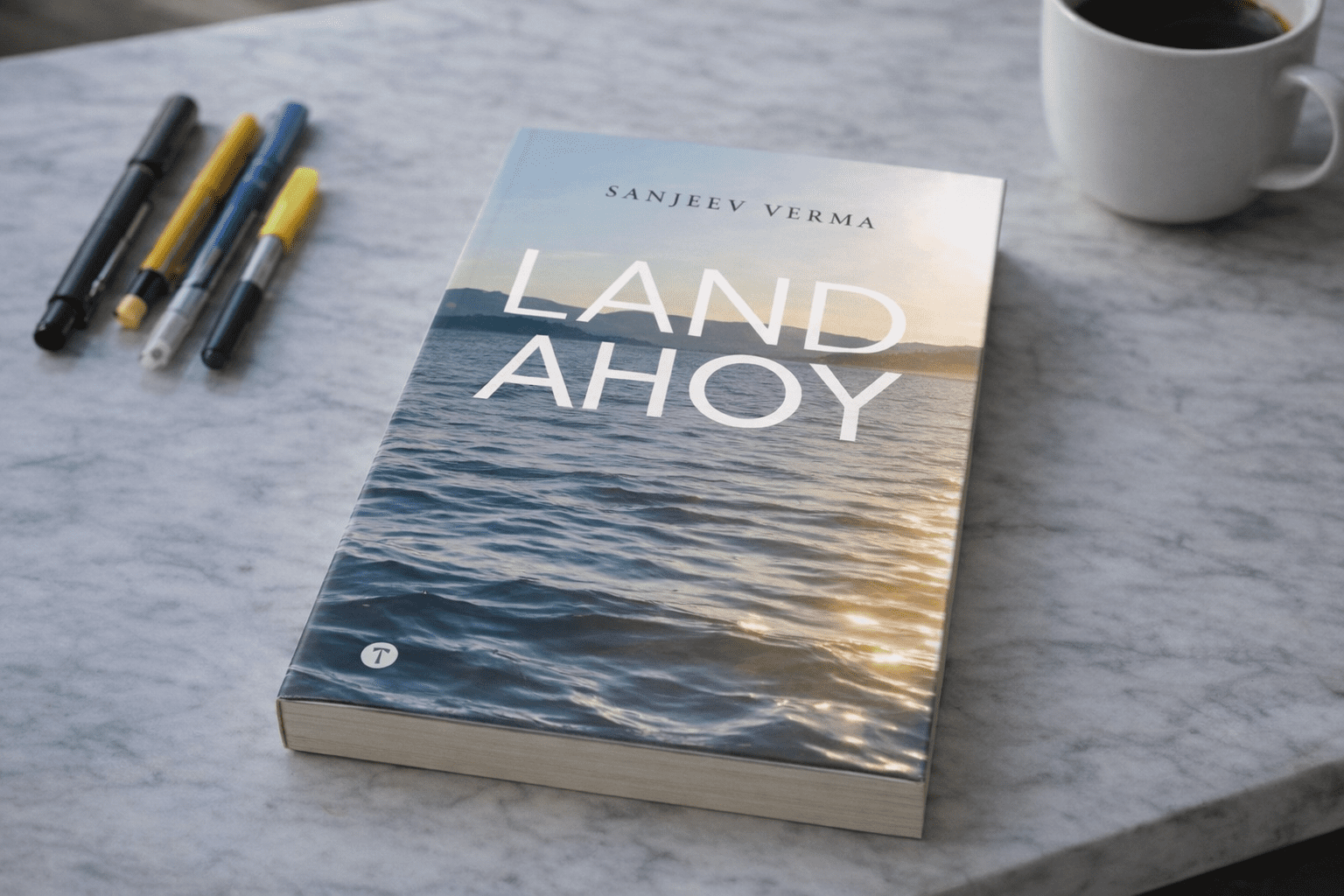
I picked up Land Ahoy by Sanjeev Verma at a time when I was not actively looking for a memoir. Memoirs often lean heavily either into achievement lists or emotional confessions that feel carefully arranged. This one felt different from the moment I saw the cover. The sea, the horizon, the open water. It did not promise drama. It promised perspective.
After finishing the book, I can say this with honesty: Land Ahoy is less about what the author did with his life and more about how he paid attention while living it. That distinction matters.
A life seen through moments, not milestones
What Sanjeev Verma does well is resist the urge to turn his life into a highlight reel. Yes, he served in the Merchant Navy. Yes, he rose from Cadet to Chief Officer. Yes, he later became a teacher guiding young minds. But these facts are never presented as trophies. Instead, they sit quietly in the background while the real focus remains on moments. Small ones. Odd ones. Sometimes funny, sometimes heavy.
There are memories of boarding school days, the warmth and chaos of Bhopal, long stretches at sea near Bombay High, and the strange intimacy that develops between strangers sharing railway compartments. These are not treated as nostalgic ornaments. They are presented as experiences that shaped how the author learned to look at people, duty, fear, joy, and time.
As a reader, I found myself relating not to the profession but to the pattern. We all remember our lives in fragments. Verma simply writes those fragments with care.
The sea as a teacher, not a metaphor
Books written by mariners often romanticize the sea. Land Ahoy does not fall into that trap. The sea here is demanding, unpredictable, sometimes generous, sometimes indifferent. It is a workplace, a companion, and occasionally an adversary.
What stayed with me was how the author talks about friendships formed on ships. These are not dramatic bonds forged in crisis alone. They are built through shared boredom, shared meals, shared mistakes. Anyone who has worked long hours with the same group of people will recognize this dynamic instantly.
The maritime mishaps are told with humor, but never with exaggeration. There is respect for the profession and the risks involved, without turning it into bravado.
Humor that feels earned
One of the book’s strengths is its humor. It does not rely on punchlines. It relies on observation. Mango raids, childhood follies, strange coincidences, misunderstandings at sea, awkward family moments. The humor comes from recognition rather than surprise.
I caught myself smiling more than once, not because something was funny on the surface, but because it reminded me of similar moments in my own life. The kind you only laugh about years later, when the embarrassment has softened into memory.
This humor also balances the heavier themes. The book touches on depression, loss, faith, and aging, but it never sinks under their weight. There is always a sense that laughter is not denial, but survival.

Writing that feels like a conversation, not a performance
The writing style in Land Ahoy feels conversational. Not polished to perfection, not trimmed to impress. Some sentences stretch longer than expected. Some transitions feel abrupt. And that works in the book’s favor.
It reads like someone talking to you across a table, occasionally wandering off before coming back to the point. That rhythm made the reading experience feel personal rather than staged.
Importantly, the author does not place himself on a pedestal. He admits to foolishness, misjudgment, and fear. That honesty builds trust. You believe him because he does not try to appear wiser than he is.
Faith, dharma, and doubt without preaching
One area where the book surprised me was its handling of faith and dharma. These topics are often treated with either rigid certainty or complete dismissal. Verma chooses neither.
Faith here appears as part of life, not a conclusion. It coexists with doubt, coincidence, and questioning. There are moments where belief comforts, moments where it confuses, and moments where it simply exists without explanation.
As a reader, I appreciated that the author allows complexity. He does not resolve every philosophical question. He leaves room for uncertainty, which feels honest.
Parenting, aging, and the passing of time
The sections on parenting and growing older carried emotional weight for me. Not because they were dramatic, but because they were understated. The joys and heartbreaks of raising children are presented without exaggeration.
There is an understanding that love does not protect you from pain, and responsibility does not always come with clarity. These reflections felt grounded in real experience rather than idealized memory.
The book also acknowledges aging without fear or denial. Growing older is not treated as loss alone, but as accumulation. Of stories, lessons, regrets, and acceptance.
Why this book matters in practical life
What makes Land Ahoy relevant is not its setting or profession, but its perspective. In a time where success is measured loudly and constantly, this book offers a different metric. Attention. Gratitude. Memory.
It reminds readers that meaning often reveals itself later. That experiences we dismiss as ordinary may become anchors in hindsight. That listening, noticing, and reflecting are skills worth developing.
For readers feeling rushed or pressured by comparison, this book provides a gentle recalibration. Not an escape, but a reminder that a well lived life is rarely linear.
Who should read this book
This book will resonate with readers who enjoy reflective writing and lived experience. It is especially suited for those who appreciate memoirs grounded in everyday reality rather than extraordinary achievement.
Professionals nearing transitions, parents watching their children grow up, individuals reflecting on past choices, and readers interested in Indian life beyond headlines will find value here.
Those looking for fast pacing or dramatic arcs may find the book slow at times. This is not a flaw, but it is important to know.
Any shortcomings worth mentioning
At times, the book lingers longer than necessary on certain memories. A bit of tightening could have strengthened the narrative flow. Some readers may also wish for deeper exploration of specific maritime experiences.
However, these are minor issues. They come from abundance rather than lack.
Final thoughts as a reader
When I finished Land Ahoy, I did not feel inspired in the traditional sense. I felt settled. Reflective. More attentive to the small details around me.
This is not a book that tells you how to live. It shows you how one person did, honestly, imperfectly, and with gratitude. And in doing so, it invites you to look at your own life with a bit more patience and kindness.
For readers who value sincerity over spectacle, Land Ahoy offers something rare.

With over 11 years of experience in the publishing industry, Priya Srivastava has become a trusted guide for hundreds of authors navigating the challenging path from manuscript to marketplace. As Editor-in-Chief of Deified Publications, she combines the precision of a publishing professional with the empathy of a mentor who truly understands the fears, hopes, and dreams of both first-time and seasoned writers.