
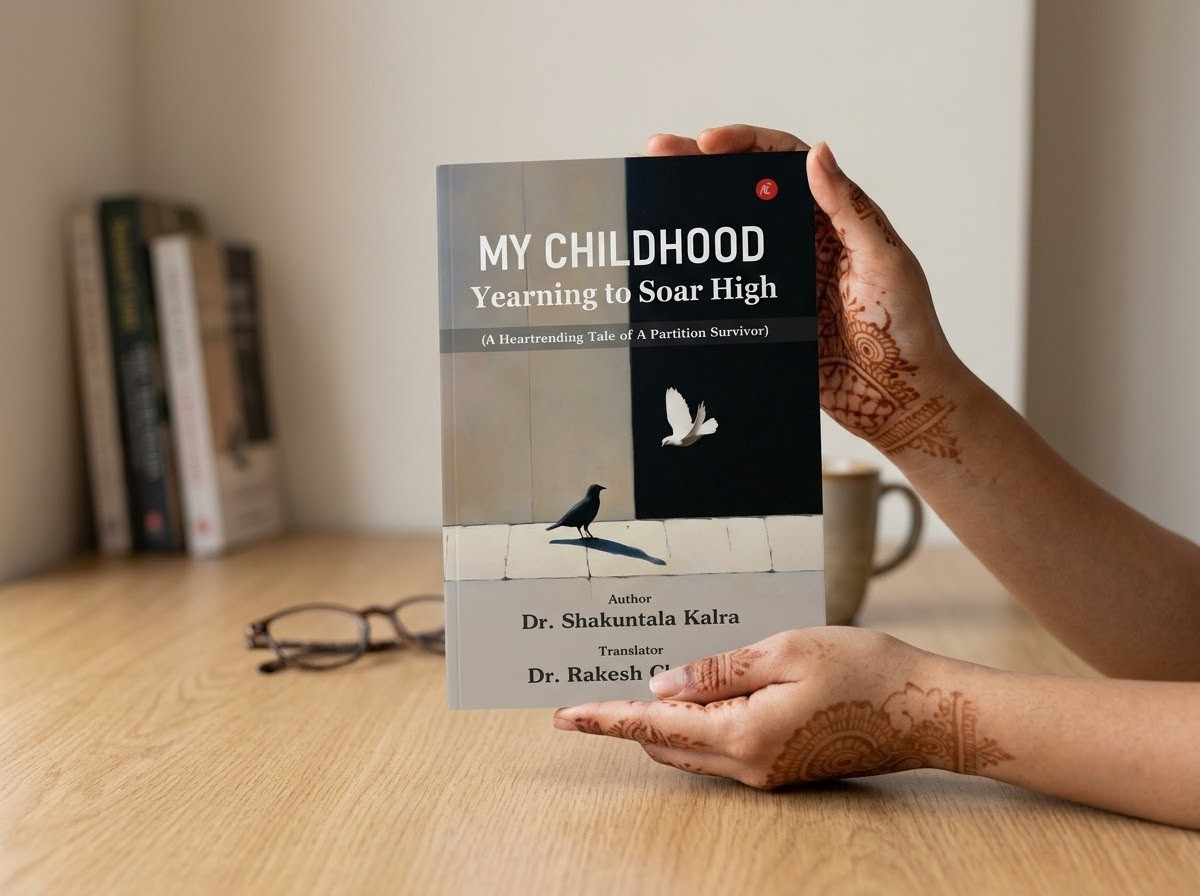
Rating:⭐⭐⭐⭐ (4.5 out of 5)
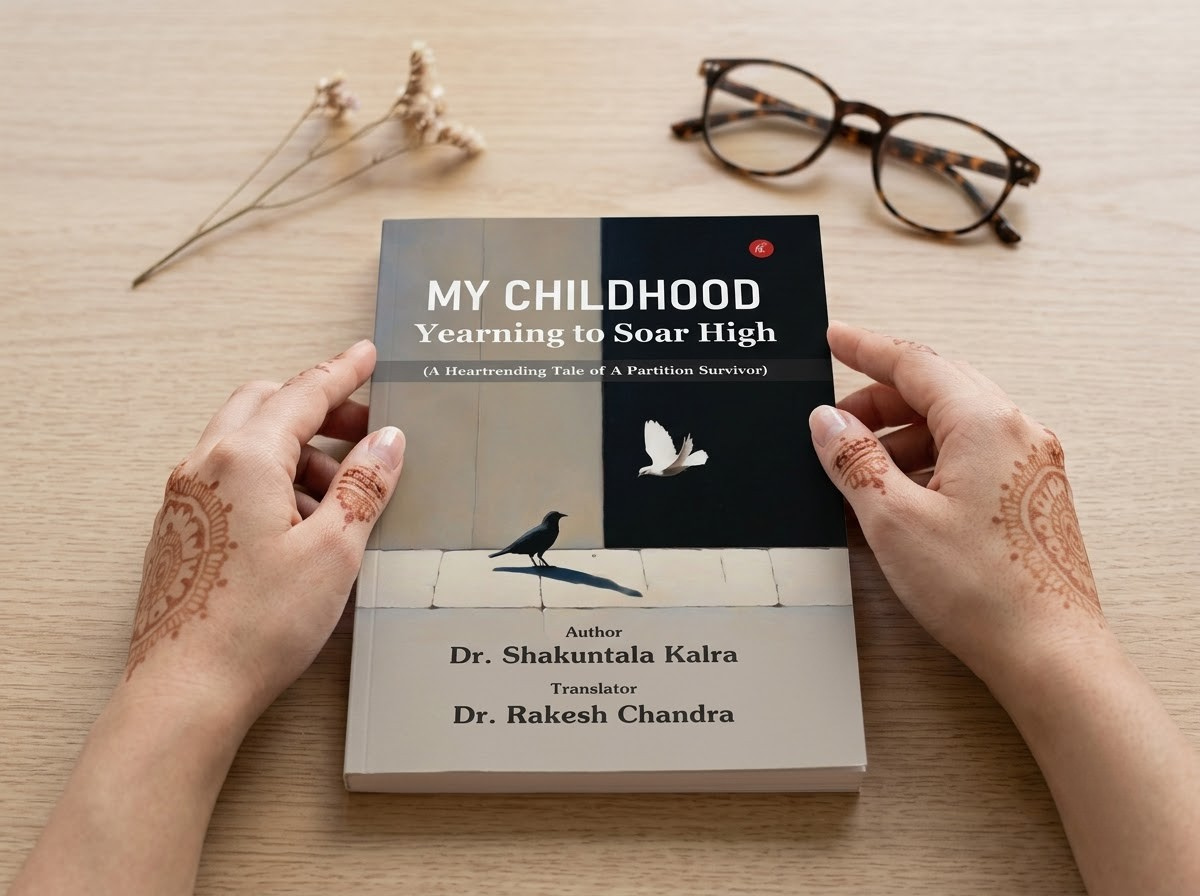
I picked up My Childhood: Yearning to Soar High on a slow afternoon, the kind where you want something honest to read and not something dressed up for effect. What I got instead was a memoir that made me put my cup of chai down twice, and after more than fifteen years of reading books for a living at Deified Publication, that does not happen very often. Dr. Shakuntala Kalra’s account of growing up during and after Partition is not loud or dramatic the way films about that period usually are. It works in a smaller, more personal register, and once you settle into it, that choice pays off.
My own grandmother used to talk about 1947 the way people talk about weather they survived, matter of fact on the surface but with something harder underneath if you asked one more question. Reading Kalra’s memoir reminded me of those conversations more than once. I kept expecting the book to turn into a history lesson full of dates and political names, and it never really does that. Instead it stays close to a child’s view of a family that lost its land, its standing, and in some ways itself, and had to figure out ordinary life from there, one day at a time.
What the Book Is About
The book opens with a prologue that sets the tone for everything that follows. Kalra writes about the people who passed through her life, the kind ones and the difficult ones, and she makes it clear early on that she has chosen not to carry grudges forward. She even quotes a line from the Hindi poet Prasad about how forgetting can bring relief from sadness, and that idea shapes the whole approach the book takes to memory. This is not a memoir written to settle scores. It is written to make sense of a childhood shaped by forces much bigger than one family, the Partition of India in 1947, and to hold onto whatever tenderness managed to survive alongside that.
From there the book moves chronologically across more than forty short chapters, starting with her birth in 1946 in Bakhar, a town that is now in Pakistan, and moving through her early years in a joint family, her schooling, her friendships, and the slow rebuilding her family did after being uprooted. Her father ran a wholesale cloth business and the family held land as zamindars before Partition took most of that away in one stroke. The book spends very little time on the political mechanics of Partition itself. Instead it shows what happened to one family and the children in it after the line was drawn, and how survival became a shared project involving grandparents, an aunt, and eventually a stepmother who enters the story partway through.
What Stood Out to Me
The chapter where her grandfather talks about Partition is probably the part I keep returning to. He tells her that the uglier side of religion was never new, that political power is what turned it into bloodshed, and while he says this, Kalra writes that his words were carrying his own pain even as he tried to sound reasonable about it. She describes watching him get lost in memories she compares to nightmares, and there is a line where she says it feels like he is still hearing bombs and bullets decades later. A few pages on, the book brings in a line from Faiz Ahmad Faiz about the morning of independence being a blotted brightness, and Kalra uses it to explain her grandfather’s disappointment with a freedom that cost him his home and his sense of who he was. I have read a fair number of Partition narratives over the years, and this is one of the more honest ways I have seen a writer show what that generational damage actually looked like inside a house, rather than on a screen.
There is also a smaller, gentler scene involving a school friend named Indu, whose mother had died and who was being raised by her aunt. Kalra writes that both girls carried a similar loss and somehow understood each other because of it, and she describes Indu’s handwriting, practiced by writing letters for her siblings on a slate, as the most beautiful in their class. Kalra even says her own writing improved because she tried to copy it. It is a small detail, but it tells you a lot about how children build attachments out of shared grief without ever putting a name to what they are doing.
Then there is a completely different kind of scene, lighter and almost funny, where Kalra and her younger sister Saroj visit the Hanuman temple with their grandmother and are told the story of Sheran Wali Maa, the goddess who rides a lion because the lion is her friend. Saroj interrupts halfway through to ask who counts as wicked and sinful, and the story simply stops there mid explanation, the way a child’s question tends to cut into an adult’s storytelling. I liked this section because it shows Kalra was still allowed to be a child in the middle of everything else going on, at least for a few pages at a time, and the book is honest enough to include these lighter stretches instead of making the whole account relentlessly heavy.
There is also a warm, small memory from her time at Ramnagar School, where she and her friend Kamlesh would split two paisa worth of pocket money on pakoras made from gram flour after school let out. Kalra writes that she still remembers the taste of them today. Details like that, the food, the friendships, the temple rituals, do more work in this book than any single dramatic scene, because they show you what an ordinary childhood looked like even while history kept interrupting it from the sides.
The Emotional Core
If I am honest, the book is at its strongest when it stays close to the family rather than to history in the abstract. The scenes with her grandfather affected me the most, partly because Kalra does not editorialize much around them. She simply describes what she saw and lets the reader sit with whatever discomfort comes from watching an adult carry pain he cannot put into words in front of a child. I also found myself thinking about the later chapters involving her stepmother and her sister Saroj, based on what the chapter titles suggest about growing hardship, and genuinely wanting to know more about how that part of the family found its footing. There is real warmth here too, in the joint family chapters, the friendships, and the grandmother’s temple visits, and that balance between hardship and tenderness is what makes the book land the way it does instead of reading like a list of misfortunes.
Who This Book Is For
This is not a book for someone chasing a fast plot with twists. It moves the way memory moves, chapter by chapter through specific moments rather than one continuous arc, and if you prefer tightly plotted narratives, this pacing might take some getting used to. But if you are interested in Partition history told from inside a family rather than from a textbook, or if you enjoy memoirs built from small, specific details, the friendships, the food, the temple visits, sitting alongside a larger tragedy, there is a great deal here for you. It would also suit readers interested in oral history, or anyone who grew up hearing Partition stories from grandparents and wants to read one written down with this much specific memory still intact.
Final Thoughts
My honest reservation is more about structure than content. With more than forty chapters, some quite short, the book occasionally reads like a list of memories rather than a narrative building toward something, and a tighter edit in a few places might have let the emotional through line land even harder. That said, it is a minor complaint next to what the book actually achieves, which is putting on paper a version of Partition that most history books skip over entirely, the version where children had to grow up overnight because the adults around them were too busy surviving to protect their childhoods. Dr. Shakuntala Kalra, helped along by Dr. Rakesh Chandra’s translation, has written something that reads less like a polished memoir and more like a family history being handed down carefully so it does not get lost. I am glad I read it, and I think readers who care about this period of Indian history will come away feeling the same way.
With over 11 years of experience in the publishing industry, Priya Srivastava has become a trusted guide for hundreds of authors navigating the challenging path from manuscript to marketplace. As Editor-in-Chief of Deified Publications, she combines the precision of a publishing professional with the empathy of a mentor who truly understands the fears, hopes, and dreams of both first-time and seasoned writers.