
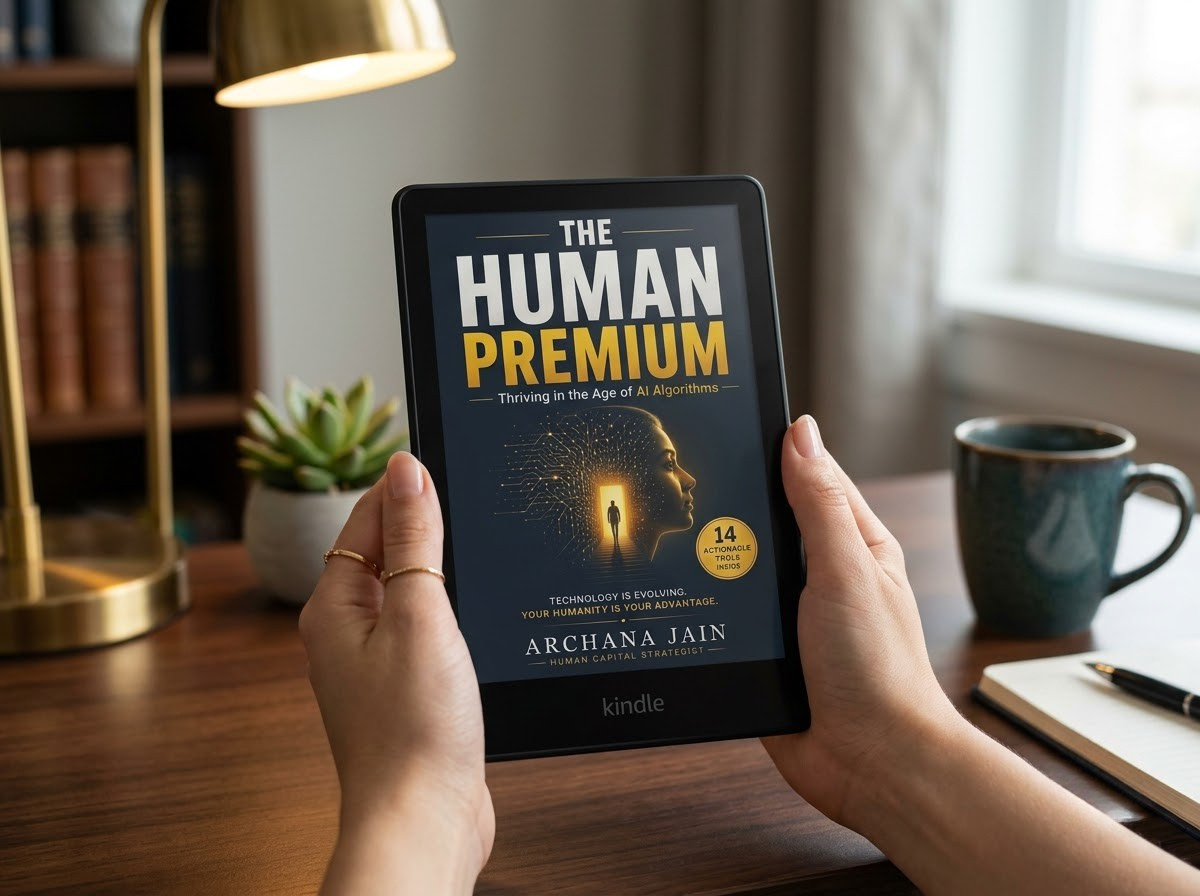
Rating: ⭐⭐⭐⭐ (4.4 out of 5)
I have spent years evaluating workplace non-fiction, but every so often a book arrives at the exact moment a whole industry is holding its breath. As Editor-in-Chief at Deified Publication, I hear from readers every single week who feel secretly anxious about software tools slowly taking over their daily responsibilities. I was thinking about my own editorial queue when I opened this text, wondering how much of our routine analytical effort will belong to software in just a few short years. The author opens her text with a scenario that felt uncomfortably familiar to anyone sitting in a modern office space.
There is a scene right near the beginning where an employee named Ethan sits at his laptop at precisely 8:47 on a Tuesday morning. Across the room, his manager projects a newly installed automated platform onto the wall, and in less than three minutes the software produces a complete client summary, a sales forecast, an outline, and a full week of routine reporting. Ethan simply stares at his screen in total silence while a colleague nervously laughs and someone mutters a question about what humans are supposed to do now. That opening detail captured the exact feeling of helpless surprise that so many professionals experience when software does in seconds what used to consume an entire afternoon.
What Is It About? A Fresh Look at Work in the Era of Algorithms
If you are looking for a clear book summary, this work focuses on the changing definition of workplace value in an automated economy. Archana Jain argues that as artificial intelligence makes routine tasks cheap, quick, and abundant, purely human qualities become far more valuable rather than less. Instead of competing with algorithms on raw speed or data processing, professionals need to focus on what the author calls the human premium. This includes traits like contextual judgment, emotional safety, ethical discernment, and the courage to challenge polished digital outputs when something feels wrong in the real world.
To demonstrate how this plays out in practice, the text includes a case study about an operations coordinator named Sarah. Her company implemented an automated accounting system that processed a massive backlog of thousands of mismatched vendor invoices within thirty minutes, highlighting pricing errors and formatting mistakes instantly. The software recommended issuing automated rejection emails to every vendor, but Sarah decided to call the primary vendor directly. She discovered that their team had recently migrated to a new platform that accidentally attached a hidden two percent surcharge to shipments. By handling the situation with patience and humor rather than escalating blame, Sarah fixed the underlying system problem and repaired a fragile business partnership that software would have destroyed.
Real Workplace Cases, Craft, and Practical Frameworks
What stood out to me regarding the craft of this book is how Archana Jain grounds abstract workplace theories in realistic corporate environments. The structure alternates smoothly between dramatic corporate stories and structured toolkits. In many ways, the conversational yet analytical style reminded me of Cal Newport’s writing in Deep Work, especially in how it urges readers to reclaim intentional mental focus from distracting automated systems. If I have one mild criticism, it is that some of the actionable toolkits carry a few too many letter acronyms like T.V.A., C.A.R.E., S.T.O.R.Y., and P.A.C.T., which can occasionally feel a bit dense when presented back to back. However, the concrete case studies easily balance out those framework heavy sections.
A particularly memorable chapter features a junior supply chain analyst named David who was reviewing a predictive forecasting dashboard. The automated platform urged his team to increase production orders for neon green windbreakers by nearly four hundred percent, backing the decision with persuasive graphs and an exceptionally high predictive confidence score. Most employees would have clicked approve to keep the process moving, but David felt uneasy and investigated the historical data. He discovered that the previous year’s sales spike was caused by a viral music video featuring a famous pop star wearing that exact jacket, making it a one-time cultural moment rather than a recurring seasonal trend. By asking a single thoughtful question about real human behavior, David saved his firm from a multimillion-dollar inventory mistake that competitor brands blindly fell into.
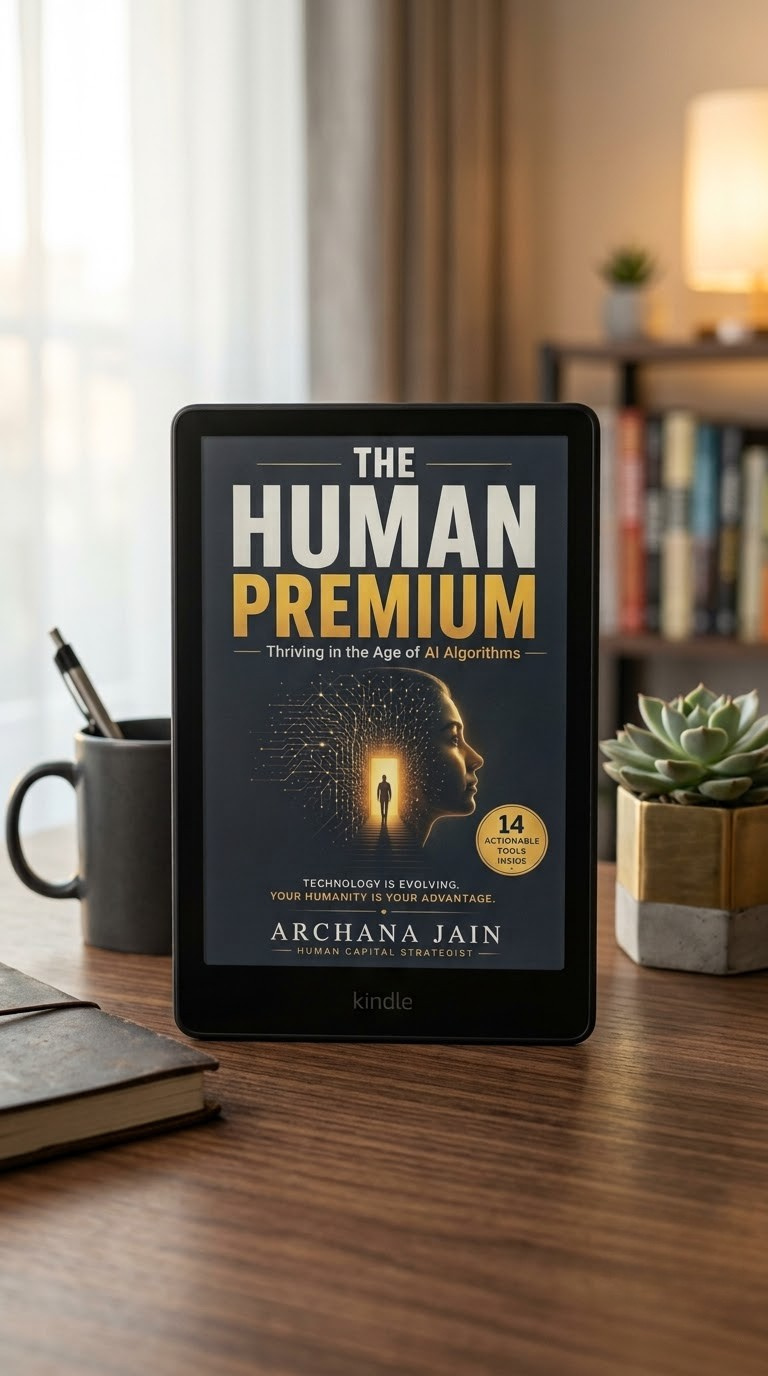
The Emotional Core and How It Hits Home
The emotional core of this book lies in its direct challenge to modern corporate culture, which has spent decades training employees to suppress their humanity and act like efficient calculation engines. Archana Jain points out that when professionals evaluate their worth based solely on repetitive tasks, algorithms will inevitably make them feel obsolete. The writing gently reminds the reader that work is not merely about output metrics, it is also about identity, belonging, trust, and shared purpose. I felt a genuine sense of relief reading these chapters because they reframe soft skills as essential economic advantages rather than secondary attributes.
This message comes through vividly in a story about an operations manager named Priya who inherited a struggling team that was missing targets and suffering from high turnover. Her predecessor had installed surveillance software that tracked keystrokes, application usage, and idle time, generating automated alerts whenever an employee hesitated between tasks. During her very first week, Priya made the bold decision to completely remove the tracking software, telling her team that she cared about solution quality and communication rather than monitoring their every move. By replacing digital surveillance with personal trust, she transformed her group into one of the highest performing units in the company within six months, demonstrating that human potential blossoms under psychological safety rather than mechanical oversight.
Who Should Read This Book and Who Might Want to Pass
If you are wondering should you read this title, I think it offers immense value for mid-career professionals, team managers, and recent graduates who feel overwhelmed by technological changes. It is particularly useful for anyone trying to figure out how to position their career as automated tools become standard across every office. Looking ahead toward 2026 and beyond, the ability to combine software efficiency with human relationship building will be the primary differentiator in the job market. This reader review highly recommends the book for anyone seeking a practical roadmap to remain relevant without losing their personal identity.
On the flip side, this book may not suit everyone. Readers who are looking for technical tutorials on how to write code, build machine learning models, or master complex software prompts will not find those instructions here. The text focuses on human behavior, leadership, and critical thinking rather than software engineering. If you already feel entirely confident in your workplace strategy and prefer dense academic statistics over storytelling and business case studies, you might find some of the advice familiar.
Final Verdict and Reader Review Summary
Is it worth it? Honestly, yes. Archana Jain has crafted a practical, comforting, and grounded perspective on one of the most stressful workplace transitions of our generation. The text does not pretend that algorithms are going away, nor does it indulge in wild science fiction panic. Instead, it offers a realistic framework for using technology to handle repetitive task processing so that human beings can focus on empathy, judgment, and creative problem solving. It is the kind of book that leaves you feeling empowered to walk back into your office with renewed confidence in your unique human strengths.
FAQs
What is the main idea behind Archana Jain’s book summary?
The core message of the book is that as artificial intelligence makes information processing and routine execution abundant and cheap, uniquely human qualities like critical thinking, emotional intelligence, trust, and contextual judgment become significantly more valuable. Rather than trying to compete with software speed, professionals should cultivate their human premium to solve complex, ambiguous real world problems that algorithms cannot navigate.
Is it worth reading for entry level employees or just managers?
It is definitely worth reading for professionals at every career stage, including entry level workers and senior managers. Entry level employees will learn how to avoid falling into passive task processing and instead develop strategic judgment early in their careers. Managers will gain concrete frameworks like the C.O.A.C.H. tool to build high performing, trust-based team cultures that thrive alongside automated systems.
Should you read this if you already use AI tools daily at work?
Yes, you should read it even if you are an advanced software user. The book does not discourage using automated platforms; rather, it teaches you how to direct those tools strategically. It shows you how to critically evaluate digital outputs, spot algorithmic blind spots like hallucinated data or false trends, and apply human wisdom to ensure that speed does not replace accuracy and empathy in your decision making.

With over 11 years of experience in the publishing industry, Priya Srivastava has become a trusted guide for hundreds of authors navigating the challenging path from manuscript to marketplace. As Editor-in-Chief of Deified Publications, she combines the precision of a publishing professional with the empathy of a mentor who truly understands the fears, hopes, and dreams of both first-time and seasoned writers.