
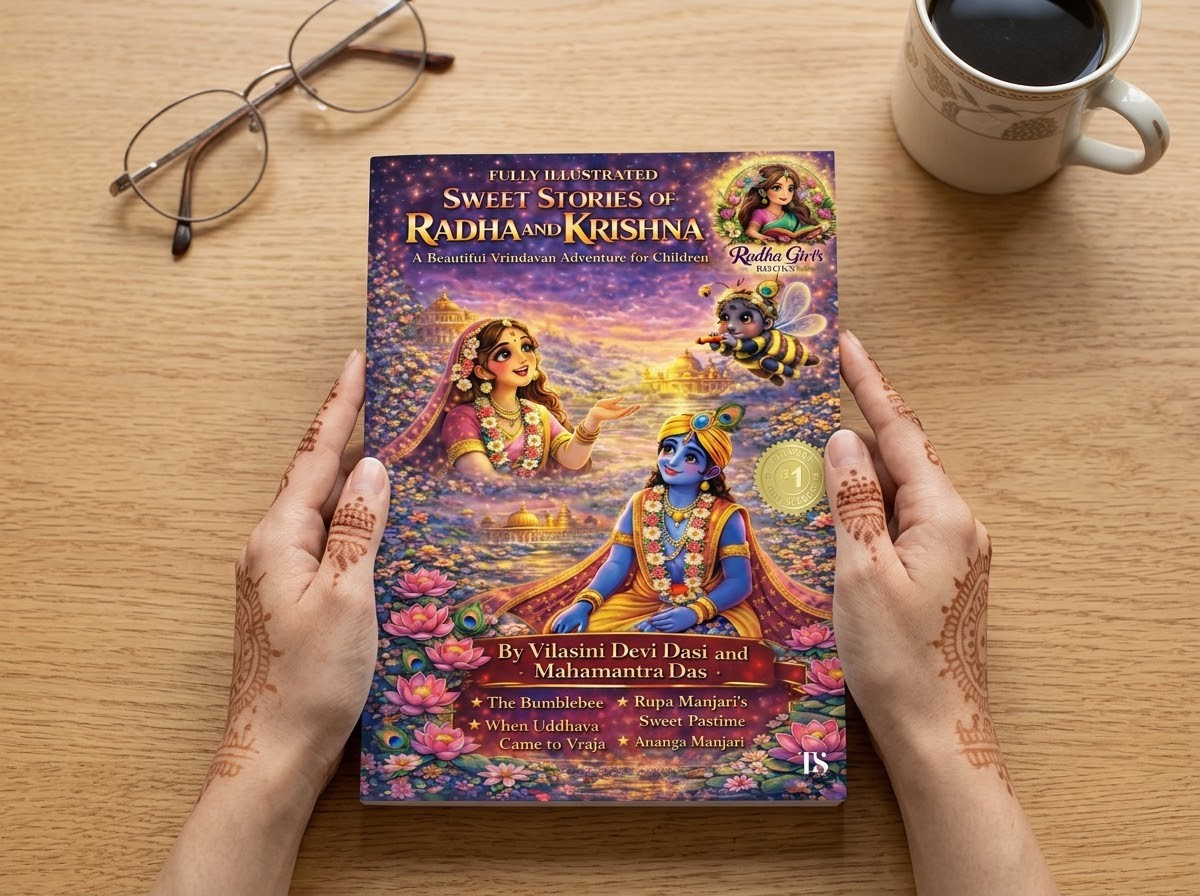
Rating: ⭐⭐⭐⭐ (4.4 out of 5)
I have always believed that children’s books are some of the hardest things to write, even though they look so simple. When you sit down with a hot cup of tea and flip through modern books for kids, you often find stories that are too loud, too chaotic, or far too commercial. As the Editor-in-Chief at Deified Publication, I spend my days reading all kinds of books, but the ones that make me sit back and think are the ones meant for the very young. I remember my grandmother telling me stories of Krishna when I was a little girl, and those gentle memories have remained with me throughout my life. When this collection arrived on my desk, I was curious to see if it could bring back that sweet feeling.
There is a delicate art to translating ancient spiritual traditions into a language that a five-year-old can comprehend without losing the core sweetness of the message. We often see books that try too hard to lecture young minds, or conversely, those that water down the narrative until it loses all its original character. In my fifteen years of reviewing books, I have learned that children are far more perceptive than we give them credit for. They do not need complex language, but they do need sincere stories that feel honest and warm. This brings me to my Sweet Stories of Radha and Krishna Book Review, where we will look closely at this new collection.
What This Collection is About
If you are wondering what is it about, the book is a collection of four simple narratives designed to introduce children to the concept of bhakti, or devotion. In this Sweet Stories of Radha and Krishna Book Review, we can look at how the authors, Vilasini Devi Dasi and Mahamantra Das, structured this collection. The first story, titled The Bumblebee, tells us about a tiny buzzing messenger that travels from flower to flower in the gardens of Vrindavan, showing children that even the smallest creatures can carry a deep message of love for Krishna. By focusing on a simple insect, the authors help children look at nature with a sense of wonder and affection.
The second story, When Uddhava Came to Vraja, describes how Uddhava visits Vrindavan with a message from Krishna, only to find that the pure devotion of the gopis offers something much greater than basic knowledge. This is a beautiful way to show young minds that love and feeling can sometimes be more important than just learning facts. The third tale, Sweet Rupa Manjari, introduces one of the devoted attendants of Srimati Radharani, showing how kindness and humble service can bring joy to Radha and Krishna. Finally, Ananga Manjari shares a playful story of friendship and loving nature in the divine land of Vrindavan. This basic book summary shows how each story focuses on a different aspect of relationships.
Looking at the Craft and Style
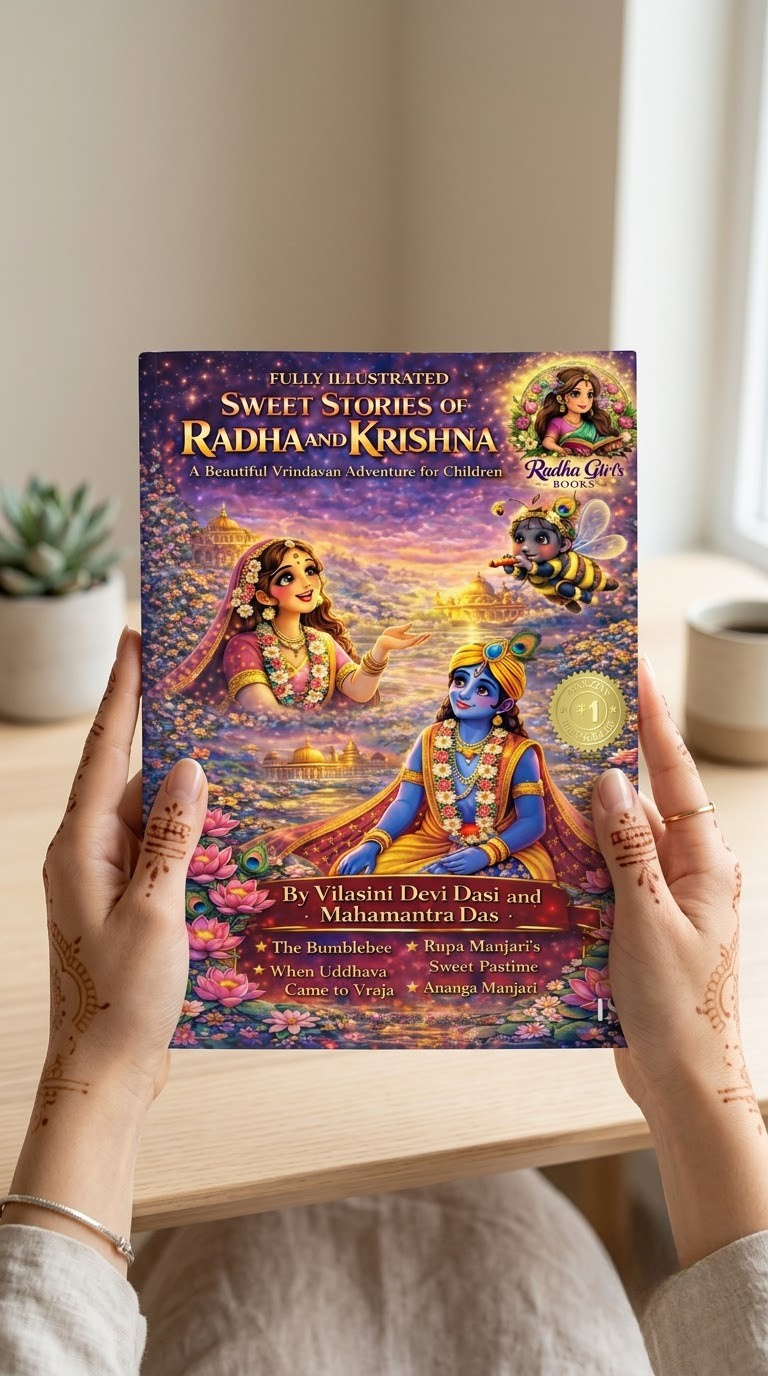
What stood out to me immediately was the sheer brightness of the illustrations, which really bring the gardens of Vrindavan to life on every page. Children’s books need to capture the eye before they can capture the mind, and the artists here did a wonderful job with the soft, glowing colors of the flowers and characters. The writing style of Vilasini Devi Dasi and Mahamantra Das is very direct, using short sentences that a five-year-old can easily understand without getting confused. I appreciated how the characters are kept very simple, which is appropriate for the target age group of two to seven years. In comparison to older, more text-heavy books of Indian mythology, this collection moves at a very gentle pace.
The narrative structure of having four separate short stories in one volume is highly effective for parents who want a structured reading routine. It means you can read one story a night, allowing the lessons of kindness and devotion to settle in before moving on to the next. The language is conversational and warm, which makes it easy to read aloud during family gatherings or bedtime. Sometimes, children’s books can feel a bit mechanical or overly educational, but this one feels like it was written by parents who truly care about the spiritual growth of their young ones. The choice to include brief summaries of the themes on the back cover is also a helpful touch for busy parents.
The Gentle Bhakti Core
The emotional core of this collection is simple love and devotion, which we call bhakti. When you read about the little bumblebee flying around the flowers, you feel a sense of warmth that is often missing from modern children’s entertainment. I think this will land very softly on young readers, making them feel secure and happy as they listen to these bedtime stories. Honestly, I found myself thinking about the story of Uddhava for a long time after closing the book, because it shows that intellectual knowledge is not as important as pure, simple love. This is the kind of book that sits with you because of its sweet simplicity.
If you are asking should you read this to your children, my answer depends on what you want them to experience. It is designed to bring a feeling of peaceful affection, which is a rare quality in books today. There is a gentle flow to the language that avoids any scary or intense elements, making it safe for even the most sensitive toddlers. I think the story of Rupa Manjari, with its emphasis on selfless service and kindness, is particularly lovely because it teaches children to think about the happiness of others. It reminds me of the simple values my own family tried to teach me when I was young, which made me feel very nostalgic.
Who Will Love This Book and Who Should Pass
This brings us to the question of whether is it worth it for every family. This book is perfect for parents who want to introduce their young kids to Indian culture, spiritual traditions, or specifically the pastimes of Radha and Krishna. It works wonderfully for homeschooling, temple groups, or simple family reading times. However, I want to be honest in this Sweet Stories of Radha and Krishna Book Review, because this book will not suit everyone. If you are looking for a detailed, academic or historical text about ancient India, you should look elsewhere. Older children, perhaps those above eight, will likely find the stories too simple and the text too basic. The pacing is very slow and focused on gentle lessons rather than exciting adventures.
As we look forward to the new books coming out in 2026, it is clear that this collection is aimed strictly at a specific, young, devotional audience. For those reading this reader review in search of a clear recommendation, the devotional themes might feel a bit too specific if your family does not share an interest in the spiritual traditions of India. It is a book written from a place of deep faith, so it is best suited for those who appreciate that perspective. For families who do want to nurture a love for Krishna in their children, this is a wonderful resource that handles the subject with great care and beauty. It brings a lot of traditional warmth to the bookshelf.
Some Final, Honest Thoughts
Overall, I think writing this Sweet Stories of Radha and Krishna Book Review has been a joyful task, and the book is a lovely addition to any family library if you have toddlers or young children. It does what it sets out to do with a lot of warmth and no pretension. The authors have managed to create a collection that feels gentle and kind, which is exactly what we need more of in children’s literature. It is not a complex narrative, but it is a sweet, beautifully illustrated book that can help build a foundation of kindness and humility in young minds. I am very happy to recommend it for those seeking a gentle introduction to these timeless stories.
FAQs
What is the book summary of Sweet Stories of Radha and Krishna?
This book is a collection of four illustrated stories for children aged two to seven. The stories are set in Vrindavan and focus on the pastimes of Radha and Krishna. They include the tale of a bumblebee carrying a message of love, Uddhava learning about devotion from the gopis, Rupa Manjari showing humble service, and Ananga Manjari sharing a story of friendship. Each story is designed to teach basic values like kindness, humility, and love.
Should you read this book to older children?
While the illustrations are beautiful, the language and stories are designed specifically for young kids between the ages of two and seven. Older children who are already reading independently may find the simple sentence structures and basic plotlines a bit too young for them. If you have children older than eight, you might want to look for more detailed narrative books, though they may still enjoy looking at the vibrant pictures.
Is it worth it to buy this collection for a non-devotional family?
If you are looking for a general introduction to Indian culture or folklore, this book is very beautiful, but it is written from a deeply devotional perspective. Families who prefer secular or purely historical stories might find the strong focus on bhakti and devotion to be more specific than what they want. However, if you want your children to learn about the values of kindness and love through traditional spiritual stories, it is a very sweet addition to your shelf.

With over 11 years of experience in the publishing industry, Priya Srivastava has become a trusted guide for hundreds of authors navigating the challenging path from manuscript to marketplace. As Editor-in-Chief of Deified Publications, she combines the precision of a publishing professional with the empathy of a mentor who truly understands the fears, hopes, and dreams of both first-time and seasoned writers.