
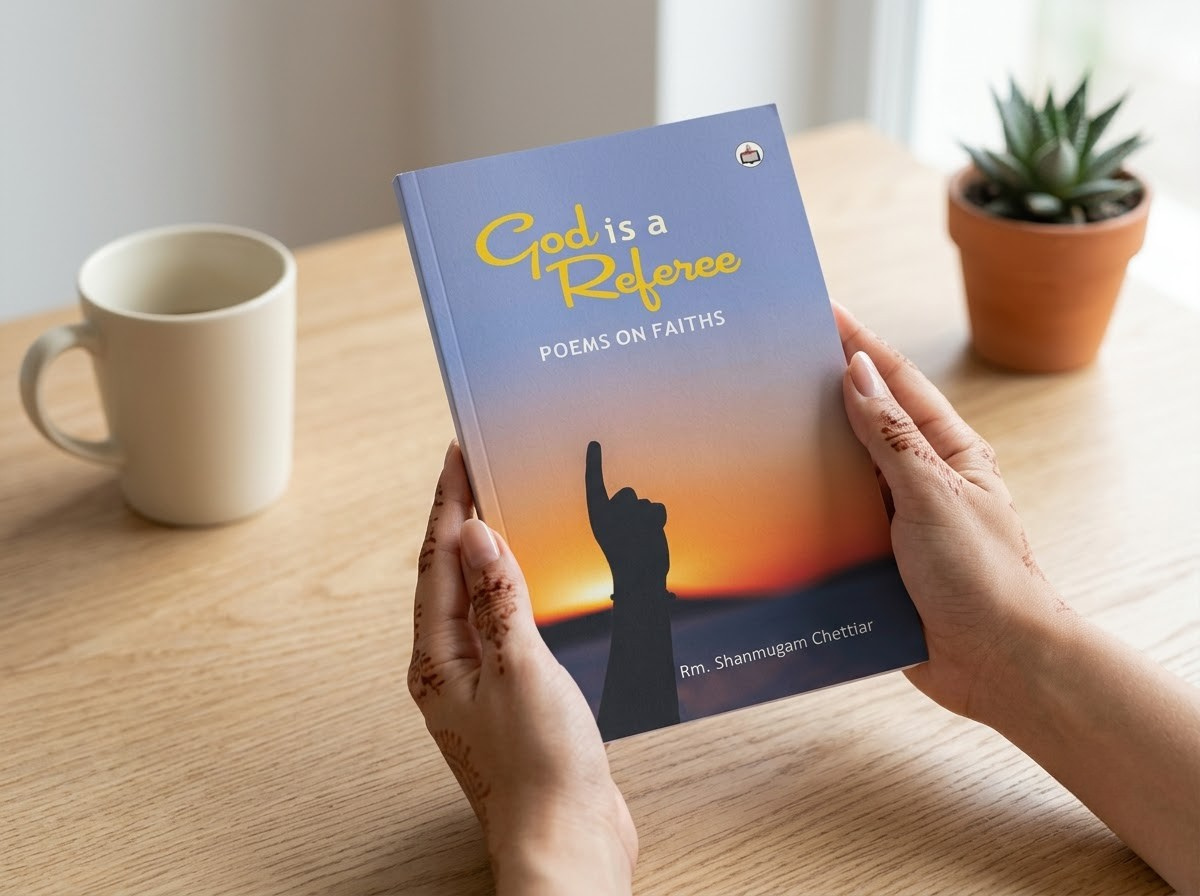
Rating: ⭐⭐⭐⭐ (4.4 out of 5)
Every now and then, a book lands on my desk that makes me look out the window for a long time while my tea grows cold. When I opened this collection, I did not expect such a blunt, no-nonsense look at our deepest spiritual questions. It felt like sitting down with an elder who has lived a long life and decided to tell you exactly what he thinks. There is a raw, conversational quality here that made me feel comfortable, even when the writer was dismantling sacred beliefs.
I kept thinking about this book for days after finishing it, mostly because it refuses to play by the usual rules of religious poetry. Usually, when people write about faith, they use heavy, decorative language that tries to make everything sound grand and mysterious. The author does the opposite, writing in short, direct lines that sound almost like prose broken into rhythmic beats. It is a style that might feel a bit dry to some at first, but it quickly reveals a practical wisdom. This is my honest God is a Referee Book Review, and I want to share how this book challenged my own views. It does not leave you feeling cozy, but it certainly keeps your mind active.
The Big Picture of the Collection
So, what is it about? At its heart, this collection is a massive, multi-faceted look at different religions, philosophies, and human behaviors. The author brings together over four hundred poems, dividing them into clear sections that cover Vedic practices, southern Indian traditions, non-Vedic paths, foreign faiths, and even atheism. This is a useful book summary of a work that acts as a personal diary of a rational thinker. He has spent decades observing how humans interact with the divine, interpreting these faiths through his own lens. He highlights what he sees as their practical strengths and logical inconsistencies, inviting us to look at our own habits of worship with clearer eyes.
The title poem sets the tone by comparing God to a sports official. Here, the author argues that the universe is ruled by natural elements like fire, air, water, and earth, which act according to their own inherent natures. Fire burns whoever is in its way, and water washes without caring about where it is, showing that these forces are indifferent to human desires. God does not interfere to favor one player over another or to change the rules. Instead, the divine is merely an observer, a referee who watches the match but lets the players face the consequences of their actions. This perspective upends the traditional idea of a personal deity who performs miracles to rescue us.
Skeptical Thinkers and Bold Perspectives
What stood out to me most in terms of craft is the absolute lack of pretense in these poems. The verses do not rely on complex metaphors, choosing instead to deliver ideas with the crisp efficiency of a philosophical essay. For instance, in a piece titled “Tree And God”, the author makes a controversial but fascinating claim. He writes that there would be no gods if there were no men, and no men if there were no trees. From this, he concludes that a tree is actually far more important to humanity than any deity, urging us to prioritize nature over abstract worship. This bold, direct statement makes you stop and think, showing how his botany background influences his view.
Another memorable moment comes in “Rain Is God”, where the author reflects on the natural cycle of water and how human greed disrupts it. He describes rain falling in drops, helping brooks and quenching thirst, only for humans to build dams that deprive those living further downstream. He writes that rain is more than God, warning that neighbors will soon wage wars over this precious resource. This poem shows a deep social concern, pointing to real conflicts over water sharing. Honestly, some parts hit differently because they are grounded in these physical realities rather than mystical illusions. By focusing on practical issues, Rm Shanmugam Chettiar anchors his philosophical musings in the tangible struggles of daily life, making his verses feel urgent.
The Human Core of the Author’s Words
At the emotional core of this collection is a deep contemplation of mortality and the aging process. The author, writing as an octogenarian, does not shy away from the physical and mental declines that come with advanced age. In “How To Meet Yema?”, he talks about how the affections of relatives and offspring can wither as time passes. He admits that, having passed eighty, a fear has begun to affect his life regarding how, when, and where he will meet the god of death. It is an incredibly honest admission that made me feel a deep sympathy for the writer. It shows us that even the most rational, skeptical minds must eventually confront the silent terror of their own end.
This preoccupation with death is not entirely gloomy, though, as he often portrays the end of life as a welcome release. In several poems, he suggests that death is the only true salvation because it brings an end to all human suffering and desire. Once we die, our worries, regrets, and physical pains disappear alongside our memories, leaving us in a state of absolute peace. I found myself reflecting on how this perspective differs from traditional religious promises of heaven or threats of hell. The author rejects these imagined realms, choosing instead to find comfort in the simple, natural cycle of return. It is a bold stance that might bring comfort to those who want a more grounded view of mortality.
Who Should Pick Up This Book and Who Might Want to Skip It
So, is it worth it? Should you read this collection if you prefer traditional, highly polished lyrical poetry? Honestly, maybe not, because some parts of this book can feel a bit repetitive and unpolished in their execution. Since the collection compiles over four hundred poems written over two decades, several themes are revisited multiple times across different sections. For instance, the discussion of the five sheaths of the body and the nature of the soul appears in several different verses, which can make the reading experience feel redundant if you read it all at once. I think a tighter editing process could have made the overall collection much stronger and more impactful.
However, for the right reader, this book is an absolute treasure of rational philosophy. If you are someone who enjoys questioning dogmas, looking at different world religions with a critical eye, and exploring the intersections of science and spirituality, you will find much to appreciate here. It is especially suited for those who appreciate eastern philosophies but are skeptical of the ritualistic, superstitious elements that often clutter them. On the other hand, if you are looking for deeply devotional, comforting religious hymns that reinforce traditional beliefs, you should probably skip this one. The author’s sharp, unsentimental critique of popular religious practices and his embrace of a secular, almost atheistic worldview will likely frustrate readers who seek orthodox comfort.
Final Thoughts from My Reading Desk
Reading this collection felt like having a long, honest conversation with a deeply thoughtful person who has spent a lifetime observing the world. This is not a book that tries to please everyone, and its bluntness is precisely what makes it so memorable. As a reader review, I can say that this work is notable for its courage to speak plainly about things that we usually discuss only in whispers. It is a book that sits with you, forcing you to look at your own habits, beliefs, and fears with a fresh perspective. Even when I did not fully agree with the writer’s conclusions, I deeply respected his willingness to ask the hard questions.
If you are looking for a unique, rational, and deeply human perspective on faith as we look ahead to the year 2026, this collection is well worth your time. It may be a bit rough around the edges, but the raw honesty of the verses more than makes up for its lack of traditional polish. I highly recommend picking up a copy and reading just a few poems each evening over a warm cup of tea. It is a rewarding experience that will certainly give you plenty of food for thought.
FAQs
What is the main theme of God is a Referee?
The main theme of the book is a rational, skeptical examination of different faiths, rituals, and human behaviors. The author compares God to a referee who observes the universe but does not interfere in human affairs or alter the natural laws of cause and effect. Through his verses, he explores how natural elements operate entirely independently of human desires, urging readers to find a practical, secular understanding of life. He also focuses heavily on the inevitability of death, portraying it as a natural, peaceful release from the struggles of existence.
Is this book suitable for highly religious readers?
This book might be challenging or even frustrating for highly religious readers who seek traditional, comforting devotional hymns. The author openly questions many orthodox practices, calling rituals superficial and suggesting that scriptures are manmade tools used to control the masses. He frequently presents a secular, almost atheistic worldview that prioritizes nature and practical ethics over divine worship. If you prefer poetry that reinforces traditional religious beliefs and offers orthodox comfort, you may want to skip this collection.
How is the writing style of Rm. Shanmugam Chettiar?
The writing style of Rm. Shanmugam Chettiar is direct, simple, and entirely free of complex poetic ornamentation. He writes in short, clear lines that prioritize the delivery of philosophical ideas over elaborate metaphors or decorative language. Some readers might find the style a bit dry or repetitive at first, especially since he revisits several themes across the collection. However, this plainspoken approach quickly reveals a practical, grounded wisdom that feels highly personal and honest.

With over 11 years of experience in the publishing industry, Priya Srivastava has become a trusted guide for hundreds of authors navigating the challenging path from manuscript to marketplace. As Editor-in-Chief of Deified Publications, she combines the precision of a publishing professional with the empathy of a mentor who truly understands the fears, hopes, and dreams of both first-time and seasoned writers.