
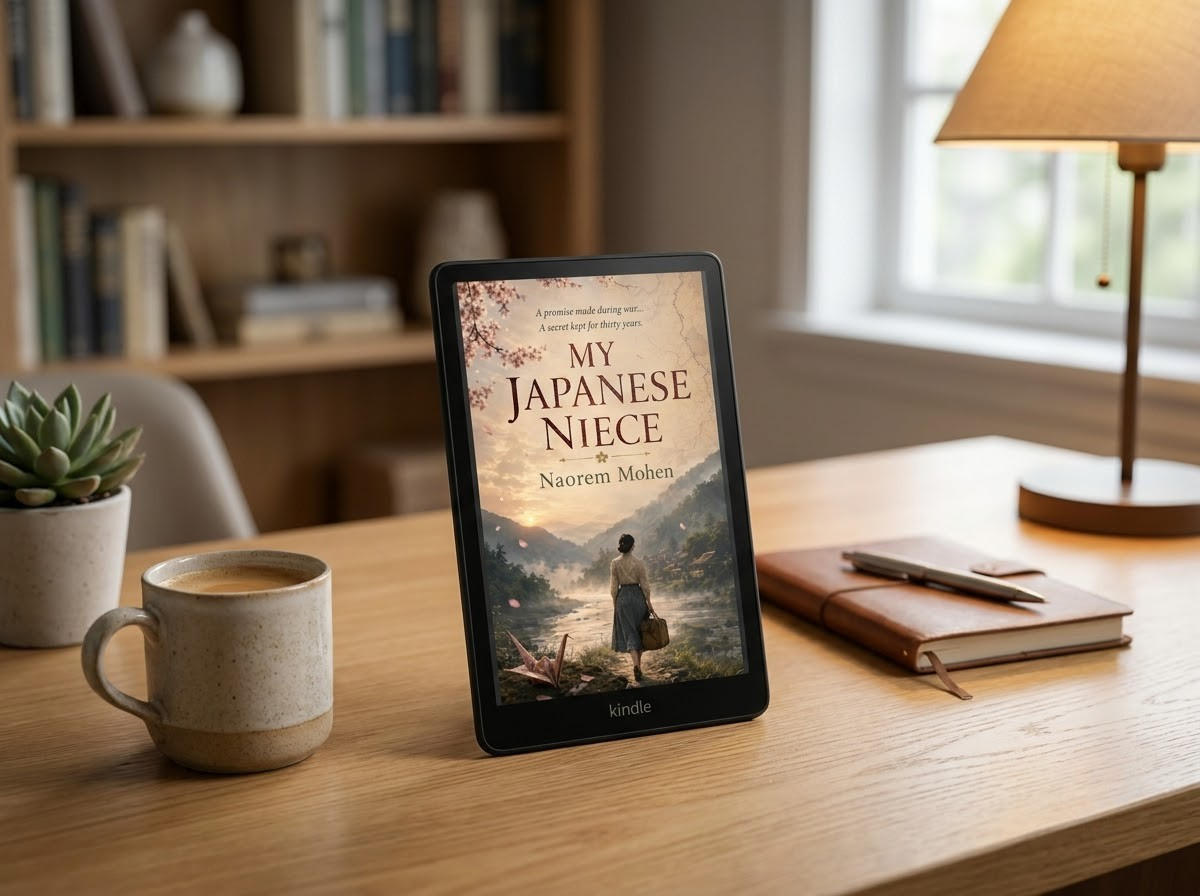
Rating: ⭐⭐⭐⭐1/2 (4.5 out of 5)
Sometimes a book arrives on your desk at the exact moment you need to slow down. As the Editor-in-Chief here at Deified Publication, I read hundreds of pages every month, and many of them fly past in a flurry of noise and quick thrills. Last night, however, I sat with my tea and opened a book that felt entirely different. It was a soft, overcast afternoon, the kind that makes you want to curl up with a hot cup of masala chai and think about your own family. The book in my hands was this specific story from northeast India, and it immediately made me think of my own grandfather, who used to tell me stories about his youth during the turbulent years of the mid-twentieth century. He always said that the true history of any conflict is not found in grand declarations, but in the small, forgotten promises made between ordinary people. That personal reflection remained with me as I turned the pages of this beautiful novel, My Japanese Niece, by Naorem Mohen.
A Soft Search Across Decades and Borders
For those wondering what is it about, this book summary details a story that spans thirty years and moves between the snowy ridges of Japan and the green hills of Manipur. The narrative begins in the spring of 1943 in Nagano Prefecture, where a young man named Junpei Asada is preparing to leave his family to join the war. Before he boards the military truck, he plants a young cherry tree with his six-year-old niece, Yuko, promising her that they will watch it bloom together when he returns. Decades pass, the war ends, but Junpei never comes home to Japan, leaving behind a family that must live with the heavy weight of his absence. In late 1973, Yuko finally travels across borders to India, carrying a partially burned diary that leads her to Keibi, a small village beside the Iril River. There, she discovers that her uncle survived the war under a different identity, marrying a local woman named Thambal and raising a daughter named Tampha.
The Style and Craft of Gentle Historical Prose
Naorem Mohen writes with a patient, delicate style that reminds me of the classic historical novels of Tan Twan Eng, where every sentence seems carefully weighed. There is a beautiful focus on the sensory details of the landscape, from the pink snow of falling cherry petals in Nagano to the thick mud and persistent leeches of the Manipur forest. I loved the way the author structures the narrative, contrasting the rigid, artificial lines of military maps with the real, living people who inhabit those spaces. In Chapter 2, there is an incredibly striking scene where Junpei meets a local guide named Yaima at an encampment and they look at a military document. Yaima notes that the Japanese soldiers look at a map and see only roads, whereas they should be seeing the people who live in those hills. This contrast between the cold strategy of war and the warmth of human life is a constant theme throughout the book, and it made me look up from the page and reflect on how we often reduce complex regions to mere lines on a screen.
I kept thinking about this scene for days because it perfectly encapsulates the internal conflict that Junpei experiences. He enters the war filled with abstract ideas of duty and country, but as the conflict grinds on, those grand words begin to feel incredibly hollow. In Chapter 5, after Yaima is killed, Junpei makes a decision that changes the entire course of his life by choosing to protect Yaima’s three-year-old daughter, Tampha. The scenes of him carrying the small, heavy child on his back through the forest while escaping gunfire are written with a raw, desperate energy that felt incredibly real to me. If I have one mild criticism, it is that the transition between the historical war scenes and Yuko’s search in 1973 can sometimes feel a bit abrupt. The middle chapters, particularly those focusing on the logistics of the retreat from Kohima, occasionally slow down the emotional momentum of the story. Some readers who prefer rapid action might find these sections a bit tedious, but for me, the rich historical detail was well worth the patience it required.
The Emotional Weight of Names and Belonging
At its heart, this is a story about the names we carry and the different homes we build when our original lives are shattered. When Yuko finally arrives in the village of Keibi in 1973, she is forced to confront the reality that her uncle became a completely different person in Manipur. He was no longer the young Japanese officer who sang playful songs about scraped knees to his little niece. Instead, he had become Pabung Yaima, a beloved local farmer, a husband to Thambal, and a father to Tampha, who had lived a full, ordinary life by the Iril River. This realization hits Yuko with a mixture of grief and understanding that honestly made me tear up a bit as I read. There is a hushed, intense confrontation in Chapter 26 where Thambal refuses to let Yuko take Junpei’s unfinished diary back to Japan. The old woman gently explains that you do not bring the river to the mountain, meaning that Junpei’s life now belongs to the soil of Manipur where he is buried. It is a moment of profound, simple wisdom that shows how love can exist without ownership.
Who Will Love This Book and Who Should Pass
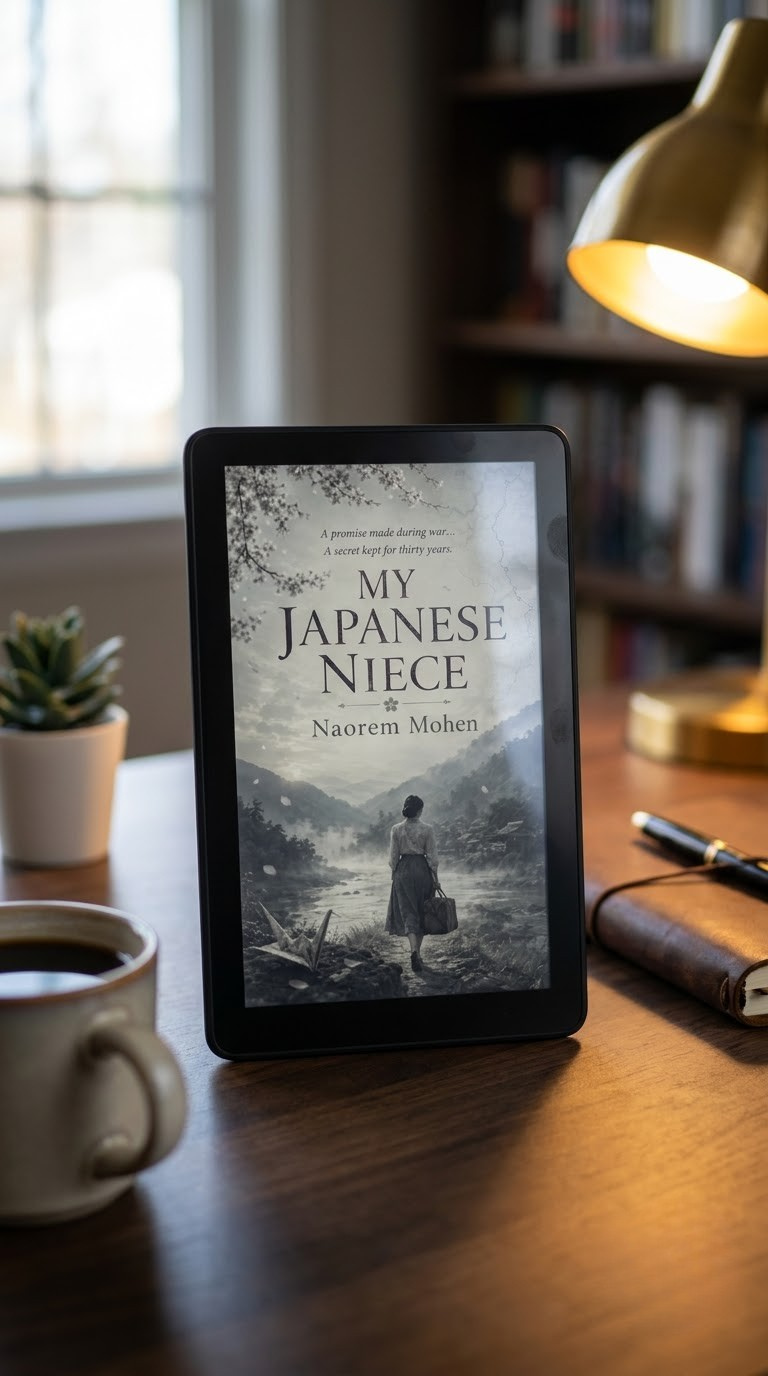
This reader review would not be complete without being honest about who will actually enjoy this gentle, slow-burning story. If you are looking for a fast-paced thriller filled with dramatic battlefield heroics and clear-cut heroes, you will probably find yourself disappointed. This is not that kind of book, and it does not try to be. Instead, it will appeal to readers who love soft family dramas, historical fiction with a deep sense of place, and stories that focus on the long-term aftermath of historical trauma. I think this book is especially valuable because it highlights a theatre of the Second World War that is rarely discussed in mainstream English literature. Naorem Mohen has done a wonderful service by bringing the history of Manipur and the battle of Imphal to a wider audience through a deeply personal lens. For anyone searching for a novel that will linger in their mind long after the final page is turned, this is a truly rewarding experience.
Final Thoughts on My Japanese Niece
When I closed the book, I went to my window and looked at the trees outside, thinking about the promises we make to those we love. The final pages of the novel are particularly moving, as Yuko returns to Japan and finally visits the old cherry tree that she and Junpei planted so many decades ago. In a beautiful, silent gesture, she places her old childhood Kokeshi doll against the trunk of the tree, realizing that her decades of waiting are finally over. She folds a paper crane, which turns out a bit clumsy and looks like a fat bird, and places it inside the diary, a small sign of peace and reconciliation. It is the kind of book that sits with you, making you want to call your own family members just to hear their voices. In a publishing landscape that often favors loud, sensational stories, this soft and gentle novel is a refreshing reminder of the power of delicate storytelling. Even as we look forward to the new literary releases of 2026, this beautiful book remains one of my most cherished discoveries, and writing this My Japanese Niece Book Review has made me reflect deeply on my own history.
FAQs
Is it worth it to read My Japanese Niece if I am not familiar with the history of the battle of Imphal?
Yes, it is absolutely worth it. The author provides enough historical context within the narrative so that readers who are unfamiliar with the specific details of the Second World War in northeast India can easily follow the story. The historical elements are woven seamlessly into the personal lives of the characters, making the grand history feel deeply personal and easy to understand. It is the sort of book that invites you to learn more about a forgotten corner of history without ever feeling like a dry textbook.
What is the significance of the Kokeshi doll in the story?
The Kokeshi doll represents the physical connection between Yuko and her uncle Junpei. As a young girl in 1943, Yuko desperately tried to give the doll to her uncle as he was leaving on the military truck, but she missed him. Throughout his long years in Manipur, Junpei carried the memory of that doll, and when Yuko finally visits his grave and his family decades later, the doll serves as a symbol of the unbroken connection between them. It represents a physical manifestation of a promise that survived the terrible wreckage of war.
How does the author portray the relationship between the Japanese soldiers and the people of Manipur?
The author portrays this complex relationship with a great deal of nuance and sensitivity. Rather than presenting the soldiers or the locals in simple, black-and-white terms, the novel shows how individuals from both sides found common ground through shared suffering and basic human kindness. The character of Yaima, the local guide, and his relationship with Junpei are central to showing how fragile bridges of understanding were built amidst the chaos of war. It shows that even during the worst human conflicts, small acts of mercy can transcend national borders and political allegiances.

With over 11 years of experience in the publishing industry, Priya Srivastava has become a trusted guide for hundreds of authors navigating the challenging path from manuscript to marketplace. As Editor-in-Chief of Deified Publications, she combines the precision of a publishing professional with the empathy of a mentor who truly understands the fears, hopes, and dreams of both first-time and seasoned writers.