
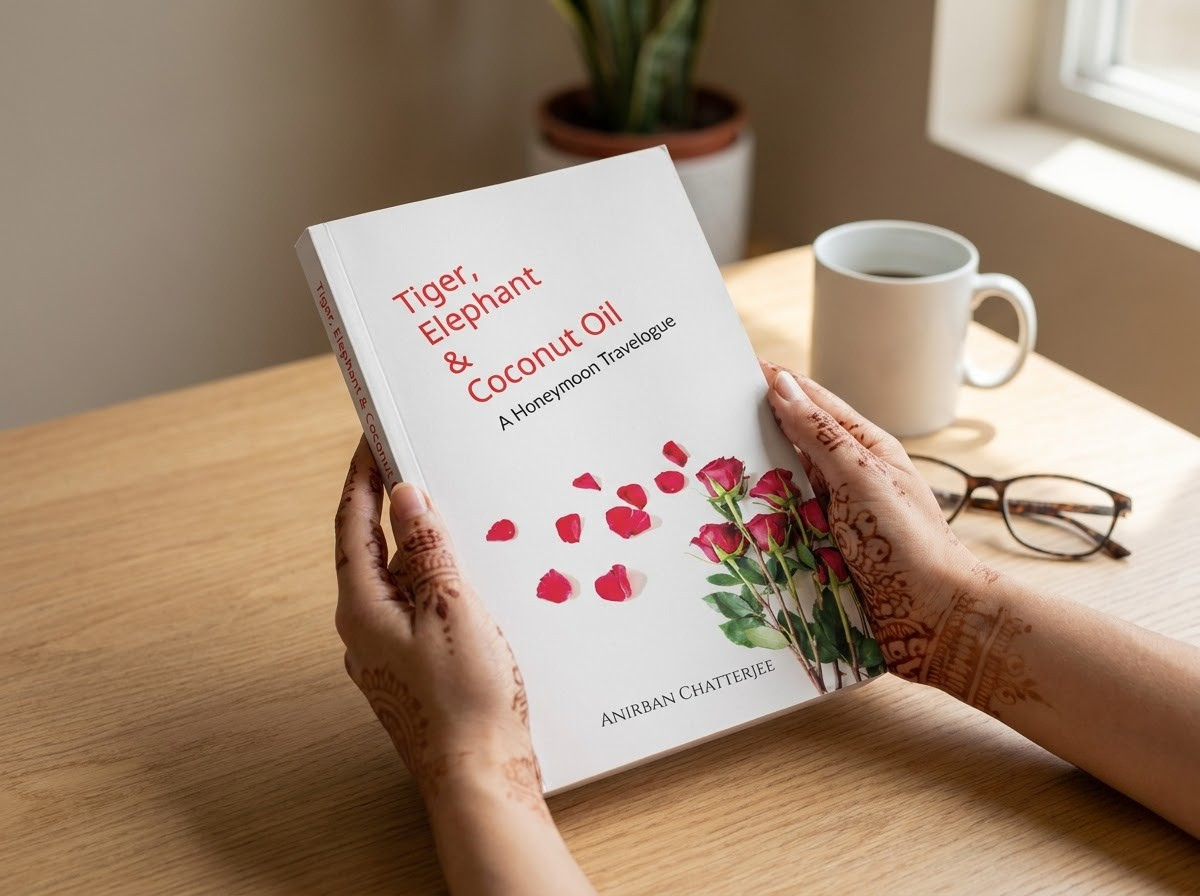
Rating: ⭐⭐⭐⭐ (4.2 out of 5)
I have a box of old notebooks in my study, filled with scribbled thoughts from years ago that I cannot bring myself to throw away, even if the ink is faded and the pages are swollen with humidity. Looking at those old papers always makes me think about how much we change, and how the memories we carry are rarely as polished as the stories we tell at dinner parties. As the Editor-in-Chief at Deified Publication, I read dozens of manuscripts every year, but it is rare to find a voice that feels like an old friend sharing a cup of hot chai on a rainy afternoon. When I opened this book, I was expecting a standard travel log about South Indian scenery, but I found myself looking at a wonderfully messy portrait of two people trying to figure each other out in the middle of a forest. It is the kind of book that sits with you long after you close the cover, because it feels so entirely real.
Honestly, the opening chapter made me smile because of how ordinary and relatable the chaos of packing is. The author describes his wife, Diya, packing and repacking her bags three times, adding extra cardigans and sandals while he watches from the bed, half-amused and half-exhausted. It reminded me so much of my own early trips with my husband, where every small decision about what to carry felt like a major debate. That specific memory of their first marriage argument over a small trolley bag is described with such gentle humor. I think anyone who has ever traveled with a partner will find themselves nodding along, recognizing those tiny, ridiculous frictions that happen when you are tired and trying to make everything perfect. It is these small human details that give the book its warmth right from the start.
What Is This Honeymoon Tale About?
So, what is it about? This TIGER, ELEPHANT AND COCONUT OIL Book Review will look at a very specific eight-day honeymoon that took place back in the year 2012. The author, Anirban Chatterjee, wrote this memoir in 2026, looking back at his younger self with fourteen years of hindsight and a good dose of self-deprecation. The book summary is fairly straightforward on the surface, as it follows a young couple from Kolkata as they set off on a trip to Munnar, Thekkady, and Tirupati. They leave their home just three days after their wedding, catching a four in the morning taxi to the airport, completely unprepared for what lies ahead. Instead of choosing a typical relaxing resort in Goa or Thailand like their friends did, the author chose tea gardens, a tiger reserve, and a hilltop temple.
But the heart of this book is not just the itinerary, it is about the sudden realization of how little you actually know the person you have just promised your life to. The narrative goes through two flights to reach Munnar, a breakdown on a village road to Thekkady, a dawn boat safari, and a long walk through the Periyar Tiger Reserve. The emotional center of the entire book happens when the author signs a Forest Department liability waiver on behalf of himself and his wife. He does this without explaining the text, which states that if a wild animal kills her, the government is not responsible. She only finds out about this document three hours after they have already walked deep into the forest, surrounded by wild elephants, wild dogs, and the knowledge that a tiger is watching them from the bushes.
Craft, Character, and the Art of Observation
The contrast between the two main figures is what makes the prose work so well. Anirban is a logical man, a management consultant who loves wildlife statistics and plans everything down to the minute. He reads about animal behaviors the way other people read sports pages, and he admits that he cannot help explaining facts even when nobody asks. Diya is the complete opposite, a person who feels first and thinks later, who laughs at his endless explanations but trusts him completely. Anirban Chatterjee sets up this dynamic beautifully in the prologue where he explains how they met on the old social media site Orkut in Kolkata during the mid-2000s, back when people sent scraps instead of posts and testimonials instead of comments. Reading about their early online courtship brought back a wave of nostalgia for that era of the internet.
I loved the attention given to the minor characters they meet along the way. Instead of treating them as mere background figures, the author gives them distinct lives and histories. For example, their taxi driver in Kolkata, Sanjay-da, is described with so much affection. He is a heavyset man who loads their bags with unhurried competence and ties the boot shut with a length of rope because the latch is broken. There is a lovely, lingering moment where Sanjay-da talks about taking his own wife to Digha back in 1986 on a road that was barely built. That short exchange, ending with the detail of his mother watching the taxi leave in her nightgown, feels incredibly authentic and tender. It is these brief sketches of real people that make the entire setting feel alive and populated.
Another scene that stood out to me happened at the Kolkata airport. While waiting in the early morning light, the couple watches a man trying to check in with an entire disassembled ceiling fan wrapped in newspaper and string. Shortly after, they spot a group of Baul singers sitting near the departure gate, dressed in soft saffron robes with their single-stringed ektara instruments resting on their laps. The author stops his travel narrative to explain who these wandering singers are and why their songs about the human body and the search for the divine are so special. It is a beautiful description that shows his deep love for Bengal’s culture, and it adds a rich layer of texture to what could have been a dry airport waiting room scene.
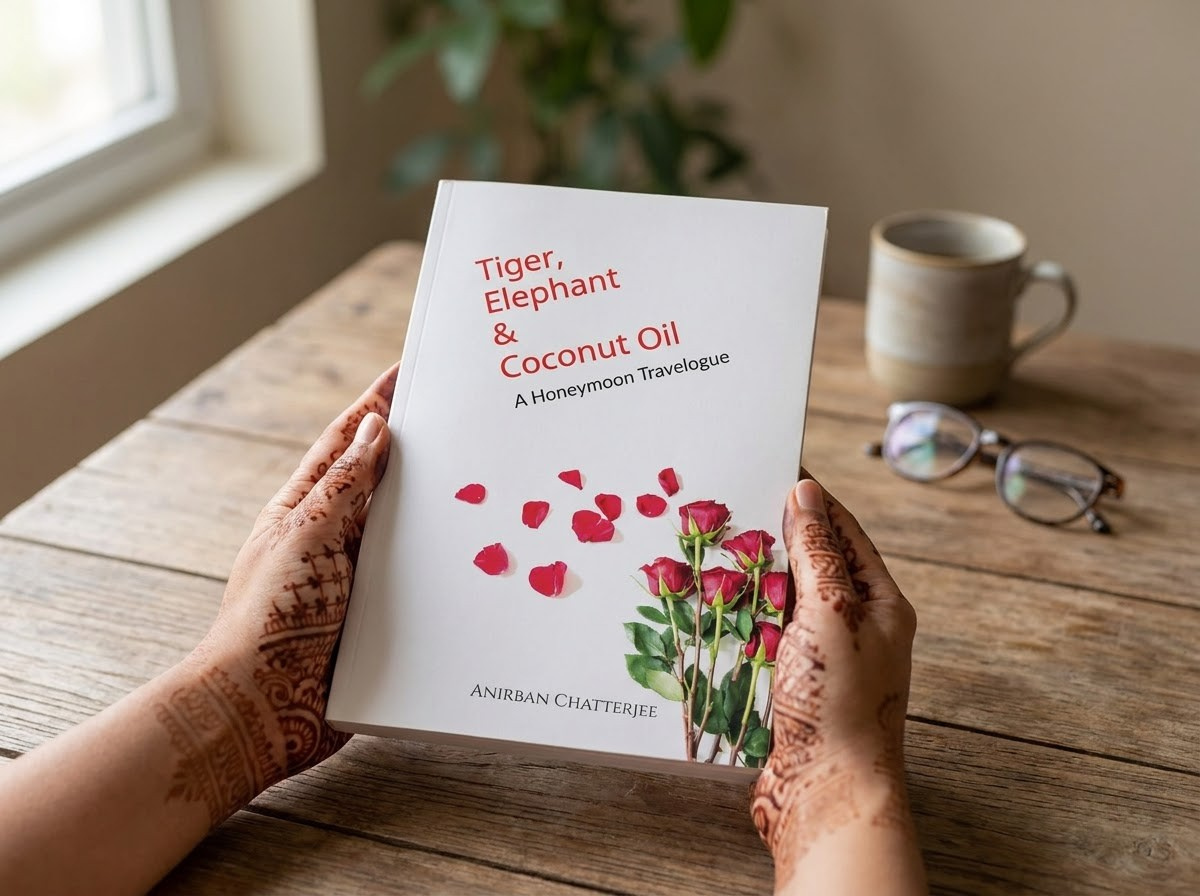
The Emotional Core of Four Red Crescent Marks
For me, the emotional core of the book is established early on during their first flight to Chennai on an Airbus A320. Diya is terrified of flying, and when the plane hits a small patch of rough air over Odisha, she grips her husband’s hand so tightly that her nails leave four small red crescents in his skin. The author does not try to crack a joke or explain the safety statistics to her, even though he is tempted to do so. Instead, he just sits there and lets her hold on as hard as she needs to, realizing that this moment does not call for facts. Those four small marks on the back of his hand become a physical symbol of their early marriage, representing a level of raw, unpolished trust that is far more valuable than any planned romantic gesture.
This theme of trust is tested even further during the eight-hour walk in the Periyar Tiger Reserve. When Diya discovers that her husband signed away their safety without her consent, the argument that follows is not a simple comedic moment. It is a genuine reflection on responsibility and the weight of making decisions for someone else. I kept thinking about this scene for days because it highlights the friction between his logical, over-confident planning and her intuitive understanding of real danger. The book does not try to hide his poor judgment, and that honesty is incredibly refreshing. Some parts of this section hit differently because they force you to think about how much we expect our partners to tolerate just because we love them.
Who Will Love This Book, and Who Should Pass?
If you are reading this TIGER, ELEPHANT AND COCONUT OIL Book Review to decide if you should read this book, my answer is yes, but with a slight caveat. While I thoroughly enjoyed the voice, there are moments where the author’s love for statistics can slow down the narrative. For instance, his detailed breakdown of aviation safety numbers and the exact routes of migratory birds might feel a bit dry if you are looking for a fast-paced adventure. Some readers might find these factual interruptions slightly distracting when they want to know what happens next on the trail. However, if you appreciate slow-paced, observant writing that values small details over high drama, then it is absolutely worth it. It is a reader review that I write with genuine pleasure, knowing that this book will find a special place on many shelves.
Honest Final Thoughts and a Warm Recommendation
In the end, Tiger, Elephant and Coconut Oil by Anirban Chatterjee is a beautiful, sometimes clumsy, but always honest look at early marriage. It is a memoir that chooses precision over nostalgia, showing the arguments, the bad decisions, and the unexpected kindness of strangers with equal clarity. It made me wonder about the decisions we make in our own lives, and how we often look back at our younger selves with a mix of embarrassment and affection. It is a lovely book to read with a hot cup of tea, and I highly recommend spending some time with this Kolkata couple and their chaotic journey through the forests of the south.
FAQs
What is Tiger, Elephant and Coconut Oil about?
The book is a personal travel memoir about an eight-day honeymoon through Kerala and Andhra Pradesh that took place in 2012. Written fourteen years later, the author reflects on his early days of marriage, recounting the challenges of a packed itinerary that included tea gardens, dawn safaris, and a particularly tense eight-hour trek through a tiger reserve where they encountered wild elephants and dhole.
Is Tiger, Elephant and Coconut Oil a fast-paced book?
No, the pacing is relatively slow and deliberate, focusing heavily on small details, interactions with local strangers, and personal reflections. While there are tense moments like the forest trek and encounters with wild animals, much of the book is dedicated to the friction of early marriage and the author’s observational thoughts, making it more suited for readers who enjoy reflective travel narratives rather than high-octane thriller stories.
Does the memoir contain useful travel advice for South India?
While the book is not a traditional guide, it does offer a unique double perspective on traveling through places like Munnar and Thekkady. Since it was written years after the actual trip, the author frequently compares how things were done back in 2012, such as using paper tickets and dealing with older booking procedures, with how those same experiences would look today, giving readers a fascinating perspective on how travel infrastructure in India has evolved over the years.

With over 11 years of experience in the publishing industry, Priya Srivastava has become a trusted guide for hundreds of authors navigating the challenging path from manuscript to marketplace. As Editor-in-Chief of Deified Publications, she combines the precision of a publishing professional with the empathy of a mentor who truly understands the fears, hopes, and dreams of both first-time and seasoned writers.