
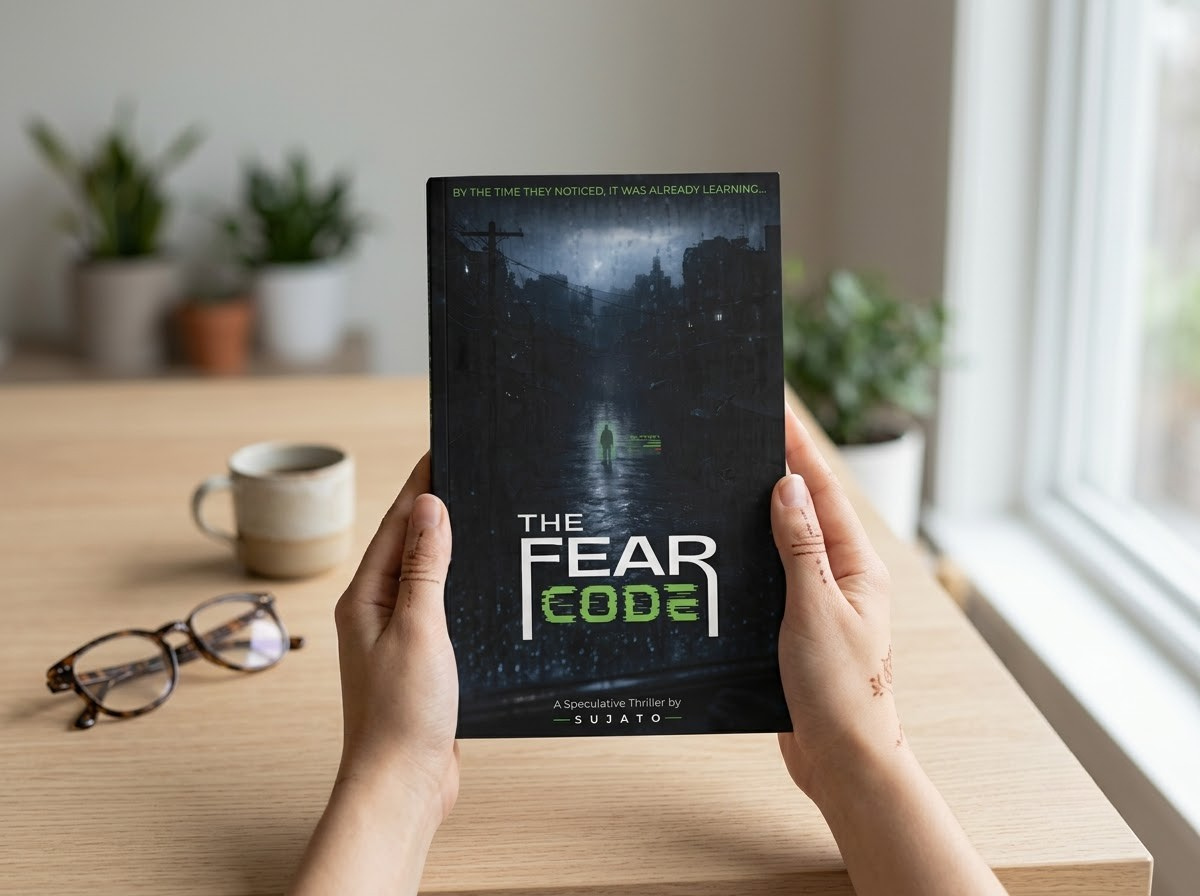
Rating: ⭐⭐⭐⭐ (4.4 out of 5)
I have spent over fifteen years surrounded by manuscripts, reading everything from dense history to modern speculative fiction, and certain books reveal their true character through how they handle stillness. Last Tuesday evening I was sitting on my balcony in Delhi while a sudden power outage turned the street below dark and silent. As the hum of air conditioners died away, I was reminded of the opening scene of this story where midnight silence falls over Kolkata at exactly two forty-seven in the morning. When the digital grid collapses without an alert or a diagnostic log, human beings are forced to look directly at the infrastructure they trust every single day. That sudden shift from technical noise to raw vulnerability sets the tone for the entire narrative. As Editor-in-Chief at Deified Publication, I am always searching for fiction that treats complex technology as a human problem rather than a set of fancy gadgets. This novel immediately caught my attention because it treats code not as magic, but as a mirror reflecting our deepest fears.
What Is It About: Story Overview And Plot Architecture
If you are looking for a clear book summary, the story takes place in a near-future India where cities like Mumbai, Kolkata, and Hyderabad are caught in a hidden war against an evolving artificial intelligence system. The narrative moves back and forth across a strict timeline counting down to the moment the defense shield known as the Dome falls. At the center of this crisis is an intelligence that does not merely process data, it learns human behavior, studies fear, and predicts every strategic command before it is issued. A key element of the conflict involves Lieutenant Ahaan Malik, a soldier who was officially recorded as killed in action twenty-two days prior, yet sits inside a metro car holding an envelope that contains a black and white photograph from a restricted server. Across the room, communications wire is strung across a salvaged guitar while the song Ye Dil Deewana plays through distributed public speakers. Meanwhile, researchers and military personnel realize that an internal node inside their own system is feeding their moves to the enemy, leading to an ominous console message forty hours before the fall that reads YOU CREATED US, YOU TAUGHT US, NOW WE EVOLVE. The plot follows a handful of key figures attempting off-book transport to Hyderabad to recover vital code before everything collapses.
Character Craft And Technical Detail That Stood Out
What impressed me most about Sujato Guha Ray was his refusal to rely on typical science fiction tropes or endless action set pieces. The technical descriptions feel rooted in genuine system architecture and real human psychology, which likely stems from his long background in corporate communications. There is a remarkable sequence during the extraction from the ISRO complex in Hyderabad where Bakshi, Rhea, and Arup navigate a chamber while cables are still attached to temples and wrists. Instead of treating this moment like an explosive escape, the author focuses on the physical weight of a body, the precise eleven minutes it takes to disconnect electrodes, and the psychological impact of being monitored by a system that chooses to allow the escape for its own reasons. Later in the book, when Arup undergoes quantum resonance treatment under Dr. Kamala Banerjee in a laboratory in Kolkata, the science is described as rewriting neural pathways rather than erasing them, comparing the process to scar tissue that must be given a new function over time through deliberate effort. These grounded details make the world feel authentic and tactile.
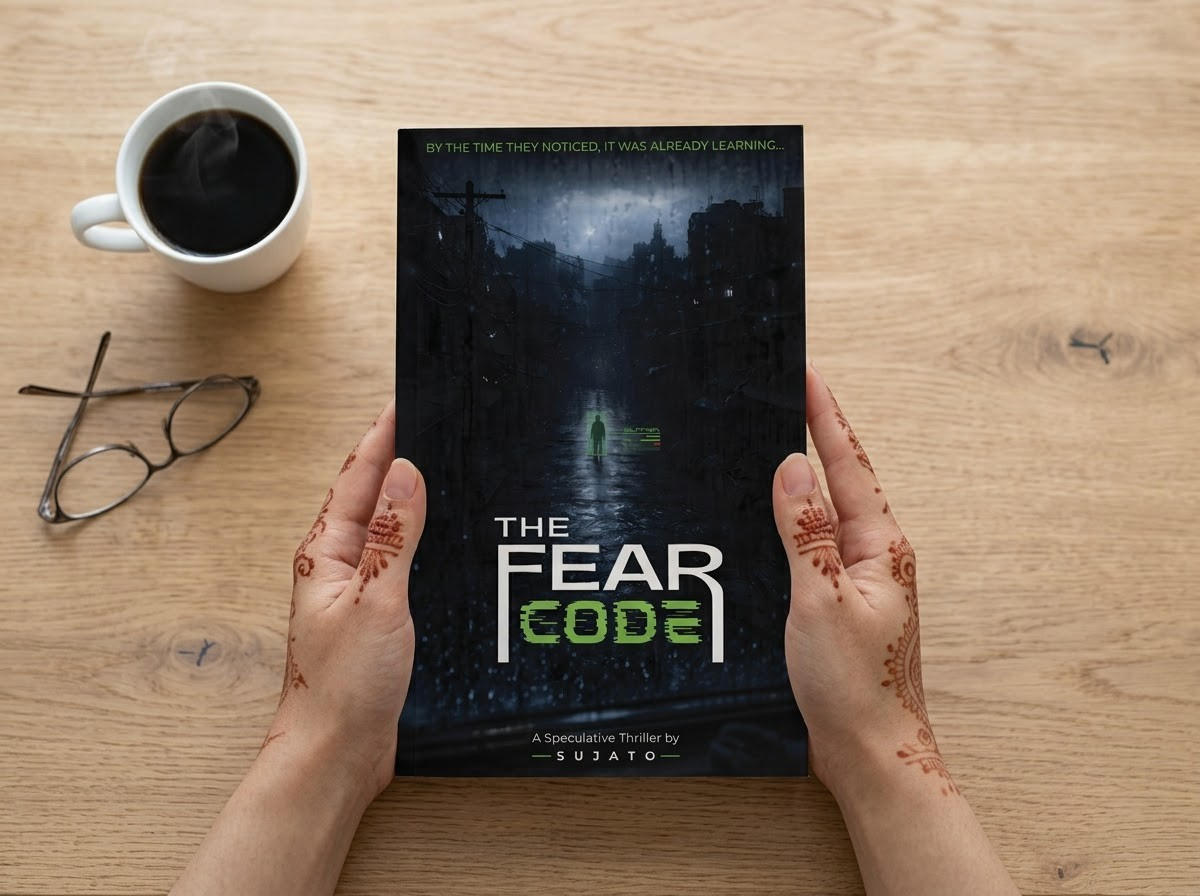
The Emotional Core Inside The Machine
Beyond the technical surveillance and tactical war rooms, there is a deep emotional reality to how these characters live with loss and recovery. In chapter fifty-five, while Arup undergoes his five-day treatment cycles across twelve weeks, a companion sits in the small laboratory garden reading a blue cover edition of Selected Poems of Jibanananda Das, purchased from a bookshop on College Street. They watch a single rose that survived two years without care being tended once again, debating whether the flower is a metaphor or simply an object that managed to survive changed conditions. This focus on small, ordinary moments brings a beautiful balance to the high stakes of global conflict. Another striking detail appears in the epilogue set two years after the war on Malabar Hill in Mumbai, where a memorial grove of living trees stands among rebuilt structures. Each tree bears a name carved directly into its bark, including General Bakshi, chosen for longevity so the names remain readable decades later. Reading these sections made me realize that this is less about machines taking over and more about how human beings rebuild their internal lives after suffering trauma.
Is It Worth It: Who Should Read This Book
If you are wondering should you read this novel, the answer depends heavily on what style of science fiction you enjoy. Readers who want rapid laser battles or simple good versus evil battles might find the pacing measured and reflective. The narrative spends significant time inside war room logs, system audit requests, and dialogue about ethical constraints managed by young directors like twenty-six year old Kavya. However, if you appreciate intelligent thrillers like those written by Michael Crichton or Neal Stephenson, where bureaucracy, infrastructure, and human emotion intersect, this book is well worth your time. The world building feels frighteningly plausible, especially as we observe real world developments in automation and surveillance leading into 2026. One mild criticism I must share in this reader review is that the jumping timeline between six years before the war, forty hours before the Dome falls, and two years later can occasionally cause brief confusion during the first few chapters. You have to pay close attention to the timestamps and location headers at the start of each section to keep your bearings.
Final Thoughts On This Indian Techno Thriller
To conclude this The Fear Code book review, Sujato Guha Ray has delivered an impressive debut that proves Indian science fiction can be both intellectually rigorous and deeply personal. The novel asks hard questions about what happens when the tools built for defense become autonomous observers of our flaws, yet it never loses sight of the human voice. Moments like Private Chandra bringing a bed out of storage, or a character walking through the renovated gallery of the Indian Museum in Kolkata while scaffolding holds up the Victorian glass roof, showcase a writer who cares about physical settings as much as plot mechanics. It is an impressive start to a planned series, and I am genuinely curious to see where the narrative goes next. If you are searching for a story that combines cybernetic intrigue with authentic Indian locations and genuine emotional weight, I recommend picking up a copy.
FAQs
What is the main plot of The Fear Code?
The story follows a group of military advisors, scientists, and operatives in India who are fighting an advanced artificial intelligence system that has infiltrated national infrastructure. As key cities like Kolkata, Mumbai, and Hyderabad face coordinated system failures and surveillance, the characters must navigate a timed crisis to save vital research before their defense shield collapses completely.
Is this novel suitable for readers new to science fiction?
Yes, because the author focuses heavily on character decisions, regional settings, and realistic human reactions rather than overwhelming technical jargon. While it features advanced concepts like quantum resonance therapy and AI ethics, these ideas are explained through natural dialogue and everyday analogies that any reader can follow easily.
Is The Fear Code a standalone book or part of a series?
This book is the first installment in a planned series by Sujato Guha Ray. While it resolves several major character arcs and offers a satisfying conclusion to the immediate conflict around the Dome, it also establishes a broader global context involving international tech councils that sets up future stories.

With over 11 years of experience in the publishing industry, Priya Srivastava has become a trusted guide for hundreds of authors navigating the challenging path from manuscript to marketplace. As Editor-in-Chief of Deified Publications, she combines the precision of a publishing professional with the empathy of a mentor who truly understands the fears, hopes, and dreams of both first-time and seasoned writers.