
Rating: ⭐⭐⭐⭐1/2 (4.5 out of 5)
I was sitting on my balcony yesterday evening with a warm cup of ginger tea, watching the neighbourhood children play a highly complicated game of make-believe. One little boy was insisting that the puddle near the gate was a bottomless ocean full of electric eels, and his sister was treating a simple cardboard tube like a magic wand. This sight made me think about how wonderfully strange and literal the world seems when you are young. We lose that specific type of creative logic as we grow older, replacing it with schedules, logic, and realistic expectations. When a book manages to capture that childhood innocence without sounding artificial, it feels like a refreshing breeze on a dusty afternoon.
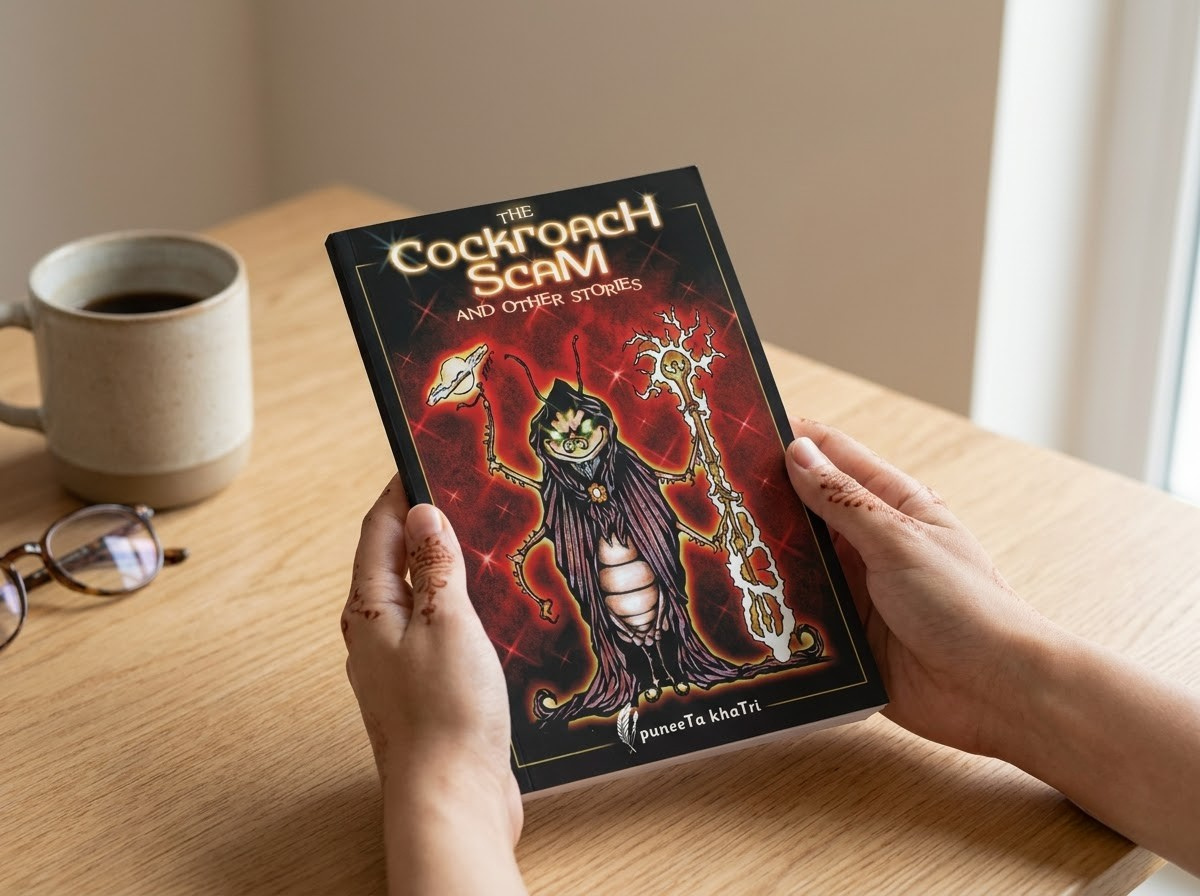
This exact feeling of nostalgic amusement came back to me as I read the pages of Puneeta Khatri’s newest collection. Writing this The Cockroach Scam and Other Stories Book Review is a delightful task for me, especially since I read so many dry submissions. As the Editor-in-Chief at Deified Publication, I receive dozens of children’s manuscripts every month, but few manage to make me laugh out loud. The stories focus on innocent mischief, featuring highly advanced grandmothers who take figures of speech too seriously and children outwitting authority figures. It is a lighthearted book that avoids heavy sermons, choosing instead to find amusement in the everyday misunderstandings of family life.
From Dissection Disasters to Interstellar Bathtubs
To understand what is it about, we only need to look at the title story, which captures school life perfectly. In this tale, a young student must bring five live cockroaches to school for a biology dissection. The protagonist tries everything to catch them, attempting to entice them with high-protein foods before asking neighbours like the shopaholic Kavita aunty. After being chased away by local shopkeepers, the desperate children buy the insects from the school janitor for ten rupees each. This transaction goes wrong when the janitor delivers tiny lice instead, leading to a hilarious physical altercation where the pests escape in class.
Another story that made me smile was “The Black Hole,” which begins with the grand space mission of Captain Michael aboard a highly sophisticated vessel. He is trying to push the boundaries of exploration by heading straight into a dark cosmic vortex. Just as the engines begin to fail, the scene shifts to reveal that Michael is actually a thirteen-year-old boy lingering in a bathtub. His mother is banging on the door, furious that he has been running the jacuzzi for an hour. This brilliant twist shows how easily a child can turn simple plastic bath toys into a massive space adventure.
A Gentle Blend of Indian Values and Whimsical Prose
The theme of literal translation gets even funnier in the story titled “Cool Off.” Here, a boy named Arjun panics when his grandmother collapses, prompting him to call emergency services. The arrival of the medical team reveals that his grandmother is actually an advanced humanoid robot programmed to teach him traditional values. Arjun had told his robotic guardian to cool off during an argument, and she obeyed by climbing inside the refrigerator. I kept thinking about this scene for days because it highlights our modern relationship with technology, showing what happens when machines follow human instructions without understanding social context.
There is also a wonderful linguistic playfulness in “Nutty Ebony,” where we meet a young domestic helper from Africa. Ebony is optimistic and eager to learn, but her limited English leads to several humorous situations. When the narrator’s mother says two friends are joined at the hip, Ebony looks at her own hip in confusion. She also takes warnings about biting off more than she can chew entirely literally, opening her mouth to show she has no food. This portrayal of language barriers is warm and affectionate, showing how easily words can create confusion when we do not share idioms.
In terms of literary craft, Puneeta Khatri writes with a simple, direct style that resembles the work of classic Indian children’s authors like Ruskin Bond. She does not use complex metaphors or flowery language, choosing instead to let the humour arise naturally from the situations. The pacing of each story is brisk, making it easy for young readers to follow along without losing interest. The characters are highly relatable, representing the familiar figures we see in our own neighbourhoods, like the grumpy next-door uncle or the gossipy shopkeeper. It is this familiar, domestic setting that makes the bizarre situations feel grounded and believable.
Why the Pure Intentions of Children Matter
The emotional core of The Cockroach Scam and Other Stories lies in its gentle defense of childhood imagination. It shows that even when children cause chaos, their intentions are often pure, driven by curiosity or a desire to solve a problem. The book also highlights the importance of traditional values, like respect for elders and the beauty of family bonds, without being preachy. Honestly, I felt a sense of comfort reading these pages, as they depict a world where families still sit together and talk rather than staring at screens. It is the kind of book that sits with you, bringing back memories of your own childhood misunderstandings.
Who Will Love These Tales and Who Should Walk Away
To write an honest reader review, I must also mention a mild criticism regarding the structure of the collection. Some of the stories end rather abruptly, feeling more like brief comedic skits than fully developed narratives. For instance, in “A Mix Up,” a boy named Ajay accidentally swaps brains with his computer after spilling milk on the keyboard, leading to a chain reaction where half the town swaps brains. The story ends without resolving how they will ever get their original minds back, which might leave some readers feeling slightly frustrated. A bit more development at the end of these wild premises would have made the collection feel more complete.
If you are reading this The Cockroach Scam and Other Stories Book Review to decide should you read it, the answer depends on what you are seeking. If you want a light, funny read to share with your family before bed, this book is absolutely worth it. It will appeal greatly to middle-grade students who enjoy silly school adventures and lighthearted science fiction. However, if you are looking for serious science fiction, deep dramatic conflicts, or complex world-building, you might want to skip this one. It is designed to entertain and amuse, not to present heavy philosophical questions or dark, intense themes.
A Few Flaws in the Brain Swap and Final Verdict
As we look forward to the literary releases of 2026, it is nice to find a collection that values simple, clean humour. Puneeta Khatri has created a delightful set of tales that celebrate the chaotic joy of growing up. It reminded me of my own school days when a simple science assignment felt like a matter of life and death. While it is not a book for everyone, those who appreciate gentle laughter and childhood mischief will find much to love here.
FAQs
What is it about?
This book is a collection of fourteen short, humorous stories that focus on the chaotic and imaginative lives of children. Some stories deal with everyday school challenges, like trying to find live cockroaches for a biology class dissection in the title story. Other stories introduce lighthearted science fiction elements, such as a robotic grandmother who takes instructions too literally, or a boy who accidentally swaps brains with his computer. The collection uses these silly situations to celebrate childhood innocence, family relationships, and the funny misunderstandings that happen when children interpret the world in their own literal way.
Is it worth it for adult readers?
Yes, especially if you enjoy lighthearted, nostalgic stories that capture the essence of childhood. While the primary target audience is middle-grade children, adults will find a lot of amusement in the relatable family dynamics and the gentle humour. It is the perfect book to read aloud with your children, as it offers plenty of moments that will make both parents and kids laugh together. However, if you are an adult reader who only enjoys complex, serious fiction with deep plots, this simple and whimsical collection may not satisfy your reading preferences.
Should you read the stories in order?
No, you do not need to read the stories in any specific order because each tale is completely self-contained. You can easily open the book to any chapter, such as the hilarious space-themed story “The Black Hole” or the literal translation comedy in “Cool Off,” and enjoy it on its own. This independent structure makes the book highly convenient for busy readers who only have a few minutes to read a single story before sleep. It is also ideal for classrooms or family reading sessions where you might want to pick just one funny tale to discuss.

With over 11 years of experience in the publishing industry, Priya Srivastava has become a trusted guide for hundreds of authors navigating the challenging path from manuscript to marketplace. As Editor-in-Chief of Deified Publications, she combines the precision of a publishing professional with the empathy of a mentor who truly understands the fears, hopes, and dreams of both first-time and seasoned writers.