
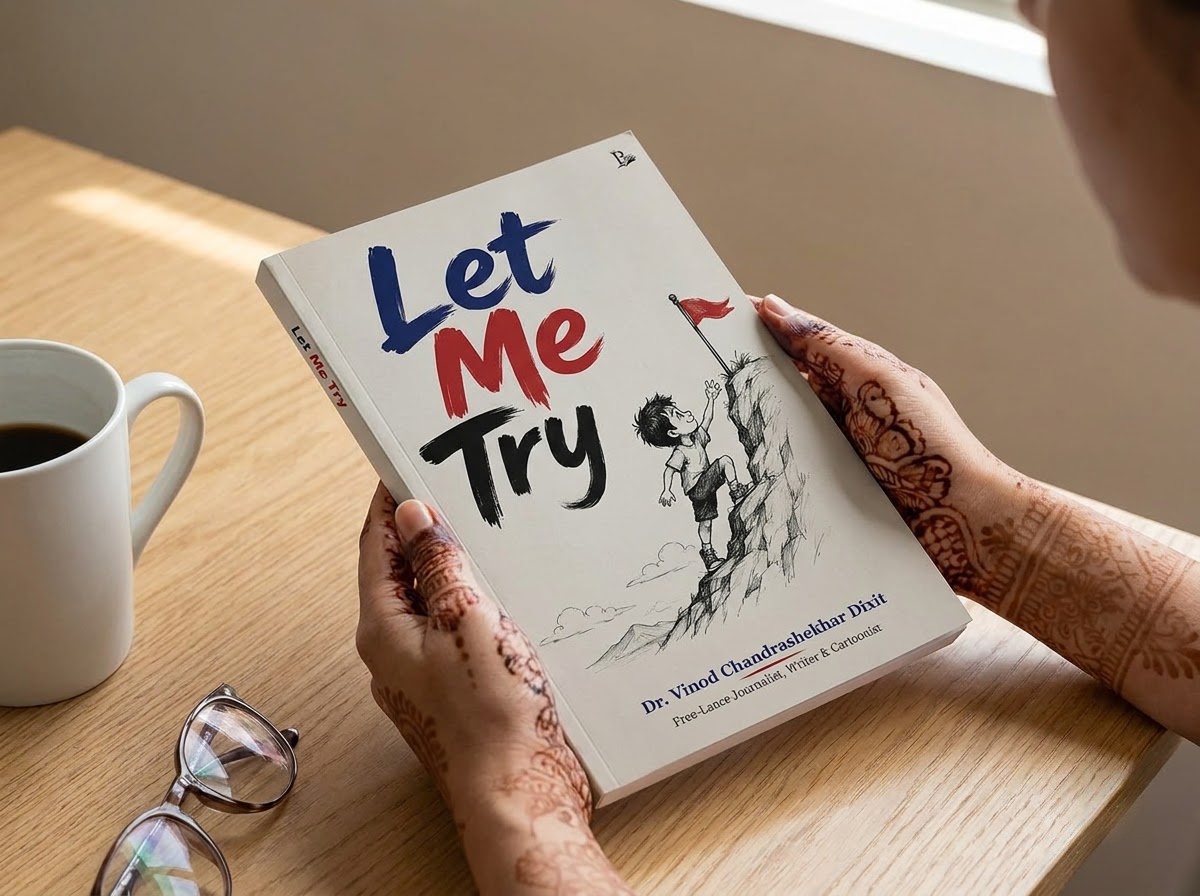
Rating: ⭐⭐⭐⭐ (4.2 out of 5)
I was sitting at my kitchen table last Sunday with a lukewarm cup of chai, thinking about how many self-help manuals pass across my desk every month. Most of them feel like they were manufactured in a corporate boardroom, filled with heavy jargon and charts that do not fit the reality of an ordinary Indian household. As Editor-in-Chief at Deified Publication, I have read hundreds of memoirs, but every so often a book arrives that feels less like a polished lecture and more like an uncle sitting down beside you on a verandah to share his life. That is the feeling I had when I opened this memoir. It does not try to impress you with high financial theories or slick motivational speeches. Instead, it offers a plain, honest look at what happens when a person decides to try, step by step, after hitting rock bottom in school.
If you are looking for a clear book summary, the story follows the life of Dr. Vinod Chandrashekhar Dixit from his middle-class childhood in Gujarat to his retirement as a Senior Manager at Bank of India. In the early 1970s, his father was transferred to Ahmedabad during the turbulent days of the Nav Nirman Andolan, marked by street curfews and financial hardship. The young boy, previously a top student in Jamnagar, struggled to adapt and received a red stamp on his ninth-standard report card that marked him as detained. Rather than shouting, his father asked a simple question in Gujarati, asking if he wanted to remain where he was or move forward. That moment shifted everything in his mind.
Following that conversation, the author built a rigorous schedule from five in the morning until eleven at night, cleared his school exams, and went on to complete his commerce degree with top marks in English. He joined Bank of India as a clerk in the remote coastal town of Veraval, steadily working his way up to head the Zonal Planning Department for more than fourteen years. All the while, he wrote thousands of letters to newspaper editors in his spare time, transforming his early academic struggles into an extraordinary life of public writing and professional achievement.
A Simple Voice and Real Lived Details
What is it about this book that makes its voice feel so distinct? The writing style is simple, direct, and unpretentious, reflecting the author’s background as a newspaper contributor who spent forty years communicating complex ideas within tight word limits. When you read this text, you notice how the author breaks down heavy life lessons into tiny, workable daily routines. For instance, he describes how his friend P. Prabhakar Rao sat on the floor of his room, drawing T-accounts on old newspapers to teach him debit and credit rules until his concepts were clear. That kind of selfless friendship made a lasting impact on his academic recovery.
There is another touching detail from 1987, when his father dropped him off at his first bank posting in Veraval, handing him a steel tiffin box and a Godrej lock while telling him that the bank was a temple and his signature was his worship. These small, real moments give the narrative its true strength. The author does not hide his failures or pretend he was born with special talents. He lays out his life as a series of deliberate experiments where consistent hard work replaced fear and uncertainty.
Turning Failure Into Useful Data
The emotional core of this memoir rests on the relationship between father and son, as well as the steady transformation of failure into useful information. In an early chapter, the author recalls publishing his very first letter to the editor in 1984 in The Indian Express regarding the abolition of begging. When he ran home with the printed paper, his father read his name three times, folded the newspaper clipping, and tucked it carefully inside his copy of the Bhagavad Gita. That silent gesture of fatherly pride set the trajectory for the rest of his writing career.
Throughout his thirty-seven years in banking, working under ten different General Managers, the author held fast to his father’s core belief that determination matters far more than initial talent. As head of the Planning Department, he made sure the Zonal Credit-Deposit Ratio report was on the General Manager’s desk by nine in the morning sharp, proving that method and discipline conquer difficult circumstances. Even after earning eight entries in the Limca Book of Records for his prolific writing and receiving six essay prizes from the Reserve Bank of India, he remains grounded enough to take up karaoke singing after turning sixty, laughing along with his family when his initial attempts sounded awkward.
Who Should Read This Book and Who Might Skip It
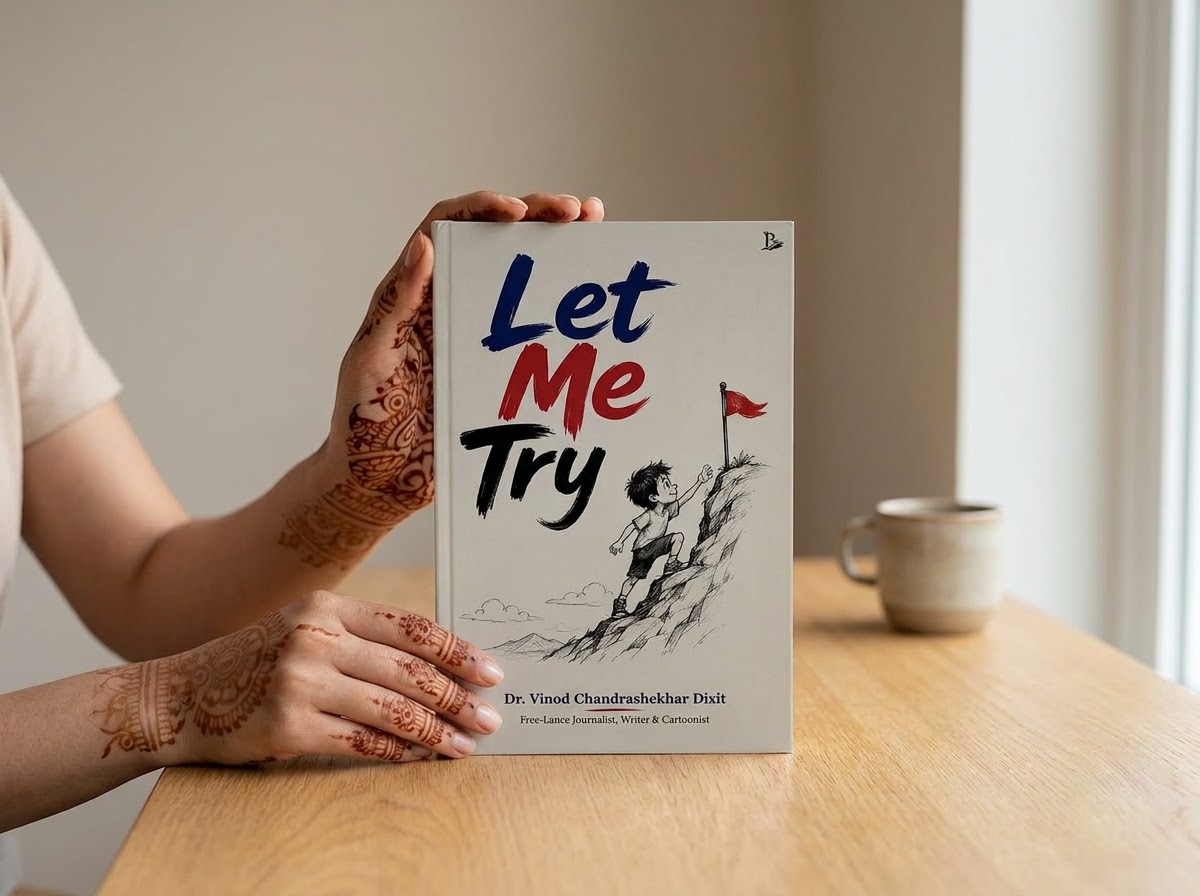
If you are deciding whether you should read Let Me Try, it helps to understand who will benefit most from its pages. Students who are recovering from academic setbacks, young graduates stepping into their first office jobs, and retirees searching for meaningful hobbies will find practical encouragement here. The author’s central message, that failure is simply data rather than an identity, offers genuine comfort to anyone who feels stuck in their current chapter of life.
However, I want to share one honest critique in this Let Me Try Book Review. The book can feel somewhat repetitive in its structure. Certain achievements, such as the total count of thirteen thousand letters, eight thousand articles, and three Best Employee awards, are mentioned multiple times across different chapters. The layout sometimes resembles a collection of independent essays rather than a single continuous narrative. Readers who expect a highly structured corporate guide like Stephen Covey’s work or a polished literary autobiography might find this loose, conversational organization a bit disjointed. It is much closer in spirit to Shri S. Raman’s memoir From a Car Shed to the Corner Room and Beyond, where real lived experience takes precedence over literary polish.
Final Verdict and Final Thoughts
So, is it worth it to spend your weekend reading this volume? I think the answer depends on what you need right now. If you want slick corporate strategies or complex psychological theories, you might want to look elsewhere. But if you need an authentic reader review of a book that shows how a bad mark in school or a difficult start in life does not define your future, this text is genuine, practical, and deeply human. In an edition published for 2026, its simple message feels especially refreshing against the noise of modern productivity culture. Dr. Vinod Chandrashekhar Dixit reminds us that consistency, respect for time, and a willing attitude can move obstacles that seem impossible at first glance.
FAQs
What is the central message of Let Me Try?
The central message of the book is that initial failure does not determine your final destination. Dr. Vinod Chandrashekhar Dixit demonstrates through his own life that consistent effort, daily discipline, and a willingness to try can turn an academic setback into a distinguished career and a prolific literary record.
Who is Dr. Vinod Chandrashekhar Dixit?
Dr. Vinod Chandrashekhar Dixit is a retired Senior Manager from Bank of India, a freelance journalist, writer, and cartoonist. Over his four-decade career, he has published over thirteen thousand letters to newspaper editors, authored thousands of articles, and achieved eight entries in the Limca Book of Records.
Is Let Me Try suitable for student readers?
Yes, the book is particularly well suited for students facing academic pressure or failure. The opening chapters detail the author’s own experience of failing ninth standard and how he rebuilt his study habits, offering practical and realistic advice for overcoming academic obstacles.
What makes this book different from other self-help memoirs?
Unlike theoretical self-help books written by corporate consultants, this book is a practical record of an ordinary middle-class career in India. It offers clear, simple advice based on real daily routines, office challenges, and personal hobbies without using heavy industry jargon.

With over 11 years of experience in the publishing industry, Priya Srivastava has become a trusted guide for hundreds of authors navigating the challenging path from manuscript to marketplace. As Editor-in-Chief of Deified Publications, she combines the precision of a publishing professional with the empathy of a mentor who truly understands the fears, hopes, and dreams of both first-time and seasoned writers.