
Rating:
⭐⭐⭐⭐ (4.2 out of 5)
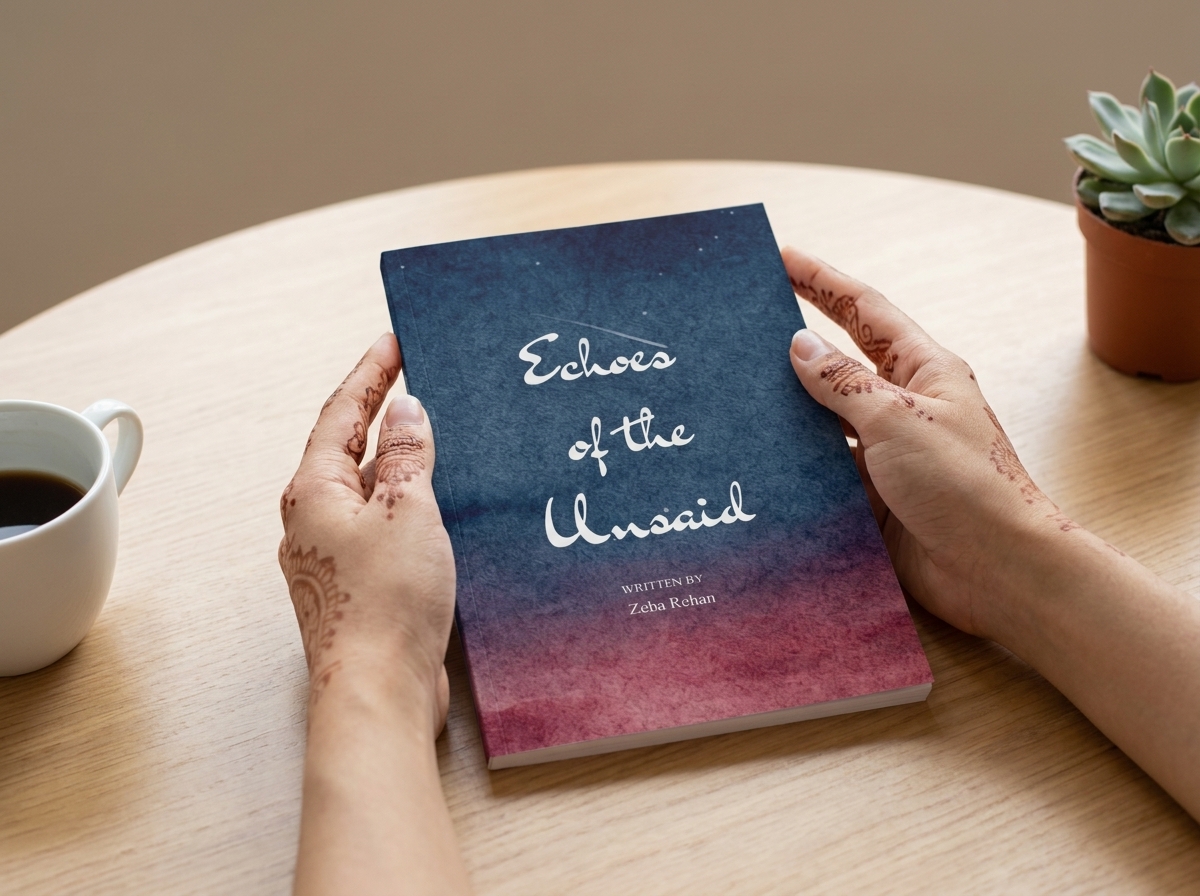
I read a lot of poetry collections that come across my desk at Deified Publication, and most of them try very hard to sound profound. Zeba Rehan’s Echoes of the Unsaid is a different kind of book. It doesn’t try to impress you with clever wordplay or abstract imagery you have to decode three times. It reads like someone sat down after a long day, maybe with tea going cold beside them, and wrote down exactly what they were feeling before they could talk themselves out of it. That honesty is what carried me through this collection, and it’s why I think a lot of readers are going to feel seen by it.
What the Book Is About
Echoes of the Unsaid is a collection of poems built around the emotional terrain most of us walk through but rarely put into words. The blurb calls it a treasure chest of feelings gathered from life’s winding paths, and having gone through the pages, that description holds up better than most blurbs do. Rehan moves between very different emotional registers across the book. There are poems about the tug of war between heart and logic, poems about motherhood and the guilt that comes with loving someone while also having to leave for work every morning, poems about childhood wonder, poems about ego and pride told through old stories, and poems that read almost like a private conversation with God. It’s not a themed collection in the tight sense, more like a life laid out chapter by chapter, each one a different season of the same person.
What Stood Out to Me
The opening poem, “Where the Heart Hesitates and the Mind Decides,” sets the tone for a thread that runs through a good part of the book. Rehan keeps coming back to this internal argument between feeling and reason, and she does it again a few chapters later in “Mist on the Chosen Road,” where she writes about the heart being dragged to reason’s court and judged. I liked that she didn’t resolve this neatly. In my years reading personal poetry, I’ve noticed writers often want to hand the reader a tidy conclusion, heart wins or mind wins, but Rehan lets the tension sit unresolved, which honestly felt more true to how these decisions actually happen in real life.
Then there’s “Tears in Tiny Eyes,” and this is the one that got me. It’s written from the perspective of a mother going to work while her daughter cries and reaches for her. There’s a line where she describes her daughter’s face dancing in her mind at the office desk, and she calls herself a selfish mom for leaving, even while telling her daughter that this ache will make her grow brave. I’ve read enough poems about motherhood to know how easily this kind of subject can tip into something saccharine, but Rehan keeps it grounded in a very specific, almost guilty tenderness. It reminded me of conversations I’ve had with working mothers who describe exactly this, the pull between providing and being present, and how neither choice ever feels complete.
A few chapters earlier, in “Noor: A Light Born of Love,” she writes about her daughter again, but from a gentler place, calling her the most beautiful story her life ever knew. Reading these two poems back to back, “Noor” and “Tears in Tiny Eyes,” gave me a fuller picture of what motherhood means in this book. It isn’t one feeling. It’s joy and guilt sitting right next to each other, and Rehan doesn’t pretend otherwise.
I also want to mention “Dawn of Endless Wonder,” which takes a slightly different approach than the rest of the book. Instead of staying personal, Rehan brings in young Kalam watching birds by the Rameswaram waves and Edison being called slow before he became who he became. It’s a poem about childhood curiosity, and using real historical figures as anchors for that idea was a smart choice. It gives the poem a sense of scale, connecting one child’s wonder to the kind of wonder that changed the world.
Then there’s “Clay Throne Crumbles,” which surprised me the most. Rehan takes the story of Namrood, and later Pharaoh, to talk about ego and the illusion of power, describing a mosquito piercing Namrood’s delusion with a single sting. It’s a bold image, and it works because it’s specific. She isn’t just saying pride is bad, she’s showing you exactly how small a thing it took to bring a supposedly untouchable man down. This poem sits alongside “Rhythm of the Lone Heart,” where she writes about toxic ties and choosing solitude over companionship that costs too much, and together they build a section of the book that’s less about tenderness and more about clarity, almost like the author is drawing lines for herself about what she will and won’t tolerate anymore.
The closing stretch of the book, especially “Voice in the Silence,” takes the collection somewhere I didn’t expect. Each stanza ends with the same question, who calls me, as she describes moonlight, crickets, dew on grass, and a presence she cannot name but feels guiding her through joy and pain. It reads like a quiet form of faith, someone reaching toward something larger than themselves without needing to fully define it. As someone who has read a fair amount of devotional poetry, I found this restraint refreshing. She doesn’t preach. She just keeps asking.
The Emotional Core
If I had to describe what this book does to a reader, I’d say it works like a mirror held up at different angles. One poem will catch you in a moment of doubt about a decision you made years ago, like “After the Roads Fell Silent” does with its line about doors closing without anger, they simply do not wait. Another will catch you in a moment of parental guilt, like “Tears in Tiny Eyes.” Another will catch you mid prayer, even if you didn’t know you were praying, like “Voice in the Silence.” I didn’t expect to feel this many different things reading one collection, and I think that range is the book’s biggest strength.
Who This Book Is For
This collection will land best with readers who enjoy personal, confessional poetry over the more experimental or abstract kind. If you’ve read authors who write in a direct, emotionally forward style, you’ll find a similar comfort here. Mothers, especially working mothers, will likely find “Tears in Tiny Eyes” and “Noor” particularly close to home. Readers who appreciate poetry with a spiritual undertone, without it turning into a sermon, will connect with the later chapters. I’ll be honest though, this might not be for someone looking for tight, polished verse in the classical sense. Some of the rhymes feel a little forced in places, and a few lines prioritize the rhyme scheme over the natural rhythm of the sentence. It’s a minor thing, but I noticed it, particularly in some of the longer narrative poems.
Final Thoughts
What I appreciated most about Echoes of the Unsaid is that it doesn’t perform emotion, it just states it. Rehan writes like someone who has actually lived through hesitation, guilt, pride, loneliness, and small moments of grace, and she’s not interested in dressing any of it up. In 2026, when so much writing feels engineered for quick engagement, a book that just wants to be honest with you stands out. It’s not a perfect collection, but it’s a sincere one, and that counts for a lot.
FAQs
Is Echoes of the Unsaid worth reading?
If you connect with personal, emotionally direct poetry, yes. It won’t be for readers who want tightly controlled meter, but for readers who want feeling over form, it delivers.
Who should read this book?
Mothers, readers going through a period of self-doubt, and anyone who enjoys poetry that reads like a diary rather than a performance.
What is Echoes of the Unsaid about?
It’s a poetry collection by Zeba Rehan covering themes of motherhood, the conflict between heart and mind, ego, solitude, and a quiet search for something larger than the self.
Does the book have a consistent theme?
Not a single theme, more a collection of emotional chapters, though the tension between feeling and reason, and the search for meaning, recur throughout.

With over 11 years of experience in the publishing industry, Priya Srivastava has become a trusted guide for hundreds of authors navigating the challenging path from manuscript to marketplace. As Editor-in-Chief of Deified Publications, she combines the precision of a publishing professional with the empathy of a mentor who truly understands the fears, hopes, and dreams of both first-time and seasoned writers.