
Rating
⭐⭐⭐⭐ (4.3 out of 5)
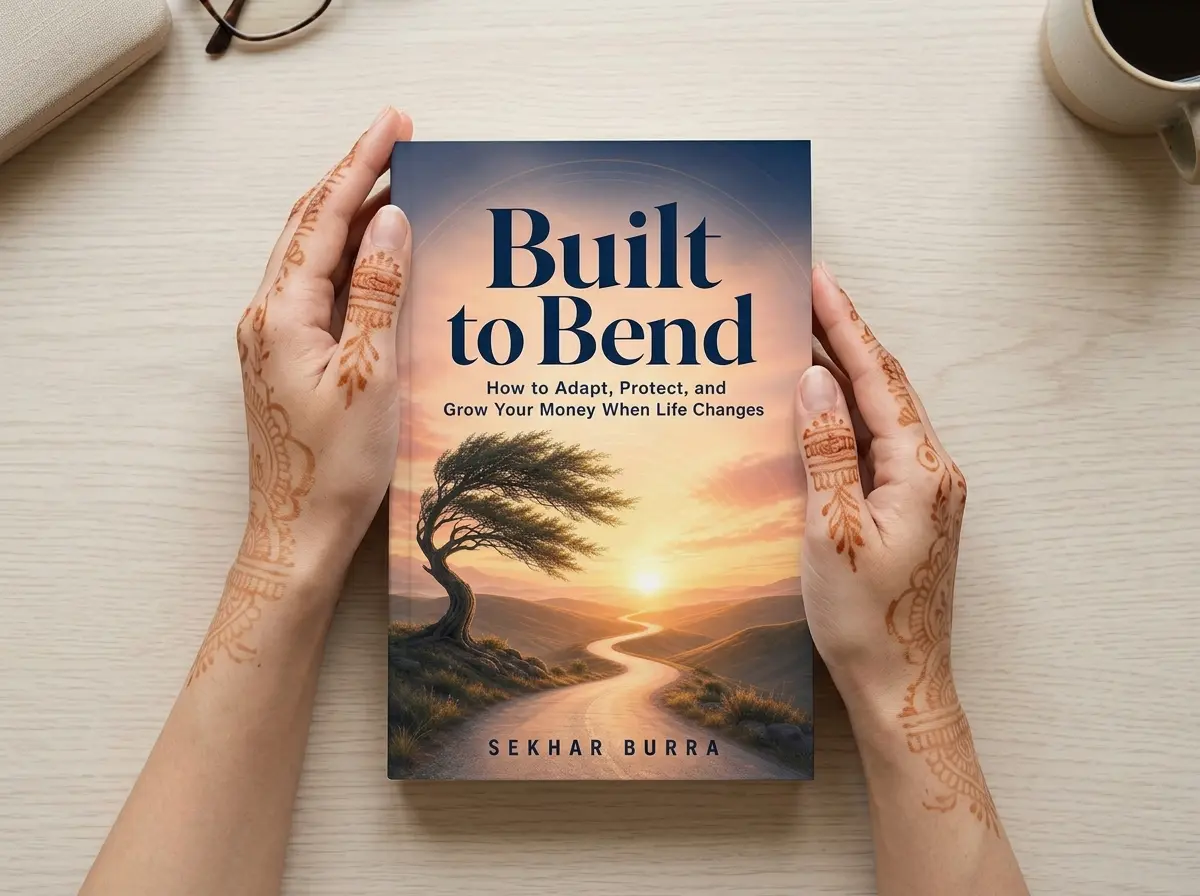
After reviewing books for well over fifteen years and reading everything from literary fiction to personal finance, I’ve realised that the books people remember are rarely the ones that promise miracles. They’re the ones that change the way you look at an ordinary problem. Built to Bend by Sekhar Burra did exactly that for me.
Most personal finance books begin with the assumption that life can be controlled if you follow the right formula. Save this percentage. Invest here. Avoid that expense. Repeat for thirty years. There is comfort in that kind of certainty, but if the last few years have taught us anything, it is that certainty has become expensive. Careers change overnight, industries evolve faster than expected, medical emergencies arrive without invitations, and responsibilities multiply in ways no spreadsheet can predict.
That is where Built to Bend feels different.
Instead of asking readers how to become rich as quickly as possible, Sekhar Burra asks a much more interesting question. How can you build a financial life that still works when life refuses to follow your plans?
I found myself thinking about that idea long after I finished the book. Not because it is dramatic or filled with shocking revelations, but because it reflects what so many ordinary people are experiencing in 2026. I’ve met professionals who earn excellent salaries but panic at the thought of losing one job. I’ve met freelancers with irregular incomes who sleep better because they have room to adapt. This book gives language to something many people feel but struggle to explain.
As Editor in Chief at Deified Publication, I read many books that simplify money into formulas. Built to Bend approaches the subject differently. It treats flexibility as an asset, not an accident.
What the Book Is About
At its heart, Built to Bend is about designing finances that can absorb change instead of collapsing under it.
Sekhar Burra opens with an image that immediately sets the tone. He compares skyscrapers that sway with the wind to rigid structures that crack because they refuse to move. It is a simple comparison, yet it captures the entire philosophy of the book. The goal is not to eliminate uncertainty. The goal is to become adaptable enough that uncertainty does not destroy your progress.
From there, the book explains why the traditional financial roadmap no longer serves everyone equally well. The familiar sequence of study, job, home, retirement was built for a world where careers remained stable for decades. Burra argues that modern life no longer follows that pattern. Layoffs, changing industries, rising housing costs, inflation, career breaks, caregiving responsibilities and longer lifespans have changed the rules. Instead of pretending these disruptions are unusual, he treats them as normal conditions that every financial plan should expect.
One chapter I particularly appreciated examines what the author calls the “straight line money life.” Rather than criticising earlier generations, he acknowledges that their advice made sense in the economic environment they lived in. What has changed is not human discipline but the environment itself. That distinction makes the discussion feel balanced instead of dismissive.
The book gradually moves from identifying rigid financial habits to offering practical frameworks for becoming more flexible. Readers encounter concepts such as financial breathing room, adaptable spending systems, optionality, debt flexibility, money sprints, reflection loops, resilience planning and long term growth. None of these ideas are presented as shortcuts. Instead, they become pieces of a larger system that encourages continuous adjustment rather than blind consistency.
What impressed me most is that the author never asks readers to predict the future. He repeatedly argues that prediction is less valuable than preparation. That is a refreshing shift in perspective.
What Stood Out to Me
One of the strongest sections appears early in the book when Burra compares two people facing similar financial shocks. Dana and Marcus both experience disruptions, but the outcomes are completely different because one has room to adjust while the other has built a life with almost no flexibility. Dana can reduce expenses, accept a temporary role and continue moving forward. Marcus earns more money but has committed nearly every future rupee before it arrives, leaving him trapped when circumstances change.
I liked this comparison because it avoids turning the discussion into a debate about income alone. The message is clear without becoming preachy. Financial strength is not always determined by earnings. Sometimes it is determined by options.
Another memorable section introduces what Burra calls the Rigidity Audit. Instead of asking readers whether they are rich or poor, the audit examines where flexibility has disappeared. It looks at income concentration, fixed costs, debt, accessible cash, assets and even mindset. That final category surprised me. The author argues that financial rigidity can exist in habits and beliefs as much as in numbers. I found that observation surprisingly honest. Many people continue making financial decisions based on identities they formed years earlier, even when their lives have changed.
The chapter on the Money Manifesto also deserves mention. Rather than encouraging readers to memorise endless budgeting rules, Burra recommends creating a short personal statement about what money should achieve in one’s life. He suggests that decisions become easier when values have already been clarified before pressure arrives. I enjoyed this section because it shifts the conversation from mathematics to intention. Numbers matter, but values often decide which numbers deserve attention.
Debt receives similarly thoughtful treatment. Instead of dividing borrowing into simplistic categories of good and bad, the author introduces the Debt Flexibility Test. The emphasis moves toward questions like whether a debt limits future choices, how easily it can be exited and whether it creates additional room or removes it. That framework feels much more useful than repeating old labels that often ignore individual circumstances.
Later chapters continue this practical approach through ideas such as money sprints, timeboxing financial goals and the Reflection Loop based on Plan, Do, Check and Act. These concepts encourage small improvements repeated consistently rather than ambitious overhauls that usually disappear after a few weeks.
Throughout the book, diagrams support the explanations without overwhelming the text. They simplify ideas that might otherwise feel abstract, particularly when discussing financial systems or decision making.
The Emotional Core
Although Built to Bend is firmly a personal finance book, I think its strongest message is actually emotional.
Money is often discussed as arithmetic, but fear usually shapes financial decisions long before numbers do. Fear of missing out. Fear of losing status. Fear of making mistakes. Fear of uncertainty.
Burra acknowledges those emotions without turning the book into psychology. There is a chapter devoted to recovering from money mistakes without shame, and I appreciated that choice. Many finance books assume readers begin from a perfect starting point. Real people rarely do.
The recurring idea of creating “financial breathing room” also resonated with me. It appears throughout the book because the author understands that breathing room is not just about cash reserves. It is about lowering panic. It is about creating enough flexibility that one unexpected event does not force desperate decisions.
Another section that genuinely stood out discusses reflection instead of constant action. The Reflection Loop encourages readers to review what worked, adjust what did not and continue improving rather than chasing perfection. I think many readers will recognise themselves here. We often make financial resolutions with enthusiasm, abandon them after a setback and conclude that we lack discipline. Burra argues that improvement comes from repeated learning instead of flawless execution. That idea feels realistic.
The closing chapters bring these themes together nicely. Rather than promising a future without problems, the book suggests building a life capable of responding to those problems. I found that ending satisfying because it remains consistent with everything introduced from the opening chapter onward.
If I had one small observation, it would be that some readers expecting dramatic storytelling may find the writing deliberately measured. This is not a motivational book built around emotional highs. It prefers thoughtful explanation and steady progress. Personally, I think that suits the subject well, but readers looking for constant excitement should know what to expect.
Who This Book Is For
I think Built to Bend will connect most strongly with readers who already have some financial responsibilities and want practical guidance rather than motivational slogans.
Young professionals beginning their careers will benefit because the book encourages flexibility before financial commitments become difficult to change. Mid career professionals may recognise many of the situations described, especially discussions around career shifts, fixed costs and changing family responsibilities. Freelancers, entrepreneurs and people with unpredictable incomes are also likely to appreciate the emphasis on adaptability rather than rigid budgeting systems.
Even experienced investors may find value here because the focus extends beyond investing into the broader architecture of financial life. Investment returns matter, but Burra argues convincingly that resilience begins much earlier than portfolio allocation.
This may not be the ideal choice for readers searching for stock market predictions, aggressive wealth building strategies or highly technical investment analysis. That is not the purpose of this book. Instead, it asks readers to think carefully about how much freedom their financial decisions create or remove.
If that question interests you, there is plenty here to consider.
Final Thoughts
Writing this Built to Bend Book Review, I kept returning to one sentence from my own notes. Good financial advice should make life feel more flexible, not more fragile.
That is exactly what Sekhar Burra attempts to achieve.
The greatest strength of Built to Bend is that it refuses to pretend life is perfectly predictable. Instead of promising certainty, it offers practical ways to prepare for uncertainty. Through concepts such as financial breathing room, the Rigidity Audit, the Money Manifesto, the Debt Flexibility Test, money sprints and the Reflection Loop, the book builds a complete philosophy that feels coherent from beginning to end.
As someone who has reviewed books for many years at Deified Publication, I value authors who respect readers enough to avoid exaggerated promises. Burra never suggests there is one formula for financial success. He encourages experimentation, reflection and gradual improvement. That honesty gives the book credibility.
Could a few sections have been shorter? Perhaps. There are moments where ideas are reinforced more than once, and some readers may prefer a slightly faster pace. Even so, the repetition serves a purpose by reinforcing habits rather than presenting isolated tips.
In 2026, when careers, technology and family structures continue changing rapidly, the central message feels remarkably relevant. Financial success is not simply about earning more. It is about creating enough flexibility to respond when life changes direction.
That is an idea worth spending time with.
FAQs
Is Built to Bend worth reading?
Yes, especially if you’re looking for a personal finance book that focuses on adaptability instead of chasing quick wealth. It offers practical frameworks that many readers can apply regardless of income level.
Who should read Built to Bend by Sekhar Burra?
Young professionals, salaried employees, freelancers, entrepreneurs and anyone who wants a stronger financial foundation without relying on unrealistic assumptions about the future will find value in this book.
What is Built to Bend about?
The book explains how to create a financial life that can adapt to changing careers, family responsibilities, economic uncertainty and unexpected setbacks. It introduces practical ideas like financial breathing room, debt flexibility, reflection loops and money sprints.
Is Built to Bend only for experienced investors?
No. Investment is only one part of the discussion. The book focuses more broadly on building resilience, flexibility and better financial decision making, making it accessible even for readers who are just beginning to organise their finances.

With over 11 years of experience in the publishing industry, Priya Srivastava has become a trusted guide for hundreds of authors navigating the challenging path from manuscript to marketplace. As Editor-in-Chief of Deified Publications, she combines the precision of a publishing professional with the empathy of a mentor who truly understands the fears, hopes, and dreams of both first-time and seasoned writers.