
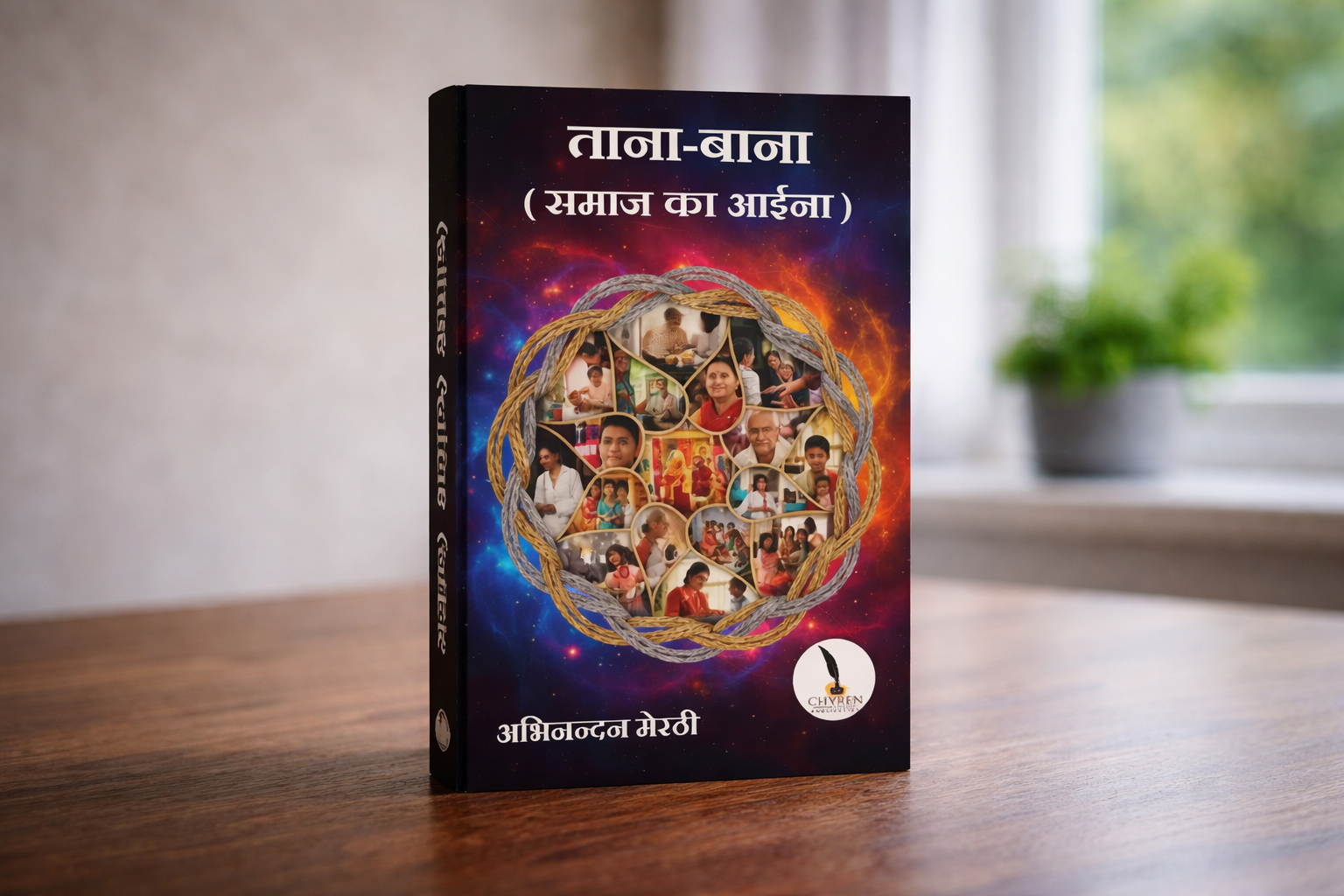
First Impressions: A Poetry Book That Feels Familiar, Not Distant
When I first picked up Tana-Bana (Samaj ka Aaina), I did not expect it to feel so close to everyday life. Poetry collections often carry a certain distance, either through heavy language or abstract themes that take time to decode. This book feels different from the start. It does not ask the reader to work hard to “understand” it. Instead, it invites the reader to recognize themselves, their surroundings, and their society in small, honest moments.
At 339 pages, this is not a slim or casual poetry book you finish in one sitting. It is meant to be read slowly, maybe even returned to again and again. The title itself, Samaj ka Aaina or “a mirror to society,” is not used as a decorative phrase. As you move through the poems, you begin to see why this name fits so well.
Poetry Rooted in Real Lives, Not Ivory Towers
One of the strongest aspects of this collection is how grounded it feels. The poems do not speak from an abstract or privileged distance. They come from lived experience. You can feel that the writers have closely observed people, relationships, struggles, and quiet emotions over time.
There are poems about family, social responsibility, aging, inner conflict, dignity, hope, disappointment, and the small compromises people make every day. None of these themes are presented dramatically. Instead, they unfold gently, almost like conversations you might overhear in real life.
While reading, I often felt that these poems were not trying to impress anyone. They were simply trying to say something honest. That honesty gives the book its emotional weight.
Language That Chooses Clarity Over Ornament
Another thing that stood out is the language. The poems are written in a way that prioritizes clarity and feeling over decorative complexity. This does not mean the writing is shallow. It means the poets have chosen accessibility.
You do not need a background in literature to connect with this book. The emotions are clear, the situations are recognizable, and the tone remains grounded. This makes the book suitable not just for poetry lovers, but also for readers who usually feel disconnected from poetry.
At times, the simplicity of language makes the poems hit harder. When emotions are expressed plainly, without excessive embellishment, they often feel more truthful.
A Wide Emotional Range, Without Losing Balance
Across its 339 pages, Tana-Bana (Samaj ka Aaina) covers a wide emotional range. Some poems feel reflective and calm. Others carry quiet sadness. A few carry subtle hope. What the book avoids is emotional excess.
There is no forced despair, no exaggerated optimism. Instead, the poems seem comfortable sitting in the middle space, the space where most people actually live. Life is not always tragic or joyful. Most of the time, it is a mix of responsibility, routine, memories, and unspoken feelings. This book understands that.
That balance makes the reading experience steady rather than overwhelming. You are never emotionally pushed too hard in one direction.
Social Observation Without Preaching
Many poetry collections that focus on society fall into the trap of preaching. They tell the reader what is wrong, who is guilty, and what must change. Tana-Bana (Samaj ka Aaina) takes a quieter route.
The poems observe rather than accuse. They show situations rather than explain them. This approach respects the reader’s intelligence and emotional awareness. You are allowed to form your own responses.
Whether it is about changing values, social inequality, fading relationships, or moral dilemmas, the poems do not shout their opinions. They simply hold up a mirror and let the reflection speak.
The Influence of Life Experience
Knowing a little about the authors’ background adds another layer to the reading. Their life experience clearly shapes the writing. There is a sense of maturity here, a patience in how themes are handled.
This is not impulsive writing. It feels considered, shaped over time. The poems reflect observation rather than reaction. That gives the book a calm confidence.
It also explains why the book does not chase trends or modern poetic gimmicks. It stays rooted in human experience, which does not go out of date.
Not Every Poem Stays With You, and That’s Fine
Being honest, not every poem in the collection leaves the same impact. Some poems resonate deeply, others pass quietly. But this is true of most large poetry collections, especially those that try to reflect the breadth of society.
What matters is that the overall tone and intent remain consistent. Even when a particular poem does not strike strongly, it does not feel out of place. It still belongs to the larger fabric of the book.
This unevenness actually adds to the book’s realism. Society itself is uneven. Some moments stay with us for years, others fade quickly.
Who This Book Is For
Tana-Bana (Samaj ka Aaina) is not a book for readers looking for dramatic poetic experiments or intense symbolism. It is for readers who appreciate emotional honesty and social awareness.
If you enjoy poetry that speaks about people, relationships, aging, duty, and inner reflection, this book will likely resonate with you. It is especially meaningful for readers who see poetry as a way to understand life rather than escape it.
It is also a good choice for readers who are new to poetry and want something approachable without feeling simplistic.
Why This Book Matters in Everyday Life
In practical terms, this book matters because it slows the reader down. In a world of quick opinions and constant noise, these poems ask you to pause and notice.
They remind you that many people carry similar worries, responsibilities, and quiet hopes. That awareness alone can make readers feel less isolated.
The book does not promise solutions, but it offers recognition. And sometimes, recognition is what people need most.
Final Thoughts
Tana-Bana (Samaj ka Aaina) is a sincere, grounded poetry collection that reflects society without dramatizing it. Its strength lies in its honesty, accessibility, and emotional balance.
It is not a book that demands attention loudly. It earns it slowly. By the time you reach the end, you may not remember every poem, but you will remember the feeling of being understood.
For readers who value quiet literature that stays close to real life, this book is worth spending time with.

With over 11 years of experience in the publishing industry, Priya Srivastava has become a trusted guide for hundreds of authors navigating the challenging path from manuscript to marketplace. As Editor-in-Chief of Deified Publications, she combines the precision of a publishing professional with the empathy of a mentor who truly understands the fears, hopes, and dreams of both first-time and seasoned writers.