
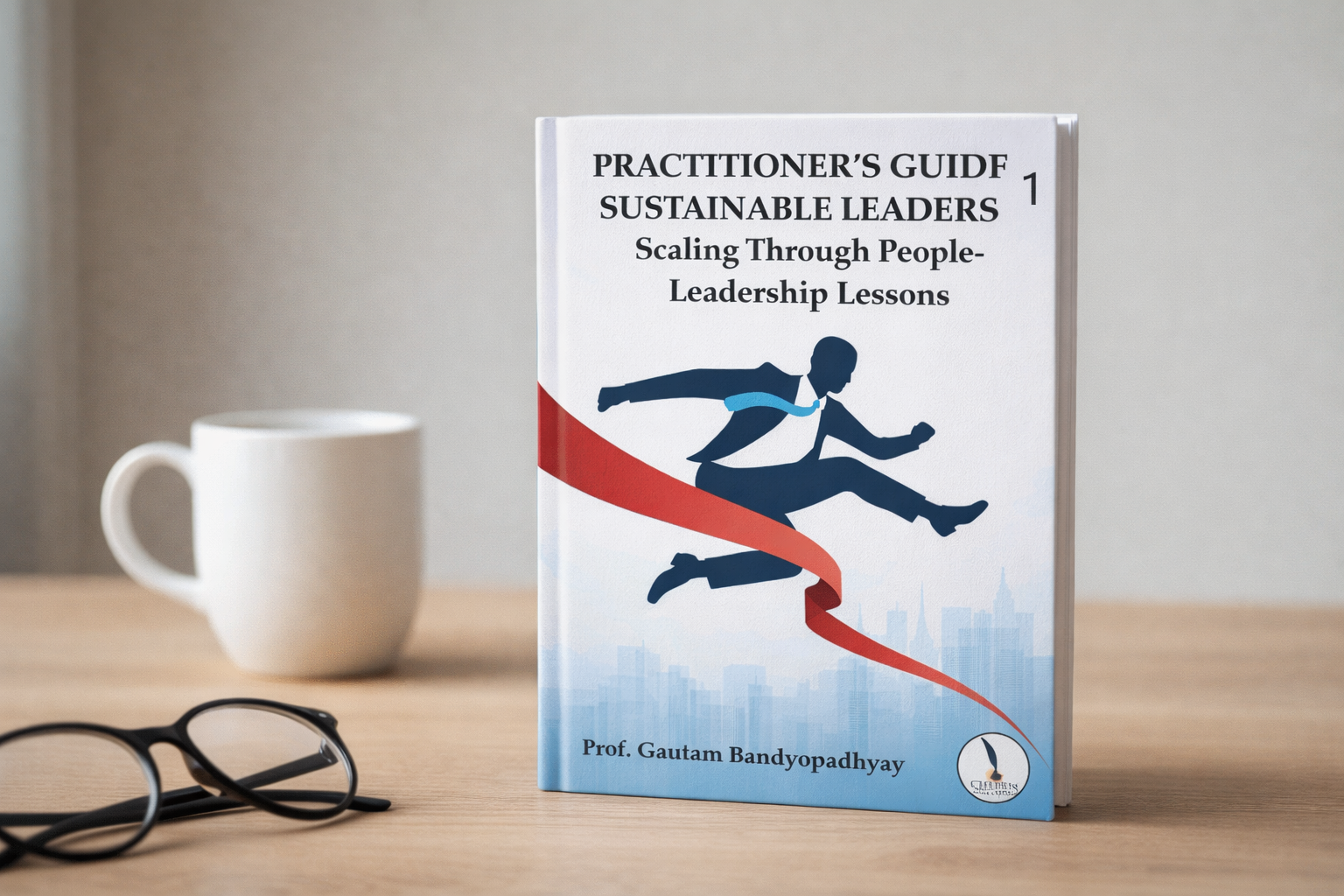
Rating: ⭐⭐⭐⭐ (4.2 out of 5)
I have a complicated relationship with leadership books.
Over the years, as an editor and a reader, I’ve gone through dozens of them. Some are polished to perfection. Some are heavy with theory. Many talk confidently about influence, vision, and strategy. But very few feel like they have actually stood in a muddy project site at 7 a.m., with a contractor shouting, a deadline slipping, and thirty anxious faces waiting for direction.
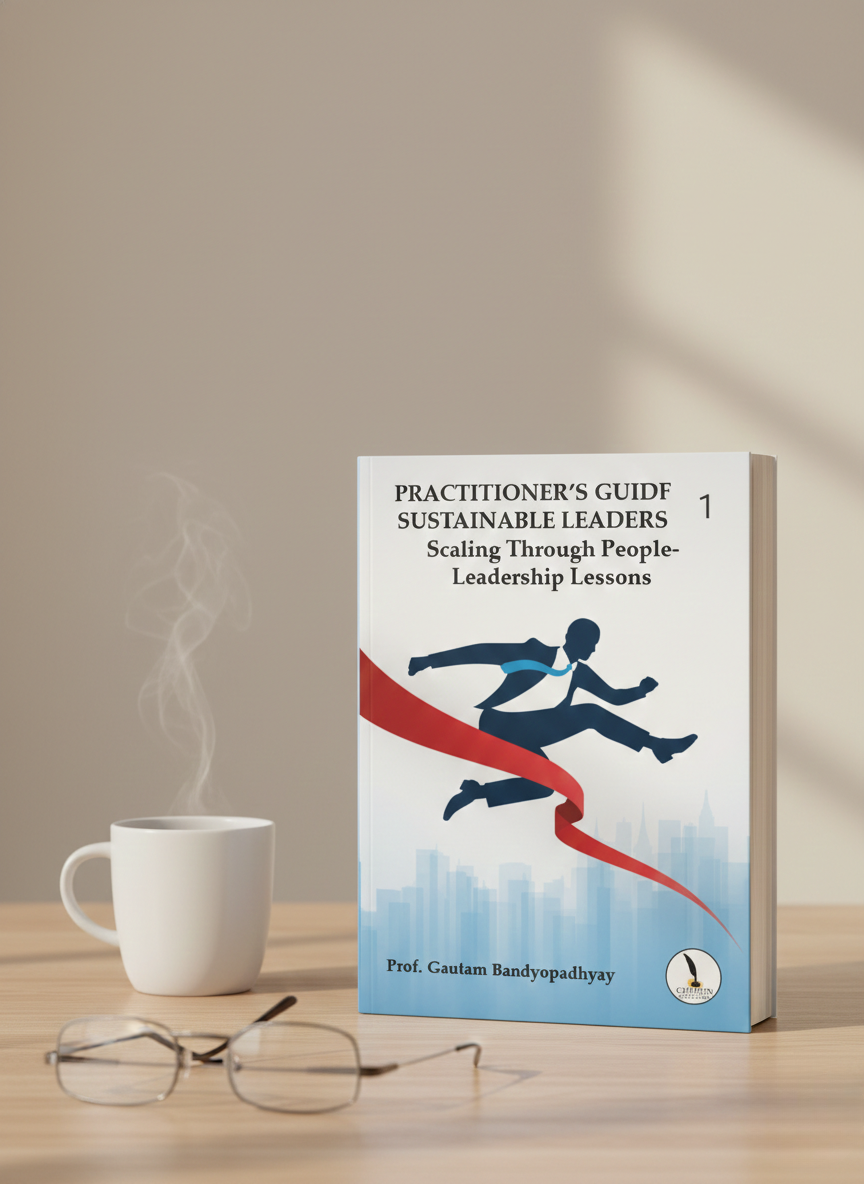
When I picked up Practitioner’s Guide to Sustainable Leadership: Scaling Through People-Leadership Lessons by Prof. Gautam Bondyopadhyay, I immediately sensed this wouldn’t be another boardroom manifesto. Even the subtitle hints at something grounded. Scaling through people. Not scaling through systems alone. Not scaling through authority. Through people.
And honestly, that small shift matters.
As Editor in Chief at Deified Publication, I’ve read enough management books to recognize when someone is writing from lived experience rather than observation. This one feels lived in. It feels earned.
“In fast scaling environments, whether in AI or infrastructure, leadership fails when people are treated as secondary to systems. This book reminds us that sustainable growth begins with human clarity and responsibility. That perspective is more relevant today than ever.”
– Bhanu Srivastav, Founder and CEO, Infinity
What the Book Is About
At its core, Practitioner’s Guide to Sustainable Leadership is built on four decades of hands-on experience across EPC, infrastructure projects, public sector enterprises, and academia. That breadth shows.
This is not leadership as an abstract concept. It is leadership under pressure. Leadership when things go wrong. Leadership when technical, contractual, financial, and human constraints collide.
The book brings together real project case studies and reflective lessons. It attempts to bridge two worlds that often remain separate: engineering logic and human behavior. That line stayed with me. Engineering logic meets human behavior. Because that is exactly where most leadership breakdowns occur.
From the cover and author bio, we learn that Prof. Gautam Bondyopadhyay has worked across industry and academia, holding senior executive roles and contributing actively to professional development forums. That dual exposure matters. It allows him to speak to practitioners and educators with equal clarity.
What I appreciated most is that this book doesn’t position leadership as charisma. It positions leadership as responsibility. As fairness. As clarity in moments of crisis. The blurb mentions “moments when people seek clarity, courage, and fairness—not authority.” That distinction tells you a lot about the tone of the book.
This is leadership not as dominance, but as stewardship.
What Stood Out to Me
The first thing that stood out was the emphasis on constraints. Many leadership books assume you operate in ideal conditions. Clear budgets. Supportive teams. Predictable timelines. But anyone who has worked on infrastructure or public sector projects knows that ideal conditions are rare.
Here, decision-making is presented under technical failures, contractual tensions, financial limitations, and human fatigue. That layering makes the insights feel credible.
In my experience reviewing professional literature, the strongest books are those that do not pretend complexity can be simplified away. They acknowledge trade-offs. They admit ambiguity. This book seems to do that.
Another aspect I found meaningful is the repeated return to people-centric scaling. Scaling is usually framed as expansion. More projects. More revenue. More visibility. But this book seems to argue that sustainable scaling happens when people grow in competence and confidence alongside the organization.
There’s something deeply practical about that.
I also think the engineering background of the author shapes the writing style. It appears structured, methodical, and case-driven. But not cold. There is a human layer throughout. The leadership lessons are not extracted in a vacuum. They emerge from real situations.
At times, I wished for slightly more narrative depth in some case descriptions. A bit more storytelling before the lesson. But perhaps that restraint is deliberate. The focus remains on application, not drama.
The Emotional Core
You might wonder if a leadership book even has an emotional core. I think this one does.
The emotional undercurrent here is responsibility. The weight of being the person others look to when systems wobble. The awareness that technical expertise alone is not enough.
There’s something quietly powerful about acknowledging that fairness matters more than authority. That in moments of crisis, people do not need someone louder. They need someone steadier.
This book also carries an implicit message about sustainability beyond environmental contexts. Sustainable leadership means you don’t burn out your team. You don’t win today and collapse tomorrow. You build systems that endure because people feel respected and included.
In 2025, when leadership conversations are dominated by speed, disruption, and scale at any cost, this feels timely. Almost corrective.
I kept thinking about a manager I once knew who could solve complex problems but struggled with team morale. He believed competence alone was enough. It wasn’t. Reading about leadership framed as an integration of logic and human sensitivity made me reflect on how often we separate those two.
Who This Book Is For
If you are looking for motivational slogans, this may not be your book.
If you are a project manager, engineer, public sector professional, consultant, or academic teaching management courses, this book will likely resonate strongly. Especially if you have faced real operational complexity.
It may also serve as a strong reference for mid-level managers transitioning into higher leadership roles. The case-based format offers reflection points without overwhelming theory.
However, readers seeking purely inspirational storytelling might find the tone more analytical than emotional. And that’s okay. Not every leadership book needs to feel like a keynote speech.
Final Thoughts
Practitioner’s Guide to Sustainable Leadership feels grounded. It feels patient. It does not attempt to dazzle. It attempts to guide.
Prof. Gautam Bondyopadhyay writes from authority earned through decades of navigating engineering, infrastructure, public sector enterprises, and academia. That longevity brings perspective. There is no rush to impress. There is a steady focus on what works and why.
As someone who has reviewed leadership literature for years, I appreciate when a book respects the reader’s intelligence. This one does. It does not oversimplify. It does not exaggerate. It offers structured insight shaped by lived experience.
Is it perfect? No book is. Some readers may wish for more personal anecdotes or deeper emotional storytelling in specific chapters. But the clarity of framework and practicality of lessons outweigh that.
In a world obsessed with rapid growth, this book gently insists that sustainability begins with people. And I think that message deserves attention.
FAQ
Is Practitioner’s Guide to Sustainable Leadership worth reading?
If you are a professional in engineering, infrastructure, public sector, or management education, yes. It offers grounded insights rather than abstract theory.
Who should read Practitioner’s Guide to Sustainable Leadership?
Project managers, engineers, consultants, and leadership educators will benefit most.
Is this book practical or theoretical?
It is strongly practice-grounded, built around real project case studies and field experience.
Does the book focus only on engineering leadership?
While rooted in engineering and infrastructure contexts, the leadership lessons are transferable across industries.

With over 11 years of experience in the publishing industry, Priya Srivastava has become a trusted guide for hundreds of authors navigating the challenging path from manuscript to marketplace. As Editor-in-Chief of Deified Publications, she combines the precision of a publishing professional with the empathy of a mentor who truly understands the fears, hopes, and dreams of both first-time and seasoned writers.