
Rating:
⭐⭐⭐⭐ (4.3 out of 5)
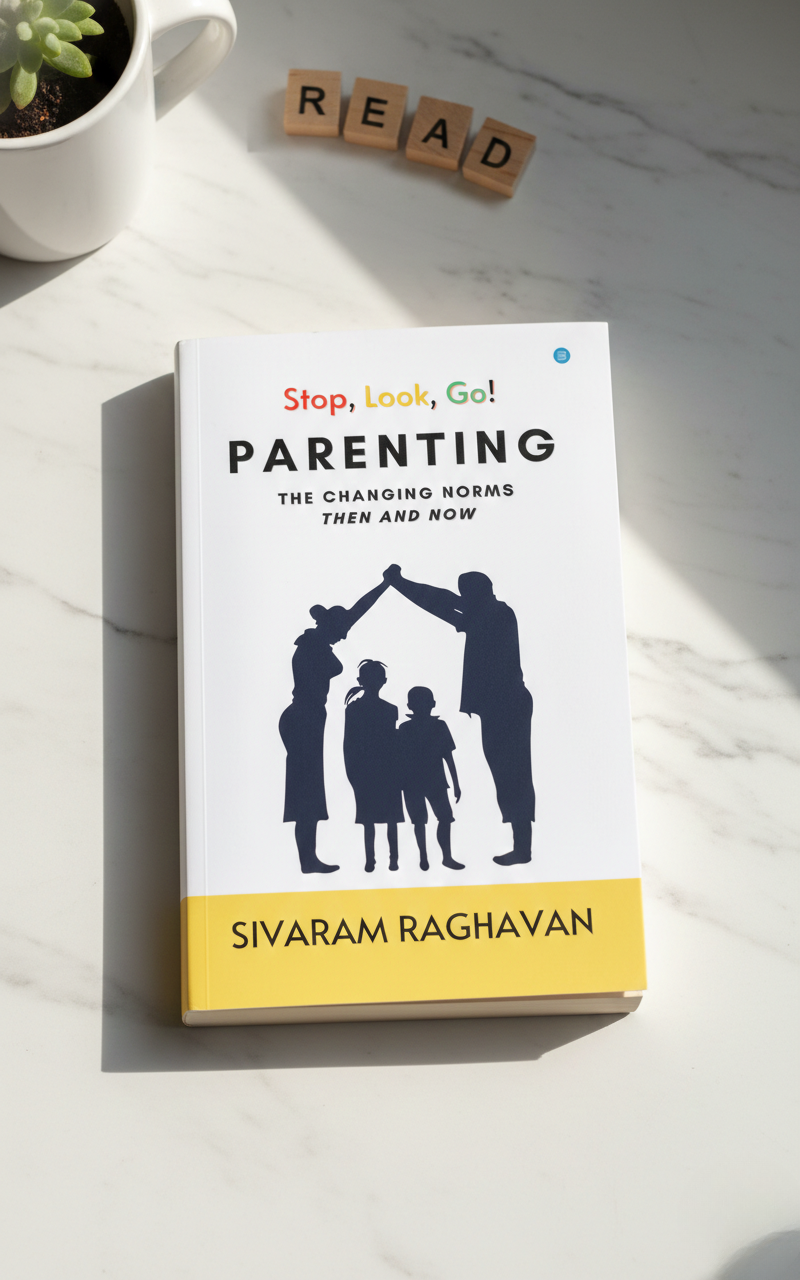
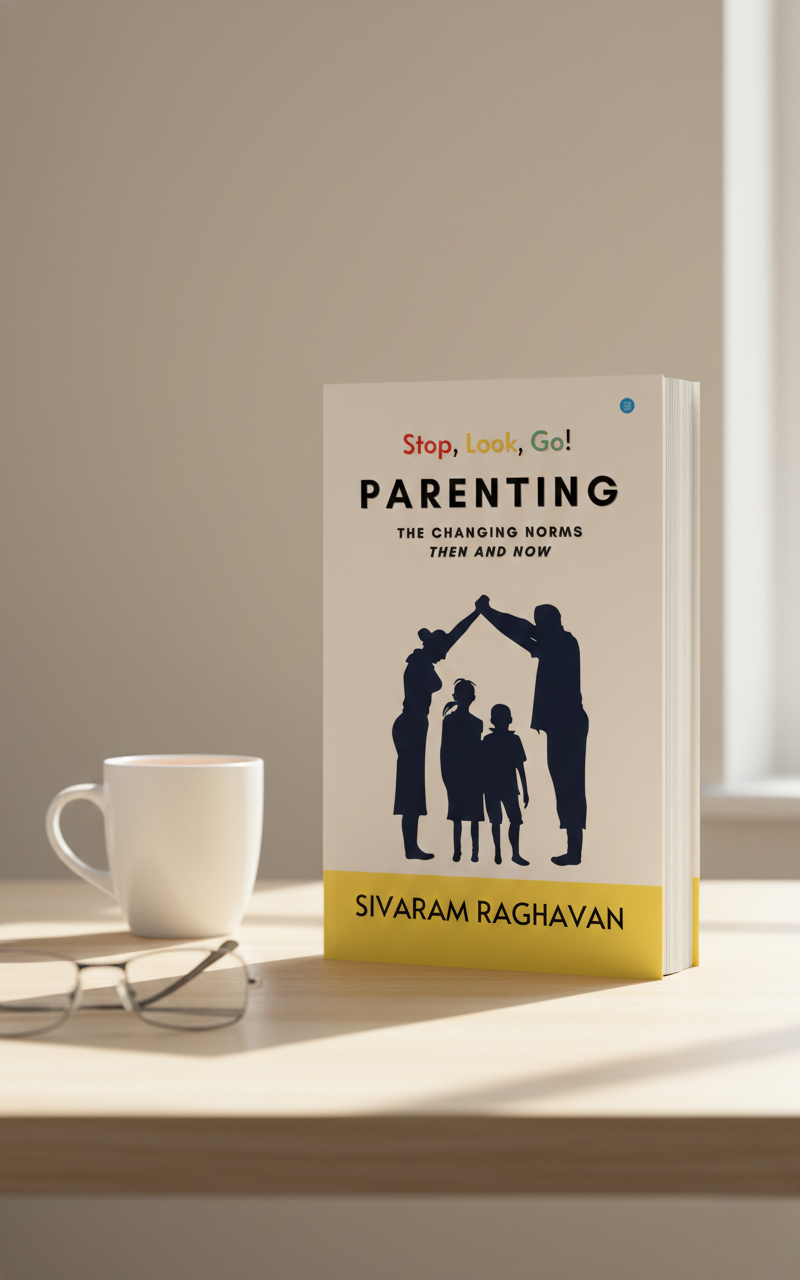
I think the first thing I noticed about Stop, Look, Go! Parenting: The Changing Norms, Then and Now was how calm the cover felt. No chaos. No clutter. Just a family standing together, hands raised, forming a shape that feels protective without being rigid. I remember thinking, this already says something about how the author sees parenting. Not as control, not as panic, but as presence.
I have been reading books on parenting for many years now, both as an editor and as a reader who has seen parenting change dramatically around her. In that time, I have noticed a pattern. The books that stay with me are rarely the ones that give strict formulas. They are the ones that sound like someone sitting across from you, talking honestly, sometimes unsure, sometimes reflective, always human. This book gave me that feeling early on.
What the Book Is About
Based on the cover and the detailed blurb, Stop, Look, Go! Parenting: The Changing Norms, Then and Now is not a rulebook. It reads more like a collection of lived moments. Sivaram Raghavan brings together thoughts, anecdotes, and experiences from years of observing children, parents, and families across different stages of life.
The structure feels intentionally flexible. Rather than chapters built around rigid theories, the book appears to move through situations. Moments of joy, moments of confusion, moments where parents are amused by their children, and moments where they feel overwhelmed. Honestly, that range felt accurate to real life.
What stood out to me in the description is the emphasis on parenting as an all-season, around-the-clock responsibility. The author clearly believes that one size never fits all. Every child is different, and parenting needs to shift as the child grows. That idea is simple, but it is surprisingly easy to forget, especially in a world full of advice reels and quick fixes.
What Stood Out to Me
In my years reviewing non-fiction, especially books around family and development, I have learned to pay attention to tone. The blurb repeatedly mentions a conversational style, and I believe that is central to this book’s appeal.
Sivaram Raghavan does not position himself as someone speaking down to parents. From what we can gather, he speaks as someone walking alongside them. The back cover mentions his experience in the social sector for over 30 years, his work with parents, teachers, and students, and his background in counselling. That context matters. It tells me the insights likely come from real conversations, not just theory.
Another thing that stayed with me was the idea of realignment. Parenting is not static. What works for a toddler does not work for a teenager. What felt right ten years ago may feel out of place today. I liked that the book seems to acknowledge this without judgment. There is no sense of blame for parents who feel lost. Instead, there is an invitation to pause, reassess, and respond differently.
I also appreciated the repeated emphasis on quality time and attention. Not perfection. Not constant supervision. Just presence. I have seen this play out in real life, families where children thrive not because everything is ideal, but because someone truly shows up.
The Emotional Core
At its heart, this book seems to ask parents to slow down. To stop, look, and then go. That phrase itself is telling. It suggests awareness before action.
I imagine many parents reading this and feeling seen. Parenting today comes with pressure. Social media comparisons, changing school systems, digital exposure, shifting family structures. This book appears to acknowledge that stress instead of dismissing it.
Some parts may feel reassuring, especially for parents who constantly worry if they are doing enough. Other parts may feel gently uncomfortable, the kind that makes you rethink habits. Not in a harsh way, but in a reflective one.
I think this is the kind of book that might make readers pause mid-page and think of their own child. Or remember a moment they handled differently than they wish they had. I have seen that happen with similar books, and those are usually the ones that linger.
Who This Book Is For
This book may not be for readers looking for strict schedules, checklists, or step-by-step systems. If you want rigid frameworks, you might feel this is too open-ended.
But if you are a parent who likes to reflect, who wants reassurance without being patronized, and who understands that parenting changes as children grow, this book is likely a good fit.
It also feels suitable for parents of children across age groups, which is not always easy to achieve. From early childhood to adolescence, the focus seems to be on adapting rather than controlling.
Teachers, counsellors, and caregivers may also find value here, especially those who interact closely with families and want a broader perspective on evolving parenting norms.
Final Thoughts
As Editor-in-Chief at Deified Publication, I read many parenting books each year. Some are informative. Some are overwhelming. Stop, Look, Go! Parenting: The Changing Norms, Then and Now feels different in that it does not try to impress. It tries to connect.
There may be moments where readers wish for deeper dives into certain topics. Some anecdotes may resonate more than others. But that unevenness also reflects real conversations. Parenting itself is uneven.
What I appreciated most is the underlying respect for both children and parents. The belief that parenting, while exhausting, also makes us kinder and more empathetic. That idea stayed with me.
If you are wondering whether Stop, Look, Go! Parenting is worth reading, I would say yes, especially if you approach it as a companion rather than a manual.
For those interested in learning more about the author’s work and perspective, you can also visit his website at uponestep.com.
FAQ Section
Is Stop, Look, Go! Parenting worth reading?
If you prefer reflective, experience-based parenting books, it is worth your time.
Who should read Stop, Look, Go! Parenting?
Parents, caregivers, and educators looking for perspective rather than rigid rules.
What is the book about in simple terms?
It discusses changing parenting norms through real-life situations and personal insights.
Is it suitable for parents of all age groups?
Yes, the book addresses parenting across different stages of a child’s growth.

With over 11 years of experience in the publishing industry, Priya Srivastava has become a trusted guide for hundreds of authors navigating the challenging path from manuscript to marketplace. As Editor-in-Chief of Deified Publications, she combines the precision of a publishing professional with the empathy of a mentor who truly understands the fears, hopes, and dreams of both first-time and seasoned writers.