
ReviewNon-Fiction
Why Criticism of Law, Politics & Social Life Made Me Think
 Review byPriya SrivastavaEditor-In-Chief
- Published
- Reading time
- 9 min
- Readers
- 3,12,657 views · 121 shares
In this review6 sections
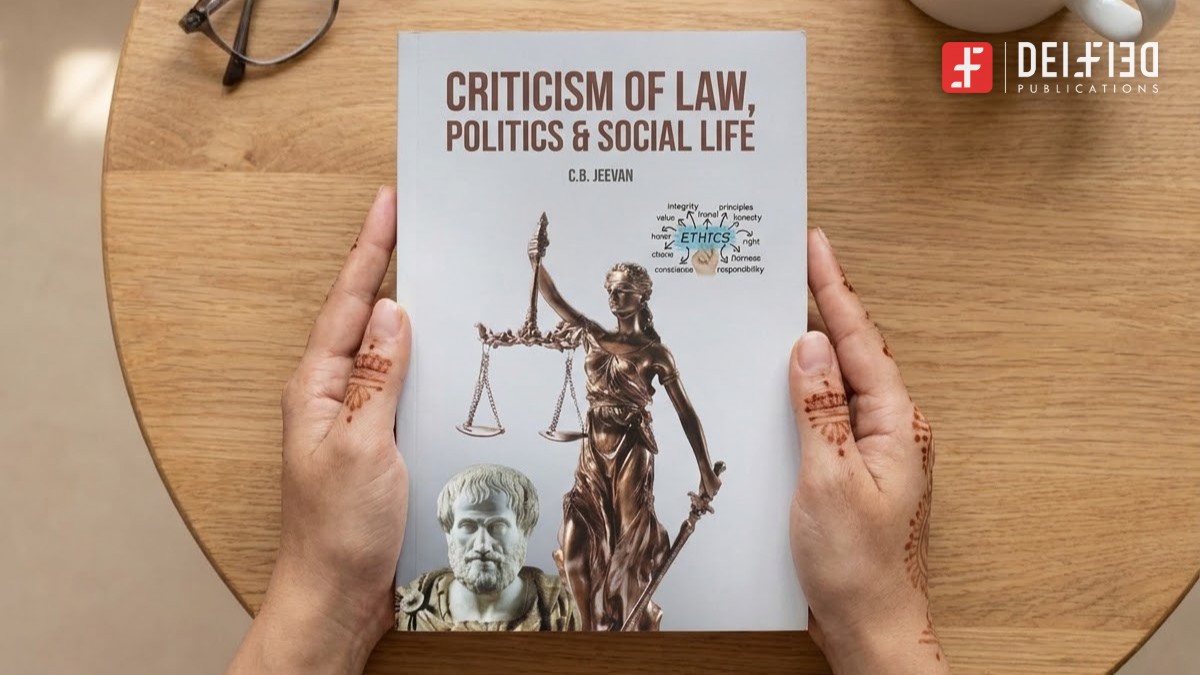
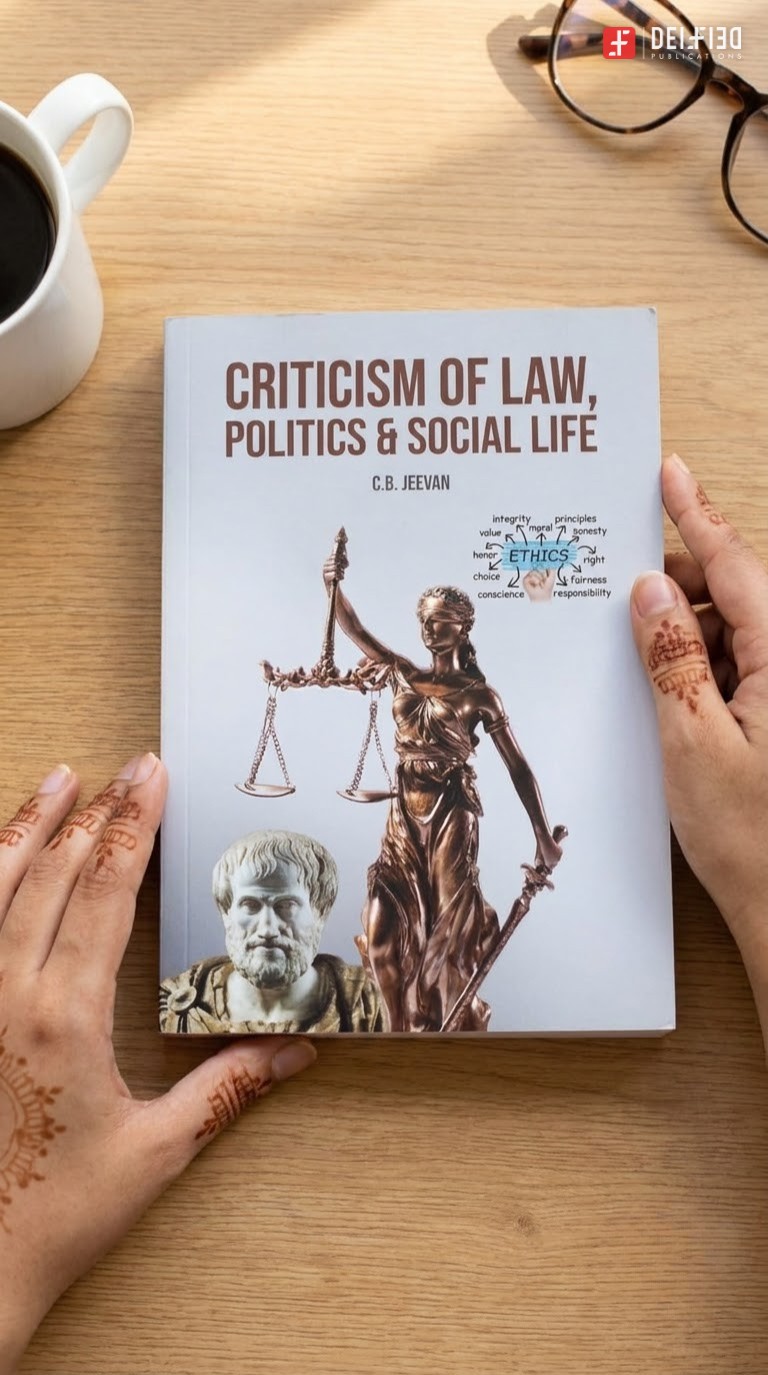
I sat by my window on a rainy Tuesday afternoon, flipping through pages that demanded much more than casual attention. In my years reviewing books for Deified Publication, I have read enough memoirs and theoretical treatises to know when an author is merely repeating common tropes, but this volume felt different from the very first page. I was not expecting to feel quite so unsettled by ordinary legal discussions, yet C.B. Jeevan has a way of writing that cuts through academic jargon and touches raw nerves. Books arrive on my desk every single week, and most of them fade from memory before the weekend arrives, but this one lingered long after I closed the back cover.
There is a distinct weight to how C.B. Jeevan approaches the complex machinery of our society, moving effortlessly from high constitutional debates down to the mundane frustrations of everyday life. As someone who spends hours reading both fiction and non-fiction, I appreciate when an author refuses to pander to the reader. You can tell immediately that these essays come from a lifetime of observing students, arguing points in classrooms, and wrestling with the contradictions of our legal framework. It made me look up from the page several times just to stare out the window and wonder how much of our civic architecture we accept simply because nobody has asked us to look closer.
Some readers might find the transition between chapters a bit jarring because the book moves so fast from heavy jurisprudence to personal memories about elevators and water bodies. I actually found that human texture refreshing, and it reminded me of conversations I used to have with professors who refused to live entirely inside ivory towers. When you read something that mirrors the untidy reality of living in a democracy, you forgive the occasional structural abruptness. This is a robust book summary of a complex mind at work, and it sets the tone for a reading experience that rewards patience and critical thought.
What Criticism of Law, Politics and Social Life Is About
If you are wondering what is it about, this volume operates as a modular collection of essays divided into clear sections focusing on law, politics, and social life. The author examines the moral and constitutional crises surrounding capital punishment under the rarest of rare doctrines, looking closely at prolonged judicial delays. He questions whether Hindi nomenclature changes for major criminal law codes represent genuine reform or superficial rebranding. The text also scrutinizes the legal exceptions around marital rape in Section 375 of the Indian Penal Code, along with the strict provisions introduced after the Nirbhaya case through the Criminal Law Amendment Act of 2013.
Beyond the courtroom, the author ventures deep into the political arena by examining general elections, the reliability of Electronic Voting Machines, and the performance of the Election Commission of India. He explores the political instability in Kerala, detailing student politics and campus violence that prompt serious administrative concerns. The social chapters address human rights as potential institutional myths, environmental responsibility, land encroachment, and safety concerns surrounding the Mullaperiyar Dam. He connects everyday anxieties, such as elevator phobia and urban water body degradation near Aluva, to larger systemic failures that affect ordinary citizens every day.
Education forms a major pillar of the discussion, where the author evaluates primary universal access, midday meal schemes, and the growing influence of political and religious groups on academic institutions. Throughout these pages, C.B. Jeevan asks readers to reconsider the true meaning of education in fostering critical thinking and civic responsibility. It is the kind of book summary that barely scratches the surface of how many topics get packed into these chapters, blending rigorous socio legal analysis with personal reflections and academic critiques. Whether you are looking for a detailed reader review or trying to decide if the book is worth reading, understanding its broad scope helps clarify its ambitious aims.
What Stood Out to Me About the Craft and Themes
The craft of this book relies heavily on a structured essay format that transitions smoothly between broad political critique and intimate personal observations. C.B. Jeevan employs a scholarly yet impassioned tone, writing primarily from a first person reflective perspective combined with a third person analytical viewpoint. What stood out to me most was the honesty in the prose, especially when the author argues that justice cannot be for one side alone, but must be for both. You notice small details, such as his comparison between Newton's laws and the environmental repercussions of urban encroachment on local water bodies, which makes abstract ecological concepts feel immediate and urgent.
The thematic core revolves around the tension between legal rigidity and moral conscience, forcing readers to examine where their allegiance truly lies among law, state, ideology, and conscience. I found myself deeply engaged by the historical overview of Lord Macaulay drafting the Indian Penal Code in 1860 and how those colonial foundations continue to shape modern jurisprudence in 2026. The book does not offer easy answers, and it openly acknowledges that it is easy to criticize without fully understanding the real issues at stake. That intellectual humility lifts the writing above ordinary political pamphlets and gives the arguments real substance.
To be completely honest about the weaknesses, the book does suffer from minor editorial oversights in formatting consistency across section headers, and the abrupt shifts between heavy constitutional law and personal anecdotes can catch you off guard. Yet these flaws feel minor compared to the sheer intellectual honesty on display across every chapter. If you compare it to works like Amartya Sen's The Argumentative Indian or Granville Austin's foundational constitutional studies, this volume shares that same deep commitment to democratic debate. It reminds us that civic life requires constant vigilance and active participation rather than passive acceptance of flawed institutions.
The Emotional Core That Made Me Think
Books about law and politics often read like cold legal briefs, but this one carries a surprising emotional pulse that caught me off guard on multiple occasions. When the author reflects on his years as a teacher, principal, and student counselor, you sense a genuine grief for the state of our educational institutions and the moral values we are losing. There is an underlying sadness in how political violence and regional fragmentation tear communities apart, particularly when discussing student unrest and tragic campus losses in Kerala. It made me think about my own school days and the teachers who tried to instill a sense of justice that seems harder and harder to maintain.
The emotional weight peaks when the author discusses human rights and whether they function as mere institutional myths in the face of systemic poverty and environmental neglect. You realize that behind every legal loophole, every delayed execution, and every voting anomaly, there are real human lives caught in the machinery of the state. I kept thinking about this scene for days, especially the personal interludes where everyday fears blend with planetary anxieties. It is the kind of book that sits with you long after you put it down, prompting gentle internal reckonings about your own complicity in social apathy.
Readers who expect a dry academic manual will be surprised by how much heart beats beneath these scholarly arguments, and I teared up a bit during the reflections on moral integrity and the right ordering of loyalties. C.B. Jeevan writes not as an detached observer looking down from a mountain, but as someone who has walked the hallways of our schools and courtrooms for decades. That lived experience gives the emotional core its authenticity, proving that intellectual critique and deep compassion do not have to cancel each other out. You finish reading with a profound sense that our public life desperately needs more of this kind of fearless moral clarity.
Who This Book Is For and Who Should Skip It
If you are a student of law, a political science researcher, an activist, or an urban professional interested in contemporary Indian socio-legal discourse, this book belongs on your shelf. It provides a treasure trove of arguments and historical context that will enrich seminars, debates, and personal reading groups. People who appreciate authors like Amartya Sen or Granvile Austin will find a kindred spirit here, and anyone who refuses to accept political and institutional rhetoric at face value will appreciate the rigorous questioning. It serves as an invaluable resource for anyone trying to make sense of the complex intersections between democracy, law, and social responsibility.
On the other hand, if you are looking for a light, fast-paced narrative or a straightforward self-help guide, you should probably skip this title. The dense legal analysis, detailed voting pattern evaluations, and academic framing require focused attention and patience, making it an unsuitable choice for casual readers seeking entertainment. Readers who prefer neat, linear storytelling without sudden shifts into socio-legal theory might also find the structure challenging. Knowing your own reading habits will save you frustration, and this volume is explicitly designed for those willing to do the hard work of critical thinking.
Deciding if it is worth reading comes down to what you want from your non-fiction collection, and if you want something that challenges your assumptions and broadens your understanding of Indian institutions, you will find it deeply rewarding. The prose demands intellectual engagement, and it refuses to offer comforting platitudes about how our systems always work out for the best. It is an honest, demanding companion for anyone who cares about the direction of our society. Approach it with an open mind, and you will walk away with a much sharper lens for viewing the world around you.
Final Thoughts From My Reading Chair
Finding a book that combines lifelong professional experience with fearless moral critique is a rare occurrence in modern publishing, and C.B. Jeevan has managed to produce something truly memorable. While the formatting has minor rough edges and the transitions between legal analysis and personal memory can feel abrupt, the overall achievement is remarkable. It is the kind of reading experience that reminds you why books matter in a democracy, challenging our complacency and urging us to think for ourselves. I am genuinely glad I spent my Tuesday afternoon with these pages, and I suspect many other readers will feel the same way.
Deified Publication is proud to bring this important work to the public, and I believe it will spark crucial conversations across academic and civic circles for a long time. Whether you agree with every conclusion the author reaches, you will undoubtedly respect the depth of research and the sincerity of purpose behind every essay. It is an invitation to look past superficial rebranding and examine the real foundations of our legal, political, and social lives. Read it slowly, argue with it in the margins, and let it challenge everything you thought you knew about our institutions.
Criticism of Law, Politics & Social Life FAQs
Is Criticism of Law, Politics & Social Life worth reading?
Yes, this book is well worth reading if you care about contemporary Indian socio-legal issues, constitutional law, and political critique. C.B. Jeevan brings decades of experience as a teacher, principal, and legal scholar to these essays, offering sharp insights that go far beyond standard blurb copy. While it requires patience and focus, the intellectual rewards easily justify the time investment for serious readers.
Who should read Criticism of Law, Politics & Social Life?
The ideal audience includes law students, political science researchers, academics, civic activists, and urban professionals who follow Indian public affairs. Anyone interested in topics like capital punishment, marital rape legislation, environmental degradation, and educational reform will find plenty of substantial material to ponder. Casual readers who prefer light fiction or quick memoirs might find the dense academic tone and legal analyses too heavy.
What makes this book different from other political critiques?
Unlike many contemporary political commentaries that rely on partisan rhetoric and superficial headlines, this volume blends rigorous academic jurisprudence with intimate personal reflections and historical grounding. The author draws directly from his diverse background in education and law to connect grand constitutional debates to everyday realities like elevator phobia and local water body encroachment. That unique blend of scholarly rigor and human vulnerability sets it apart from standard nonfiction releases.