

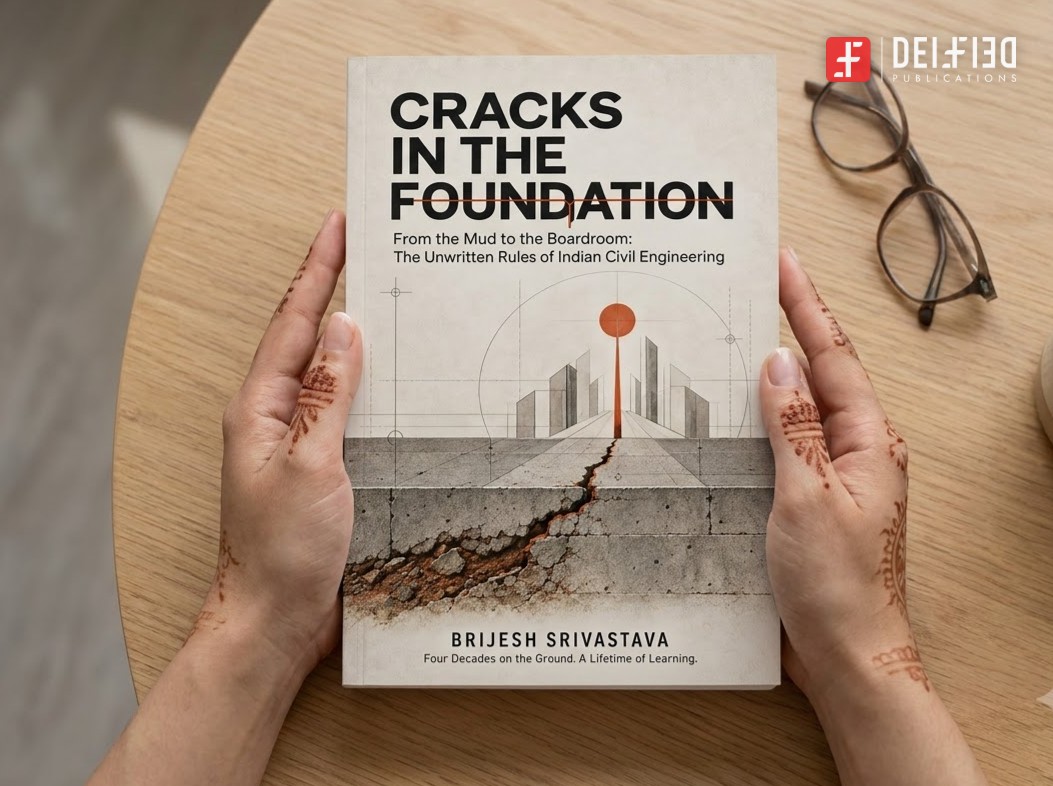
ReviewNon-Fiction
Cracks In The Foundation Shows The Hard Truth Of Site Work
 Review byPriya SrivastavaEditor-In-Chief
- Published
- Reading time
- 8 min
- Readers
- 4,12,564 views · 217 shares
Cracks In The Foundation
In this review6 sections
I grew up around people who worked with their hands and their tape measures, so I know how rarely construction sites match the tidy white drawings on drafting tables. When I cracked open this volume with my evening tea, I was expecting a stiff technical handbook full of formulas, but instead I felt like I was listening to an older uncle who had spent forty years in the sun and finally decided to tell the truth. As Editor-in-Chief at Deified Publication, I have read dozens of professional memoirs that promise insider secrets, yet most of them hide behind polished corporate language. Here, the voice is direct, sharp, and occasionally bruised. It caught my attention because it talks about dust, pride, and the strange shock of discovering that your college degree did not prepare you for the real world.
There is an early memory in the author note that set the entire tone for me. The writer remembers growing up in an un-electrified village named Asanhari, reading holy verses by the glow of a single kerosene lamp after losing his mother at six. He recalls an itinerant mystic who taught him focus by making him look at a single ink dot drawn inside a rectangle on scrap paper. Later, his uncle, a modest clerk with a basic ninth-grade education, would challenge him with algebra puzzles hidden in recited Urdu couplets, calculating the height of a broken tree faster in his head than any textbook formula could manage. That grounding in patience and sharp mental reckoning explains why the rest of the book feels so lived-in. It is not theory from an air-conditioned lecture hall, but lessons learned the hard way through decades of public work.
What the Book Is Actually About
At its heart, this book summary is about the enormous gap between passing engineering exams and surviving the chaotic landscape of public works. Brijesh Srivastava pulls from his four decades of experience across public undertakings like RITES and NIDC to trace a career path across five distinct stages. He takes you from the initial bewilderment of being a junior site engineer to learning how to question flawed designs, controlling project finances, leading large teams, and finally understanding how large public institutions function. What makes this text unusual is that it treats measurement books, site order entries, and contractual letters not as boring paperwork, but as defensive armor.
The author argues that true technical competence is only half the battle when you are building rail sidings, thermal power plants, or massive steel yards. The real struggle happens when a contractor tries to substitute cheap soil, or when an auditor questions a routine site payment five years after the concrete has dried. In 2026, this feels timely because thousands of young graduates enter the infrastructure sector every year on meager salaries, completely unaware of the legal traps waiting for them. The narrative moves through real projects in places like Ghaziabad, Kahalgaon, Bina, and Meja, showing how an engineer protects public money while keeping their own name clean. It turns dry contract administration into a matter of personal honor and professional survival.
The Technical Battles and Sharp Lessons That Caught My Eye
In my years reviewing books on professional life, I have rarely seen an author explain the brutal friction between theoretical education and field reality with such clarity. I loved the moment where a fresh engineering graduate on his third week attempts to lecture a seasoned mistri using academic terminology. The mason listens without arguing, but by the end of the day, he deliberately erects the column shuttering two inches out of plumb, leaving the cocky newcomer to stumble through an awkward explanation to the site chief. It is a brilliant, humbling illustration of why textbook arrogance always breaks against practical craftsmanship. Samuel C. Florman touched on the philosophy of building in his classic writings, but Srivastava brings that dynamic down to earth with Indian job site grit.
Another scene that made me sit upright involves the author catching site supervisors who were calculating concrete volume for pyramidal twin footings using simple average-area shortcuts. That seemingly innocent mathematical laziness was leaking up to fifteen percent in excess public payments, until he forced everyone back to the prismoidal formula. Later, at a huge SAIL stockyard in Ghaziabad, a combative contractor tried to use excavated site dirt for sub-base layers while waving a dubious laboratory test. Srivastava did not scream or cause a scene, but he simply eliminated the expensive haulage and disposal line items from the monthly running bill. His writing makes you realize that an engineer with a meticulous pencil and a clear command of the contract is far more effective than someone shouting orders in the mud.
There are some structural rough edges, to be completely fair. A few historical side projects, like a polytechnic facility in Kanpur or a complex railway corridor over freight tracks, are introduced and wrapped up in a couple of paragraphs without the deep payoff of the bigger case studies. I also noticed that the warnings about young engineers neglecting their writing skills and dismissing documentation repeat almost word for word between the third chapter and the toolkit at the back. When an author has such strong, original arguments, hearing the exact same complaint twice feels like an editing oversight. Yet these small flaws do not spoil the punch of the broader craft, which blends field anecdotes with crisp, actionable advice.
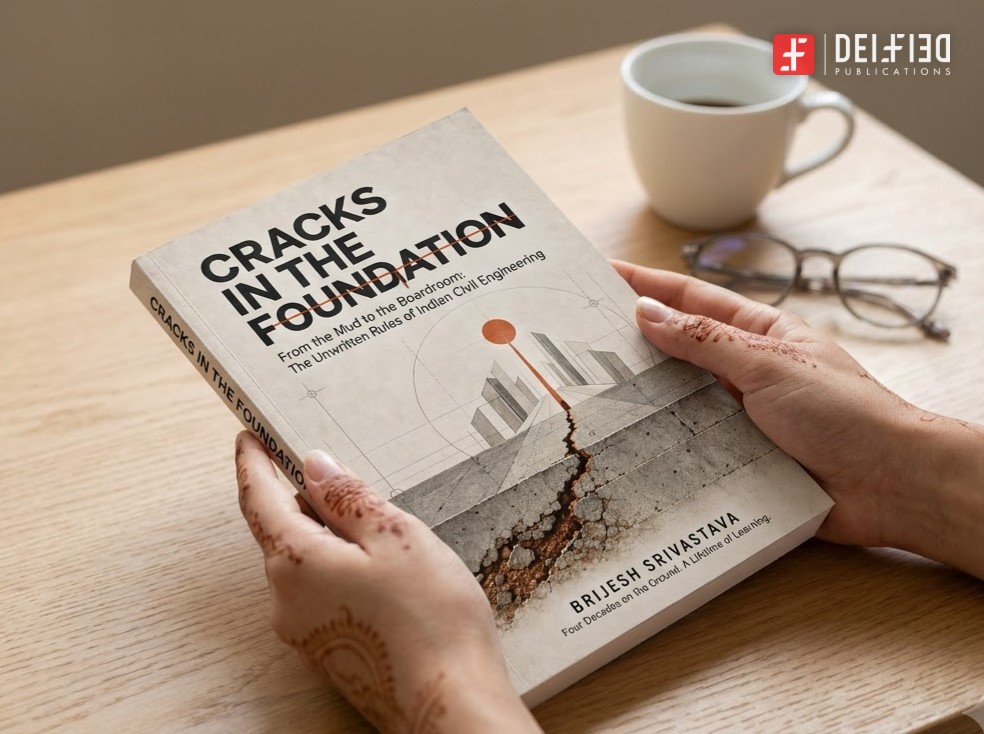
The Emotional Core of Site Life
Beyond the technical details and contract disputes, there is an underlying emotional weight here that caught me off guard. The author talks frankly about what he calls the Scorpio trap, where a young engineer earning fifteen thousand rupees a month stands next to a wealthy contractor driving an expensive SUV, gradually absorbing the illusion that proximity to money equals having money. Srivastava admits with painful honesty that while he oversaw hundreds of crores in public infrastructure, he did not build substantial personal wealth for himself until very late in life. He writes with a sense of urgency because he does not want the next generation to spend forty years working themselves ragged only to end up financially vulnerable in retirement.
I felt that vulnerability most clearly when he describes facing a four-count vigilance inquiry in 2017, five years after finishing the Meja project report. Seeing a career veteran forced to sit before inquiry panels to defend technical choices made years earlier is chilling. He cleared the major charges because he had kept two specific emails from 2012 proving the design decisions were formally ordered by higher authorities, eventually reducing a severe penalty to a minor censure. That episode strips away any romantic ideas about public service. It leaves you feeling the cold truth that documentation is your only real friend when organizational politics turn against you, and that realization lingers long after you finish the chapter.
Who Should Pick This Up and Who Might Want to Walk Away
If you are wondering should you read it, the answer depends entirely on what you want from your shelf. This book belongs in the hands of fresh civil engineering graduates, site supervisors, and junior project managers who feel overwhelmed by the rough politics of construction. It will also speak directly to seasoned infrastructure consultants who know the sting of arbitrary audit objections and want to sharpen their project oversight. Anyone who enjoyed the structural storytelling of Roma Agrawal in Built, but wishes it had more practical advice on managing subcontractors, government departments, and legal claims, will find exactly what they need here.
On the other hand, if you are looking for an academic textbook loaded with differential equations, structural analysis software tutorials, or broad inspirational philosophy, you should probably skip this one. Srivastava writes with an abrasive edge that deliberately attacks academic vanity, repeatedly reminding the reader that the site does not care about your diploma. Readers outside the construction sector or those who dislike detailed breakdowns of billing practices, tender specifications, and audit reports might find the second half a bit tedious. It is written for people who have mud on their safety shoes or expect to have it soon, and it does not pretend to be anything else.
Final Reflections on an Unvarnished Career
I closed this volume feeling a deep respect for the sheer endurance required to build roads, bridges, and power lines in this country. Brijesh Srivastava has written something that feels less like a polished memoir and more like a survival manual passed down from someone who took the blows so you do not have to. His blend of early village memories, site battles, and bureaucratic skirmishes offers a rare, clear-eyed look behind the concrete walls of public development. It is an honest reader review because I can see where the chapters could have been trimmed, but the sheer authenticity of the author makes those repetitions easy to forgive.
The book delivers a clear lesson that building things is not merely about pouring cement or finishing assigned tasks on time. It is about learning how to value your own labor, protecting public resources, standing up to pressure with written evidence, and building an honorable life along the way. In a market flooded with generic career advice, this practical guide cuts through the noise with authority, earned wisdom, and genuine care for the young professionals entering the field.
FAQs
Is Cracks In The Foundation worth reading for non-engineers?
While the book is primarily targeted at civil engineers and construction professionals, anyone interested in how large public infrastructure projects operate behind closed doors will find the personal stories and bureaucratic struggles fascinating. The writing explains technical disputes through human conflict, showing how public funds are spent, how contracts are disputed, and how government inquiries function. However, general readers who have no curiosity about contracts, site measurements, or project management may find the specialized tender discussions somewhat dense.
Who should read Cracks In The Foundation?
This volume is ideal for early-career civil engineers, site supervisors, diploma holders, and fresh graduates who are stepping onto construction sites for the first time. It is equally valuable for mid-level project managers in contracting firms or public sector undertakings who want to learn how to write airtight contractual letters, survive external audits, and avoid legal traps. If you want to understand how technical drawings connect to real financial outcomes, this guide offers an indispensable roadmap.
What is the main takeaway from Brijesh Srivastava in this book?
The central message is that technical knowledge alone will not protect you on a construction site if you lack contractual discipline and written records. Srivastava shows through forty years of experience that public projects are decided not just by physical construction, but by site order entries, clear correspondence, and rigorous measurement calculations. He urges young professionals to look beyond simple supervision, understand the financial systems running their sites, and preserve their personal integrity through meticulous documentation.