
ReviewFiction
Tetari Book Review: Why This Village Story Broke My Heart
 Review byPriya SrivastavaEditor-In-Chief
- Published
- Reading time
- 8 min
- Readers
In this review6 sections
I opened this short book late on a rainy Tuesday evening, holding a warm cup of ginger tea and expecting a simple village tale that I might finish before bed. In my years reviewing books, you develop an instinct for how a story will unfold within the first dozen pages, but every so often a narrative comes along that completely upends your comfortable expectations. That was precisely my experience with this slim novel. As Editor-in-Chief at Deified Publication, I read dozens of manuscripts every month, yet there are specific voices that refuse to play by conventional literary rules, and Ranjita Kumari writes with that exact kind of stubborn, unvarnished honesty. By the time I reached the middle of the second chapter, my tea had grown completely cold on the side table, because the weight of the protagonist's life had settled over me like a heavy wool blanket.
There is an early scene where the young protagonist is grinding spices on a stone silbatta in the courtyard while her grandmother scolds her about getting the lantern lit before the dark sets in completely. It is such an ordinary, daily chore, but the author renders the scrape of the stone and the sting of red chilies against bare fingers with such physical clarity that you can practically smell the mustard oil and woodsmoke in the yard. It made me think about my own grandmother's ancestral home in eastern Uttar Pradesh, where the courtyard was both a sanctuary and an open prison for the women living inside it. I was not expecting to feel this way so early in such a slender volume, but the sheer domestic reality caught me off guard. That grounding in physical labor sets the mood for everything that follows, and it announces immediately that this author has no interest in romanticizing village traditions.
What the Book Is Actually About
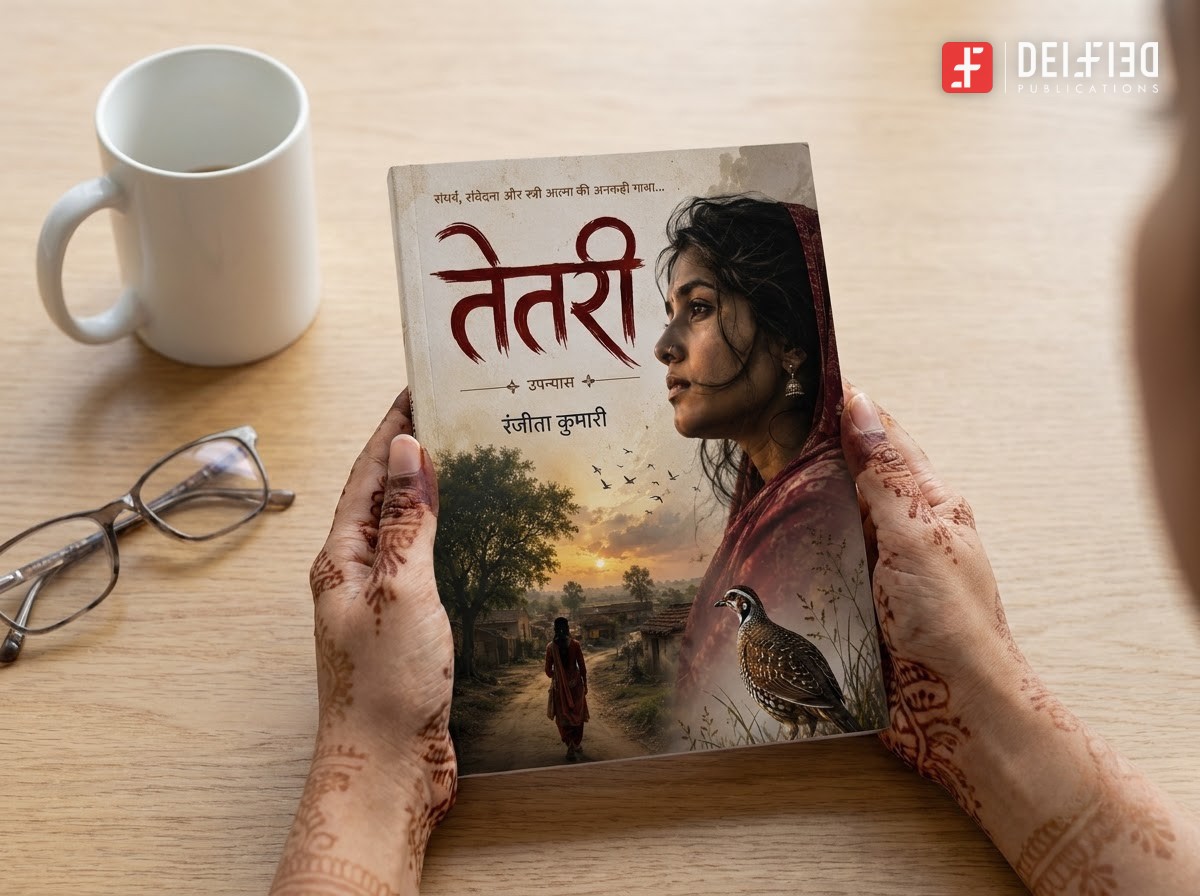
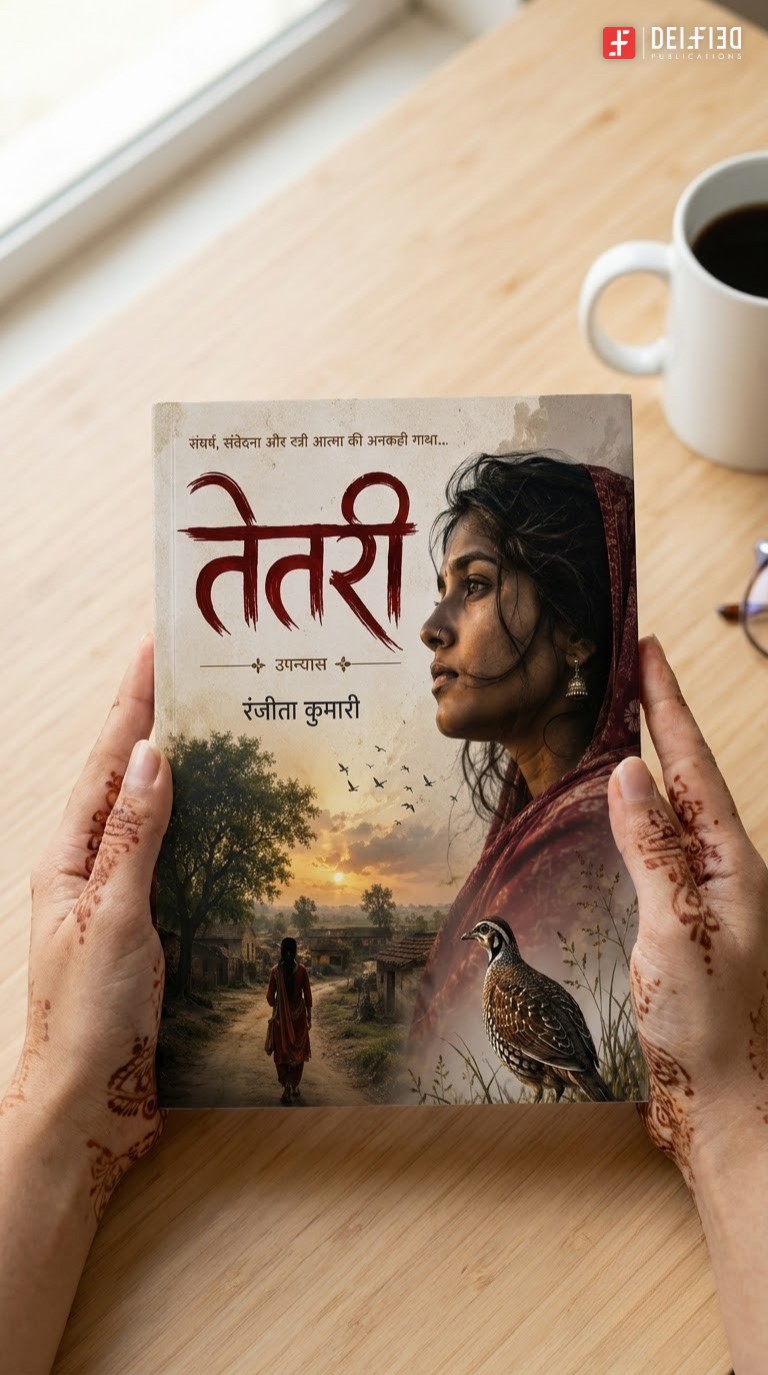
At its heart, this ninety-one-page novel chronicles the life of an orphaned girl named Tetari, who is raised by her elderly grandparents on the margins of a village in Bihar. Her mother, Shanichari, suffered an unspeakable public humiliation after being falsely accused of stealing two brinjals by the local landlord, forced to carry the vegetables on her head through the dust while neighbors watched and mocked. After her mother succumbs to grief and abandonment, and her father passes away from tuberculosis, the young girl grows up knowing that she exists at the mercy of everyone around her. She marries a hardworking laborer named Shyam Kumar who must constantly leave for distant cities to earn bread, leaving her behind to manage an endless cycle of household duties, demanding in-laws, and predatory neighbors.
Across fifteen numbered sections, the narrative expands outward from her personal routine to map the lives of several women in her orbit. We meet Phulmatiya, who is cast out and forced by the community panchayat to terminate her pregnancy after being exploited by the landlord Lallan Singh. We follow Sunita, Tetari's neighbor, who elopes with high hopes only to find herself trapped with an abusive man who perishes in a suspicious road incident, leaving her destitute with two young daughters. There is also the tragic thread of Anita, whose torment under her predatory father-in-law Ramlal ends in an act of utter desperation behind locked doors. Through these intersecting tragedies, the book summary becomes an inventory of social debts, showing how rural poverty and caste hierarchies extract their highest price from women who have nowhere else to run.
What Stood Out to Me in the Writing and Craft
What caught my attention right away was the language, which is completely devoid of decorative flourishes or fancy metaphors. Ranjita Kumari writes in a dry, vernacular Hindi that relies on natural regional rhythms and sharp Bihari colloquial phrases that feel pulled directly from village courtyards. When elders snap at girls or young men assert their caste authority, the dialogue carries the sharp sting of everyday life without sounding theatrical. The author includes lines that cut right to the bone, such as when she observes that whenever a single sorrow arrives in a person's life, every past grief comes rushing back to keep it company, or when she notes plainly that when a woman lacks a man's protection, every wandering eye feels entitled to inspect her. These are not academic statements, they are the lived survival rules of people who cannot afford illusions.
In many ways, the village atmosphere and the social landscape made me think of the classic rural realism found in Phanishwar Nath Renu's Maila Anchal, though this book is far shorter and much more focused on domestic interiors. The chapters open briskly with concrete actions like fetching water from a handpump or drying cow dung cakes, and they close abruptly on notes of grim resignation. However, I want to be entirely fair in this reader review, because the book is not without technical flaws. There are noticeable typographical slips and uneven spacing in the typesetting that occasionally interrupt the reading flow, suggesting that the volume needed another round of thorough proofreading before release. Furthermore, several subplots follow an identical pattern where an elopement leads to social rejection, abuse, and ultimate catastrophe, which can feel repetitive when compressed into fewer than a hundred pages. Even with those rough edges, the raw authenticity of the character voices carries the book past its structural shortcomings.
The Emotional Core That Sits With You
There is this moment where Tetari is called over to help with preparations for a lavish wedding at the landlord's grand mansion, and she finds herself cornered once again by Sunder Sharma, the landlord's grandson who had exploited her years earlier in an empty room. The absolute dread in that scene is not built on theatrical violence, but on his casual arrogance and her sickening knowledge that shouting for help would only ruin her own reputation while he walked away untouched. I kept thinking about this scene for days afterward, because it demonstrates with painful precision how generational power operates in small communities. The powerful do not need weapons when social convention already shields every transgression they commit against poorer neighbors.
Honestly I teared up a bit during the later pages when Kanchan, Sunder's own wife, stumbles upon damning videos on his phone and decides she cannot endure his betrayal any longer, picking up her child and leaving to demand a separation. In a book where female characters are so frequently crushed by circumstance, that sudden flicker of defiance hits differently. The emotional core of this novel does not rely on neat resolutions or triumphant victories, because life in these dusty settlements rarely offers neat conclusions. Instead, it invites the reader to sit beside these women in their courtyards, listening to their shared grief as they chop vegetables and wash utensils, acknowledging the gentle courage required simply to wake up and start the fire again the following morning.
Who Should Read This and Who Might Want to Pass
If you are looking for lighthearted escapism, a sweet romance, or a story where the good people receive justice and the villains face swift punishment, you should probably pass on this book. It is an unsparing, somber portrait of rural patriarchy, and several scenes involving domestic abuse, forced terminations, and self-harm can be genuinely difficult to stomach. Readers who become frustrated by unresolved plot threads or rough production values might also find the experience challenging, because the book reads more like a sequence of interconnected sociological character sketches than a polished commercial novel.
On the other hand, anyone interested in contemporary Hindi realistic fiction, grassroots feminist writing, or the lived experience of marginalized communities will find immense value in these pages. In 2026, this feels timely because our wider cultural conversations often look at rural transformation through broad economic statistics while forgetting the daily compromises made by the women holding those fragile households together. If you appreciated the emotional grit of Mannu Bhandari or the social directness of Geetanjali Shree, this book will speak to you in a voice that is both humble and startlingly honest. It gives dignity to characters who are so often treated as background extras in larger national stories.
Final Thoughts and Editorial Score
Closing the back cover left me with a mixture of heavy sadness and deep respect for what the author attempted here. In her brief author's note, she mentions that she wrote this narrative as an offering for all the women who have endured exploitation without ever finding the words or the safety to tell their stories, and you can sense that personal dedication breathing through every single paragraph. It is not an easy book to read, and it certainly will not leave you feeling cheerful, but books do not always exist to comfort us. Sometimes the most generous thing a writer can do is simply hold up a clear mirror to a corner of the world that polite society prefers to ignore.
This is an earnest, imperfect, but deeply felt work that deserves to be read with patience and an open heart. The repetition in its dramatic arcs and the minor copyediting slips keep it from absolute technical perfection, but its emotional honesty and sociological weight more than justify the time you will spend with it. It is the kind of book that sits with you long after you return it to the shelf, reminding you of the hidden costs paid by ordinary women every single day.
Tetari FAQs
Is Tetari worth reading for general fiction lovers?
Yes, it is definitely worth your time if you appreciate grounded, realistic fiction that tackles serious social issues like caste, poverty, and gender dynamics without romanticizing village life. While the narrative is short and carries several heavy tragedies, the emotional honesty of the protagonist's journey and the authentic regional voice make it a memorable reading experience for anyone interested in serious Hindi literature.
What is the main message behind the story of Tetari?
The central message focuses on the hidden resilience and systemic exploitation of marginalized rural women who carry the emotional and physical burdens of patriarchal society. Through the experiences of Tetari and her neighbors, the author highlights how societal honor codes, economic deprivation, and caste hierarchies disproportionately penalize women, while also celebrating their endurance and mutual solidarity in the face of relentless adversity.
How difficult is the Hindi language used in this novel?
The language is quite accessible, written in a conversational, straightforward style that incorporates everyday regional phrasing and dialectal expressions from rural Bihar rather than dense Sanskritized vocabulary. Any reader with an intermediate grasp of Hindi can easily follow the prose, as the author deliberately chooses direct, unpretentious words to reflect the genuine speech and inner thoughts of her characters.