ReviewSelf-help
Dictionary of Lies Book Review: Does Truth Need Protecting?
 Review byPriya SrivastavaEditor-In-Chief
- Published
- Reading time
- 8 min
- Readers
- 4,62,553 views · 121 shares
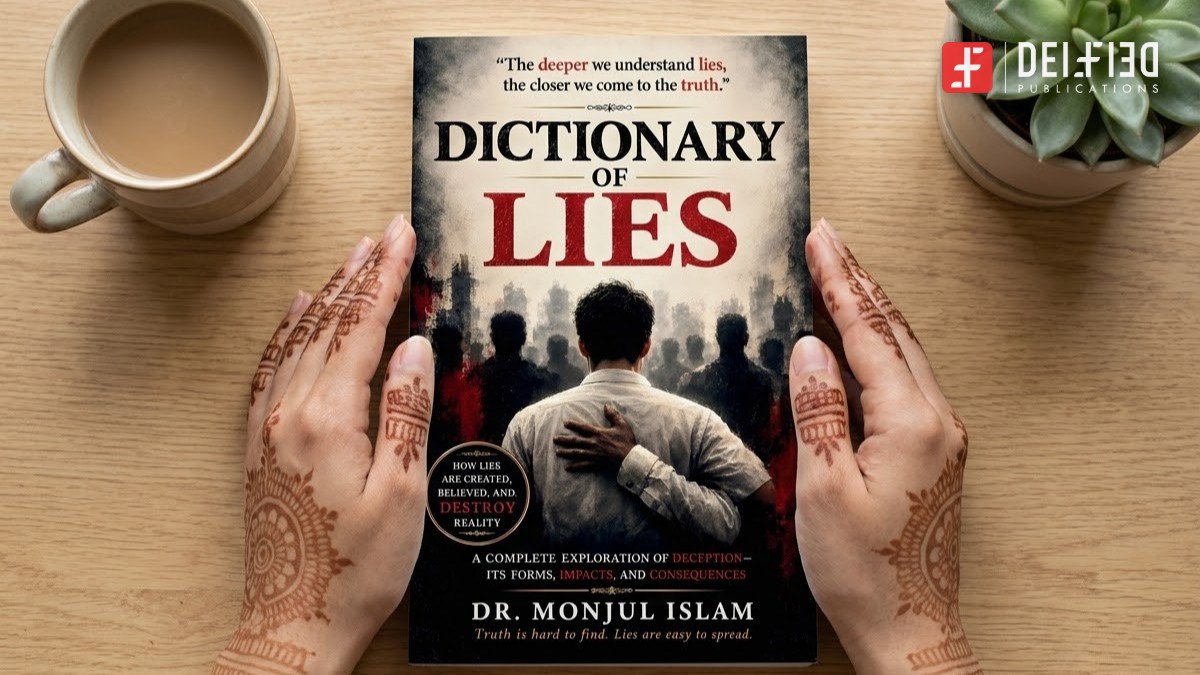
A few weeks ago I forwarded an alarming health warning to my family group without checking it. It had a doctor's name attached and it sounded urgent, and within an hour my cousin gently told me it was fake. I felt a little silly, honestly. That small embarrassment came back to me while I was reading Dictionary of Lies by Dr. Monjul Islam, because the whole book is built around moments exactly like that one, the ordinary seconds when a falsehood passes through a normal person on its way to someone else. I'm Priya, Editor-in-Chief at Deified Publication, and in my years reviewing books I have read plenty of titles about trust, honesty and human behaviour. Very few of them begin with such a plain admission of hurt.
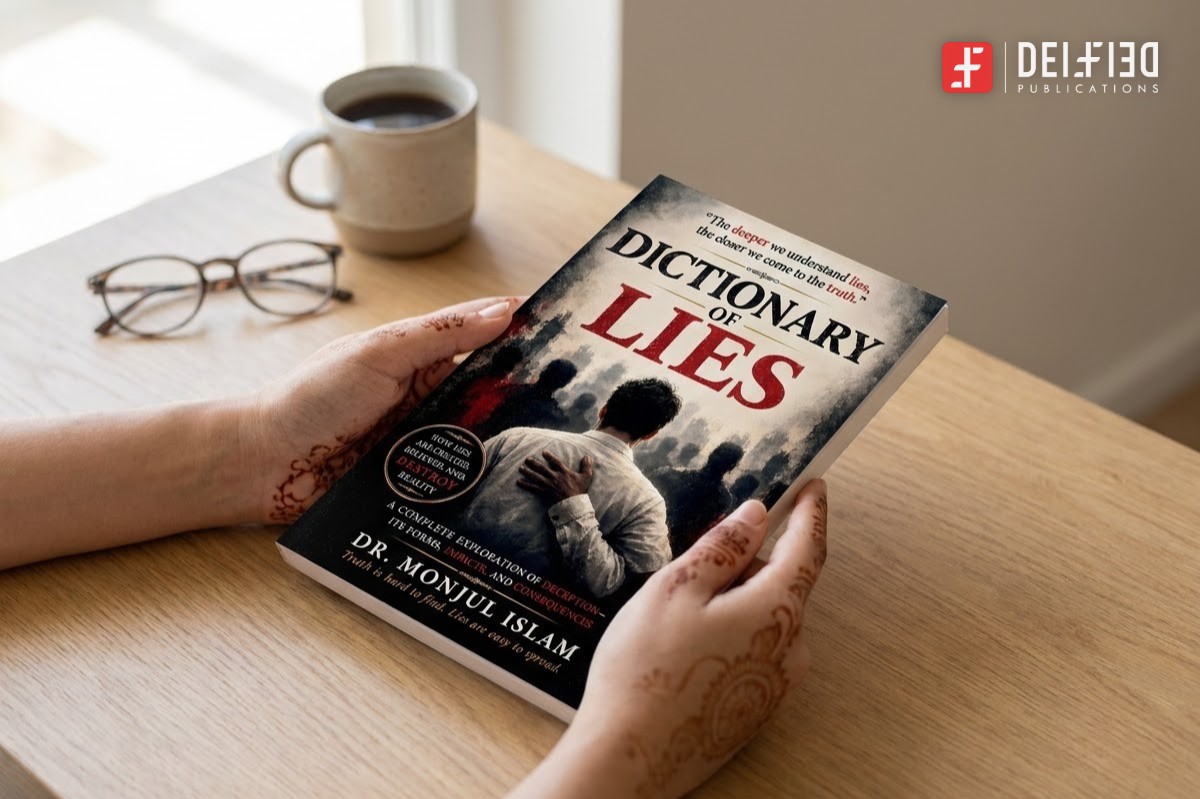
Dictionary of Lies is not a novel, and I want to say that early because the title can make you expect a reference book of definitions. It is closer to a long, organized walk through the subject of deception, written by a man who says openly that his own pain started everything. In the Author's Note he writes that he was truthful and honest but never knew how to protect those qualities, and that sentence sets the tone for the rest. He also says, almost in the same breath, that the book is not a personal grudge and not a recipe for escaping lies. I respected that. Plenty of authors hide their wound, and he puts his on the first page.
What the Book Is About
The book runs through fifteen chapters, plus a conclusion and an epilogue, and the structure is easy to follow. It starts with why recognizing lies matters at all, then moves to why that matters even more in the age of social media, and then goes back to the birth of lies. There he looks at definitions, the difference between falsification and concealment, and how religious traditions, anthropology and psychology each try to answer the question of when the first lie was told. After that comes a chapter on why lies travel faster than truth, a long tour of lies in the world, and sections on money, advertising, science and pseudoscience, philosophy, relationships, media and conspiracy theories.
The later chapters turn toward the present and the future. There is a short chapter on artificial intelligence and what it does to evidence, a chapter on why falsehoods survive and what they cost, and then the longest practical section, which asks how a society might become truth conscious. The final chapter, The Responsibility of the Reader, is only a couple of pages, and I think that is deliberate. After all the history and theory, it narrows down to the moment before you forward something alarming, repeat something you heard from a third person, or defend a belief just because your group holds it.
What Stood Out to Me
The first thing I liked was how seriously the book takes small lies. Chapter one argues that a lie does not need to be big to do damage, and it describes how a small exaggeration or an omitted fact creates the need for another explanation, then another, until there is a whole web. The author compares a first lie to a tiny spark, which is a familiar image, but the examples around it about families, hospitals and workplaces made it feel earned. I have watched this happen in real life with friends, where one convenient half truth about a missed event grew into months of awkward distance. The book understands that slow, boring way trust actually breaks.
The case studies are where Dr. Monjul Islam's research shows most clearly. He uses Ramesses II and the Battle of Kadesh around 1275 BCE to show how rulers have always needed a story, and how monuments worked as political messages carved in stone. The Donation of Constantine appears as one of history's best known documentary forgeries, and Enron is used to show that modern economies run on invisible trust in published accounts. I liked that these examples are spread across centuries, because it makes the point that deception keeps changing its tools while the human habits underneath barely move.
What I appreciated most, as someone who has read many books that preach, is the care he takes not to flatten everything into "everyone lies." He separates myth, metaphor and sincere faith from deliberate manipulation, and he says plainly that the book does not judge whether any religion is true. The conspiracy chapter does something similar. It begins by admitting that real conspiracies exist, with Watergate as his example, and then describes the theory that seals itself off: you ask for evidence and hear that it was destroyed, you mention independent investigators and hear that they are part of it. That passage was sharp and a bit funny in a grim way, and I recognized it from a few family dinners.
I also kept coming back to the chapter on why lies spread faster than truth. The idea is that a lie can be built in one sentence while the truth needs evidence, verification and sometimes years. Truth tends to say "it depends" and "we do not yet know," while a lie hands you one villain and one simple explanation. In 2026, with feeds that reward attention more than accuracy, this reads less like theory and more like a description of what is on my phone every morning.
The Emotional Core
Under all the research there is something personal that I did not expect to feel as strongly as I did. The author says the first and permanent victim of a lie is the person who creates it, because nobody can use deceit on another person without getting infected by it. I'm not sure I fully agree, since some liars seem to sleep perfectly well, but I understood why a hurt person would need to believe it. He also writes that the damage to the person deceived, in money or reputation, may be temporary, while the pain can last forever. That sentence made me think of someone I know who still cannot talk about a friend who lied to her years ago.
The chapter on why falsehoods survive carries the most feeling for me. He offers two explanations for a failure, one saying you made some mistakes and part of the responsibility is yours, the other saying you did nothing wrong and enemies caused everything. Of course the second one is easier to live with. He adds that truth may require us to change while a lie lets us remain exactly as we are. The epilogue goes further and admits that he began by trying to understand lies and ended up trying to understand human beings, and that if we demand honesty from everyone except ourselves, the search for truth means nothing. I would call that the most honest stretch of the book.
Where It Didn't Fully Land for Me
I should be honest about the reading experience too. The book is built a bit like a training manual, with many bullet lists, long topic lists before each section, and prose that can feel plain and repetitive. Chapter fourteen is the longest practical section, and its opening contents list repeats the heading about teaching children how to think rather than what to think. Some sentences clearly needed another round of editing. The author admits in his note that typing and grammar mistakes may exist and invites readers to help correct them, which I found disarming, but a tighter edit would help. The chapter on artificial intelligence is also only a few pages, and given how much weight the book gives the topic elsewhere, I wanted more of it.
Who This Book Is For
This is for readers who like to understand the machinery behind everyday behaviour. Teachers, students, managers, HR trainers and anyone running an organization will find the later chapters practical, and the author himself suggests the book for ethics and organizational training. If you were hurt by someone's deception and want a fair, steady way to think about it without turning bitter, you may find it useful. It might not be for readers who want a gripping story, one sharp argument, or heavy academic footnotes. This is a wide and patient survey, and it asks for a reader willing to go chapter by chapter.
Final Thoughts
So, is Dictionary of Lies worth reading? I think yes, if you come to it for its sincerity and its range rather than its polish. Dr. Monjul Islam says near the end that we need neither blind belief nor permanent suspicion, we need judgment, and that is the thread I will remember from this book. It does not ask you to trust less. It asks you to check more, to correct yourself sooner, and to be careful about what passes through your hands. As an editor I would trim and tighten it. As a reader, I closed it feeling a little more careful with my forwards, and a little kinder toward people who have been lied to.
Frequently Asked Questions
Is Dictionary of Lies worth reading?
Yes, if you want a broad and sincere look at deception across history, relationships, media and technology. It is more of a guide for thinking than a story, so read it slowly.
What is Dictionary of Lies about?
It is a book summary in one line: how lies are created, believed and spread, and how people and societies can protect truth without becoming suspicious of everyone. It covers religion, politics, markets, science, social media and AI.
Who should read Dictionary of Lies?
Students, teachers, managers, trainers and general readers who want to understand trust and deception. Anyone who has been hurt by a lie may also find it steadying.
Is this book a personal memoir?
No. The author says his own pain inspired it, but he states clearly that it is not a personal account or a grudge against anyone. It is a wide study of the subject.