

ReviewNon-Fiction
Abraham Jacob’s Railway Memoir Reveals India’s Hidden Track of Trouble
 Review byPriya SrivastavaEditor-In-Chief
- Published
- Reading time
- 7 min
- Readers
- 98,019 views · 11 shares
In this review6 sections
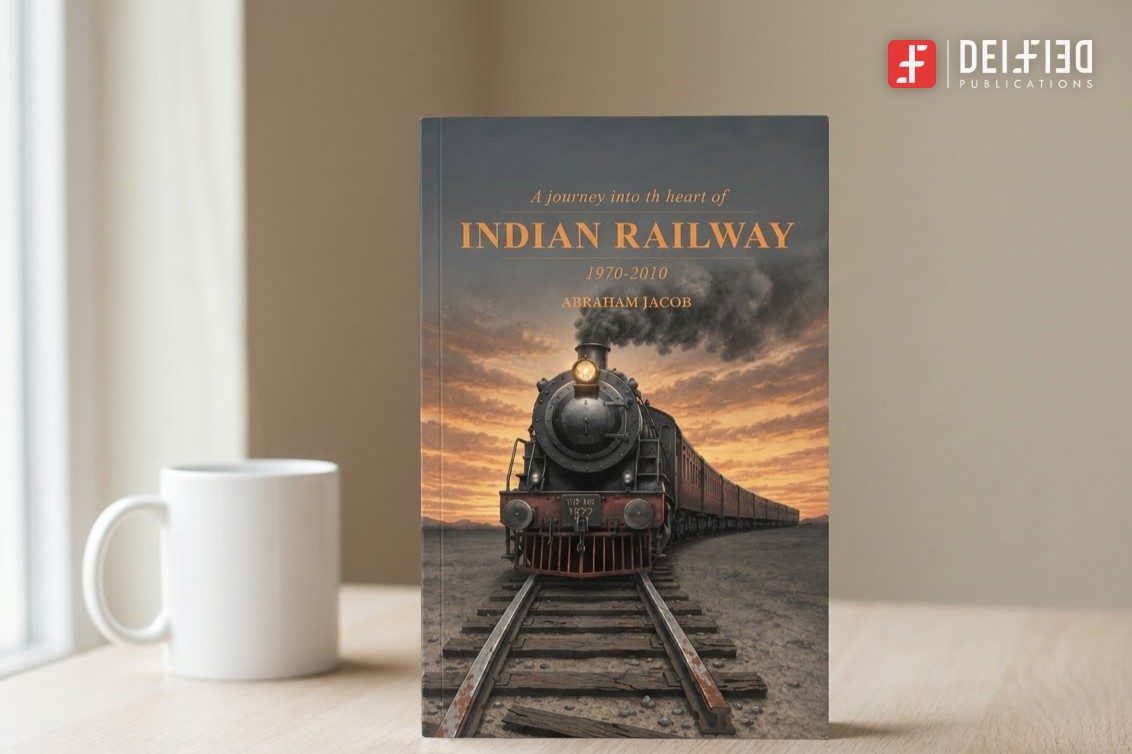
When I first opened the cover of A Journey into the Heart of Indian Railway 1970‑2010, I was reminded of the evenings I spent waiting for a slow‑moving express at Platform 3, the whistle echoing like a distant promise. The title alone pulled me into a world I had only glimpsed in news reports and nostalgic films, and I felt a flicker of curiosity about what a thirty‑year insider could reveal. As I turned the first pages, Abraham Jacob introduced himself not as a distant historian but as a probationary officer who had just stepped onto the greasy floor of a station master’s office. That personal entry point felt immediate, like a friend inviting me for chai and a story about his first day on the rail.
What caught my breath early was Jacob’s description of the station master, “I found that the Station Master was under the Railway Protection Force,” a line that made the whole system feel both militarized and humane at once. The image of a uniformed officer polishing his desk while the world of tracks hummed outside kept coming back to me, and I realized the book would be as much about people as about locomotives. In 2026, when India is racing toward high‑speed corridors, Jacob’s early anecdotes feel like a gentle reminder that every steel rail rests on human hands, many of them weary.
What the Book Is About: A Memoir and a Diagnosis
Jacob’s work is part memoir, part investigative report, stitched together across four decades of Indian Railways, from the steam‑filled era of the 1970s to the digital promises of the early 2010s. He opens with his own initiation: meeting the Station Master, the quirky AOS whose “vibuthi and saliva flowing all over his lips” created a vivid, almost comic scene, confronting an arrogant Divisional Superintendent, and finally being shuffled to a lackadaisical Deputy Personnel Officer. Those early chapters set the tone, showing the Railway as a sprawling organism populated by distinct, often flawed personalities.
The middle of the book shifts gears, moving from personal anecdotes to a systematic critique. Jacob labels the era of “Abidcation of coaching services,” noting that “The Railway has been progressively abdicating its responsibility to passengers.” He laments the abandonment of profitable three‑tier sleeper coaches, exposing how profit‑driven decisions were replaced by bureaucratic inertia. The chapters on corruption detail bribe‑laden contracts (pages 154‑157), the role of middlemen, and the personal projects like gauge conversion that turned public money into vanity. The final section, titled “A Word Before the Light Finally Fades,” strings together observations on cleanliness, stagnant coach design, and the decay of railway colonies into urban slums, ending with a warning that change must be proactive.
What Stood Out to Me: Themes, Characters, and Craft
The first thing that struck me was Jacob’s ability to anchor big systemic problems in concrete, human moments. The Station Master’s disciplined routine contrasted sharply with the later image of “urban slums” where once‑proud railway quarters now crumble. This contrast illustrates the theme of institutional decay through a single thread: the loss of pride and purpose. Similarly, the AOS’s odd habit in the early chapter becomes a metaphor for the eccentricities that later pervade middle management, a subtle reminder that oddities in small offices can echo in a national network.
Jacobs’s recurring focus on “abdication” weaves through the whole book. The early claim that the Railway is “progressively abdicating its responsibility to passengers” is echoed later when he notes, “The Railway has changed India but has not been able to change itself.” This phrase, taken from the concluding analysis, shows how a single idea matures from a fresh observation to a structural indictment. The evolution of this theme from a personal grievance to a national diagnosis gave the book a cohesive spine, even when the prose grew dense.
On the craft side, Jacob’s prose alternates between vivid description and dense policy analysis. The opening scene with the Station Master is crisp; I could almost hear the clang of the register and the rustle of the uniform. In contrast, the sections on contract corruption (pages 154‑157) sometimes become a list of malpractices that repeat the same point, making the reading slower. A particularly strong line, “The Railway's engineers have not been able to improve coach design in 60 years,” hits like a whistle blast, underscoring technological stagnation. Yet the same chapter also suffers from a convoluted sentence about the Railway Board’s ethos, which tangled the narrative and forced a reread. Overall, the blend of memoir and analysis works, but the heavier analytic portions demand patience.
The Emotional Core: How the Book Might Feel
Reading Jacob’s memoir feels like sitting on a bench at an old station, watching the world rush by while the buildings around you crumble. The early anecdotes make you smile at the quirks of railway officers, then slowly shift to a sober realization that the same quirks have hardened into systemic rot. When Jacob writes, “The Railway's officers refuse to take action against indiscipline and that the organization has become corrupt,” a cold knot forms in the gut, because it is not just a critique of policy but a lament for lost dignity.
There is also a lingering sense of urgency that builds towards the final chapters. The warning, “Change is inevitable but it is ridiculous to merely flow with the tide, for then one would not even be standing,” feels like a friend urging you to act before the train leaves the station forever. I found myself keeping a notebook, jotting down parallels to other public institutions I know, and the book kept coming back to me long after I closed it. It is the kind of reading that makes you glance at your own commute with a new, critical eye.
Who This Book Is For: The Right Audience
If you love deep gets into how massive bureaucracies function, especially when told through the eyes of someone who lived inside the system, this memoir will feel like home. Railway historians, policy analysts, and readers who enjoy institutional case studies will find Jacob’s insider perspective invaluable. The book also speaks to anyone who has felt the frustration of waiting for a train that never arrives on time; the personal stories will land on a human level.
Conversely, a casual traveler looking for a breezy travelogue may find the dense sections on contract corruption and gauge conversion taxing. Those who expect a light, anecdotal recount of scenic routes will be surprised by the heavy focus on corruption, bureaucratic inertia, and the stark images of decaying colonies. If you prefer quick, optimistic reads, you might skip this one, but if you are ready for a thoughtful, sometimes uncomfortable look at an institution that carries a nation, you will be rewarded.
Final Thoughts: A Warm Yet Unflinching Review
Abraham Jacob has given us more than a chronicle of locomotives; he has handed over a mirror that reflects both the grandeur and the rot of the Indian Railways. The book’s strength lies in its ability to marry personal experience with hard‑won analysis, allowing readers to feel the clatter of tracks while confronting the gentle rot of bureaucracy. The early characters, Station Master, AOS, Superintendent, DPO, serve as entry points that later blossom into a broader critique of an entire system that “has changed India but has not been able to change itself.” That line keeps coming back to you, because it captures the paradox at the heart of the Railway’s story.
While the book’s analytical sections sometimes repeat the same grievances and a few sentences become tangled, the overall narrative remains absorbing and essential. Jacob’s voice is honest, occasionally bitter, but always anchored in lived reality, making the book feel like a conversation over chai rather than a polished manifesto. For anyone interested in understanding how one of the world’s largest railway networks navigated, or failed to navigate, the challenges of modernization, this memoir is a rare, candid document.
A Journey into the Heart of Indian Railway 1970‑2010 Book Review: Your Questions Answered
Is A Journey into the Heart of Indian Railway 1970‑2010 worth reading?
Yes, especially if you are interested in how a massive public service evolves over time. The memoir offers vivid personal anecdotes and a hard‑won diagnosis of corruption, bureaucratic inertia, and missed opportunities, making it both informative and emotionally resonant.
Who should read this book?
The ideal reader is a railway enthusiast, a policy researcher, or anyone fascinated by institutional history. It also appeals to readers who enjoy memoirs that blend personal narrative with systemic critique.
Does the book provide solutions for the problems it outlines?
Jacob highlights the need for proactive change and better management, but concrete reform proposals are limited. The focus is more on exposing the issues than prescribing detailed solutions.
How does the book compare to other railway memoirs?
Unlike travel‑focused accounts such as Paul Theroux’s Great Railway Bazaar, Jacob’s work digs into the inner workings of the Indian Railways, making it more of an insider’s case study than a scenic journey.