

ReviewFiction
My Honest Take: The Subconscious Mind of a Juvenile Killer
 Review byPriya SrivastavaEditor-In-Chief
- Published
- Reading time
- 7 min
- Readers
- 3,26,551 views · 114 shares
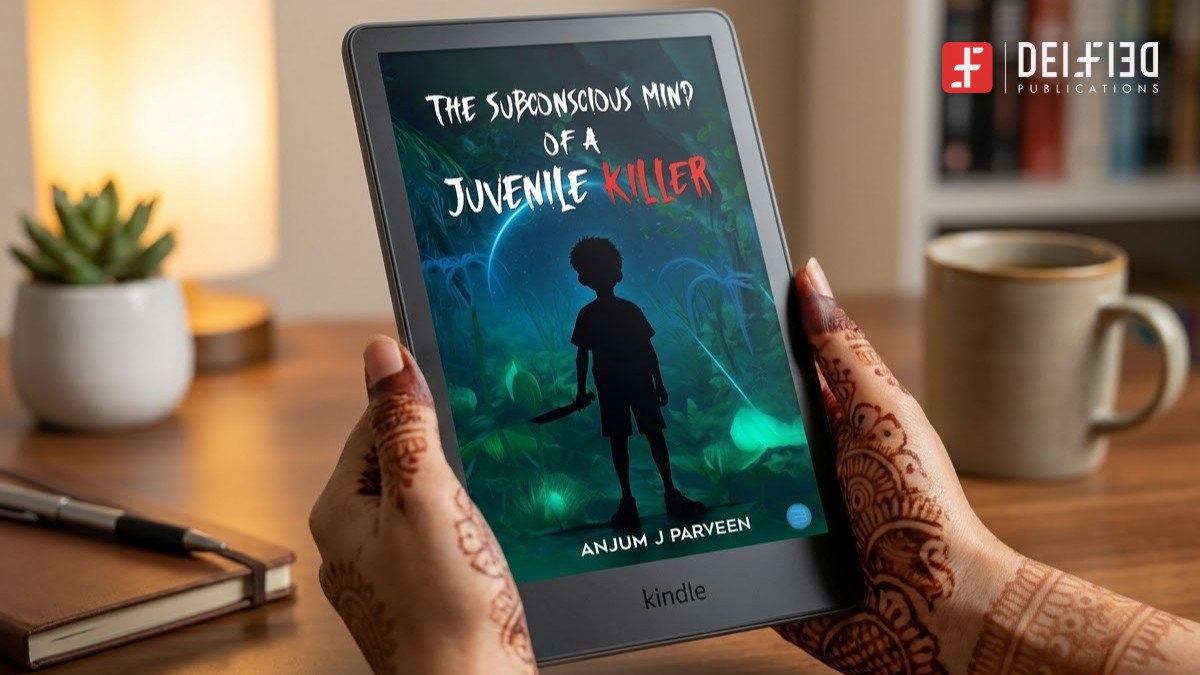
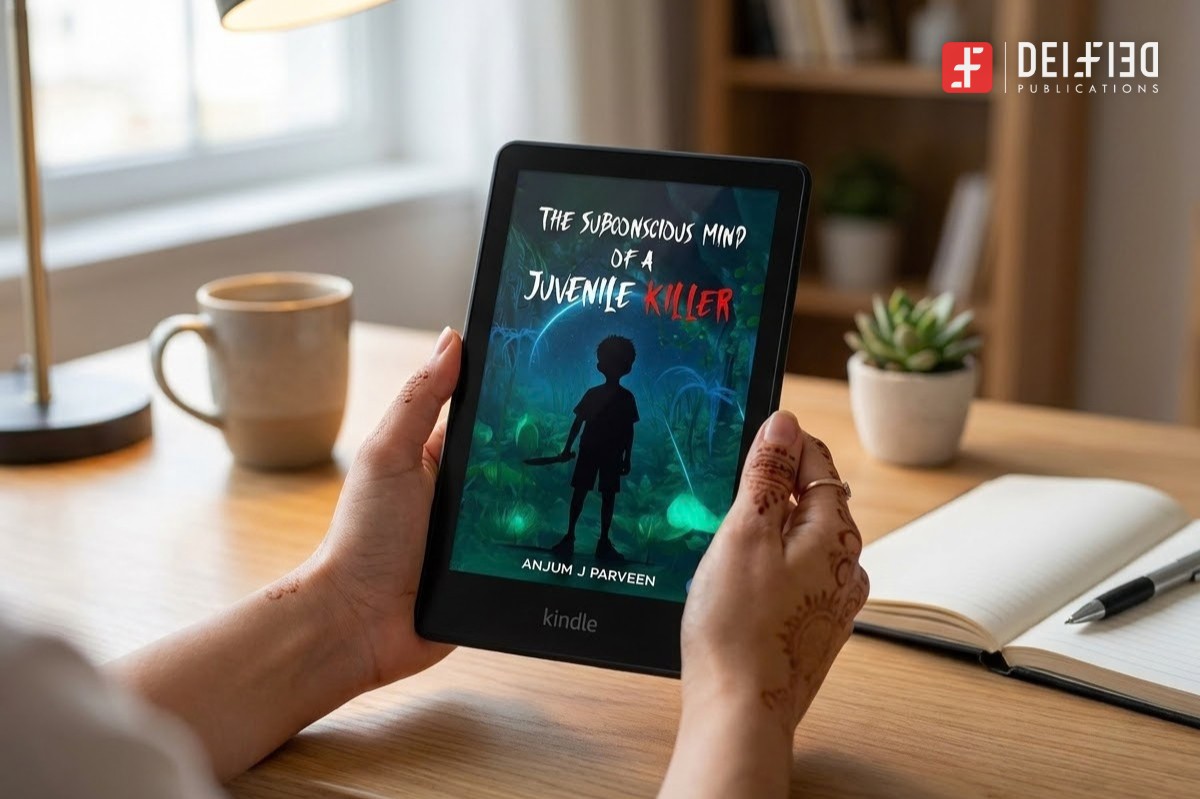
I have been reading for more than fifteen years, and as Editor in Chief at Deified Publication I see a lot of manuscripts that promise to be dark. Most of them are not. They flirt with darkness and then back away, because the author gets nervous. The Subconscious Mind of a Juvenile Killer by Anjum J Parveen does not back away, and honestly, I am still working out how I feel about that. I read it in two sittings and made tea in between, just to get out of that room in my head. It follows a boy named Aarav, born in a damp village on the outskirts of Kanpur, and it keeps asking one ugly question: where exactly did we fail him, and who was standing there when it happened? In 2026, with juvenile law, child safety and mental health being argued about on every news channel, that question feels more urgent than any author could have planned.
What the Book Is About
The story begins with a birth that nobody celebrates. In the prologue, Aarav's mother lies unconscious in a blood soaked saree while his father smokes a bidi outside, cursing another mouth to feed. From there the book follows Aarav's whole life across ten chapters, an epilogue and a short author's message at the end. His early childhood unfolds inside a one room hut where his father, Ratan, drinks away his daily wages and beats his mother, Arti, while a small boy watches from the corner. After his father dies, he is sent to a paternal uncle's house, where things get worse. At fourteen he lands in a juvenile home after a violent crime. At eighteen he is released with almost nothing, and what he does with that freedom takes up the middle of the book. The later chapters cover his time in jail, the psychiatric evaluations, an escape, a courtroom reckoning, and the long isolation of a high security cell. Some chapters are told in the order things happened. Others, like the one built from separate memory fragments, loop back into his childhood to show how a particular belief took root.
What Stood Out to Me
The thing I noticed first is that Parveen builds Aarav's childhood from small, specific cruelties instead of one dramatic event. There is a moment where his father hits his mother so hard that blood runs from her nose, and she simply wipes it away and whispers to the little boy not to make his father angry. Aarav wonders why she never fought back and why she gave birth to him if she could not protect him. I have seen versions of this in real life, in homes where a child learns very early that adults will not step in. Reading it as a parent or a teacher is uncomfortable in a useful way.
I also liked how the early chapters handle school. Aarav sits in the last row and never speaks, and his teachers decide he is slow. Nobody asks what is going on inside his head. Meanwhile he is setting insects on fire in a matchbox at night and finding a terrible kind of peace in watching them go still. It is a small detail, but it shows how easily a "silent boy" gets lost in a crowded classroom, and I think the book earns its central argument there. There is also a bitter little scene in the juvenile home where a visiting social worker asks Aarav what he wants to be when he grows up. He answers "police officer, madam" with a polite smile, and she writes it down happily, praising how respectful he is. That one line captures the author's whole critique of reform on paper. The home's only therapy turns out to be yoga classes twice a week.
The structure is also interesting. Between the scenes, Parveen drops in short clinical profiles, written as "if a psychiatrist had examined him then" lists, and later as a formal diagnostic report by a character called Dr. Meenakshi Rao. These give the book a case file feel that I found effective in the first half, since they keep pointing out that nobody was actually looking at this child. The moment I remember best is the release scene in chapter 3. The warden hands Aarav an Aadhaar card, half a packet of Parle G biscuits and a few hundred rupees, and tells him not to come back. That is the entire safety net the system offers him, and the writing makes you feel how thin it is.
The Emotional Core
I did not expect to feel pity while reading this, and I did, which is probably the point. The most affecting stretch for me was when Aarav goes looking for his mother after release. She opens the door, her eyes fill, and she whispers his name. He feels nothing, and the way the author describes that nothing is more chilling than any of the bloodier scenes. When he finally asks her why she never protected him, the book has been building to that question for pages, and it lands hard. I won't say more, but the aftermath is written with a cold restraint that I thought was the strongest craft decision in the book.
The memory fragments chapter also hit me. There is a small scene where a young Aarav finds a broken toy truck on the roadside and clutches it like treasure, and his father snatches it, calls him "trash for a trash child," and smashes it against the wall. The book says that moment became his first philosophy, that if everything he touches gets destroyed, he will destroy it first. I read that and put the book down for a minute. Near the end, Dr. Rao sits alone and rereads her final report with tears blurring the words, and she writes that he was born unwanted and that the choice was still his. That tension between "a monster made" and "he chose" runs through the whole book, and I appreciated that the author lets a character argue both sides.
Where It Did Not Fully Work for Me
This book is not easy, and I should be clear that it is not for everyone. The violence is relentless and often graphic, and it includes explicit sexual violence against women and children. By the second half I felt a numbness creeping in, and I wondered whether the author needed to show so much to make her point. Restraint can hit harder, and the doorstep scene proves it. The clinical bullet lists, useful early on, start to feel like textbook material dropped into a story, and some of the psychiatric labels are used a bit loosely. I also noticed a few timeline wobbles. The boy named Sameer appears as the ration shop owner's son in chapter 1 and as a village friend with a cruel older brother in chapter 8, and I could not tell if they were meant to be the same boy. His first murder is placed at twelve in one chapter and around eleven in the memory fragments. A careful edit would fix these. The supernatural flavour of the ending, with the crow and the "Evil is real" line, also muddied the social message for me a little. I preferred the book when it stayed grounded in neglect and institutional failure.
Who This Book Is For
If you read crime fiction and true crime, and you are curious about the psychology behind violence, this will interest you. It is also worth picking up if you work with children as a teacher, counsellor, social worker or policy person, because Aarav's story is built to make adults uncomfortable about what they overlook. If you want something light, or if graphic violence and sexual assault are triggers for you, please skip it. I mean that sincerely. It reads in the tradition of Indian crime writing that wants to indict the system, more than a detective story with a tidy solution.
Final Thoughts
I came away with mixed feelings and a lot of respect. Anjum J Parveen clearly wrote this because she wanted readers to look at the children they are not looking at, and the final author's message says as much: the child you ignore today becomes the adult you fear tomorrow. Whether you agree with every choice in the book or not, you will not forget Aarav's story. I think it is raw, uneven in places and very sure of its purpose.
Quick FAQs
Is The Subconscious Mind of a Juvenile Killer worth reading?
Yes, if you can handle very dark material. It is a bold book with a clear message about neglect and a failing juvenile system.
What is the book about?
It is a book summary in one line: the life of a boy named Aarav, from an abusive childhood in a village near Kanpur to the juvenile home, prison and a courtroom, and how a society that looked away shaped him.
Who should read it?
Readers of psychological crime fiction, people who work with children, and anyone interested in juvenile justice. Readers sensitive to violence should avoid it.
Is it very graphic?
Yes. It includes extreme violence and sexual violence, so please read with care.